
No products in the cart.
Return To Shop
The Anti-Pollution Bodycare Routine That Actually Protects Skin
The most effective anti-pollution bodycare routine has four fixed points: cleanse gently at night to lift particulate matter off the skin, apply an antioxidant leave-on morning and night to neutralize oxidative stress, layer a ceramide-rich moisturizer to reinforce the barrier, and finish every morning with broad-spectrum sunscreen. UCLA Health’s guidance on pollution and skin identifies exactly this combination, sunscreen, cleansing, antioxidants, and barrier repair, as the core defense against airborne pollutants, and it applies as much to the arms, shoulders, and legs as it does to the face. Pollution particles are small enough to work their way into pores and along hair follicles anywhere on the body, which is why treating anti-pollution bodycare as a facial-only concern leaves most of your skin unprotected.
Here is the sequence in practice:
- Morning: rinse or wipe down, apply an antioxidant serum or lotion, seal with a barrier moisturizer, finish with SPF 30 or higher.
- Evening: cleanse thoroughly to remove the day’s particulate buildup, treat with antioxidants if your skin tolerates a second dose, then apply a richer repair balm before bed.
Sunscreen matters because ultraviolet light doesn’t just burn skin. It activates a cascade with airborne pollutants that intensifies oxidative damage, which is the single biggest reason morning SPF outranks every other step in this routine.
Key Takeaways
The most reliable anti-pollution bodycare routine combines nightly cleansing, twice-daily antioxidant application, barrier-repair moisturizing, and morning sunscreen, with diet, hydration, and fabric choices reinforcing the topical work.
| Point | Details |
|---|---|
| Cleanse to remove particle load | Wash thoroughly each evening; morning cleansing is optional if skin wasn’t sweaty overnight. |
| Antioxidants neutralize oxidative stress | Apply a stable antioxidant lotion or serum morning and night to counter free-radical damage from pollutants. |
| Sunscreen is non-negotiable | Broad-spectrum SPF 30 or higher every morning, reapplied for extended outdoor exposure, since UV activates pollutant damage. |
| Exfoliate weekly, not daily | Gentle AHA/BHA treatments once a week (less often for sensitive skin) remove trapped residue without stripping the barrier. |
| Apiceuticals offers continuous antioxidant delivery | PROPOWAX™ Living Honeycomb technology sustains antioxidant release rather than a single-dose application, with independent validation from Aristotle University of Thessaloniki. |
Selected Authoritative Studies and Institutional Guidance
- UCLA Health: Simple steps to protect your skin from everyday pollution
- Dermascope: Anti-pollution skin care ingredient review
- Healthline: Can anti-pollution skin care really protect your skin?
- Dermatologic Therapy: Research on particulate matter and skin
Persistent redness, breakouts, or sensitivity that doesn’t improve with a barrier-focused routine warrants a dermatologist’s opinion rather than more product experimentation.
Table of Contents
- Why Pollution Damages Body Skin and Why This Routine Helps
- What Is the Best Morning and Evening Bodycare Ritual?
- Which Ingredients Actually Defend Against Pollution?
- What Common Mistakes Undermine an Anti-Pollution Routine?
- How PROPOWAX™ Living Honeycomb Supports Daily Antioxidant Defense
- Does Anti-Pollution Bodycare Need to Address Indoor Air and Blue Light?
- Which Textures Work Best for Body Versus Face?
- How Do Hydration, Diet, and Clothing Factor Into Pollution Defense?
- What the Research Actually Supports
- Where Continuous Antioxidant Protection Comes From
- Sources
- FAQ
Why Pollution Damages Body Skin and Why This Routine Helps
Particulate matter and airborne chemical pollutants generate free radicals the moment they contact skin. Those free radicals steal electrons from healthy cells, a process dermatologists call oxidative stress, and the resulting chain reaction weakens the stratum corneum, the outermost layer of skin that normally keeps moisture in and irritants out. Once that barrier thins, pollutants penetrate more easily, moisture escapes faster, and the skin becomes more reactive to fragrance, friction, and temperature swings. It’s a feedback loop: damage invites more damage.
Dermascope’s review of anti-pollution skin care links this oxidative burden directly to visible aging signs, including dark spots and a loss of elasticity, particularly on skin that’s chronically exposed without antioxidant support. The body is not exempt. Shoulders, forearms, and shins spend just as much time in traffic-heavy air and direct sun as the face does, yet they typically receive a fraction of the product attention.
Ultraviolet exposure compounds the problem rather than acting as a separate threat. UV radiation activates certain pollutant compounds, converting them into more reactive molecules than they would be on their own, which means broad-spectrum sunscreen does double duty: blocking UV rays directly and limiting the secondary damage pollutants cause once activated by light.
A split-face clinical study published in Dermatologic Therapy found that consistent barrier cream use prevented measurable skin deterioration during high particulate-matter periods, confirming that barrier support isn’t cosmetic reassurance. It’s a documented countermeasure against a documented mechanism of harm.
What Is the Best Morning and Evening Bodycare Ritual?
A routine only works if it’s specific enough to follow without guesswork. Here’s the order that respects both the science of oxidative stress and the practical reality of getting dressed and out the door.
Morning routine:
- Cleanse only if needed. If you showered the night before and haven’t sweated overnight, a quick rinse suffices. Over-washing every morning strips lipids the skin needs for barrier function.
- Apply an antioxidant leave-on. A body lotion formulated with a stable antioxidant complex should go on clean, slightly damp skin so it absorbs rather than sits on the surface. This is the step most routines skip entirely on the body, even though antioxidant body lotion addresses the same oxidative stress mechanisms that facial serums target.
- Layer a barrier moisturizer. Ceramides and hyaluronic acid go on next, sealing in the antioxidant layer and reducing how much pollutant penetration the skin experiences over the day.
- Finish with broad-spectrum SPF 30 or higher. Sunscreen is always the last step, never mixed into a moisturizer as an afterthought. If you’ll be outdoors for more than two hours, reapply, particularly on shoulders, the back of the neck, and forearms, which get more direct exposure than most people realize.
Evening routine:
- Cleanse thoroughly. This is the step that matters most for removing the day’s particulate load. A gentle, sulfate-free wash is sufficient. You’re not trying to strip skin, just lift off what settled on it.
- Apply antioxidant treatment where needed. If your skin tolerated the morning application well, a second light dose in the evening helps sustain the neutralizing effect overnight, when skin does most of its repair work.
- Use a richer moisturizer or repair balm. Nighttime is when heavier textures make sense, since you’re not layering under clothing or sunscreen and the skin has hours to absorb without disruption.
Exfoliation sits outside this daily rhythm but still matters for anti-pollution bodycare, since dead skin cells trap particulate residue against the surface. A gentle AHA or BHA body treatment once a week is enough for most skin types; those with sensitive or reactive skin should stretch that to once every two to three weeks and watch for tightness or redness as a signal to pull back. Avoid exfoliating on the same day as a strong antioxidant treatment, since freshly exfoliated skin absorbs actives faster and can become irritated by concentrations it would otherwise tolerate.
Layering order matters more than most people assume. Vitamin C and other antioxidants should go on before moisturizer, not mixed into it, so the active reaches skin directly rather than getting diluted. Sunscreen is the exception to layering rules: it always goes last in the morning, on top of everything else, regardless of what actives came before it.
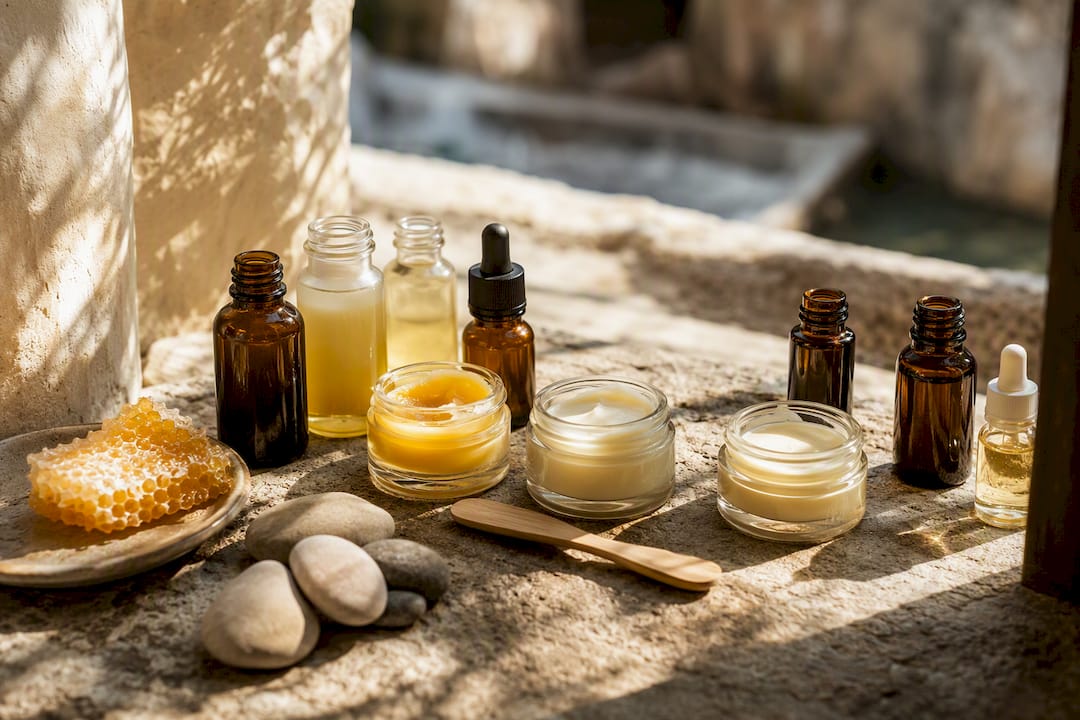
Pro Tip: If you’re rotating between a body lotion and a richer balm, use the lighter antioxidant lotion in warmer months or on days you’ll be more active, and reserve the heavier balm for dry seasons or after sun exposure, when skin needs more support to rebuild.
Which Ingredients Actually Defend Against Pollution?
Ingredient function matters more than any claim printed on packaging. Three categories do the actual work.
- Antioxidants: stable vitamin C derivatives (ascorbyl glucoside, sodium ascorbyl phosphate), vitamin E, niacinamide, resveratrol, ergothioneine, and quercetin each neutralize free radicals through slightly different pathways, and combining a few tends to outperform relying on one alone.
- Barrier-repair actives: ceramides, hyaluronic acid, and free fatty acids rebuild the lipid matrix that pollutants exploit once it’s compromised, a mechanism Dermascope’s ingredient review treats as inseparable from antioxidant strategy rather than a secondary step.
- Sunscreen filters: broad-spectrum SPF 30 or higher is non-negotiable for body use. Mineral filters (zinc oxide, titanium dioxide) sit on top of skin and physically reflect UV rays and, to some degree, particulate matter, while chemical filters absorb UV before it converts to heat in skin. Either works for pollution defense as long as it’s broad-spectrum and reapplied.
Red flags worth avoiding: added fragrance, which is a common irritant on already-compromised barrier skin; harsh surfactants like SLS and SLES, which strip the same lipids barrier creams are trying to rebuild; and high concentrations of drying alcohols, which can destabilize antioxidant formulas and blunt their effectiveness before they ever reach the skin. A well-formulated antioxidant product loses much of its value if it’s packaged alongside ingredients working against the same goal.
What Common Mistakes Undermine an Anti-Pollution Routine?
The word “anti-pollution” carries no regulatory definition. Healthline’s reporting on the claim notes that protection comes from what’s actually in the formula, not from a label a marketing team chose. Evaluate ingredient lists, not packaging language.
- Over-cleansing or over-exfoliating strips the very barrier you’re trying to protect, making skin more vulnerable to the particulates it was meant to block.
- Mixing unstable antioxidant combinations, or applying them in the wrong order, can cancel out their neutralizing effect before it happens.
- Skipping sunscreen because a product contains antioxidants is a common and costly mistake. Antioxidants and SPF do different jobs and neither substitutes for the other.
- Trust cues worth checking: independent third-party validation, documented dermatological testing, and a clearly stated ingredient-exclusion policy, rather than adjectives on a bottle.
How PROPOWAX™ Living Honeycomb Supports Daily Antioxidant Defense
Apiceuticals built its bodycare formulations around PROPOWAX™, a patented Living Honeycomb structure that releases antioxidants onto skin continuously rather than in a single application. The mechanism holds a global patent for the highest antioxidant activity recorded in cosmetics, independently validated by Aristotle University of Thessaloniki, which matters because most antioxidant serums deliver one concentrated dose that degrades over several hours, leaving skin unprotected for the remainder of the day.
- The Living Honeycomb structure sustains antioxidant release across wear time, addressing the gap that occurs between a morning application and the pollutant exposure that continues into the evening.
- Apiceuticals excludes more than 2,000 potentially harmful ingredients from its formulations, including fragrance additives and harsh surfactants that undermine barrier repair.
- Dermatological testing on sensitive skin reports 0% irritation, a relevant benchmark for anyone applying antioxidant products to already pollution-stressed skin daily.
Readers who want the mechanism explained in full can review the PROPOWAX™ technology page, and the antioxidant body and bath category shows how the technology translates into bodycare formats.
| Point | Details |
|---|---|
| Continuous release | PROPOWAX™’s Living Honeycomb structure sustains antioxidant delivery beyond a single application window. |
| Independent validation | The antioxidant activity patent was verified by Aristotle University of Thessaloniki, not brand testing alone. |
| Sensitive skin testing | Dermatological testing reports 0% irritation, relevant for daily leave-on use. |
Does Anti-Pollution Bodycare Need to Address Indoor Air and Blue Light?
Outdoor smog gets most of the attention, but indoor air carries its own particulate load from cooking exhaust, synthetic fragrance diffusers, and dust that recirculates through HVAC systems. Skin doesn’t distinguish between outdoor and indoor sources of oxidative stress. The same antioxidant and barrier strategy that defends against street-level pollution works indoors, which is one reason a once-daily application isn’t enough if you’re moving between environments all day.
Blue light from screens is a separate, more contested concern. The evidence for meaningful skin damage from typical phone and laptop use is thinner than pollution research, but the plausible mechanism, low-grade oxidative stress from prolonged exposure, overlaps with what particulate matter already does. Rather than chasing a blue-light-specific product, the practical response is the same antioxidant layer already built into a sound bodycare routine. There’s no need for a separate category of defense when the underlying skin biology responds to the same countermeasures.
What changes indoors is humidity and temperature control, which affect how well a barrier moisturizer performs. Heated indoor air in winter and air-conditioned spaces in summer both pull moisture from skin faster than outdoor air typically does, so barrier-repair ingredients like ceramides and hyaluronic acid earn their place whether you spent the day in traffic or at a desk.
Which Textures Work Best for Body Versus Face?
Bodycare has different mechanical demands than facial skincare, and formulation should reflect that. A lightweight lotion absorbs quickly enough to allow immediate dressing, which matters for a morning routine where antioxidant application happens before clothing goes on. Richer creams and balms, by contrast, sit better in an evening routine when skin has hours to absorb without friction from fabric.

Large body surface area also means product texture affects compliance more than people expect. A cream that takes ten minutes to fully absorb on the face becomes impractical across arms, legs, and torso, which is a large part of why most people skip antioxidant treatment on the body even when they’re diligent about it on the face. Lightweight lotions solve that friction point directly, delivering the same antioxidant body lotion benefits in a format that fits into a five-minute morning routine rather than a fifteen-minute one.
Areas with thicker skin or more environmental exposure, elbows, knees, shins, benefit from a slightly heavier formulation or a second pass with the same product. The goal isn’t matching texture to a marketing category but matching it to how the product will actually get used day after day, since the best antioxidant formula does nothing if it sits unopened because it feels too heavy for a Tuesday morning.
How Do Hydration, Diet, and Clothing Factor Into Pollution Defense?
Topical products handle the surface, but internal hydration and dietary choices shape how resilient skin is before a product ever touches it. UCLA Health’s guidance points to antioxidant-rich diets and adequate omega-3 intake as complements to topical defense, since systemic oxidative stress and skin-level oxidative stress aren’t fully separate processes. Diets consistently low in produce and healthy fats tend to show up as skin that recovers more slowly from environmental stress, even with a solid topical routine layered on top.
Clothing choices matter more than most anti-pollution guidance acknowledges. Tightly woven fabrics offer a physical barrier against particulate matter settling directly on skin, which is part of why long sleeves in high-pollution seasons aren’t just about temperature. Fabric that traps sweat and heat against skin, though, can undo some of that benefit by creating a warm, damp environment where barrier function struggles, so breathable fabric matters as much as coverage.
Hydration works on a longer timeline than skincare marketing tends to suggest. Well-hydrated skin maintains barrier flexibility better than dehydrated skin, which translates into fewer microscopic cracks for pollutants to exploit. None of this replaces a topical routine, but it’s the difference between a routine that works with your skin’s baseline resilience and one fighting against it.
What the Research Actually Supports
Most anti-pollution advice treats sunscreen, antioxidants, and cleansing as interchangeable options, pick one, feel protected. That framing doesn’t hold up against what the mechanism actually shows. Oxidative stress from pollution is continuous, not a single event a morning serum can neutralize and then forget about. A single antioxidant application that degrades within hours leaves the back half of a day unprotected, which is precisely the gap conventional single-dose formulas struggle with.
The bigger failure in most routines isn’t product choice. It’s treating the body as an afterthought to facial skincare, when arms, shoulders, and legs face identical particulate exposure with a fraction of the antioxidant support. Anyone serious about pollution defense should prioritize consistency and coverage over chasing a single “hero” ingredient. A modest antioxidant lotion applied to the whole body every day beats an expensive serum applied only to the face. PROPOWAX™’s continuous-release approach reflects an understanding that antioxidant defense is a sustained process, not a single transaction, which is the correction most anti-pollution routines actually need.
Where Continuous Antioxidant Protection Comes From
If the routine outlined above raised the question of which product actually delivers sustained antioxidant defense rather than a single fading dose, that’s the gap Apiceuticals built PROPOWAX™ to close.
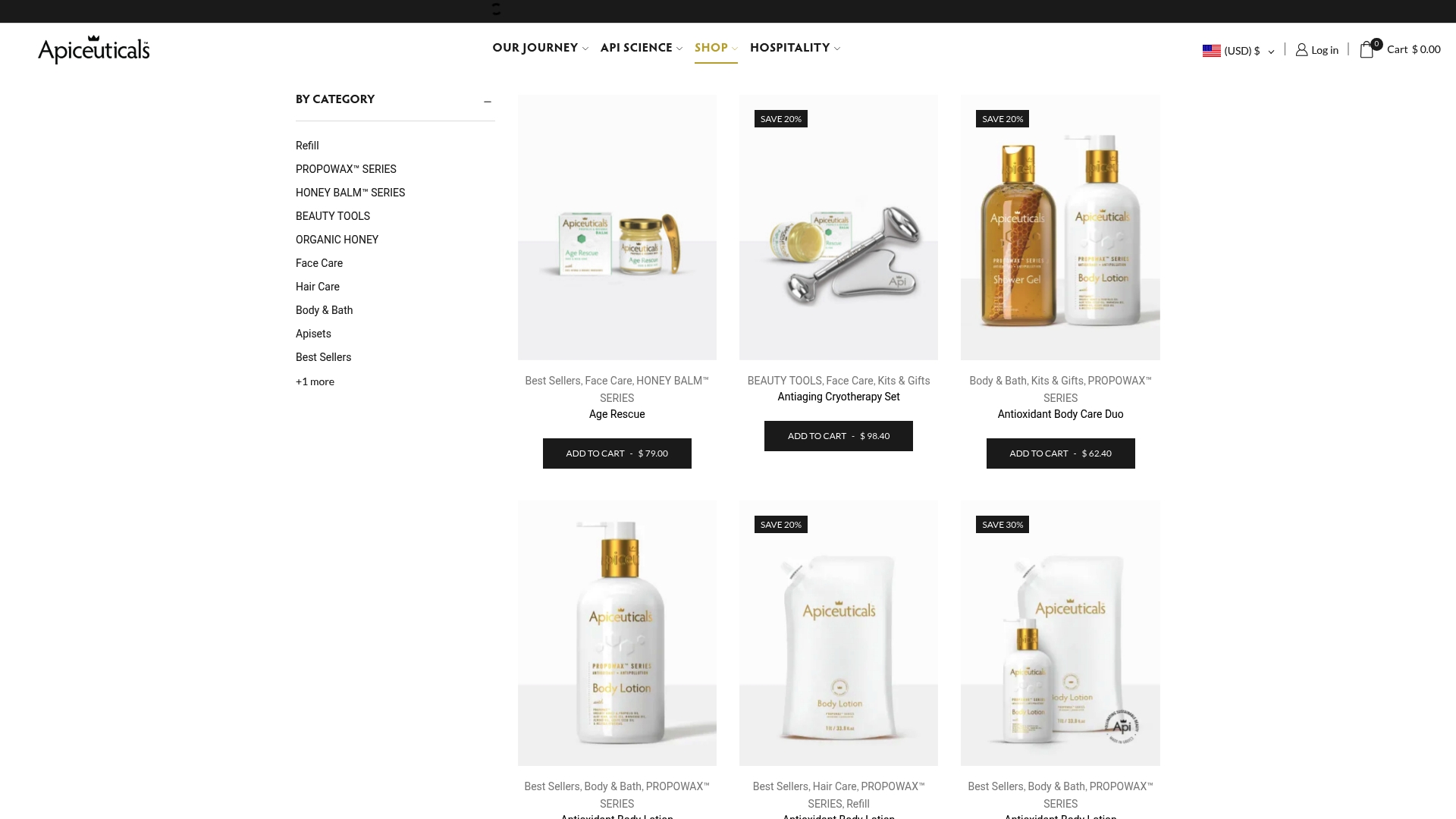
Apiceuticals formulates its bodycare line around the Living Honeycomb structure inside every PROPOWAX™ product, engineered to keep releasing antioxidants onto skin well after a single serum would have already broken down. That matters most for anyone whose day runs long, commuting through traffic, sitting near recirculated office air, walking home through evening exhaust, since a routine that only protects for a few hours after application leaves real gaps.
Readers ready to build this into a routine can start with the antioxidant body lotion, a lightweight formulation designed for exactly the morning-to-evening layering this article outlines, or browse the full antioxidant bodycare category to compare textures and formats.
Sources
- Simple steps to protect your skin from everyday pollution | UCLA Health
- Anti-pollution skincare: Research on effective ways to protect skin from particulate matter – Lee – 2021 – Dermatologic Therapy
- Anti-pollution skin care: Understanding the environment’s impact and ingredients that can provide solutions – Dermascope
- Brainy Beauty: Can anti-pollution skin care really protect your skin? – Healthline
FAQ
What Are the Best Anti-Pollution Skincare Products?
The most effective products combine a stable antioxidant (vitamin C derivatives, niacinamide, or a continuous-release system like PROPOWAX™) with barrier-repair ingredients like ceramides, plus a broad-spectrum SPF 30 or higher sunscreen; ingredient function matters more than the “anti-pollution” label itself.
What Is Anti-Pollution Skincare?
Anti-pollution skincare refers to products formulated to counter oxidative stress and barrier damage caused by airborne particulate matter and chemical pollutants, typically through antioxidants, barrier-repair actives, and sunscreen rather than a single specialized ingredient, as explained in detail in Pollution Defense Skincare: What It Is and Why It Works.
How Do You Protect Your Skin Against Pollution?
Cleanse gently each evening to remove particulate buildup, apply an antioxidant leave-on morning and night, reinforce the skin barrier with ceramides and hyaluronic acid, and wear broad-spectrum sunscreen every morning, reapplying during extended outdoor exposure.
What Is an Anti-Pollution System?
There’s no single regulated definition, but the term generally describes a layered routine, cleansing, antioxidant treatment, barrier support, and sun protection, that addresses pollution’s effects on skin from multiple angles rather than relying on one product.
Do I Need Anti-Pollution Bodycare, or Just Facial Skincare?
Body skin faces the same particulate and UV exposure as facial skin but usually receives far less antioxidant support, which is why extending antioxidant lotions and sunscreen to arms, shoulders, and legs closes a real gap in most routines.
How Often Should I Exfoliate to Remove Pollutants?
Once weekly with a gentle AHA or BHA body treatment works for most skin types, while sensitive skin should stretch that to every two to three weeks to avoid weakening the barrier that’s already under oxidative stress.
Recommended


Related posts

How bees and biodiversity sustain each other, what the science says about Greece and the Aegean, and how antioxidant beauty can start from a hive...

How organic propolis extraction works, from hive to extract: collection, solvents, EU organic rules, Greek propolis phenolics and what it means for skincare.

Build an anti pollution skincare routine that fits Greek city life: what pollution does to skin, the morning and evening steps, and the antioxidants with...

Honey moisture content explained: the EU and Greek limits, how to take a refractometer reading, what excess water does to honey, and why it matters...

How antioxidant activity measurement works: DPPH, ABTS, FRAP and ORAC explained, why results differ, and what a lab number can and cannot say about skin...















