
No products in the cart.
Return To Shop
Anti-Pollution Haircare: The Science-Backed Routine That Works
Anti-pollution haircare works when it combines three actions in sequence: a cleanser that lifts particulate matter without stripping the scalp, an antioxidant treatment that neutralizes the oxidative damage those particles trigger, and a scalp-focused step that keeps the follicle environment clear. The single highest-leverage move in that sequence is antioxidant defense. Free radicals generated by soot, exhaust, and airborne particulate matter degrade hair proteins and pigment the way rust eats into iron, and only an antioxidant can interrupt that reaction once pollutants have made contact. Apiceuticals built its PROPOWAX™ Living Honeycomb system around exactly this mechanism, a delivery format holding global patent for antioxidant activity in cosmetics, validated independently by the Aristotle University of Thessaloniki.
Start here today:
- Cleanse with a micellar or chelating shampoo formulated to lift particulate residue and mineral build-up.
- Follow with an antioxidant leave-in or serum while hair is still damp, so the active ingredient sits on the cuticle rather than rinsing away.
- Address the scalp separately, at least weekly, with a gentle exfoliating or clarifying step to prevent follicle congestion.
Key Takeaways
Anti-pollution haircare succeeds when antioxidant protection, particulate-lifting cleansers, and scalp care work together as a sequence rather than as isolated products.
| Point | Details |
|---|---|
| Antioxidants come first | Prioritize antioxidant delivery systems like PROPOWAX™ to interrupt oxidative damage from particulate matter. |
| Cleanse with intention | Use micellar or chelating formulas to lift soot and hard-water minerals without stripping the scalp. |
| Match frequency to exposure | Wash daily or every other day normally, and clarify promptly after heavy pollution exposure. |
| Skip heavy silicones | Lightweight film-formers help; thick silicones can trap particulate matter against the cuticle. |
| Apiceuticals anchors the routine | PROPOWAX™’s patented, university-validated antioxidant delivery is the evidence-backed core of this routine. |
Table of Contents
- How Pollution Damages Hair and Scalp
- What to Look for in Anti-Pollution Haircare Products
- Building a Daily, Post-Exposure, and Weekly Routine
- The Science of Antioxidant Defense, and Why Delivery Matters
- Myths and Mistakes That Undermine Anti-Pollution Care
- What the Research Actually Supports
- Where to Start With Apiceuticals
- Sources
- FAQ
How Pollution Damages Hair and Scalp
Hair is more vulnerable to airborne pollution than skin, largely because its surface area and texture give particulate matter far more to grip onto. Soot and fine particulate matter physically adhere to the cuticle, trapping oil, dirt, and moisture underneath in a film that thickens with every commute. During winter temperature inversions, that pollutant load in urban air can rise sharply, meaning exposure does not simply hold steady through the year. It spikes, according to reporting from Vogue Scandinavia.
Once particulates sit against the shaft, oxidative stress takes over. Free radicals generated by pollutants attack the keratin proteins that give hair its structure and the melanin that gives it color, which is why urban dwellers tend to see faster breakage and quicker color fade than the product’s aging profile would predict. The scalp absorbs a parallel hit.
- Trapped particulate matter clogs follicles and disrupts natural oil balance.
- Chronic low-grade irritation shows up as flaking, tightness, or sensitivity.
- A compromised scalp barrier makes it harder for any subsequent treatment, antioxidant or otherwise, to actually perform.
What to Look for in Anti-Pollution Haircare Products
Choosing the right formulation matters more than choosing the most heavily marketed one. Industry analysis from Lubrizol frames effective anti-pollution products around three functions: cleansing pollutants away, delivering antioxidant protection, and sometimes forming a light barrier that limits how quickly particulate matter re-deposits after washing. Each function calls for a distinct ingredient signal on the label.
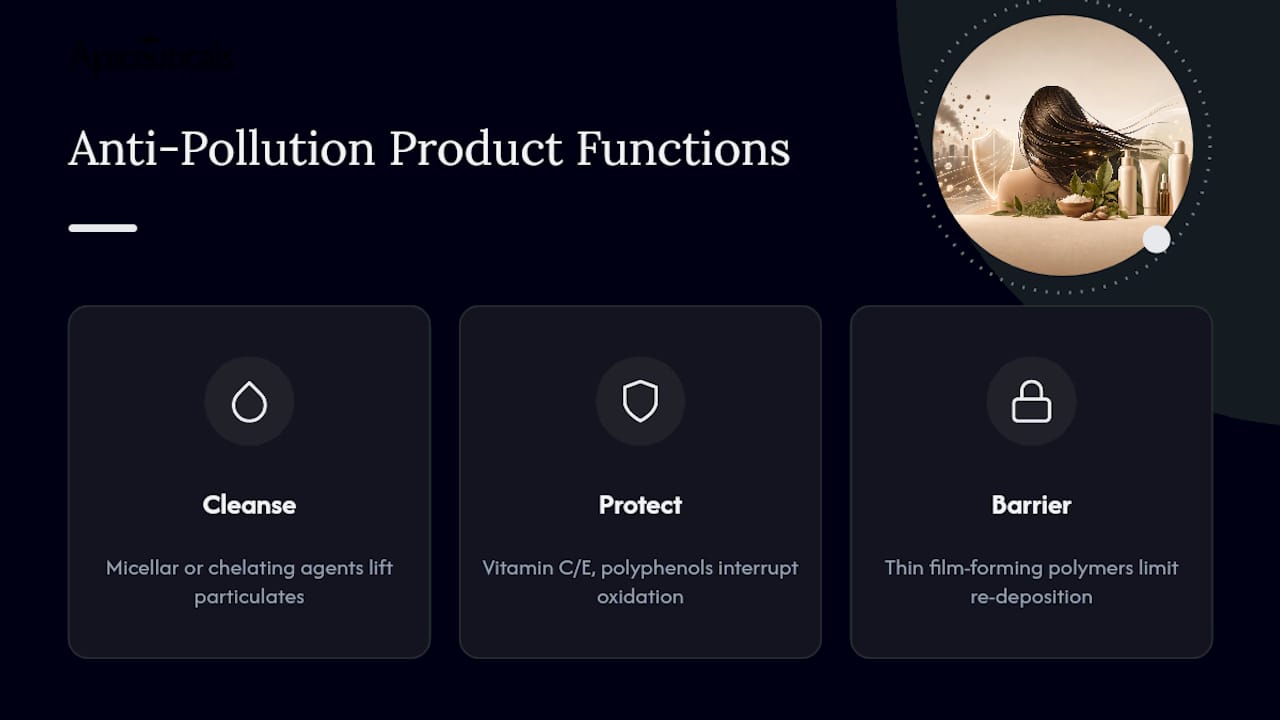
For the cleansing step, look for micellar technology or chelating agents, both of which are designed to lift particulate residue and mineral deposits from hard water without the aggressive stripping action of older sulfate-heavy formulas. Some market listings specify these chelating and micellar ingredients directly on the product page, which is a useful shorthand when comparing options.
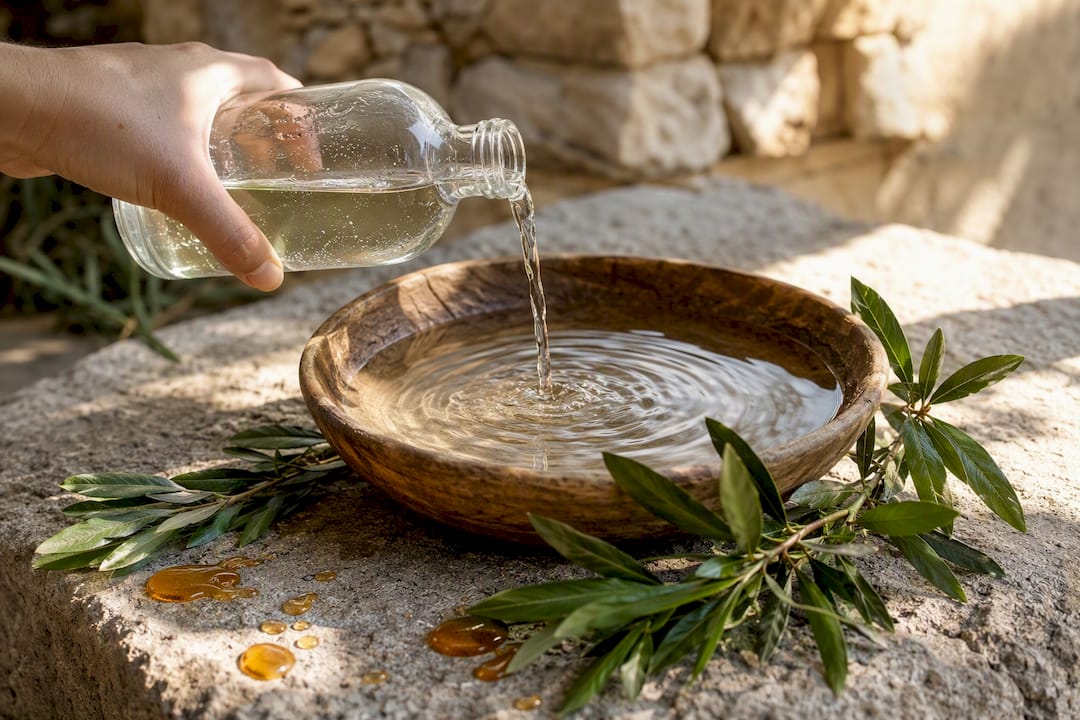
For the protective step, prioritize antioxidants with a documented mechanism rather than a vague claim. Vitamin C, vitamin E, plant polyphenols, and delivery systems like PROPOWAX™ all interrupt the same oxidative cascade that damages keratin and melanin, though the concentration and delivery method determine how much of that activity actually reaches the hair. Lightweight film-forming polymers can help reduce pollutant re-deposition through the day, but they need to stay thin. Heavy silicones do the opposite of what a pollution defense product should do: they seal a film over the cuticle that can trap particulate matter underneath rather than letting it rinse clean at the next wash.
If sustainability factors into the decision, refillable packaging formats are increasingly common across premium haircare and worth checking before purchase.
Pro Tip: Read the ingredient list for delivery mechanism, not just the presence of an antioxidant name. A well-documented delivery system will outperform a higher-percentage antioxidant sitting in an unstable base.
Building a Daily, Post-Exposure, and Weekly Routine
A workable anti-pollution haircare routine breaks into three rhythms rather than one fixed daily ritual.
- Daily maintenance. Cleanse every one to two days depending on hair type and pollution exposure, favoring a gentle sulfate-light formula. Apply an antioxidant leave-in or serum to damp hair, focusing on mid-lengths and ends where cuticle damage accumulates fastest. On high-pollution days, protective styling (a braid, a bun, or a light scarf) reduces the surface area exposed to airborne particulate matter.
- Post-exposure protocol. After heavy exposure, a clarifying wash removes the particulate film before it oxidizes further, then an antioxidant mask sits for 5 to 10 minutes to counter the free-radical load the day left behind. Consumer guidance from Nanoil recommends exactly this cleanse-then-treat sequence rather than treating alone. For readers dealing with heavier product or toxin build-up, more intensive detox approaches like the Macujo Method illustrate how far a deep-clarifying protocol can go, though that level of intensity belongs on occasion, not weekly rotation.
- Weekly maintenance. Scalp exfoliation once a week clears follicle congestion without over-stripping. Follow with a conditioning treatment that restores moisture, since a dry cuticle actually grips pollutants more readily than a well-conditioned one. Air-dry when possible; heat styling on pollutant-loaded hair can bake oxidized residue further into the shaft.
Pro Tip: Apply antioxidant serum before, not after, any heat styling. Heat accelerates oxidation, so the antioxidant needs to already be in place to do its job.
The Science of Antioxidant Defense, and Why Delivery Matters
Oxidative stress is the mechanism behind nearly every visible sign of pollution damage in hair: dullness, breakage, and premature color fade. Free radicals generated by particulate matter and UV exposure attack keratin bonds and melanin structures the way rust slowly corrodes untreated metal. An antioxidant works by donating an electron to neutralize the free radical before it can complete that reaction, which is a straightforward chemical trade, but the practical challenge is getting a stable, sufficient dose of antioxidant onto the hair and keeping it there.
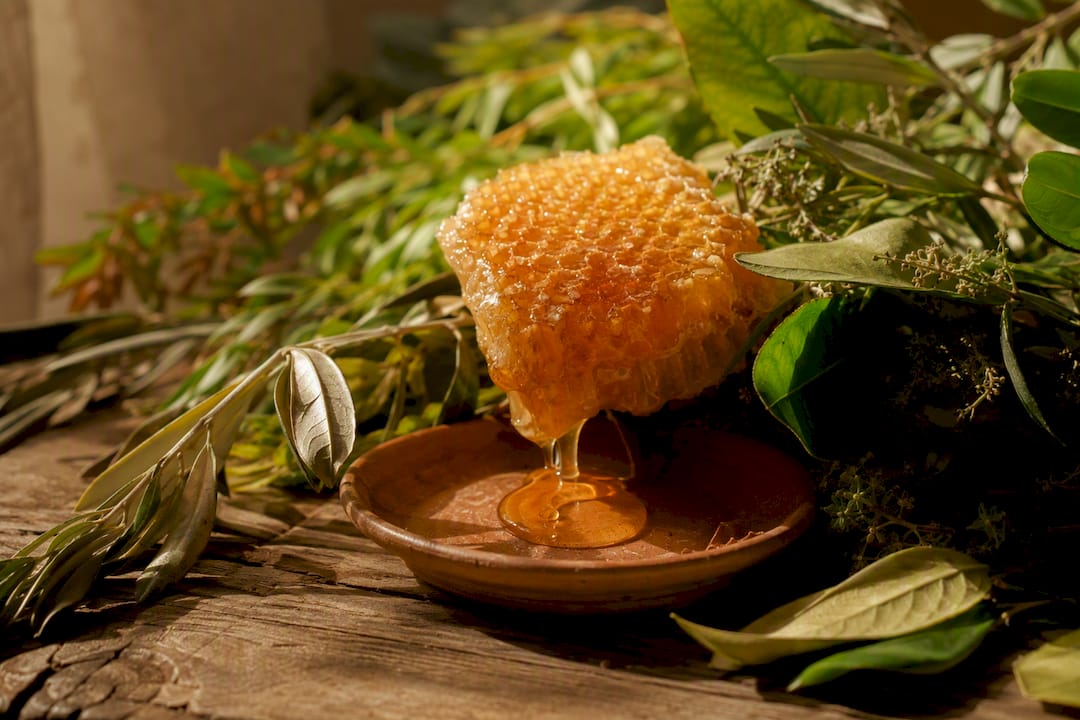
This is the problem PROPOWAX™ was engineered to solve. Its Living Honeycomb structure continuously releases antioxidant compounds onto the hair and scalp rather than delivering a single dose that depletes after one wash. Apiceuticals holds global patent for the highest antioxidant activity documented in cosmetics through this delivery system, and the claim was independently validated by the Aristotle University of Thessaloniki, giving the mechanism an academic checkpoint rather than a marketing assertion alone.
Clinical validation and delivery format matter more than whether the word “antioxidant” appears on a label. Microencapsulation, sustained-release structures, and documented concentration determine whether an antioxidant claim translates into measurable real-world protection.
When you read an “antioxidant-rich” claim on any product, ask two questions: what concentration is actually disclosed, and what delivery system keeps that antioxidant active until it reaches the hair. Dermatological testing and full ingredient transparency are the two signals worth trusting over adjective-heavy copy.
Myths and Mistakes That Undermine Anti-Pollution Care
Not every instinct here is a good one, and a few common habits work against the goal.
- Heavy silicones aren’t protection. They can seal particulate matter under a film rather than letting it wash away, defeating the point of a pollution-defense routine.
- Over-washing strips natural defenses; under-cleansing after heavy exposure lets oxidation continue overnight. The right frequency depends on exposure, not a fixed daily rule.
- UV protectants alone don’t stop pollution. They guard against light-driven damage, not the particulate and chemical load that soot and exhaust deposit directly on the cuticle.
- DIY rinses like diluted vinegar can help occasional mineral build-up, but frequent baking soda washes disrupt pH and can leave hair more vulnerable, not less.
What the Research Actually Supports
Most advice on this topic treats pollution defense as a barrier problem, something to seal against rather than something to neutralize. That framing is incomplete. A film that blocks particulate matter from settling is useful, but it does nothing about the oxidative damage already occurring at the protein and pigment level once pollutants make contact. The conventional wisdom overweights barrier claims and underweights antioxidant mechanism, largely because “protective barrier” is an easier line to put on packaging than “sustained-release antioxidant delivery validated by independent research.”
What the evidence actually supports is a hierarchy: cleanse to remove the particulate load, then treat with an antioxidant that can keep neutralizing free radicals between washes, and only then think about barrier or film. Readers chasing a single miracle product are asking the wrong question. The right question is which delivery system keeps an antioxidant active on hair long enough to matter, which is precisely the engineering problem PROPOWAX™’s Living Honeycomb was designed around. Prioritize that mechanism first, and the rest of the routine falls into place around it.
— Apiceuticals
Where to Start With Apiceuticals
Apiceuticals built its antioxidant haircare line around the same delivery mechanism this article has been describing, rather than retrofitting a marketing claim onto a standard formula. The PROPOWAX™ Series suits anyone who has read this far and wants a cleanse-and-protect routine backed by a patent for antioxidant activity and independent validation from the Aristotle University of Thessaloniki, not just a label that says “antioxidant” without disclosing what stands behind it.
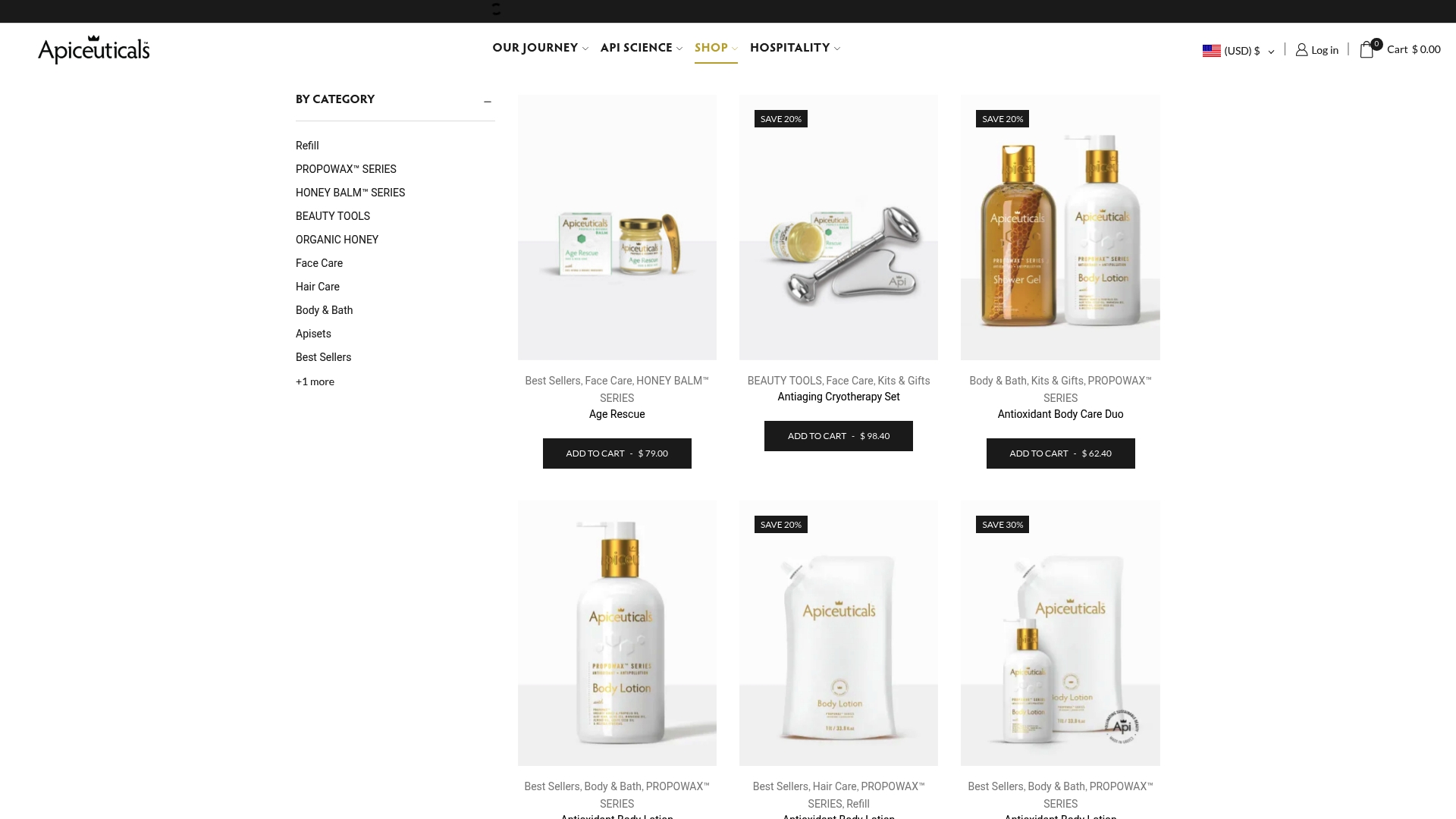
If your hair sees daily traffic, a commute, or any measurable city air, the practical next step is straightforward: explore the antioxidant-rich routine framework Apiceuticals has built around PROPOWAX™, or go directly to the shop to bring an antioxidant-first cleanse-and-treat sequence into your week.
Sources
- How to stop pollution from ruining your hair
- Anti-Pollution…the New Trend in Beauty
- How to Protect Hair Against Toxins, Urban Pollution and Smog?
FAQ
How can I protect my hair from pollution?
Cleanse regularly with a formula that lifts particulate matter and hard-water minerals, then apply an antioxidant leave-in or serum while hair is still damp, and address the scalp weekly with a gentle clarifying step.
What is the most environmentally friendly shampoo?
Look for formulas free of SLS, SLES, parabens, and mineral oils, packaged in refillable systems, since sustainability in shampoo comes down as much to packaging and sourcing as to the formula itself.
Which shampoo is the least harmful?
The least harmful options avoid harsh sulfates and heavy silicones, rely on gentle surfactants or micellar technology, and disclose ingredient concentrations rather than hiding behind vague “natural” claims.
What is the healthiest hair care brand?
The healthiest brands combine clean formulation with a validated delivery mechanism. Apiceuticals excludes many potentially harmful ingredients and builds its PROPOWAX™ Series around an antioxidant delivery system holding a patent independently validated by the Aristotle University of Thessaloniki.
How often should I wash pollution-exposed hair?
Daily to every other day works for most hair types under normal exposure, but a clarifying wash after unusually heavy exposure prevents oxidative damage from setting in overnight.
Do antioxidant serums actually work against pollution damage?
Antioxidants neutralize the free radicals that particulate matter and UV exposure generate on the hair shaft, and delivery systems with sustained release, like PROPOWAX™’s Living Honeycomb, keep that protection active between washes rather than rinsing away after one use.
Recommended


Related posts

How bees and biodiversity sustain each other, what the science says about Greece and the Aegean, and how antioxidant beauty can start from a hive...

How organic propolis extraction works, from hive to extract: collection, solvents, EU organic rules, Greek propolis phenolics and what it means for skincare.

Build an anti pollution skincare routine that fits Greek city life: what pollution does to skin, the morning and evening steps, and the antioxidants with...

Honey moisture content explained: the EU and Greek limits, how to take a refractometer reading, what excess water does to honey, and why it matters...

How antioxidant activity measurement works: DPPH, ABTS, FRAP and ORAC explained, why results differ, and what a lab number can and cannot say about skin...















