No products in the cart.
Return To Shop
Formulators: High Phenolic Antibacterial Honeys, 5% Safety Ceiling
Prioritize arbutus, heather, buckwheat, honeydew and other dark honeys, eucalyptus, and coffee-flower honey when selecting antibacterial honey types for antioxidant skincare and haircare formulas. Each carries elevated phenolic and flavonoid content, and several show darker color and measurable enzyme-inhibition activity linked to that chemistry. The benefit only reaches skin when the vehicle and concentration are right, so formulation choices matter as much as the honey itself.
TL;DR:
- Dark honey varieties like arbutus, buckwheat, and heather have higher phenolic content and antioxidant activity, making them more effective for skincare formulations.
- Honey’s botanical origin and color can predict antioxidant strength, with darker shades often indicating higher phenolic and flavonoid levels, but lab testing remains essential.
- Formulators should prefer hydrogel or optimized emulsion vehicles for better phenolic penetration, and moderate honey concentrations around 5% are safest for skin compatibility.
- Sourcing documentation must include specific assay methods, batch analysis, and freshness indicators like HMF and water activity to ensure consistent quality.
- Apiceuticals’ PROPOWAX™ system employs a patented honeycomb technology that delivers antioxidants continuously, validated by independent research for superior cosmetic efficacy.
Table of Contents
- 1. Antibacterial honey types that matter most for antioxidant skincare
- 2. Why botanical origin and color hint at antioxidant strength
- 3. Turning phenolics into a stable, effective formula
- 4. A shopper and formulator checklist for honey actives
- 5. How Apiceuticals applies bee science to antioxidant delivery
- 6. How labs measure antibacterial activity in honey
- 7. How processing and storage change what ends up in the jar
- 8. Where honey’s properties extend beyond beauty formulas
- 9. What formulators tend to get wrong about honey actives
- 10. Explore Apiceuticals’ antioxidant honey formulations
- Sources
- FAQ
1. Antibacterial honey types that matter most for antioxidant skincare
Not every jar of honey belongs in a serum. The honey varieties formulators return to for antioxidant beauty work share a chemical signature: elevated total phenolic content (TPC), elevated total flavonoid content (TFC), and, in many cases, a darker hue that tracks with that chemistry. A Sardinian comparative study found that arbutus, or strawberry-tree, honey ranked highest among tested monoflorals for antioxidant activity and enzyme-inhibition potential, with heather, buckwheat, eucalyptus, and thistle honeys among the ones showing high antioxidant activity.
Here is what distinguishes each of the honey types formulators and shoppers should know:
- Arbutus (strawberry tree) honey: shows the strongest antioxidant and enzyme-inhibition signal among Sardinian monoflorals tested, making it a candidate for antioxidant serums and targeted balms at modest inclusion rates.
- Heather honey: carries high total phenolic content and sustained antioxidant activity, which suits formulas designed for slower, prolonged phenolic release, such as leave-on masks.
- Buckwheat honey: among the darkest and most phenolic-rich honeys tested, it lends both antioxidant strength and visible color intensity, making it useful in barrier-focused creams and balms.
- Honeydew and other dark honeys: their phenolic load runs high, and they pair well with waterless balm bases where reduced water content limits enzymatic breakdown.
- Eucalyptus honey: offers a dependable antioxidant and enzyme-inhibition profile that translates well into scalp tonics and hair serums where sensory lightness matters.
- Coffee-flower honey: some assays report high FRAP and DPPH values, positioning it as a useful addition to targeted antioxidant boosters rather than a base ingredient.
Working concentrations vary by product type, but most topical formulas that rely on honey fractions sit in a moderate range rather than at the extremes, a point the next sections unpack in more detail. For a closer look at how these varieties compare, the breakdown in 5 Honeys Formulators and Shoppers Use for Antioxidant Skin and Hair expands on sourcing and use cases.
2. Why botanical origin and color hint at antioxidant strength
Antioxidant potential in honey is not random. It traces back to what the bees visited. A large-scale melissopalynology study covering more than ninety regions found that honeys drawing heavily from Rosaceae, Fabaceae, and Asteraceae plant families consistently showed higher antioxidant activity, with altitude and floral abundance adding further lift. That is a useful shortcut for anyone reading a label: a monofloral declaration naming one of those families is a reasonable signal of phenolic richness before a lab report even arrives.
Color offers a second, faster clue; similarly, selecting the right complementary ingredients like Hibiscus Berry Tea can enhance the botanical synergy in antioxidant skincare formulations. A review of phenolic compounds and honey color found that total phenolic and flavonoid content often correlate with color intensity and with antioxidant capacity, though the strength of that relationship shifts with region and honey type. Assay method matters too: DPPH, FRAP, and ABTS measure antioxidant activity through different chemical reactions, so two honeys can rank differently depending on which test a lab ran. A formulator comparing suppliers should ask which assay produced a given number, not just what the number is.
3. Turning phenolics into a stable, effective formula
Getting phenolic compounds into a jar is one problem. Getting them into skin is another. A Franz-cell permeation study comparing honey-based hydrogels against pure honey and standard emulsions found that hydrogels increased both the permeation and skin accumulation of phenolic acids, making vehicle choice one of the more consequential decisions in the entire formulation process.
A few practical rules follow from that finding and from the wider clinical literature on honey-based cosmetics:
- Favor hydrogels or optimized emulsions over pure honey applications when the goal is measurable phenolic delivery, since the vehicle itself changes how much active reaches the skin.
- Work within tested concentration ranges. Clinical and pilot studies referenced in research on honey-based topical formulas point to moderate inclusion levels for hydration and barrier benefits, while pushing concentrations higher raises both formulation complexity and cell-compatibility concerns.
- Control temperature and enzymatic activity. Honey’s glucose oxidase enzyme generates hydrogen peroxide over time, and prolonged heat exposure during processing can degrade the phenolic profile a formula depends on.
- Choose standardized extracts or controlled fractions where possible, since raw honey batches vary naturally and reproducibility becomes difficult without a consistent input.
- Respect the safety ceiling. In vitro cytotoxicity research found that some honey concentrations at 5% or higher reduced fibroblast viability, a signal that more is not automatically better and that professional formulation should balance potency against tolerability.
Pro Tip: When requesting supplier documentation, ask specifically for TPC in mg GAE per 100 g, the assay type used (DPPH, FRAP, or ABTS), hydroxymethylfurfural (HMF) level, and water activity. A supplier who cannot produce these numbers is not offering a formulation-grade ingredient.
4. A shopper and formulator checklist for honey actives
Reading a honey label with a formulator’s eye takes only a few extra questions. The review on phenolic compounds and antioxidant activity outlines the documentation that separates a characterized ingredient from a marketing claim, and it maps onto a short checklist:
- Botanical or monofloral declaration, ideally confirmed through pollen analysis rather than a generic label.
- Lab-reported TPC and TFC figures, along with the specific assay type used to generate them.
- Color description, often given on a Pfund scale, since darker honeys tend to track with higher phenolic content.
- Certification status, including organic or triple-certification where claimed.
- Processing notes stating whether the honey is raw, filtered, or pasteurized, since heat exposure affects phenolic stability.
- HMF and water activity values, both indicators of freshness and storage condition.
- A certificate of analysis (COA) tying the batch to a specific region and testing lab.
Red flags run the other direction: vague “medicinal” claims attached to a cosmetic product, an absent COA, or a listing that leans entirely on marketing language without naming an assay type. The ingredient page on Honey in Apiceuticals Beauty Products walks through how sourcing documentation should read when it is done properly, and the profile on heather honey’s antioxidant uses shows what a fully specified monofloral listing looks like in practice.
5. How Apiceuticals applies bee science to antioxidant delivery
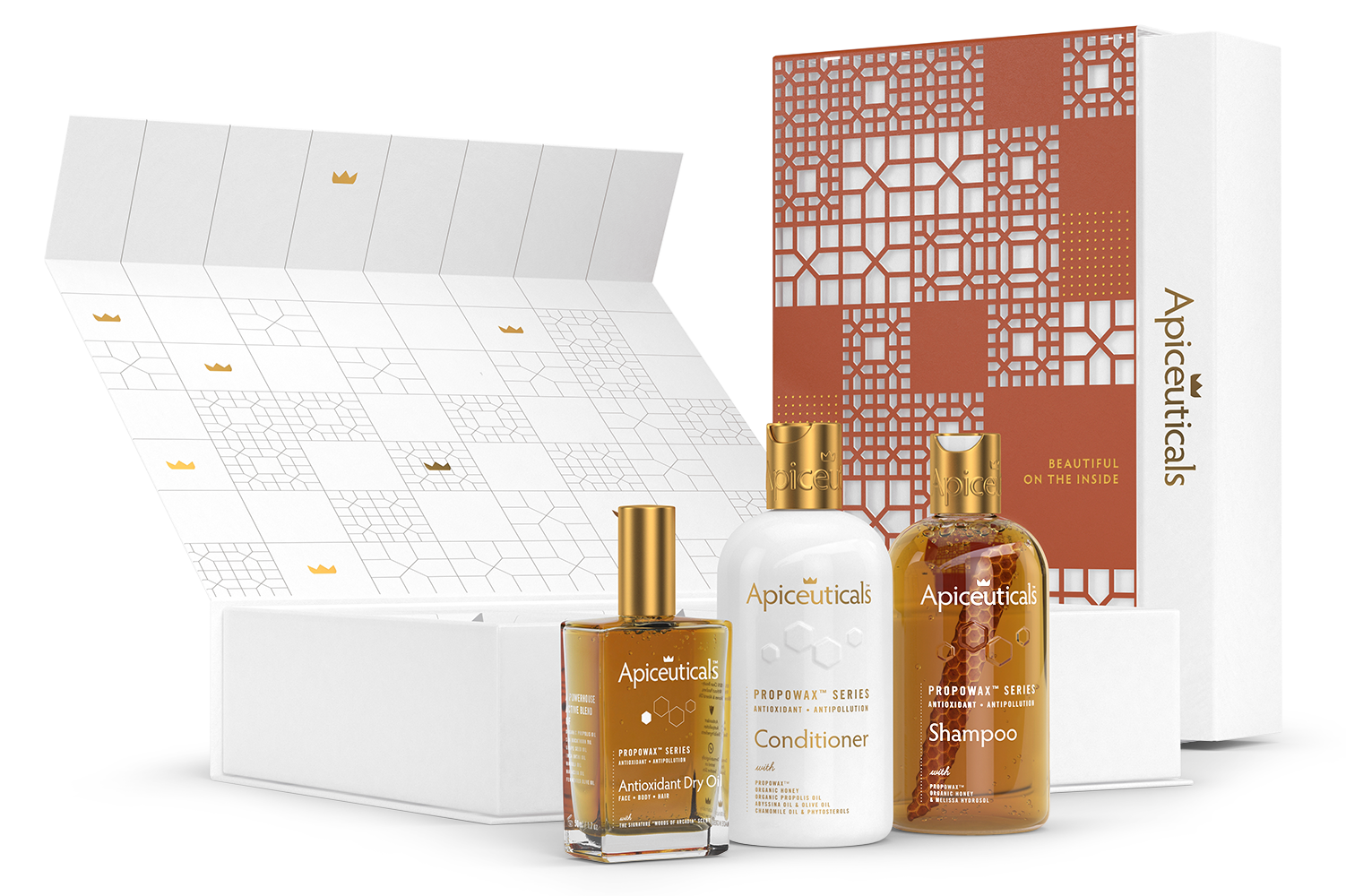
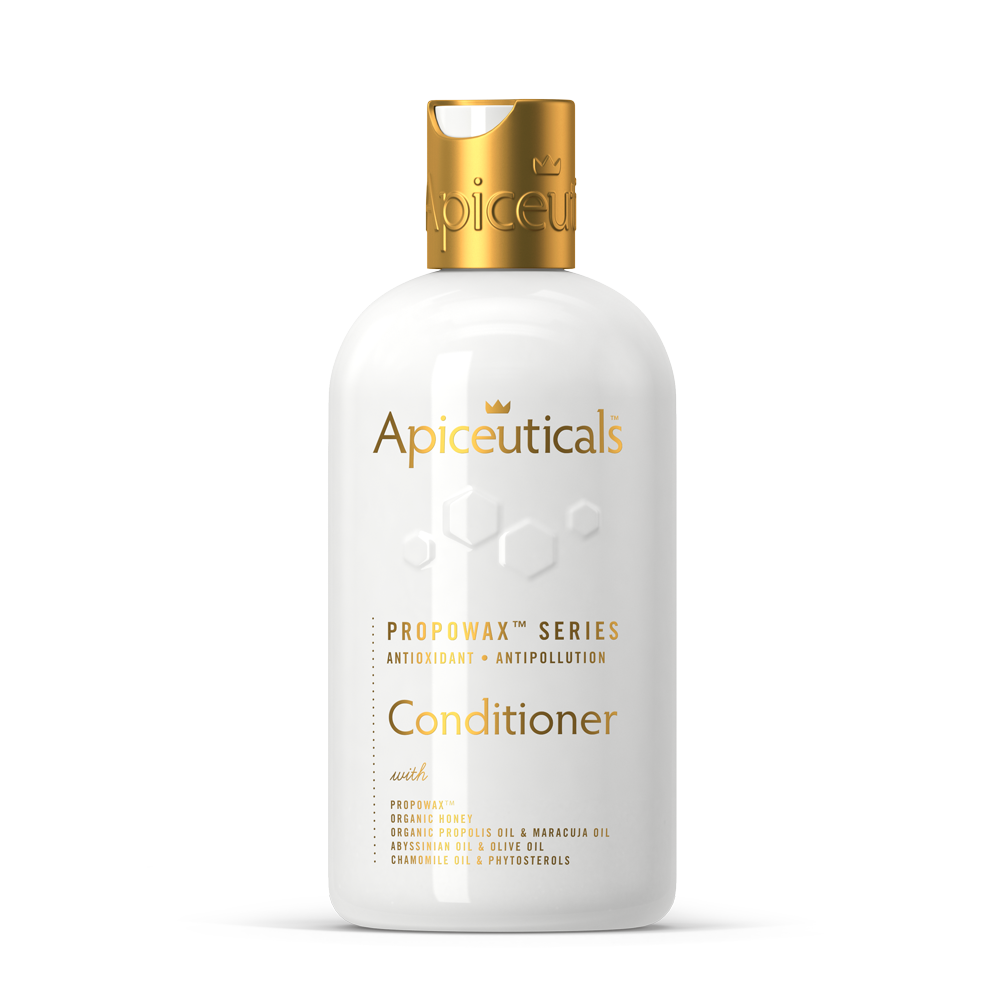
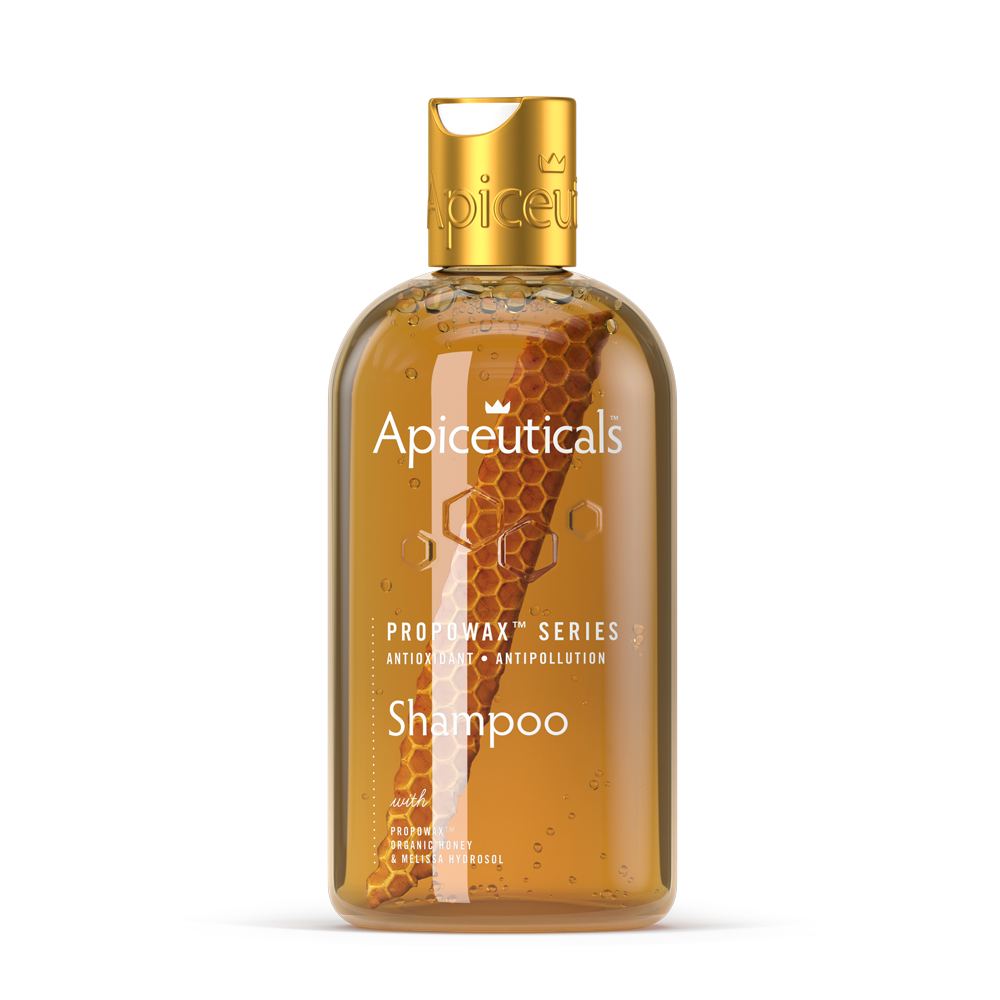
Apiceuticals built its formulation approach around PROPOWAX™, a patented Living Honeycomb structure embedded in its products that continuously releases antioxidants onto skin, scalp, and hair rather than delivering them in a single application spike. The technology holds a global patent for the highest antioxidant activity in cosmetics, and its performance was independently validated by researchers at the Aristotle University of Thessaloniki. That validation matters in a category where marketing claims often outrun laboratory evidence, and it is the kind of documentation the checklist above asks any supplier to produce. Apiceuticals applies the same standard across its waterless balm formulas and its PROPOWAX™ product line, treating potency and stability as a single design problem rather than two separate ones.
6. How labs measure antibacterial activity in honey
Standardized testing exists because raw honey varies enormously from batch to batch, and a claim without a stated method is not a verifiable claim. Antioxidant assays such as DPPH, FRAP, and ABTS each expose a honey sample to a different chemical reaction and measure the result differently, which is why the phenolic compound review stresses that results vary by method as much as by honey origin. A DPPH result and a FRAP result on the same honey are not directly comparable numbers, even when both are labeled “antioxidant activity.”
For formulators, this means a supplier’s certificate of analysis needs to name its method, not just its number. A reported TPC value in milligrams of gallic acid equivalent per 100 grams only means something alongside the assay that produced it. Complementary measures, including HMF level and water activity, round out a useful specification sheet because they speak to freshness and storage condition rather than antioxidant strength directly. Without that context, a single impressive-sounding figure tells a buyer almost nothing about whether the honey will perform consistently across production runs.

7. How processing and storage change what ends up in the jar
Heat and time are the two variables most likely to erode a honey’s phenolic profile before it ever reaches a formulation bench. Prolonged exposure to high temperatures during processing degrades heat-sensitive compounds, which is why raw or minimally processed honey generally retains more of its original phenolic content than heavily pasteurized batches. Glucose oxidase, an enzyme naturally present in honey, continues generating hydrogen peroxide over time, and that ongoing chemical activity is part of why storage condition affects a honey’s measured properties from harvest to shelf.

Filtration presents its own trade-off. Coarse filtration removes debris without stripping much phenolic material, while more aggressive filtering or blending can dilute the very compounds a formulator is sourcing the honey for in the first place. Water activity, one of the values worth requesting on a COA, offers a practical proxy for how well a batch has been stored, since higher water activity tends to accompany faster degradation and a shorter useful shelf life. None of this is exotic chemistry, but it explains why two honeys from the same botanical origin can test differently depending entirely on how they were handled after harvest.
8. Where honey’s properties extend beyond beauty formulas
The same phenolic and enzymatic properties that make certain honeys useful in antioxidant skincare also underpin a wider body of work on honey in medical and wound-care contexts, an area that sits outside this article’s beauty-formulation focus but is worth acknowledging briefly. Clinical interest in honey-based wound dressings has grown around properties tied to hydrogen peroxide generation and other compounds naturally present in raw honey, distinct from the antioxidant-focused cosmetic applications covered here.
That broader research context is one reason honey sourcing documentation carries real weight: the same rigor that supports a wound-care claim, complete with assay data and batch testing, is exactly what a cosmetic formulator should expect before trusting a supplier’s antioxidant numbers. The overlap is in the underlying chemistry, not in the intended use, and beauty formulators generally want a very different specification profile than a wound-care product would require.
9. What formulators tend to get wrong about honey actives
The honey aisle rewards patience over enthusiasm. The instinct to reach for whatever honey carries the most dramatic-sounding claim on its label often backfires, since a bold marketing line and a verified assay result are two very different things, and only one of them survives scrutiny once a product goes into stability testing.
The more defensible approach starts with the paperwork: a monofloral declaration backed by pollen analysis, a stated assay method behind any TPC or TFC figure, and a certificate of analysis tied to an actual batch. Darker, monofloral honeys such as arbutus, heather, and buckwheat earn their reputation because the data behind them holds up across multiple studies, not because they sound more exotic on a label. University-validated claims, of the kind behind PROPOWAX™’s patent, set a bar that marketing copy alone cannot meet.
— Apiceuticals
10. Explore Apiceuticals’ antioxidant honey formulations
Readers who want to see these principles applied rather than described can start with the PROPOWAX™ technology page, which details the patented Living Honeycomb system behind Apiceuticals’ antioxidant delivery.

Full product ranges are listed on the main shop.
Sources
- The amount of antioxidants in honey has a strong relationship with the plants selected by honey bees | Scientific Reports
- Innovative Honey-Based Product and Its Beneficial Effects Measured by Modern Biophysical and Imaging Skin Techniques
- Sardinian honey antioxidant activity and enzyme inhibition study
- Permeation and accumulation of phenolic acids from honey-based hydrogels vs emulsions (study)
FAQ
Which honey type has the highest antioxidant activity for skincare?
Among tested varieties, arbutus (strawberry tree) honey showed the strongest antioxidant and enzyme-inhibition signal in a Sardinian comparative study, with heather, buckwheat, and eucalyptus honeys close behind. The ranking can shift depending on the assay method used, so a certificate of analysis naming the test matters as much as the result itself.
Does darker honey always mean more antioxidants?
Darker color often correlates with higher phenolic and flavonoid content, according to a review of honey color and antioxidant activity, but the strength of that relationship varies by region and botanical origin. Color is a useful quick indicator, not a substitute for lab-confirmed TPC and TFC values.
What concentration of honey works best in a topical formula?
Clinical and pilot studies on honey-based cosmetics generally test moderate inclusion levels rather than extremes, since higher concentrations can raise cell-compatibility concerns without proportional benefit. In vitro research found reduced fibroblast viability at concentrations of 5% or higher in some tested formulas, which is why professional formulation matters.
Is honey recognized as a legitimate cosmetic ingredient?
Yes. A systematic review of clinical trials notes that honey is recognized by INCI as a moisturizing cosmetic ingredient, with trial evidence supporting hydration benefits in properly formulated products.
What is PROPOWAX™ and how does it relate to antibacterial honey types?
PROPOWAX™ is Apiceuticals’ patented Living Honeycomb technology that continuously releases antioxidants onto skin, scalp, and hair. It holds a global patent for the highest antioxidant activity in cosmetics, independently validated by the Aristotle University of Thessaloniki, and applies the same sourcing principles this article outlines for selecting honey actives.
Should I choose a hydrogel or an emulsion for a honey-based formula?
A Franz-cell permeation study found that honey-based hydrogels increased skin permeation and accumulation of phenolic acids compared with pure honey or standard emulsions. Hydrogels are generally the stronger choice when the goal is measurable phenolic delivery rather than surface-level moisturization alone.
Recommended


Related posts

Explore how a trial lasting 24 weeks and Malassezia research link scalp oxidative stress to shedding, and where PROPOWAX™ fits continuous antioxidant care.

See when silicones smooth hair or build up, and how PROPOWAX™ holds a global patent for highest antioxidant activity, validated by Aristotle University.

Explore mountain honey benefits for skin and body, from floral polyphenols and antioxidant activity to evidence on cough relief, wound care, and safe use.

Propolis delivers stronger antioxidant and antimicrobial action. Royal jelly boosts hydration and repair. Learn which suits your skin or scalp and why...

Pick sulfate-free or sulfate shampoo by your scalp, porosity, and color needs. Read evidence-backed guidance, antioxidant options, and a 4-step switch...