
No products in the cart.
Return To Shop
Antioxidant Delivery Systems for Formulators: Why NLCs Outperform SLNs
Lipid nanovesicles and nanostructured lipid carriers remain the most reliable classes for improving antioxidant stability and skin localization, particularly when paired with compatible natural penetration enhancers rather than aggressive synthetic ones. Hyalurosomes and other hyaluronic acid immobilized systems add meaningful residence time and measurable enzymatic recovery in oxidative stress models. Apiceuticals’ own PROPOWAX™ Living Honeycomb, a patented sustained-release matrix independently validated by the Aristotle University of Thessaloniki, illustrates what this category looks like when translated into a finished product. Across formulation types, the outcomes that matter are chemical stability during storage, controlled release at the tissue interface, and antioxidant activity that persists on skin rather than degrading before application.
TL;DR:
- Lipid nanovesicles and nanostructured lipid carriers provide superior oxidative stability and skin localization, especially when paired with natural penetration enhancers.
- Nanostructured lipid carriers typically offer better bioaccessibility and sustained release for antioxidants like quercetin compared to solid lipid nanoparticles.
- Hybrid systems like hyalurosomes improve antioxidant residence time and enzymatic recovery by extending skin surface retention.
- Choosing the right delivery system depends on the antioxidant’s solubility, stability, target tissue depth, and desired release profile, with rigorous preformulation testing essential.
- PROPOWAX™ Living Honeycomb demonstrates effective sustained antioxidant release, validated by independent research, and exemplifies best practices in formulation stability and efficacy.
Table of Contents
- What Are Antioxidant Delivery Systems and Why Do They Matter?
- How Do Lipid Nanovesicles Improve Topical Antioxidant Delivery?
- Should You Choose Solid Lipid Nanoparticles or Nanostructured Lipid Carriers?
- Do Hyalurosomes and Hybrid Carriers Improve Antioxidant Localization?
- Which Penetration Enhancers Work Best With Antioxidant Carriers?
- How Do You Choose the Right Antioxidant Delivery System?
- What Characterization Methods Confirm a Delivery System Works?
- How PROPOWAX™ Applies These Delivery Principles
- Scale-Up and Regulatory Reality for Antioxidant Carriers
- What In Vivo Models Best Predict Antioxidant Carrier Performance?
- How Do Delivery Systems Compare in Clinical and Preclinical Testing?
- Are Targeted and Stimuli-Responsive Systems Relevant to Antioxidant Delivery?
- What the Research Actually Supports
- Bring These Delivery Principles Into Your Own Formulation Work
- Sources
- FAQ
What Are Antioxidant Delivery Systems and Why Do They Matter?
Antioxidant delivery systems are engineered carriers, primarily lipid-based vesicles, nanoparticles, and hybrid polymer-lipid constructs, built to protect an antioxidant molecule from degradation and guide it to the tissue layer where it can neutralize free radicals, as explained in detail in the role of antioxidants in skincare. The need for these systems comes down to three recurring physicochemical problems that plague antioxidant actives on their own.
Most potent polyphenols and carotenoids are poorly water-soluble, which limits how much active can be dissolved in a topical base without recrystallization. Many are also oxidatively unstable themselves, an almost absurd irony: molecules meant to neutralize oxidation frequently degrade via oxidation during manufacturing, storage, or on-skin exposure to light and air. A third group, including several terpenoid and phenolic antioxidants, is volatile enough that a meaningful fraction evaporates or degrades before it ever penetrates the stratum corneum.
Delivery system selection follows from which of these problems dominates for a given active. A rough classification, ranked by relevance to topical formulation:
- Lipid nanovesicles (liposomes, ethosomes, niosomes, ufasomes): bilayer structures that encapsulate both hydrophilic and lipophilic actives, offering strong skin affinity and tunable deformability.
- Lipid nanoparticles (solid lipid nanoparticles and nanostructured lipid carriers): solid or semi-solid lipid matrices that trade some deformability for superior payload protection and controlled release.
- Hybrid and mucoadhesive carriers (hyalurosomes, polymer-lipid hybrids, cyclodextrin complexes): systems layered with hyaluronic acid or polymers to extend residence time and improve targeting.
- Penetration enhancer systems: not carriers themselves, but chemical or physical adjuncts, natural terpenes, fatty acids, sterols, or energy-based methods, that modify the stratum corneum to let a co-formulated carrier or free active penetrate more efficiently.
The rest of this survey prioritizes lipid nanovesicles and nanostructured lipid carriers because the published literature on antioxidant-specific applications is deepest there, and because these two classes cover the majority of oxidative-stability and localization problems formulators actually encounter. Hybrid and enhancer strategies are treated as modifiers layered onto those primary carriers rather than standalone systems.
How Do Lipid Nanovesicles Improve Topical Antioxidant Delivery?
Liposomes, ethosomes, niosomes, and ufasomes all work through a shared mechanism: a lipid bilayer or micellar structure encapsulates the antioxidant, shielding it from oxygen and light while using the vesicle’s own lipid affinity to fuse with or partition into the stratum corneum’s intercellular lipid matrix. That fusion process is what distinguishes vesicular delivery from simply suspending an antioxidant in a cream base. A 2024 review of lipid nanovesicles for antioxidant delivery in skin found that these structures consistently improve topical stability and penetration compared to unencapsulated actives, though loading capacity and long-term physical stability remain persistent limitations across formulations published between 2019 and 2024.
Each vesicle subtype offers a different lever for formulators to pull. Phospholipid selection sets the baseline: phosphatidylcholine sourced from soy or egg yields more fluid bilayers than hydrogenated variants, which matters when the goal is deformability for penetration rather than rigidity for storage stability. Cholesterol incorporation, typically in a moderate molar range relative to phospholipid, reduces bilayer permeability and slows payload leakage, but too much cholesterol stiffens the vesicle and undermines the deformability that makes ethosomes and transethosomes useful in the first place.
Ethanol content is an important variable for ethosomes, influencing vesicle softness and penetration efficiency. That ethanol fraction interdigitates with stratum corneum lipids and simultaneously softens the vesicle bilayer itself, which is why ethosomes and their transethosome variants tend to outperform conventional liposomes on deformability and penetration depth. Niosomes swap phospholipids for nonionic surfactants such as Span or Tween series compounds, often combined with an edge activator like sodium cholate to increase bilayer flexibility, and they tend to offer better chemical stability during storage than phospholipid vesicles because nonionic surfactants are less prone to oxidative degradation.
Loading oxidation-prone actives demands attention beyond the vesicle architecture itself. Co-encapsulating a secondary antioxidant, ascorbyl palmitate alongside vitamin E is a common pairing, or including a metal chelator such as EDTA or a citrate salt in the aqueous phase reduces the transition-metal-catalyzed oxidation that degrades many polyphenols during manufacturing and shelf storage. Oxygen-scavenging excipients in the aqueous phase serve a similar protective function for particularly fragile molecules.
The literature offers concrete performance patterns worth noting. Resveratrol and quercetin, both prone to rapid photodegradation in free form, show markedly improved photostability once encapsulated in liposomal or niosomal systems. Coenzyme Q10, highly lipophilic and essentially water-insoluble, integrates efficiently into the lipid bilayer itself rather than the aqueous core, which is a formulation detail that changes how encapsulation efficiency should be measured. Propolis-derived compounds, a complex mixture of phenolic acids and flavonoids, present unique challenges because the mixture’s heterogeneity makes uniform encapsulation harder to standardize than with a single purified molecule.
Pro Tip: Deformability and stability sit on opposite ends of the same lever. Pushing ethanol or edge activator concentration higher to improve penetration depth almost always shortens shelf life and increases vesicle fusion risk during storage. If a formulation is headed for clinical translation, run accelerated stability testing at the deformability level you actually intend to ship, not the more conservative version you validated in early screening.
Should You Choose Solid Lipid Nanoparticles or Nanostructured Lipid Carriers?
Nanostructured lipid carriers (NLCs) generally outperform solid lipid nanoparticles (SLNs) for antioxidant payloads, and the mechanism is structural. SLNs are built from a single solid lipid that crystallizes into a relatively ordered matrix, which limits how much active can be incorporated before payload expulsion occurs during storage as the crystal lattice reorganizes. NLCs replace part of that solid lipid with a liquid lipid, creating an intentionally imperfect, disordered matrix with more space to accommodate the antioxidant molecule and less tendency to push it out over time.
A comparative study on nanostructured lipid carriers reported NLC bioaccessibility of 52.7 percent for quercetin versus 39.7 percent for the equivalent SLN formulation, a gap that tracks directly to that structural difference in lipid ordering. The same review noted that NLCs can improve oral absorption of lipophilic antioxidants through lymphatic transport, a route that bypasses first-pass hepatic metabolism and increases systemic bioavailability, relevant for oral antioxidant supplementation even though it falls outside strictly topical applications.
Formulators tune NLC and SLN performance through a handful of interconnected variables:
- Solid to liquid lipid ratio: typically 70:30 to 99:1 for NLCs; higher liquid lipid content increases loading capacity but can compromise particle stability if pushed too far.
- Surfactant type and concentration: poloxamers and polysorbates are common choices, with concentration directly affecting particle size and long-term colloidal stability.
- Homogenization method: high-pressure homogenization yields smaller, more uniform particles than simple high-shear mixing, though it requires more specialized equipment for scale-up.
Release behavior differs meaningfully between the two matrix types. SLNs tend to show a pronounced initial burst release as surface-adsorbed antioxidant diffuses out quickly, followed by a slower sustained phase from the core. NLCs, because of their less ordered structure, often distribute the active more evenly throughout the matrix, producing a flatter, more sustained release curve with a smaller initial burst. Minimizing payload expulsion and oxidation during that release phase generally means keeping storage temperatures below the lipid’s recrystallization threshold and incorporating the same chelator and oxygen-scavenging strategies used in vesicular systems.
Scale-up introduces its own friction. High-pressure homogenization that performs cleanly at bench scale does not always translate linearly to pilot or production volumes, and batch-to-batch lipid crystallinity can shift with even minor changes in cooling rate. Regulatory safety testing for topical NLC and SLN products typically follows the same irritation and sensitization frameworks applied to other nanoparticle-based cosmetic actives, which means documentation of particle size distribution and stability data needs to be built into the process from early development rather than retrofitted later.
Do Hyalurosomes and Hybrid Carriers Improve Antioxidant Localization?
Hyalurosomes, lipid vesicles immobilized with a hyaluronic acid coating, extend antioxidant residence time on skin and produce measurable biological recovery in oxidative stress models, not just improved penetration numbers. In a UVB-irradiated model, vitamin E loaded hyalurosomes restored antioxidant enzyme activity, specifically superoxide dismutase and catalase, from roughly 20 percent of baseline toward near-normal levels, while also reducing the inflammatory markers IL-6 and TNF-alpha. That combination, mechanical delivery plus enzymatic recovery, is a stronger evidentiary bar than penetration depth alone, and it is one reason hyalurosome research has drawn attention beyond standard vesicle studies.

The hyaluronic acid layer works mucoadhesively: it slows vesicle clearance from the skin surface, giving the encapsulated antioxidant more time to fuse with stratum corneum lipids before being washed away or mechanically abraded. This matters most for actives meant to act at the epidermal surface or upper dermis rather than actives targeting deeper tissue.
Beyond hyalurosomes, two other hybrid strategies deserve mention. Polymer-lipid hybrid nanoparticles combine a lipid core with a polymer shell, chitosan and PLGA are common choices, to improve both mechanical stability and controlled release timing. Cyclodextrin complexation takes a different approach entirely, encasing a single antioxidant molecule inside a cyclic oligosaccharide’s hydrophobic cavity to improve aqueous solubility and shield it from oxidative degradation, useful for actives too small or too polar to encapsulate efficiently in a lipid bilayer.
Compatibility cautions apply across all three approaches. Sensitive antioxidants with reactive hydroxyl groups, quercetin and other flavonoids in particular, can interact unpredictably with certain polymer shells during processing, so compatibility screening earlier in development saves considerable rework later. Apiceuticals’ overview of antioxidant delivery technologies covers how these hybrid approaches compare across formulation goals in more depth.
Which Penetration Enhancers Work Best With Antioxidant Carriers?
Natural penetration enhancers, terpenes, fatty acids, and sterols, transiently loosen the stratum corneum’s lipid packing to boost absorption of both hydrophilic and lipophilic actives, and they carry a meaningfully better safety profile than many synthetic alternatives. Research on natural transdermal permeation enhancers confirms lower irritation risk alongside comparable efficacy, and mixtures of complementary natural enhancers can often match synthetic performance while reducing the concentration needed of any single disruptive component.
Choosing and combining enhancers with a vesicular or nanoparticle carrier follows a short set of practical rules:
- Match enhancer polarity to the barrier target. Terpenes like limonene and menthol work well for lipophilic actives moving through the intercellular lipid route, while fatty acids such as oleic acid tend to favor more polar payloads.
- Avoid stacking enhancers with high-ethanol vesicles. Combining a potent terpene enhancer with an already ethanol-rich ethosome formulation risks over-disrupting the stratum corneum rather than incrementally improving penetration.
- Screen enhancer concentration against vesicle integrity. Some fatty acid enhancers can destabilize phospholipid bilayers at higher concentrations, so co-formulation compatibility testing should happen before finalizing either component’s concentration.
Physical adjuncts, microneedles and iontophoresis chief among them, belong in a different tier of use case. They suit situations where the target antioxidant needs to bypass the stratum corneum barrier more completely than any chemical enhancer allows, deeper dermal delivery for larger or more polar molecules, for example, but they also introduce more procedural complexity and a higher bar for safety documentation than a topically applied enhancer blend.
Safety monitoring should track transepidermal water loss (TEWL) as the primary functional barrier marker, alongside inflammatory cytokines including IL-6 and TNF-alpha where irritation risk is a concern. The stratum corneum remains the skin’s dominant physical barrier, and any enhancer aggressive enough to meaningfully disrupt it long-term risks trading short-term absorption gains for chronic barrier compromise, a trade formulators should treat as a real cost, not a footnote.
Statistic Callout: Natural enhancer mixtures can reduce the required concentration of any single disruptive component while maintaining comparable permeation efficacy to synthetic enhancers, according to the Molecular Pharmaceutics review on transdermal permeation enhancers.
How Do You Choose the Right Antioxidant Delivery System?
Selecting among lipid nanovesicles, nanostructured lipid carriers, and hybrid systems comes down to six decision axes that interact with each other more than any single-variable framework suggests. Solubility profile determines whether the active belongs in an aqueous core, a lipid bilayer, or a solid lipid matrix. Molecular weight affects how readily a carrier can fuse with stratum corneum lipids versus needing mechanical or chemical assistance. Target tissue depth, surface, epidermal, or dermal, dictates whether deformability or sustained-release stability should take priority. Release profile requirements shift the balance toward vesicles for fast onset or NLCs for extended activity. Oxidative sensitivity of the payload determines how much chelator and antioxidant co-ingredient support the formulation needs. Cost and scale considerations often eliminate options that perform beautifully at bench scale but do not translate to production-volume homogenization.
A stepwise checklist keeps development moving without skipping steps that come back to bite later:
- Preformulation assays: confirm solubility, log P, and thermal stability of the raw antioxidant before selecting a carrier class.
- Compatibility screening: test the active against candidate lipids, surfactants, and any planned penetration enhancer for chemical interaction or accelerated degradation.
- Encapsulation screening: run small-batch trials across two or three carrier candidates to compare encapsulation efficiency before committing to one system.
- Accelerated stability testing: subject the leading candidate to elevated temperature and light exposure to project shelf life and detect early payload expulsion.
- In vitro penetration assay: use Franz diffusion cell data to confirm the formulation actually delivers active to the target skin layer at a clinically meaningful rate.
Acceptance criteria should be set before screening begins, not adjusted afterward to fit whatever the data shows. Encapsulation efficiency below roughly 60 percent for a lipid nanovesicle formulation, or a polydispersity index above 0.3, are common red flags suggesting the formulation needs rework rather than fine-tuning. A sudden increase in particle size during accelerated stability testing signals vesicle aggregation or fusion, and it should trigger a return to the compatibility screening stage rather than an attempt to patch the existing formulation with additional stabilizer.
Pro Tip: Run your in vitro penetration assay against a delivery target you can actually defend scientifically, not just “deeper is better.” A formulation optimized for maximum stratum corneum penetration is often the wrong choice for an antioxidant meant to act at the skin surface, where sustained release and residence time matter more than depth.
For active-specific background that feeds directly into this decision framework, Apiceuticals’ guide to natural antioxidants for skin, scalp, and hair breaks down how different chemical classes, polyphenols, carotenoids, tocopherols, shift the calculus on each of these six axes.
What Characterization Methods Confirm a Delivery System Works?
Confirming that a lipid nanovesicle or nanoparticle formulation actually performs as designed requires a defined characterization panel, not a single headline metric. Dynamic light scattering (DLS) remains the standard first-pass method for particle sizing, and for topical antioxidant carriers the useful target range generally sits between 80 and 300 nanometers, small enough to interact efficiently with stratum corneum lipids but not so small that manufacturing becomes prohibitively difficult at scale. Polydispersity index (PDI) values below 0.3 generally indicate an acceptably uniform population; values climbing above that threshold suggest either incomplete homogenization or early aggregation, and should prompt a look at TEM or SEM imaging to visually corroborate what the DLS number is reporting.
Encapsulation efficiency, typically measured by HPLC after separating free from encapsulated active, tells you how much of your antioxidant payload actually made it into the carrier rather than remaining in free solution. In vitro release testing using Franz diffusion cells, run against an appropriate receptor medium and always alongside a free-active control, distinguishes true controlled release from simple diffusion artifacts. Standardized early-stage characterization across encapsulation efficiency, PDI, particle size, zeta potential, and release rate materially improves how well bench results predict translational performance later.
Zeta potential rounds out the core panel as the primary indicator of colloidal stability. Values below negative 30 millivolts or above positive 30 millivolts generally indicate sufficient electrostatic repulsion between particles to resist aggregation during storage; values closer to zero flag a formulation at higher risk of flocculation over shelf life.
| Parameter | Method | Target range for topical carriers | What it tells you |
|---|---|---|---|
| Particle size | DLS | 80 to 300 nm | Skin interaction potential and manufacturing feasibility |
| PDI | DLS | Below 0.3 | Population uniformity |
| Zeta potential | Electrophoretic light scattering | Below negative 30 mV or above positive 30 mV | Colloidal stability |
| Encapsulation efficiency | HPLC | Formulation-dependent, commonly above 60% | Payload retention in carrier |
| Release profile | Franz diffusion cell | Formulation-dependent | Sustained versus burst release behavior |
Bridging in vitro results to in vivo performance requires deliberate design rather than assumption. A useful sequence: confirm in vitro release kinetics first, follow with ex vivo skin penetration studies using excised human or porcine skin, and only then move to in vivo evaluation. Reporting practices matter as much as the data itself. Documenting lipid source, batch homogenization parameters, and storage conditions alongside the characterization results gives future formulators, including your own team revisiting the project months later, the context needed to reproduce or troubleshoot the formulation.
How PROPOWAX™ Applies These Delivery Principles
PROPOWAX™ Living Honeycomb offers a concrete, market-validated illustration of what sustained topical antioxidant release looks like when the formulation science described above is executed at product scale. The technology holds a global patent for the highest antioxidant activity recorded in a cosmetic formulation, independently validated by the Aristotle University of Thessaloniki, and it works by continuously releasing antioxidant compounds onto skin, scalp, and hair rather than delivering a single upfront dose that fades with rinsing or oxidation.
Mapped against the formulation decision axes covered earlier, PROPOWAX™ addresses several simultaneously:
- Sustained release: the Living Honeycomb structure is built to release antioxidant activity over time rather than in a single burst, aligning with the controlled-release goals formulators pursue through NLC and hybrid carrier design.
- Dermatological safety: products built on this technology are dermatologically tested on sensitive skin with documented zero percent irritation.
- Clean-beauty constraints: the formulation excludes SLS, SLES, parabens, silicones, and mineral oils, meeting the same clean-formulation limits that increasingly shape which excipients and stabilizers are viable in translational antioxidant work.
Full proprietary characterization data and clinical study specifics sit outside the scope of this survey, though readers building comparative formulation cases can review the PROPOWAX™ technology page directly for the current documentation.
Scale-Up and Regulatory Reality for Antioxidant Carriers
Moving a lipid nanovesicle or NLC formulation from bench to production surfaces problems that rarely appear at small batch volumes. Sterility control becomes harder to maintain as batch size increases, particularly for water-containing vesicle systems prone to microbial growth without adequate preservative systems. Batch-to-batch reproducibility of particle size and encapsulation efficiency can drift with even minor variation in homogenization pressure or cooling rate, and oxidation control, already a concern at bench scale, compounds when larger batches spend more time at intermediate processing temperatures.
Regulatory expectations for topical antioxidant products center on three testing priorities: irritation and sensitization testing appropriate to the nanoparticle or vesicle size range used, preservative efficacy testing given that many antioxidant-rich aqueous phases are themselves susceptible to microbial contamination, and thorough documentation of characterization data, particle size, PDI, zeta potential, tied to each production batch rather than only initial development lots.
Open research gaps worth prioritizing include:
- Long-term safety data for nanocarrier systems used chronically on skin, an area still thinner than short-term irritation studies.
- Standardized clinical endpoints for antioxidant efficacy claims, which currently vary widely across published studies.
- Better in vitro to in vivo correlation models specific to antioxidant release rather than adapted from generic drug delivery frameworks.
What In Vivo Models Best Predict Antioxidant Carrier Performance?
In vivo evaluation for antioxidant delivery systems generally follows a tiered approach, moving from ex vivo skin models to live animal studies before any human clinical work. UVB-irradiated rodent models remain the most widely used in vivo system specifically for antioxidant carriers, because oxidative stress markers, superoxide dismutase, catalase, and inflammatory cytokines like IL-6 and TNF-alpha, can be measured directly in irradiated versus treated tissue. The hyalurosome study cited earlier used exactly this model to demonstrate enzymatic recovery, which is a stronger pharmacokinetic and pharmacodynamic signal than skin penetration depth alone.
Pharmacokinetic evaluation for topical antioxidant carriers differs meaningfully from oral drug pharmacokinetics. Rather than tracking systemic plasma concentration curves, topical antioxidant PK studies typically measure local tissue concentration over time, how much active antioxidant remains detectable in the epidermis or dermis at set intervals after application, alongside functional markers of oxidative stress reduction. For orally delivered lipophilic antioxidants using NLC systems, lymphatic transport changes the pharmacokinetic picture entirely, since bypassing first-pass hepatic metabolism alters both peak concentration timing and total systemic exposure compared to a non-encapsulated oral dose.
The practical challenge formulators face is that few standardized in vivo protocols exist specifically for antioxidant carriers, as opposed to drug delivery generally. Most published studies adapt models built for pharmaceutical actives, which do not always account for the fact that antioxidant efficacy is often better measured through enzymatic and inflammatory marker recovery than through simple tissue concentration curves.
How Do Delivery Systems Compare in Clinical and Preclinical Testing?
Comparative data across delivery system classes shows a consistent pattern: more structurally sophisticated carriers tend to outperform simpler ones on both stability and localization metrics, though the margin depends heavily on the specific antioxidant being delivered. The NLC versus SLN comparison offers the clearest quantified example, with NLC bioaccessibility reaching 52.7 percent for quercetin against 39.7 percent for SLN in the same study, a gap large enough to influence carrier selection on its own for that particular active.
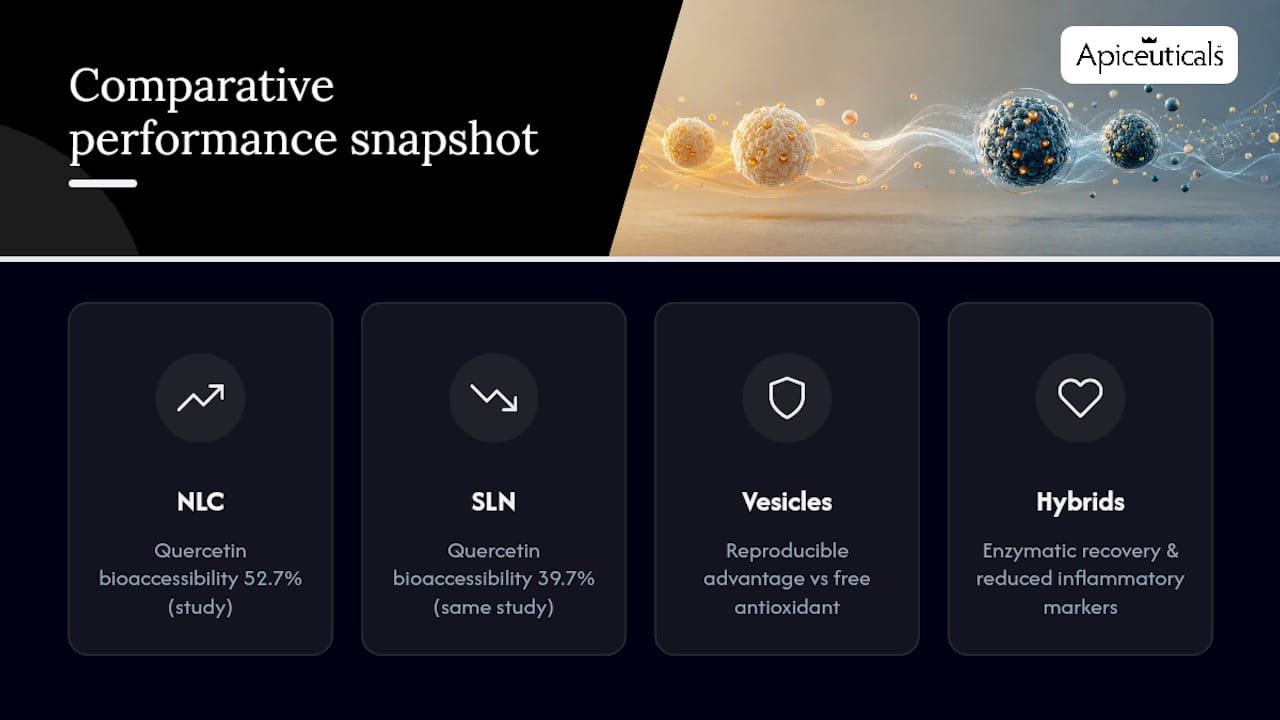
Vesicular systems compared against non-encapsulated antioxidant controls show improvement patterns that are qualitatively consistent but harder to reduce to a single number, since encapsulation efficiency, vesicle type, and the specific antioxidant tested all shift outcomes independently. What the 2024 lipid nanovesicle review makes clear is that the comparative advantage of vesicular delivery over free antioxidant application is real and reproducible across multiple studies, even though loading capacity and long-term stability limitations mean vesicles are not uniformly superior to nanoparticle systems for every application.
Hybrid systems occupy an interesting middle position in comparative testing. Hyalurosomes do not necessarily outperform standard liposomes on penetration depth alone, but they show a distinct advantage on functional recovery endpoints, enzymatic restoration and inflammatory marker reduction, that simpler vesicles have not demonstrated as clearly in published UVB models. That distinction matters for formulators deciding what “better” actually means for a given application: penetration depth and biological efficacy are related but not interchangeable metrics, and a delivery system optimized for one does not automatically win on the other.
Are Targeted and Stimuli-Responsive Systems Relevant to Antioxidant Delivery?
Advanced targeting strategies, ligand-receptor mediated delivery and stimuli-responsive release systems, represent an emerging frontier for antioxidant carriers, though the field remains considerably less mature here than in oncology drug delivery, where these approaches originated. Ligand-mediated targeting attaches a receptor-binding molecule to the carrier surface so it preferentially binds specific cell types, keratinocytes or fibroblasts, for example, rather than distributing uniformly across tissue.
Stimuli-responsive systems take a different approach, designing the carrier to release its antioxidant payload in response to a specific trigger: pH shifts, elevated temperature, or the oxidative environment itself. A pH-responsive vesicle designed to release its payload preferentially in an already oxidatively stressed, and therefore locally more acidic, microenvironment offers a theoretically elegant solution: the antioxidant activates precisely where free radical damage is occurring rather than releasing uniformly regardless of local need.
Both strategies remain more common in preclinical and academic literature than in commercially available topical antioxidant products, largely because the added formulation complexity and characterization burden, confirming targeting specificity or trigger sensitivity adds substantial testing overhead, has to be justified by a clear efficacy advantage over simpler sustained-release systems. For most topical antioxidant applications, particularly for skin, scalp, and hair, a well-designed sustained-release lipid nanovesicle or NLC system, or a hybrid carrier like a hyalurosome, delivers meaningful biological benefit without the added translational risk that comes with targeting or trigger-responsive complexity. Where targeted systems are likely to earn their complexity is in applications requiring precise localization to a specific damaged cell population, a narrower use case than general antioxidant skincare currently demands.
What the Research Actually Supports
The gap between what gets published and what formulators need to act on is wider in this field than most technical surveys admit. A large share of the antioxidant delivery literature optimizes for penetration depth as though it were the only outcome that mattered, when the hyalurosome data on enzymatic recovery makes a strong case that functional biological response, restored superoxide dismutase and catalase activity, reduced inflammatory cytokines, is the metric that should carry more weight in formulation decisions.
Conventional formulation advice also tends to treat SLNs and NLCs as interchangeable lipid nanoparticle options differentiated mainly by cost. The bioaccessibility data says otherwise: NLCs’ disordered matrix delivers a real, measurable advantage for antioxidants like quercetin, and defaulting to SLN for cost reasons alone means leaving bioavailability on the table without acknowledging the trade-off explicitly.
If there is one priority worth adopting ahead of the others, it is this: build oxidative stability testing into preformulation screening from day one, rather than treating it as a late-stage stability checkpoint. An antioxidant that degrades during encapsulation processing never gets the chance to prove itself in a penetration assay. Apiceuticals built PROPOWAX™ around exactly that principle, sustained protection and release validated independently rather than assumed, and that sequencing, protect first, then deliver, is the discipline the broader field still underapplies.
— Apiceuticals
Bring These Delivery Principles Into Your Own Formulation Work
Apiceuticals approaches antioxidant delivery the way this survey has argued formulators should: stability and sustained release validated first, marketing claims built on top of that foundation rather than instead of it. Where much of the category leans on penetration-depth marketing alone, Apiceuticals holds a global patent for the highest antioxidant activity in cosmetics, backed by independent validation from the Aristotle University of Thessaloniki, a distinction earned through third-party academic assessment rather than internal testing claims.
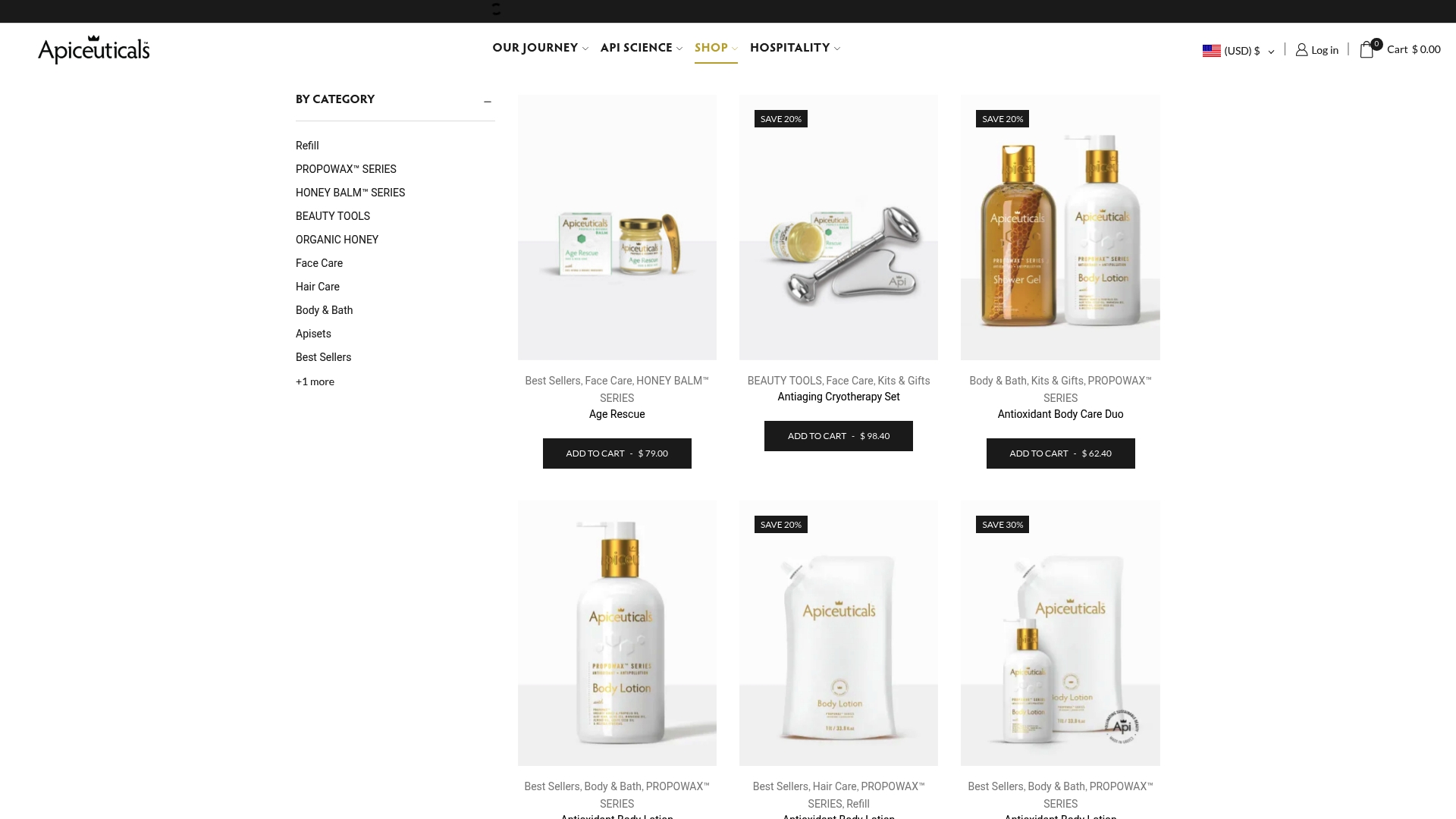
That validated technology, PROPOWAX™ Living Honeycomb, sits inside the brand’s haircare and bodycare lines, continuously releasing antioxidant compounds onto skin, scalp, and hair rather than delivering a single application spike. For readers evaluating what a translationally sound antioxidant delivery system looks like in a finished product, the PROPOWAX™ technology overview documents the mechanism in more depth, and the full product range shows how that sustained-release approach is applied across different formats, from body lotion to haircare. If you are sourcing a formulation reference point grounded in independently validated performance rather than claims alone, start there.
Sources
- Natural Ingredients of Transdermal Drug Delivery Systems as Permeation Enhancers of Active Substances through the Stratum Corneum | Molecular Pharmaceutics
- Hyalurosome research (April 2026)
- Antioxidant Delivery Revisited: The Promise of Nanostructured Lipid Carriers | PMC
- Lipid Nanovesicles for Antioxidant Delivery in Skin: Liposomes, Ufasomes, Ethosomes, and Niosomes (2024 review)
FAQ
What Are Antioxidant Delivery Systems?
Antioxidant delivery systems are engineered carriers, primarily lipid nanovesicles, lipid nanoparticles, and hybrid polymer or hyaluronic acid systems, designed to protect an antioxidant molecule from degradation and improve how efficiently it reaches and acts on target skin tissue.
What Are the Three Main Types of Drug Delivery Systems Used for Antioxidants?
The three primary carrier classes are lipid nanovesicles (liposomes, ethosomes, niosomes, ufasomes), lipid nanoparticles (solid lipid nanoparticles and nanostructured lipid carriers), and hybrid or mucoadhesive systems such as hyalurosomes and polymer-lipid complexes.
What Are the Big Three Antioxidants Used in Skincare Formulation?
Vitamin E (tocopherol), vitamin C derivatives, and polyphenolic compounds such as resveratrol and quercetin are the most extensively studied antioxidants in topical delivery research, each presenting distinct solubility and stability challenges that shape carrier selection.
What Is a Liposomal Delivery System?
A liposomal delivery system encapsulates an active ingredient inside a phospholipid bilayer structure that mimics the skin’s own cell membrane composition, improving stability and enabling the antioxidant to fuse with stratum corneum lipids more efficiently than an unencapsulated active.
How Does PROPOWAX™ Differ From Conventional Antioxidant Delivery Approaches?
PROPOWAX™ Living Honeycomb is built for continuous, sustained antioxidant release rather than a single application dose, and it holds a global patent for the highest antioxidant activity in cosmetics, independently validated by the Aristotle University of Thessaloniki.
How Do Formulators Decide Between Lipid Nanoparticles and Lipid Nanovesicles?
The choice depends on the antioxidant’s solubility, target tissue depth, and required release profile. Nanostructured lipid carriers generally offer better sustained release and higher bioaccessibility for many antioxidants, while lipid nanovesicles like ethosomes offer superior deformability for faster stratum corneum penetration.
Recommended


Related posts

How bees and biodiversity sustain each other, what the science says about Greece and the Aegean, and how antioxidant beauty can start from a hive...

How organic propolis extraction works, from hive to extract: collection, solvents, EU organic rules, Greek propolis phenolics and what it means for skincare.

Build an anti pollution skincare routine that fits Greek city life: what pollution does to skin, the morning and evening steps, and the antioxidants with...

Honey moisture content explained: the EU and Greek limits, how to take a refractometer reading, what excess water does to honey, and why it matters...

How antioxidant activity measurement works: DPPH, ABTS, FRAP and ORAC explained, why results differ, and what a lab number can and cannot say about skin...















