No products in the cart.
Return To Shop
Antioxidant Hair Masks: Science First Gains in 12–24 Weeks
Antioxidant hair masks reduce oxidative stress on the scalp and hair fibers, and the visible payoff shows up in two timelines. Within days, hair looks glossier and feels softer as lipids and surface damage are addressed. Over months, controlled research links scalp antioxidant regimens to less shedding and fuller-looking hair. Some brands study this territory through patented Living Honeycomb antioxidant delivery systems, which frame these benefits as a matter of ongoing biochemistry rather than a one-wash fix.
TL;DR:
- Antioxidant hair masks provide quick cosmetic improvements like gloss and softness within days, primarily through lipid restoration on the hair surface.
- Structural benefits, including reduced shedding and increased fullness, develop over 12 to 24 weeks of consistent use, supported by rigorous clinical trials.
- Proper timing of application is crucial: rinse-out masks should be applied after shampooing, while oil-based formulations work best before washing, with frequency based on hair condition.
- Ingredients like rice germ oil, artichoke extract, and polyphenols have measurable antioxidant effects backed by formulation studies, and chelating agents help prevent metal-driven oxidation.
- Products validated with independent, third-party testing and objective clinical endpoints, such as antioxidant assay results, are more trustworthy than vague marketing claims.
Table of Contents
- What Antioxidant Hair Masks Actually Do for Your Hair
- How Antioxidants Protect the Scalp and Hair Fiber
- Which Ingredients in a Hair Mask Actually Have Evidence Behind Them
- When and How to Apply an Antioxidant Hair Mask
- Who Gets the Most Out of an Antioxidant Hair Mask
- How to Judge a Clinical Claim on an Antioxidant Product
- The Bee-Science Behind PROPOWAX™
- What the Evidence Actually Supports
- A Science-First Way to Start
- Sources
- FAQ
What Antioxidant Hair Masks Actually Do for Your Hair
The antioxidant hair mask benefits people notice first are cosmetic: smoother strands, less frizz, a visible sheen under light. Those effects are real, but they are the easy half of the story. The harder, more consequential half happens beneath the cuticle and at the follicle, where oxidative stress quietly erodes structure over weeks and months.
Shine and softness happen fast because antioxidant masks typically pair free-radical scavengers with lipid-replenishing agents. Hair’s outer cuticle relies on an intact lipid layer to lie flat and reflect light evenly. When that layer is stripped by ultraviolet exposure, heat tools, or chemical processing, light scatters instead of reflecting, and hair reads as dull no matter how clean it is. Restoring lipids and coating the fiber’s surface produces the immediate slip and gloss most people associate with a good mask, often after a single application.
The structural benefits take longer, and they matter more. A 24-week randomized, double-blind, placebo-controlled clinical trial testing a topical antioxidant scalp regimen found statistically significant reductions in hair shedding, along with increased total hair count, reduced transepidermal water loss, and improved scalp biomarkers compared with placebo. That trial did not measure a rinse-out mask specifically, but it establishes something the whole antioxidant hair care category leans on: sustained antioxidant exposure to the scalp changes measurable outcomes over months, not days.

Between those two extremes sits fiber-level protection. Laboratory studies on antioxidants applied to pretreated hair found reduced lipid peroxidation and better-preserved color and shine after ultraviolet exposure, compared with untreated fibers. That is the mechanism behind claims about color-treated hair holding its tone longer between salon visits.
What a realistic timeline looks like:
- Week one: improved softness, detangling, and light reflection from surface lipid restoration.
- Weeks two to eight: reduced frizz and split-end appearance as protein loss slows.
- Weeks twelve to twenty-four: measurable reductions in shedding and improved fullness, based on the trial protocol above.
A statistic worth remembering: the 24-week trial’s placebo-controlled design is the kind of evidence hair care rarely produces. Most “clinically tested” claims in this category rely on open-label, short-duration studies with no control group.
How Antioxidants Protect the Scalp and Hair Fiber
Think of oxidative stress the way a metallurgist thinks of rust. Reactive oxygen species, or ROS, attack cell membranes and proteins the same way oxygen and moisture attack exposed iron: slowly, cumulatively, and mostly invisibly until the damage is advanced. The scalp’s outer layer, the stratum corneum, is exposed to ultraviolet radiation, pollutants, and its own metabolic byproducts every day, and that exposure generates ROS continuously.
Antioxidants interrupt that process by donating electrons to unstable ROS molecules before those molecules can oxidize lipids, proteins, or DNA in surrounding cells. On the scalp, this shows up as reduced transepidermal water loss and improved biomarkers of barrier function, exactly what the 24-week trial measured. A healthier barrier means a more stable environment for the follicle, which needs consistent blood flow, sebum balance, and low inflammation to anchor hair properly through its growth cycle.
At the fiber level, the mechanism shifts slightly but the target is the same. Hair’s structural strength depends on keratin, a protein held together by disulfide bonds that oxidative damage can break. Once those bonds degrade, hair loses tensile strength and becomes more prone to breakage under normal brushing or styling tension. Antioxidants applied directly to the fiber slow this protein degradation and help preserve the lipid layer that governs shine and smoothness, the same layer implicated in the ultraviolet-exposure studies cited above.
There is a mechanism worth knowing that most consumer articles skip entirely: metal chelation. Copper accumulation in hair, picked up from tap water and some styling products, acts as a catalyst that accelerates free radical formation on the fiber surface. Chelating agents like EDDS or histidine bind that copper and prevent it from amplifying oxidative damage, which is why the strongest fiber-protection formulations often pair a chelant with an antioxidant rather than relying on antioxidants alone.
At a cellular level, researchers point to the Nrf2 pathway, a built-in cellular response that activates the body’s own antioxidant defenses under oxidative load. Mechanistic research suggests that supporting this pathway may help protect follicle cells and delay premature entry into the resting phase of the hair cycle, though this remains an area of ongoing investigation rather than settled clinical fact.
- Scalp barrier support lowers transepidermal water loss and inflammatory signaling.
- Fiber-level antioxidants preserve keratin’s disulfide bonds and slow protein loss.
- Metal chelation blocks copper-catalyzed radical formation on the hair surface.
- Nrf2 pathway activation may support follicle resilience, per mechanistic research.
Apiceuticals frames this multi-target approach through its own science guide to antioxidants in hair care, which walks through how barrier support and fiber protection work as separate but complementary systems.
Which Ingredients in a Hair Mask Actually Have Evidence Behind Them
Reading an ingredient list well matters more than trusting a bottle’s front label. A handful of antioxidant actives now carry real formulation studies behind them, and each protects a slightly different endpoint.
Rice germ oil has the most direct mechanical evidence. A study on a hair mask combining rice germ oil and ferulic acid found improved surface and mechanical characteristics and reduced protein loss in both virgin and chemically damaged hair. Adding ferulic acid increased ultraviolet-absorption properties in some test conditions, which matters for anyone who spends significant time outdoors or lives somewhere with intense seasonal sun.

Artichoke extract shows up in newer formulation research as a polyphenol-rich antioxidant source, typically paired with rice-derived ingredients to combine radical-scavenging capacity with mechanical strengthening. A 2026 formulation study on an antioxidant herbal mask using flaxseed and rice water reported high DPPH radical-scavenging activity along with favorable spreadability and conditioning results, evidence that plant-derived antioxidant blends can perform at a measurable level in lab assays, not just in marketing copy.
Polyphenols as a broader class, including resveratrol, EGCG, and procyanidins, do something antioxidants without signaling activity cannot: some influence biological pathways connected to hair growth beyond simple radical scavenging, according to a review of natural polyphenol effects on skin and hair. That distinction separates a purely cosmetic antioxidant from one with plausible structural relevance.
Beyond the antioxidants themselves, the formulations that performed best in the 24-week scalp trial combined antioxidants with barrier enhancers, specifically niacinamide and panthenol, which supported measurable improvements in scalp biomarkers. Other common functional additions include caffeine, often included for its scalp-circulation profile, and piroctone olamine, an anti-microbial agent used when scalp flora balance is a concern alongside oxidative stress.
- Rice germ oil: mechanical strength, reduced protein loss, some UV protection when paired with ferulic acid.
- Artichoke extract and polyphenol blends: radical scavenging plus conditioning performance in lab assays.
- Niacinamide and panthenol: barrier support that complements antioxidant activity rather than replacing it.
- Chelating agents (EDDS, histidine): block copper-driven oxidation, particularly relevant for color-treated hair.
Pro Tip: Look for brands that publish an actual antioxidant assay result, such as a DPPH or ORAC score, rather than the vague phrase “rich in antioxidants.” A number tied to a named test method is verifiable; an adjective is not.
Apiceuticals’ top antioxidants for hair breaks down how these ingredient classes compare when read against published formulation studies rather than marketing language.
When and How to Apply an Antioxidant Hair Mask
Timing changes what a mask can accomplish, and getting the sequence wrong wastes most of its benefit.
- Shampoo first for rinse-out masks. Most antioxidant masks are formulated to work on clean hair, since residual product and oil block penetration. Apply after shampooing, while hair is still damp, and work from mid-shaft to ends where damage concentrates.
- Apply oil-based protective masks before shampooing instead. Rice germ oil and similar lipid-forward formulations work better as a pre-wash treatment, coating the cuticle so shampooing afterward removes excess oil without stripping the antioxidant benefit already absorbed.
- Match frequency to hair condition. Once weekly maintains healthy, minimally processed hair. Color-treated, heat-styled, or chemically relaxed hair generally benefits from twice-weekly use, especially during the first six to eight weeks of a new antioxidant routine.
- Give the mask five to fifteen minutes of contact time, and consider mild heat, a warm towel or shower cap, to help the formulation penetrate the cuticle rather than sitting on the surface.
- Add a clarifying or chelating step monthly if you suspect copper build-up, particularly if you live somewhere with hard tap water or swim frequently in chlorinated or copper-piped systems. This prevents metal-catalyzed oxidation from undercutting the mask’s benefit between uses.
Apiceuticals covers routine sequencing in more depth in its practical haircare tips with antioxidants, including how to layer a mask with an antioxidant shampoo and conditioner for consistent barrier support between mask days.
Who Gets the Most Out of an Antioxidant Hair Mask
Not every hair type needs the same intensity of antioxidant support, and matching the routine to actual damage exposure produces better results than applying a mask on a fixed schedule regardless of condition.
Color-treated hair benefits most from the ultraviolet and lipid-peroxidation protection described earlier, since chemical color processing already compromises the cuticle before sun or heat exposure adds further stress. Heat-styled hair, meaning daily or near-daily blow-drying, flat-ironing, or curling, shows the fastest visible response to lipid-restoring masks because surface damage from heat is largely cosmetic and responds within days. People who spend significant time outdoors face cumulative ultraviolet exposure that antioxidant masks address at the fiber level over a longer arc, closer to the weeks-to-months timeline than the immediate one.
- Frizz that worsens through the day, not just after washing, often signals lipid-layer depletion.
- Brittleness or snapping at the ends points toward protein loss from repeated oxidative and mechanical stress.
- Dullness that persists despite clean hair usually reflects surface damage rather than a product buildup problem.
Sudden, patchy, or rapidly accelerating hair loss falls outside what any topical mask can address and warrants medical evaluation rather than a shift in hair care routine.
How to Judge a Clinical Claim on an Antioxidant Product
Most antioxidant hair care marketing cites “clinical testing” without specifying what that testing measured or how it was structured. The gap between a meaningful study and a marketing footnote comes down to a handful of concrete signals.
A trial worth trusting is randomized and placebo-controlled, meaning participants are assigned to treatment or placebo groups by chance, and neither group knows which they received. It measures objective endpoints, not just participant self-reports: total hair count via phototrichogram, transepidermal water loss, or protein-loss assays, rather than a satisfaction survey alone. The 24-week trial referenced earlier meets all three criteria, which is part of why it carries more weight than typical category claims.
Formulation transparency matters almost as much as the trial design. Products that disclose actual antioxidant assay results, ingredient concentrations, or third-party validation give you something to verify. Products that rely on adjectives like “powerful” or “advanced” without a number behind them do not.
- Randomization and a placebo control group separate a real trial from an open-label demonstration.
- Objective endpoints (hair count, TEWL, protein-loss assays) outperform subjective satisfaction scores as evidence.
- Disclosed antioxidant assay results, such as a DPPH percentage, are checkable; vague superlatives are not.
- Independent, third-party or university validation of a claimed technology adds a layer of scrutiny a brand’s internal testing cannot replicate on its own.
On that last point: Apiceuticals’ PROPOWAX™ antioxidant activity claim carries validation from the Aristotle University of Thessaloniki, an outside academic institution rather than an in-house lab, which is precisely the kind of third-party check this framework asks readers to look for.
The Bee-Science Behind PROPOWAX™
Apiceuticals approaches antioxidant hair care from a specific lineage: the Roumeliotis family has kept bees in Arcadia since 1981, and was the first family in Greece to shift that practice toward organic, sustainable beekeeping. PROPOWAX™, the technology built from that heritage, holds a global patent for the highest antioxidant activity recorded in cosmetics, a claim independently validated by the Aristotle University of Thessaloniki.
The formulation is described as a Living Honeycomb structure embedded in each product, releasing antioxidants continuously rather than delivering a single concentrated dose at application. That continuous-release model maps directly onto what the mechanistic research above describes: scalp and fiber protection depend on sustained antioxidant presence, not a brief spike that fades within hours of rinsing.
- A patented antioxidant delivery system, independently validated by an academic institution rather than self-certified.
- A continuous-release mechanism designed to extend antioxidant exposure between applications.
- A formulation heritage rooted in four decades of organic beekeeping practice, predating most clean-beauty positioning by decades.
Readers who want the underlying mechanism explained in full can review the PROPOWAX™ technology page directly.
What the Evidence Actually Supports
The honest synthesis is this: antioxidant hair masks deliver real, fast cosmetic benefits, shine, softness, reduced frizz, within the first one to two applications, because they address surface lipid loss directly. The structural claims, reduced shedding and improved fullness, are real too, but they take twelve to twenty-four weeks to show up in measurable form, and they depend on consistent use rather than occasional treatment. Anyone shopping this category should judge products by the evidence tier behind them, not by how the label reads.
A five-point routine that tracks the research:
- Match application timing to the mask type, post-shampoo for rinse-out, pre-shampoo for oil-based.
- Use two to three times weekly for damaged or color-treated hair, once weekly for maintenance.
- Pair with a barrier-supporting shampoo and conditioner rather than using the mask in isolation.
- Add a clarifying or chelating step monthly if tap water or swimming exposure is high.
- See a professional for sudden or patchy shedding, since no mask addresses that pattern.
Marketing language changes faster than the biology it describes ever will.
— Apiceuticals
A Science-First Way to Start
Among the antioxidant hair care options on the market, Apiceuticals stands apart on one specific point: its PROPOWAX™ delivery system carries a global patent for antioxidant activity, independently validated by the Aristotle University of Thessaloniki, rather than resting on unverified formulation claims. That distinction is the same one this article asks you to look for in any product you consider.

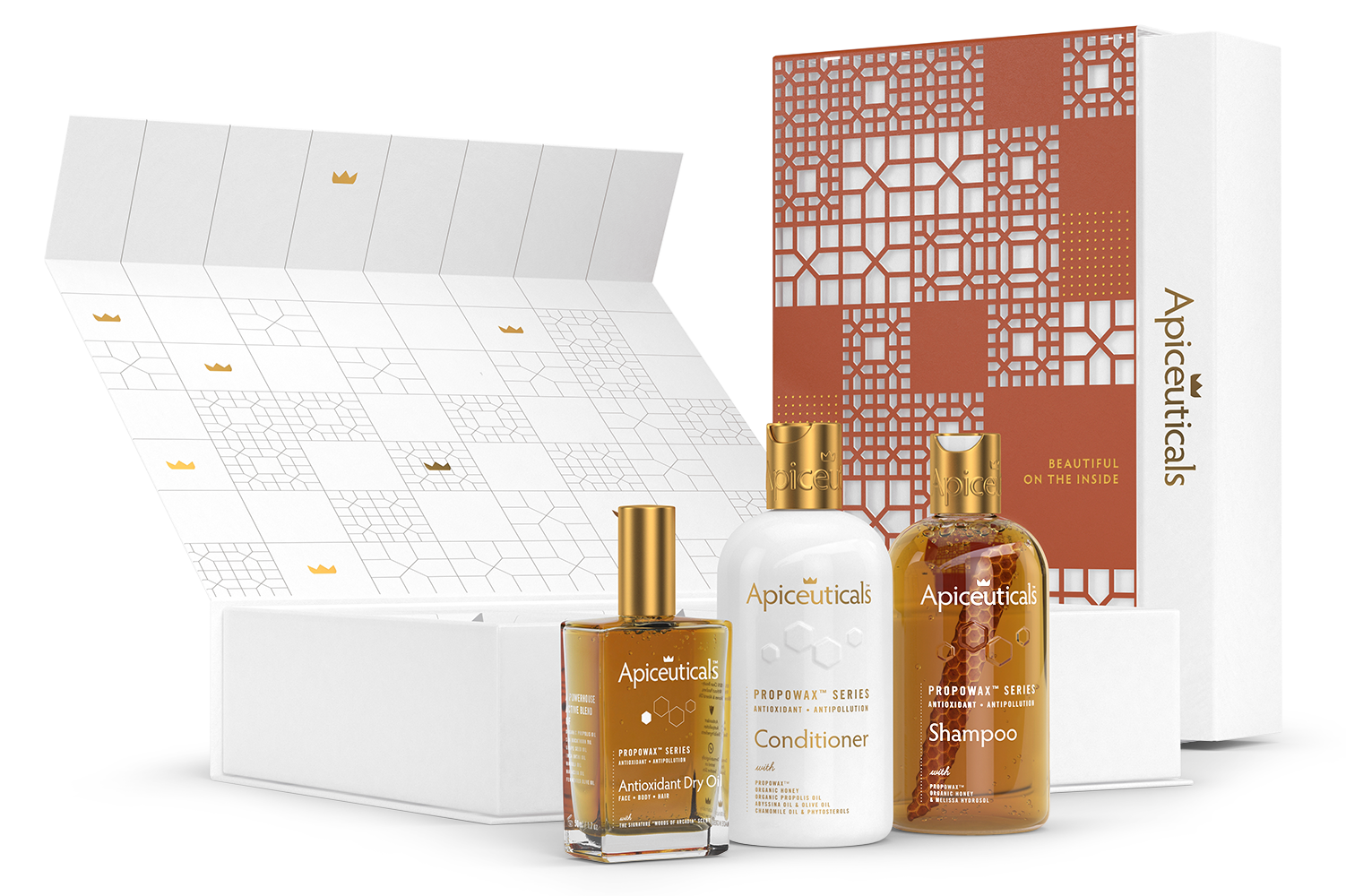
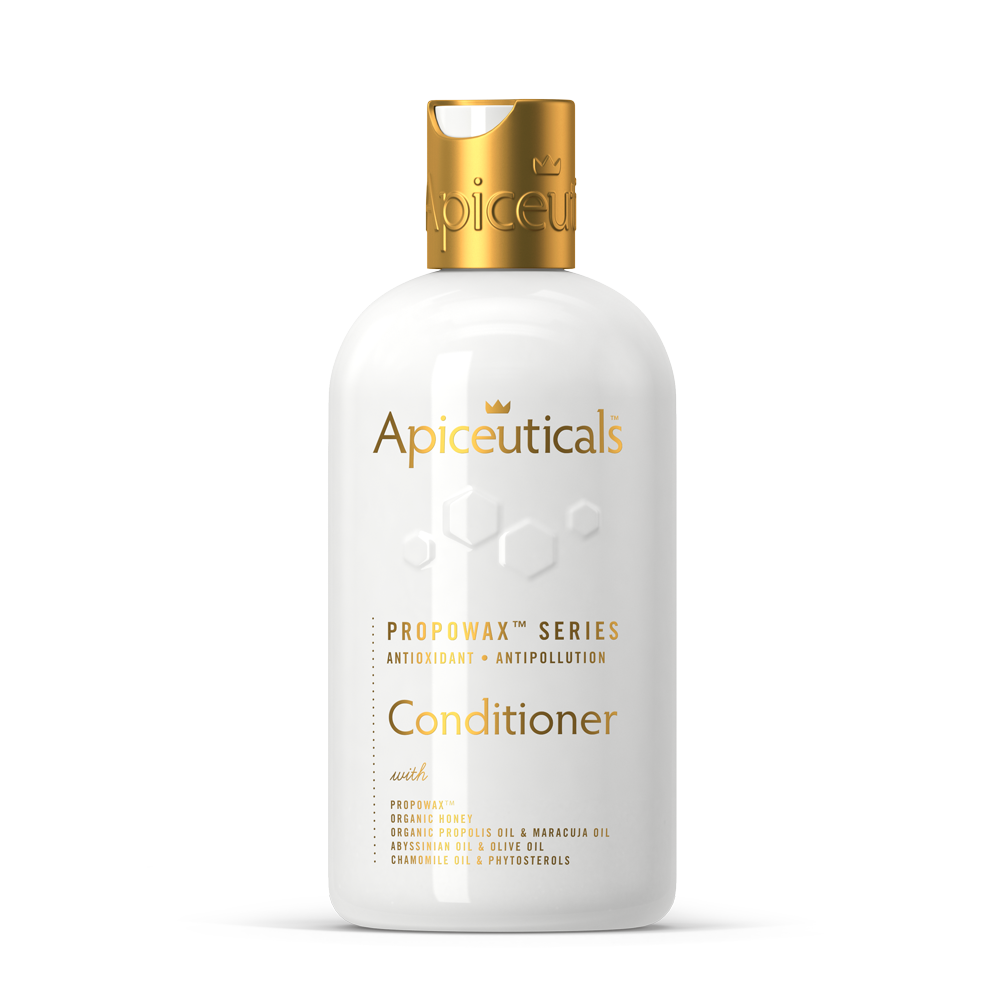
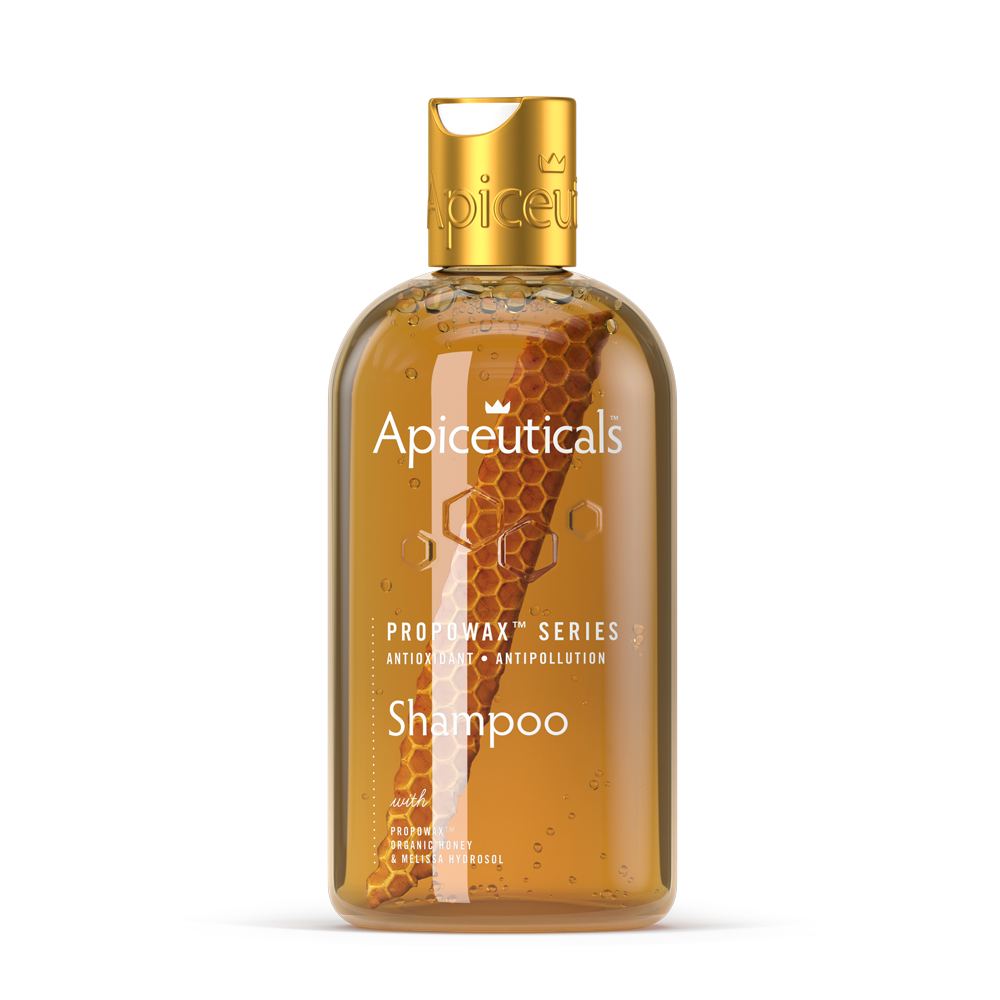
The PROPOWAX™ Antioxidant Hair Care Duo pairs the shampoo and conditioner built on this technology, designed to work alongside a weekly mask routine rather than replace it. For a broader view of how the Living Honeycomb structure functions across product categories, the PROPOWAX™ technology page walks through the patent and validation data in full. Readers ready to build a routine around evidence rather than adjectives can browse the full PROPOWAX™ Series and start with the products that match their current hair condition.
Sources
- Scalp application of antioxidants improves scalp condition and reduces hair shedding in a 24‐week randomized, double‐blind, placebo‐controlled clinical trial
- Preserving fibre health: reducing oxidative stress throughout the life of the hair fibre
- Effects of Natural Polyphenols on Skin and Hair Health: A Review
- Efficacy of antioxidants in human hair
- Evaluation of protective and restructuring efficacy of a hair mask containing rice germ oil and ferulic acid
FAQ
What do antioxidants do for your hair?
Antioxidants neutralize reactive oxygen species that break down keratin’s protein bonds and degrade the lipid layer responsible for shine, protecting both the fiber’s structure and its surface appearance.
Which hair mask is best for an itchy scalp?
Look for a mask combining antioxidants with barrier-supporting ingredients like niacinamide and panthenol, since the 24-week clinical trial linked that combination to improved scalp biomarkers and reduced irritation-related signals; persistent itching alongside flaking or redness warrants a dermatologist visit rather than a product switch.
Do I use a hair mask before or after shampooing?
It depends on the formulation: rinse-out antioxidant masks generally go after shampooing on damp hair, while oil-based protective masks like those built on rice germ oil work better applied before shampooing so the wash removes excess oil without stripping absorbed antioxidants.
Can hair masks improve hair growth?
Masks alone are not growth treatments, but sustained scalp antioxidant use has been linked in a 24-week clinical trial to increased total hair count and reduced shedding, likely by supporting a healthier follicle environment rather than accelerating growth directly.
How often should I use an antioxidant hair mask for best results?
Once weekly maintains healthy hair, while color-treated, heat-styled, or chemically processed hair typically benefits from two applications per week, especially during the first six to eight weeks of a new routine.
Is Apiceuticals PROPOWAX™ backed by clinical research?
PROPOWAX™ holds a global patent for the highest antioxidant activity recorded in cosmetics, a claim independently validated by the Aristotle University of Thessaloniki; current pricing and product details are available directly on the Apiceuticals site.
Recommended


Related posts

Explore how a trial lasting 24 weeks and Malassezia research link scalp oxidative stress to shedding, and where PROPOWAX™ fits continuous antioxidant care.

See when silicones smooth hair or build up, and how PROPOWAX™ holds a global patent for highest antioxidant activity, validated by Aristotle University.

Explore mountain honey benefits for skin and body, from floral polyphenols and antioxidant activity to evidence on cough relief, wound care, and safe use.

Propolis delivers stronger antioxidant and antimicrobial action. Royal jelly boosts hydration and repair. Learn which suits your skin or scalp and why...

Pick sulfate-free or sulfate shampoo by your scalp, porosity, and color needs. Read evidence-backed guidance, antioxidant options, and a 4-step switch...