No products in the cart.
Return To Shop
68.7–74.2% Collagenase Inhibition: Chestnut Honey Buyers’ Checklist
Chestnut honey delivers measurable topical antioxidant benefits for skin, scalp, and hair, backed by laboratory enzyme inhibition data and at least one clinical scalp trial. In vitro research shows chestnut-honey-mediated compounds inhibiting collagenase by 68.7% to 74.2%, while a clinical trial using diluted crude honey resolved seborrheic dermatitis lesions within two weeks. The evidence is real, though it comes with caveats worth understanding before you shop.
TL;DR:
- Chestnut honey’s high polyphenol and flavonoid content is linked to its antioxidant capacity, which could protect skin from oxidative damage.
- Laboratory enzyme inhibition data shows chestnut honey can significantly slow collagen breakdown, but these results are from in vitro studies, not on living skin.
- Clinical evidence of scalp benefits comes from small studies using near-raw honey applied directly, not from commercial skincare formulations.
- Formulated honey products rely on stabilization, encapsulation, and delivery tech to maintain antioxidant activity, often at lower concentrations than raw honey.
- Patch testing is essential before topical use, especially for those with bee or pollen allergies, and avoiding heating honey preserves its antioxidant properties.
Table of Contents
- What the Science Says About Chestnut Honey Benefits
- How Chestnut Honey Acts on Skin, Scalp, and Hair
- How to Use Chestnut Honey Topically
- How to Choose a Chestnut Honey Skincare Product
- Is Chestnut Honey Safe to Use on Skin and Scalp?
- Nutritional Value of Chestnut Honey
- Chestnut Honey and Everyday Wellness Habits
- What Sets Chestnut Honey Apart From Other Honey Types
- Apiceuticals’ Perspective on Bee-Science Antioxidant Skincare
- Where to Find Validated Antioxidant Formulations
- Sources
- FAQ
What the Science Says About Chestnut Honey Benefits
The strongest data point comes from enzyme inhibition studies. Researchers testing chestnut honey-mediated silver nanoparticles measured collagenase inhibition rates between 68.7% and 74.2% in controlled lab conditions. Collagenase breaks down collagen, the structural protein that keeps skin firm. Inhibiting it, even partially, matters to anyone tracking how skin loses elasticity over time. This is laboratory evidence, not a clinical outcome on human skin, but it identifies a mechanism worth taking seriously.
Chestnut honey also performs well on chemical antioxidant markers. Comparative analysis of honeys by botanical origin found chestnut varieties among the highest in total polyphenols, up to roughly 762 mg/kg, and total flavonoids near 514 mg/kg. Both compound classes are the primary drivers of antioxidant capacity in raw honey, and their concentration tends to track with how the honey performs on standard DPPH antioxidant assays.
The clinical side is narrower but instructive. A trial using crude honey diluted to roughly 90% honey and 10% water, applied twice weekly for four weeks, reported complete healing of seborrheic dermatitis and dandruff lesions within two weeks for participating patients. That is a genuine clinical result on scalp skin, though it used raw, undiluted-adjacent honey applied directly, not a finished cosmetic formulation.
Three limitations temper all of this:
- The strongest enzyme-inhibition numbers are in vitro, meaning they were measured in a lab dish, not on living skin over time.
- The clinical scalp trial had a small participant pool and used near-raw honey, a very different exposure than a leave-on serum with a labeled percentage.
- Antioxidant content varies by chestnut forest, harvest year, and how the honey is processed after collection.
The takeaway: two separate research threads, enzyme inhibition and antioxidant concentration, point in the same direction. Neither one alone proves a finished skincare product works, but together they explain why chestnut honey earns attention in antioxidant formulation science.
How Chestnut Honey Acts on Skin, Scalp, and Hair
The mechanism starts with polyphenols and flavonoids, the same compound families responsible for chestnut honey’s ranking near the top of comparative antioxidant studies. These molecules neutralize reactive oxygen species, the unstable oxygen fragments generated by ultraviolet exposure, pollution, and ordinary cell metabolism. Left unchecked, reactive oxygen species behave like rust on exposed metal: a slow, cumulative degradation of collagen, elastin, and the lipids that keep the scalp barrier intact. Antioxidants intercept that process before the damage compounds.
Enzyme inhibition is the second mechanism, and it operates differently from simple free-radical scavenging. Collagenase inhibition, at the 68.7% to 74.2% range measured in vitro, slows the breakdown of the collagen matrix itself. Separately, honey’s documented effect on myeloperoxidase, an enzyme tied to inflammatory signaling, has relevance for calming an irritated or flaking scalp.
A third mechanism is purely physical: honey’s natural sugars, primarily glucose and fructose, are humectant and osmotic. They pull moisture into the outer skin layer and hold it there, which is part of why formulated honey products tend to leave hair with more visible sheen.
A few practical notes follow from the chemistry:
- Darker, less-processed chestnut honeys consistently test higher on antioxidant and total phenolic content assays than lighter, heavily filtered varieties.
- Heat and fine filtration, standard steps in mass honey processing, measurably reduce polyphenol content and enzyme activity.
- Nanoparticle studies suggest particle size and formulation method change how much antioxidant activity survives into a finished product, which is why raw honey and a stabilized cosmetic ingredient are not interchangeable.
How to Use Chestnut Honey Topically
Three product formats carry chestnut honey’s antioxidant load most reliably: waterless balms, stabilized extracts folded into leave-on serums, and scalp masks meant for short-contact use. Waterless formats matter more than marketing copy usually admits. Water is the primary vehicle for microbial growth and for gradual degradation of light-sensitive antioxidant compounds, so a balm built without it tends to hold its activity longer on the shelf and on skin.
Concentration is where most shoppers get confused. The clinical scalp trial cited earlier used honey diluted only to 90%, which is close to raw exposure. Finished cosmetic products almost never use anything close to that concentration. Instead, they rely on delivery technology, stabilized honey extracts, encapsulation, or slow-release matrices, to make a lower labeled percentage perform closer to what raw honey achieves at full strength.
If you want to try a DIY approach on your scalp, follow these steps:
- Never heat raw honey before applying it. Heat is one of the fastest ways to degrade the polyphenols responsible for its antioxidant activity.
- Dilute one tablespoon of honey with a small amount of warm (not hot) water until it spreads easily.
- Apply to a clean, dry scalp, leave for 15 to 20 minutes, then rinse thoroughly.
- Limit use to once or twice weekly, mirroring the frequency used in clinical scalp research.
- Patch test 24 hours before your first full application.
Most people notice softer texture and reduced flaking within two to three weeks of consistent use, roughly matching the clinical trial’s healing timeline. If irritation, redness, or persistent flaking continues past three weeks, a dermatologist visit is the next right step, not a stronger concentration.
Pro Tip: Skip any recipe that calls for warming honey in the microwave “to make it easier to apply.” Heat is the single fastest way to strip a raw honey mask of the antioxidant activity you’re trying to get from it.
How to Choose a Chestnut Honey Skincare Product
Ingredient transparency separates a serious formulation from a marketing exercise. A product page that cites a specific lab assay, an independent enzyme inhibition percentage, or published clinical data gives you something to evaluate. A page that simply lists “honey extract” with no percentage and no supporting data gives you nothing but a claim.
Delivery format matters as much as the raw ingredient. A stabilized or protected antioxidant delivery system, the kind of engineering behind PROPOWAX™ Living Honeycomb, is built specifically to keep antioxidant compounds active from manufacturing through repeated use, rather than losing potency the moment a jar is opened. That distinction, sustained release versus a one-time dose, is worth checking for in any honey-based product you’re considering.
Run through this checklist before buying:
- Does the brand publish or link to any lab assay, clinical trial, or third-party validation?
- Is the formulation waterless, or does it use a stabilization technology designed to protect antioxidant activity over time?
- Is the product free of SLS, parabens, and silicones if that matters to your routine, and is sourcing described with any specificity?
- Does the brand avoid broad, unqualified language like “cures” or “eliminates,” which no honey-based cosmetic can credibly claim?
Vague percentages and undocumented “clean” labels are the two most common red flags in this category.
Is Chestnut Honey Safe to Use on Skin and Scalp?
Anyone with a known bee or pollen allergy should avoid topical honey products entirely, and honey should not be applied to open wounds without a clinician’s guidance. Beyond those exceptions, topical honey carries a low risk profile, but a patch test is still the right first move.
- Apply a small amount of the product behind the ear or on the inner forearm.
- Wait 24 to 48 hours, checking periodically for redness, itching, or swelling.
- If no reaction occurs, proceed to normal use; if one does, discontinue and consult a dermatologist.
- Store honey-based products away from direct heat and sunlight, and favor sealed, waterless formats, which carry lower microbial contamination risk than open jars of raw honey.
Nutritional Value of Chestnut Honey
Chestnut honey carries the general nutritional profile common to darker honey varieties: it is predominantly natural sugars, mainly fructose and glucose, delivering roughly 60 to 65 calories per tablespoon, alongside trace amounts of B vitamins, vitamin C, and minerals including potassium, calcium, and iron. It’s worth being precise here: this article’s focus is topical, antioxidant use on skin, scalp, and hair, not dietary consumption, so the nutritional profile above is background context rather than a health recommendation.
What distinguishes chestnut honey nutritionally from paler varieties is the same polyphenol and flavonoid density that drives its topical antioxidant performance. Comparative chemical analyses that measured chestnut honey’s total polyphenol and flavonoid concentrations found them elevated relative to many common honey types, and those same compounds are part of what gives chestnut honey its characteristically dark color and slightly bitter, mineral-forward flavor.
For readers evaluating chestnut honey purely as a cosmetic ingredient, the nutritional angle is largely irrelevant to how it performs on skin or scalp. The antioxidant compounds that matter topically, polyphenols and flavonoids, are the same molecules nutritionists track when discussing honey’s dietary profile, but their mechanism of action changes entirely depending on whether they’re ingested or applied.
Chestnut Honey and Everyday Wellness Habits
Honey has a long history as a household staple, often stirred into tea or spread on toast, and chestnut honey’s distinctive robust flavor makes it a favorite among people who prefer a less sweet, more complex honey profile. Its darker color and higher mineral content are frequently cited as reasons some households prefer it to lighter varieties.
This article’s focus stays deliberately narrow: chestnut honey’s topical antioxidant behavior on skin, scalp, and hair, not its role as a food. Readers researching digestive or immune-related questions about consuming honey should look to dedicated nutrition or medical resources rather than a beauty-focused guide like this one. What can be said within scope is that the antioxidant richness driving chestnut honey’s culinary reputation, the polyphenol and flavonoid content documented in comparative honey studies, is the identical chemistry that makes it a compound of interest to cosmetic formulators.
For shoppers, the practical distinction is this: a jar of raw chestnut honey in your pantry and a chestnut honey serum on your bathroom shelf share an ingredient origin but almost nothing else in terms of formulation, concentration, or intended use. Judging one by the other’s standards leads to confusion, not clarity.
What Sets Chestnut Honey Apart From Other Honey Types
Not all honey performs equally on antioxidant assays, and that variability is the entire reason chestnut honey gets singled out in comparative research rather than treated as interchangeable with lighter varieties. Studies measuring total polyphenol and flavonoid content across honeys of different botanical origin consistently place chestnut honey near the top of the range, well above many acacia, clover, or other pale honey types typically sold at grocery scale.
Color is a reasonably reliable visual cue here. Darker honeys, as a category, tend to carry higher total phenolic content and stronger DPPH antioxidant assay results than pale, heavily filtered honeys. Chestnut honey’s characteristic deep amber to brown color is not just an aesthetic trait; it correlates with the antioxidant density that makes it useful in formulation science in the first place.
The practical difference for a skincare shopper is straightforward: if a formulator wants a honey ingredient with a strong antioxidant baseline before any stabilization technology is applied, chestnut honey starts from a stronger position than most floral alternatives. That does not mean every chestnut honey batch performs identically. Harvest year, forest region, and post-harvest processing all introduce variability, which is exactly why lab-verified data on a specific formulation matters more than the honey type’s reputation alone.
Apiceuticals’ Perspective on Bee-Science Antioxidant Skincare
Apiceuticals traces its formulation approach to the Roumeliotis family’s organic beekeeping practice, active in Arcadia since 1981. That heritage informs PROPOWAX™ Living Honeycomb, a patented antioxidant delivery structure independently validated by the Aristotle University of Thessaloniki for the highest measured antioxidant activity in its category. The HONEY BALM™ Series applies that same waterless principle, with clinical testing showing a 26% reduction in wrinkle depth.
— Apiceuticals
Where to Find Validated Antioxidant Formulations
If the evidence above left you wanting a formulation that treats antioxidant delivery as a measured, ongoing process rather than a one-time ingredient claim, that is precisely the gap PROPOWAX™ Living Honeycomb was engineered to close. Rather than a single dose of antioxidants that fades once a jar is opened, the patented structure continuously releases antioxidant compounds onto skin, scalp, and hair, a distinction validated independently by the Aristotle University of Thessaloniki for the highest antioxidant activity measured in the category.

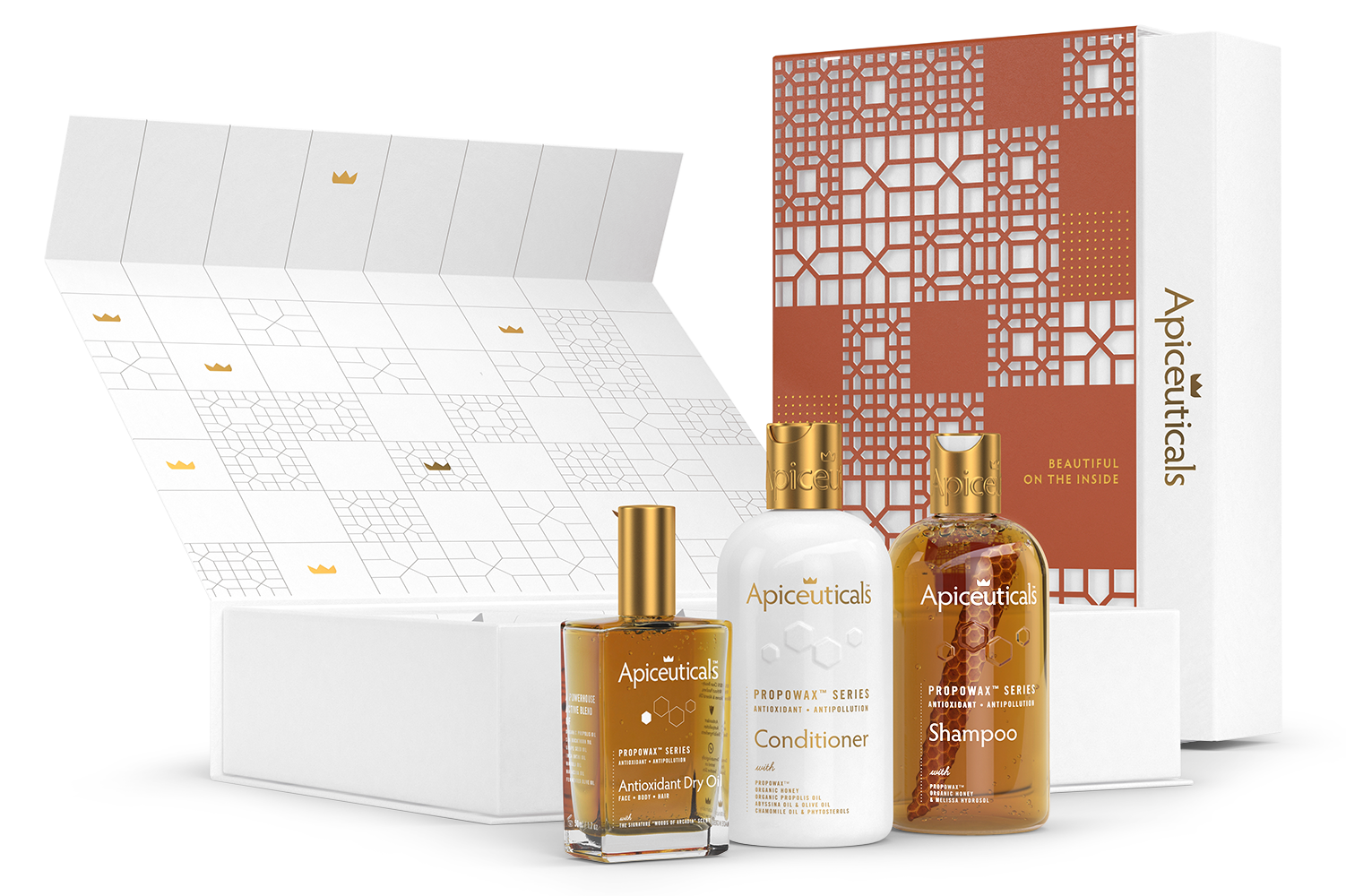
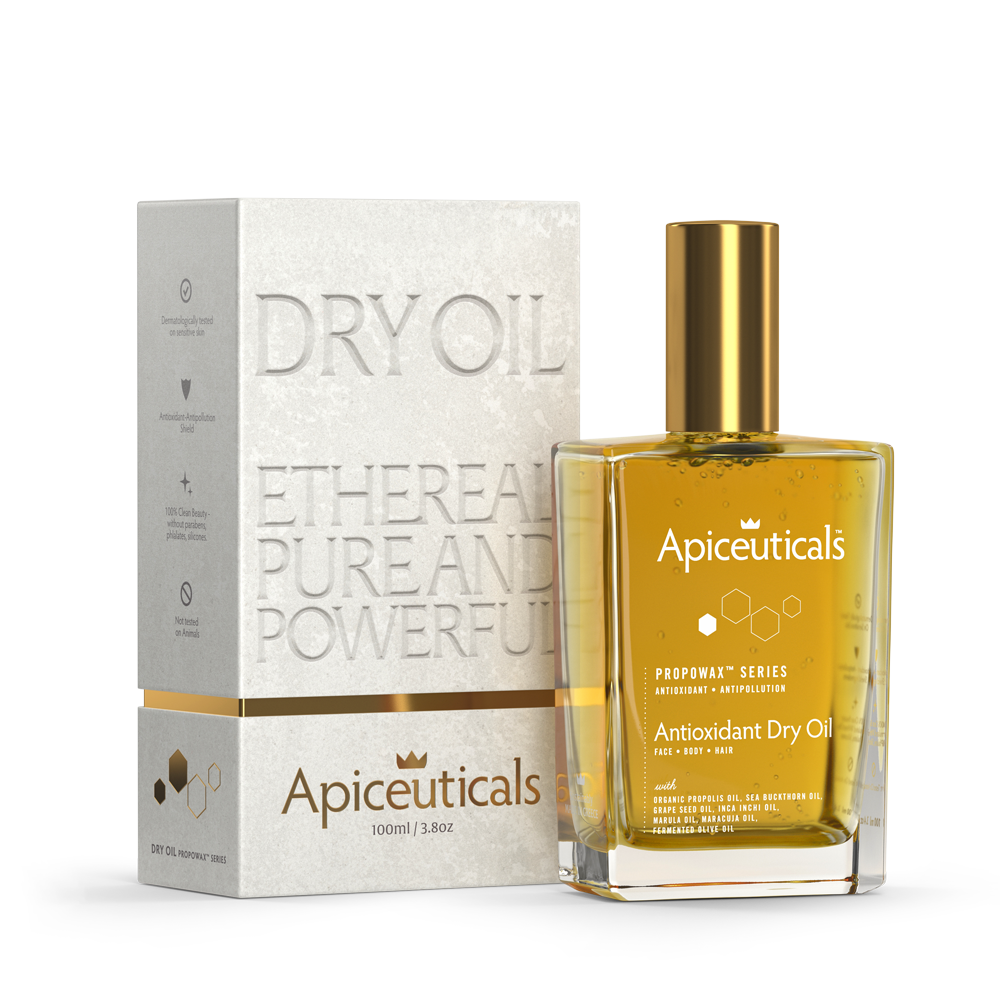
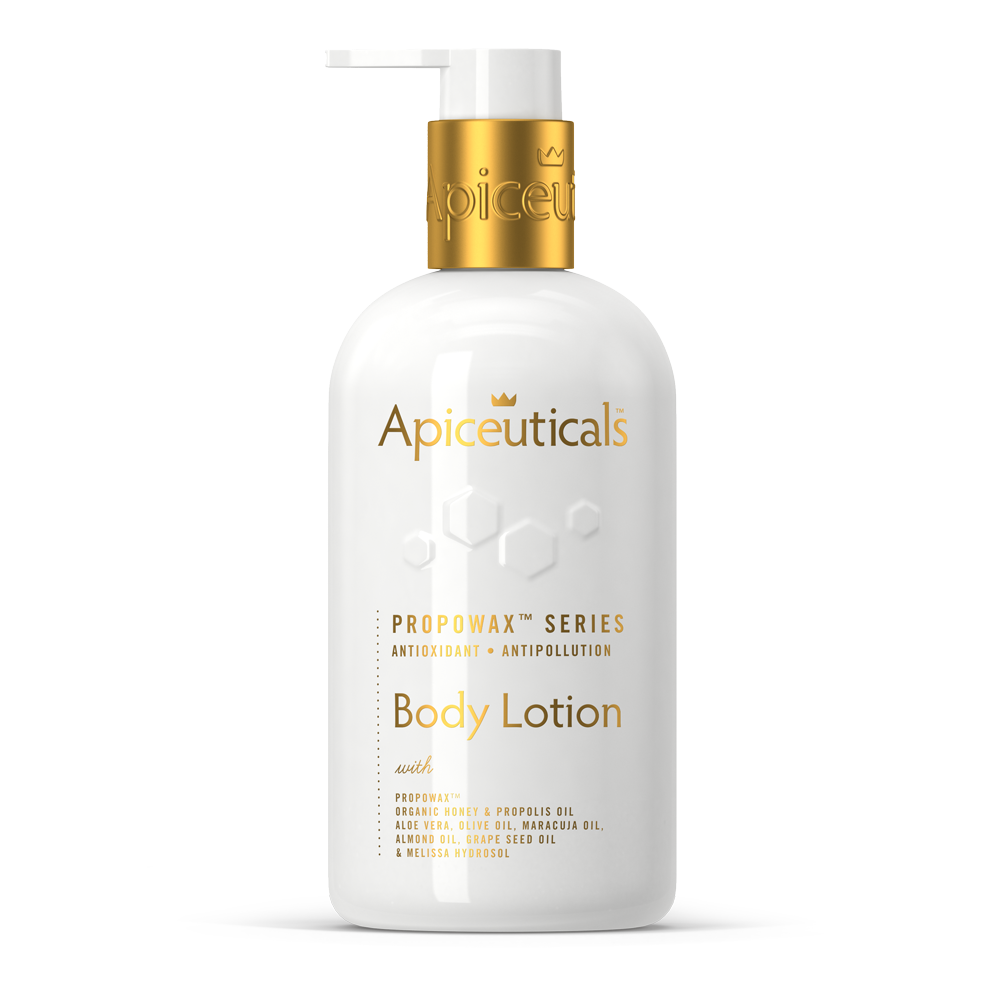
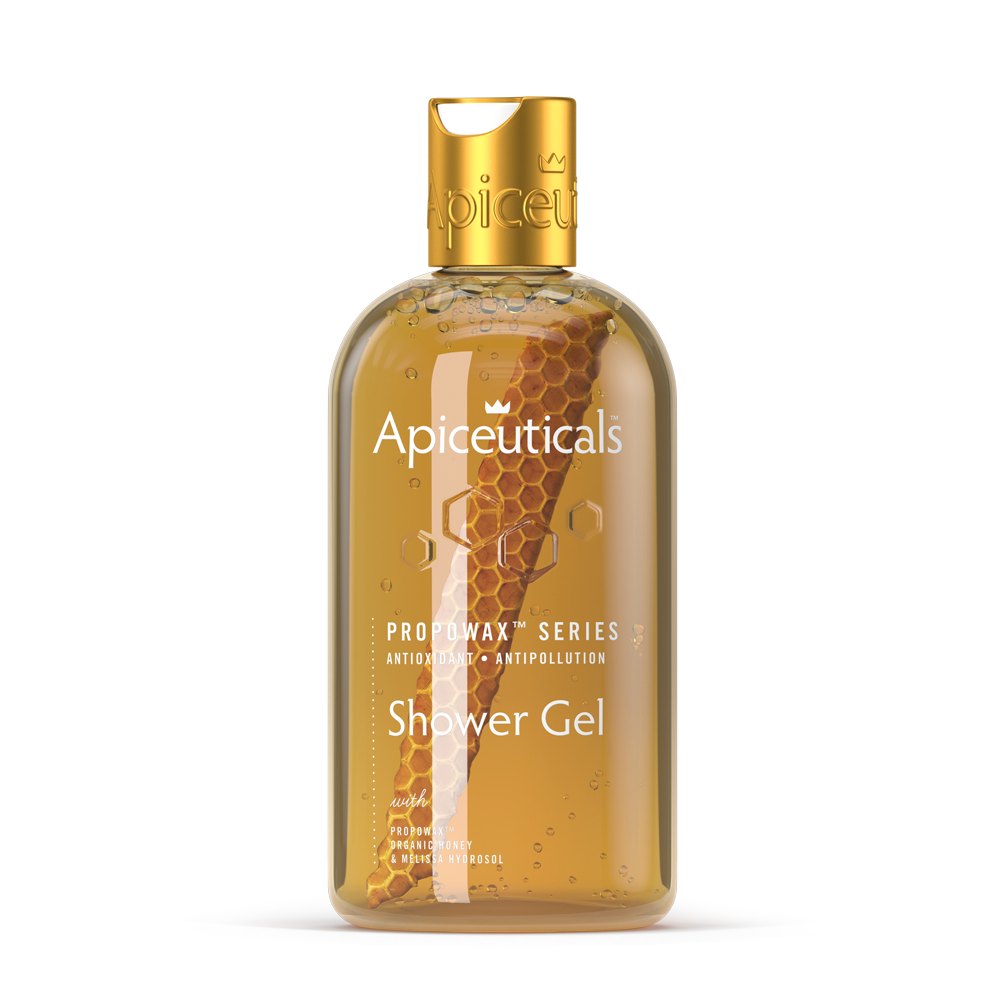
Apiceuticals builds this technology into its PROPOWAX™ Series haircare and bodycare and its waterless HONEY BALM™ Series facial balms, both formulated without SLS, parabens, silicones, or mineral oils. If the checklist earlier in this guide, quantified lab data, sustained-release technology, and transparent sourcing, is what you look for before buying, browse the antioxidant skincare collection to see how those criteria translate into an actual product line.
Sources
- Green-synthesized chestnut honey-mediated silver nanoparticles: enzyme inhibition and antioxidant activity (PubMed entry)
- Therapeutic and prophylactic effects of crude honey on chronic seborrheic dermatitis and dandruff (PubMed entry)
- Eudermic properties and chemical–physical characterization of honeys of different botanical origin (PubMed entry)
- Green synthesis, characterization, antioxidant, antibacterial and enzyme inhibition effects of chestnut honey-mediated silver nanoparticles (Molecules, 2023)
FAQ
Does chestnut honey really have antioxidant benefits for skin?
Yes. Laboratory studies show chestnut honey-derived compounds inhibiting collagenase by 68.7% to 74.2%, and chemical analyses rank it among the highest honeys for polyphenol and flavonoid content.
Can chestnut honey help with scalp conditions like dandruff?
A clinical trial using diluted crude honey applied twice weekly resolved seborrheic dermatitis lesions within two weeks, though that study used near-raw honey rather than a finished cosmetic product.
How is chestnut honey different from other honey in skincare?
Chestnut honey consistently measures higher in total polyphenols and flavonoids than many lighter honey varieties, which correlates with stronger antioxidant assay results.
Is it safe to apply chestnut honey directly to skin?
Most people tolerate it well, but anyone with a bee or pollen allergy should avoid it, and a 24 to 48 hour patch test is recommended before full use on skin or scalp.
What’s the difference between raw honey and formulated honey skincare products?
Raw honey used in clinical studies is applied near full strength, while finished products use lower labeled percentages paired with delivery technology, such as PROPOWAX™ Living Honeycomb, designed to sustain antioxidant activity over time.
How often should I use a chestnut honey scalp mask?
Once or twice weekly matches the frequency used in the clinical trial that reported complete lesion healing within two weeks, and most users see texture improvements on a similar timeline.
Recommended


Related posts

Explore how a trial lasting 24 weeks and Malassezia research link scalp oxidative stress to shedding, and where PROPOWAX™ fits continuous antioxidant care.

See when silicones smooth hair or build up, and how PROPOWAX™ holds a global patent for highest antioxidant activity, validated by Aristotle University.

Explore mountain honey benefits for skin and body, from floral polyphenols and antioxidant activity to evidence on cough relief, wound care, and safe use.

Propolis delivers stronger antioxidant and antimicrobial action. Royal jelly boosts hydration and repair. Learn which suits your skin or scalp and why...

Pick sulfate-free or sulfate shampoo by your scalp, porosity, and color needs. Read evidence-backed guidance, antioxidant options, and a 4-step switch...