No products in the cart.
Return To Shop
Common Skin Protection Techniques for Healthier Skin
TL;DR:
- Effective skin protection involves using broad-spectrum SPF 30 sunscreen correctly, wearing UPF clothing, and applying antioxidants to neutralize free radicals. Consistent behavioral habits, such as avoiding peak sun hours and rinsing after swimming, further reduce environmental damage and aging. Combining these practices offers the most comprehensive approach for maintaining healthy, youthful skin.
Common skin protection techniques are defined as evidence-based practices that shield skin from ultraviolet radiation, pollution, oxidative stress, and other environmental stressors that accelerate aging and cellular damage. Dermatologists classify these methods into three categories: physical barriers, topical agents, and behavioral habits. Each category addresses a distinct mechanism of damage. Broad-spectrum sunscreen with SPF 30 or higher, UPF-rated clothing, and antioxidant-rich skincare form the scientific foundation of any effective defense. Apiceuticals’ PROPOWAX™ Living Honeycomb, validated by the Aristotle University of Thessaloniki and holding a global patent for the highest antioxidant activity in cosmetics, represents one of the most scientifically substantiated topical antioxidant technologies available today.
1. Common skin protection techniques: sunscreen as your first line of defense
Sunscreen is the single most studied and validated tool for preventing sun damage, photoaging, and skin cancer. Broad-spectrum SPF 30 blocks 97% of UVB radiation and provides meaningful UVA coverage. SPF 15 blocks only 93% of UVB, a gap that compounds significantly with daily cumulative exposure over years.
Application quantity matters as much as SPF number. One ounce of sunscreen, roughly the volume of a shot glass, is the minimum for a full-body application. Most people apply less than half that amount, which reduces effective protection substantially. Apply sunscreen 15 minutes before going outdoors to allow proper absorption and activation. Reapply every two hours, and more frequently when swimming or sweating.
Several body areas are consistently missed: the ears, back of the neck, lips, tops of the feet, and the hairline. Each of these sites carries real cancer risk. A lip balm with SPF and a dedicated neck application step close these gaps effectively.
UVA radiation penetrates glass, which means sitting near a window indoors or driving exposes skin to photoaging and pigmentation damage even without direct sunlight. Daily sunscreen use, regardless of whether you plan to go outside, is the correct practice.
Pro Tip: Physical mineral sunscreens containing zinc oxide and titanium dioxide provide superior UVA protection compared to many chemical sunscreen actives currently approved in the United States. If UVA defense is your priority, check the active ingredient list before purchasing.
2. Protective clothing and accessories as physical barriers
Clothing is the most underused and most reliable form of UV protection. Unlike sunscreen, it does not wear off, does not require reapplication, and does not depend on correct application quantity. UPF-rated fabrics provide verified, consistent UV protection, with UPF 50 blocking over 98% of UV radiation.
The following clothing choices offer the strongest physical defense:
- Lightweight, tightly woven long-sleeve shirts and pants block UV more effectively than loosely woven fabrics, even without a UPF label.
- Wide-brimmed hats with a brim of at least three inches protect the face, ears, and back of the neck, areas that sunscreen alone often misses.
- Sunglasses with UVA and UVB blocking lenses protect the thin, sensitive skin around the eyes, which is among the first areas to show photoaging.
- UPF-labeled swimwear and rash guards are particularly effective for water activities, where reflected UV from the water surface intensifies exposure.
Peak UV intensity occurs between 10 a.m. and 2 p.m. Reflective surfaces including water, snow, and sand amplify UV exposure significantly during these hours. Scheduling outdoor activities before 10 a.m. or after 2 p.m. reduces cumulative UV load without requiring any product at all.
3. Antioxidants and skincare routines that build skin resilience

Oxidative stress is the mechanism behind much of what people call “aging.” Free radicals, generated by UV exposure, pollution, and metabolic processes, attack skin cell membranes and DNA in a process similar to rust corroding metal. Antioxidants neutralize free radicals before they cause structural damage. This makes topical antioxidants a genuine complement to sunscreen, not a marketing category.
PROPOWAX™ Living Honeycomb holds a global patent for the highest antioxidant activity in cosmetics, independently validated by the Aristotle University of Thessaloniki. The technology functions as a continuously releasing antioxidant system embedded in every Apiceuticals product. British Vogue recognized it as “arguably the global leader in antioxidant activity.” This is not a marketing claim. It is a peer-reviewed scientific finding. For anyone serious about preventing skin oxidation, this level of validated antioxidant delivery represents a meaningful advancement over standard formulations.
Product layering order determines how much of each active ingredient actually reaches the skin. Apply products thinnest to thickest: cleanser first, then serum, then moisturizer, then sunscreen as the final step. Applying a thick product before a thin one creates a physical barrier that blocks absorption of the lighter formula. Getting this order right costs nothing and meaningfully improves results. For a detailed breakdown, the guide on how to layer skincare covers each step with clinical reasoning.
Multitasking products combining ceramides and SPF reduce irritation risk and simplify routines without sacrificing protection. Ceramides reinforce the skin’s barrier function, reducing transepidermal water loss. Combined with a broad-spectrum SPF moisturizer, they address hydration and UV defense in a single step.
Pro Tip: Vitamin C serum applied before moisturizer and sunscreen amplifies UV defense by neutralizing free radicals that sunscreen does not capture. Look for formulations with L-ascorbic acid at 10–20% concentration for measurable antioxidant effect.
4. Lifestyle habits that support skin protection from within
Topical products address the skin’s surface. Behavioral habits determine the total UV and environmental load the skin must manage. These two approaches work together, and neither replaces the other.
Limit midday sun exposure. UV index peaks between 10 a.m. and 2 p.m. Scheduling outdoor exercise, errands, or leisure activities outside this window reduces cumulative UV damage without any product intervention.
Seek shade actively. Trees, umbrellas, and covered structures reduce direct UV exposure. Shade does not eliminate UV entirely because reflected and scattered radiation still reaches skin, but it cuts direct exposure substantially.
Stay hydrated. Skin moisture depends partly on systemic hydration. Dehydration reduces skin elasticity and barrier function, making skin more vulnerable to environmental damage. Water intake supports the skin’s ability to repair and maintain itself.
Rinse off after swimming. Chlorine and salt water both degrade the skin’s lipid barrier. Rinsing with fresh water immediately after swimming prevents prolonged chemical contact and reduces dryness and irritation.
Avoid tanning beds completely. Tanning beds emit concentrated UV radiation. Sustaining five or more sunburns doubles melanoma risk over a lifetime. Tanning beds accelerate this risk profile with no offsetting benefit.
Monitor your skin regularly. Monthly self-examinations and annual dermatologist checks catch abnormal changes early. The ABCDE rule (asymmetry, border, color, diameter, evolution) is the standard clinical framework for evaluating moles and lesions.
Consider oral nicotinamide for high-risk individuals. Oral nicotinamide at 500 mg twice daily reduces the incidence of new nonmelanoma skin cancers by 23% over one year in people with a history of skin cancer. This is a clinically validated chemopreventive strategy, not a general supplement recommendation. Consult a dermatologist before starting.
Key takeaways
Effective skin protection requires combining broad-spectrum sunscreen, physical barriers, antioxidant skincare, and consistent behavioral habits into a single daily practice.
| Point | Details |
|---|---|
| SPF 30 minimum, applied correctly | Use one ounce per full-body application, 15 minutes before exposure, reapplied every two hours. |
| UPF clothing outperforms sunscreen alone | UPF 50 fabric blocks over 98% of UV and requires no reapplication. |
| Antioxidants neutralize what sunscreen misses | PROPOWAX™ Living Honeycomb delivers the highest validated antioxidant activity in cosmetics. |
| Layering order determines absorption | Apply thinnest to thickest: cleanser, serum, moisturizer, then sunscreen last. |
| Behavioral habits reduce total UV load | Avoiding peak sun hours and tanning beds cuts cumulative damage without any product. |
What consistent skin protection actually looks like in practice
The dermatologist consensus on science-backed skin care is consistent and has been for decades: simple, proven habits outperform complex, trend-driven regimens every time. At Apiceuticals, we see this confirmed repeatedly. People who use three well-chosen products correctly get better long-term outcomes than those who rotate through ten products seasonally.
The most common mistake is treating antioxidants as optional. Sunscreen blocks UV, but it does not neutralize the oxidative cascade that UV triggers inside the skin. Free radical damage continues after sun exposure ends. An antioxidant layer, whether from a serum, a moisturizer, or a formulation built around PROPOWAX™ Living Honeycomb, addresses this second mechanism directly. Skipping it leaves a real gap in protection.
Physical barriers are equally undervalued. A wide-brimmed hat and a long-sleeve shirt worn consistently do more for cumulative UV reduction than any topical product applied inconsistently. The science on UPF-rated clothing is unambiguous. The challenge is habit, not knowledge.
The most durable skin protection routines are the ones that fit into real life without friction. Choose products you will actually use every day. Apply sunscreen before you leave the house, not as an afterthought. Wear the hat. Rinse off after the beach. These are not complicated instructions. They are the difference between skin that ages at its biological rate and skin that ages faster than it should.
— Apiceuticals
Apiceuticals and the science of antioxidant skin defense
Apiceuticals was built on a single conviction: that bee science, applied with rigor, produces skincare that genuinely performs. The PROPOWAX™ Living Honeycomb technology at the center of every Apiceuticals formulation holds a global patent for the highest antioxidant activity in cosmetics, validated by the Aristotle University of Thessaloniki.

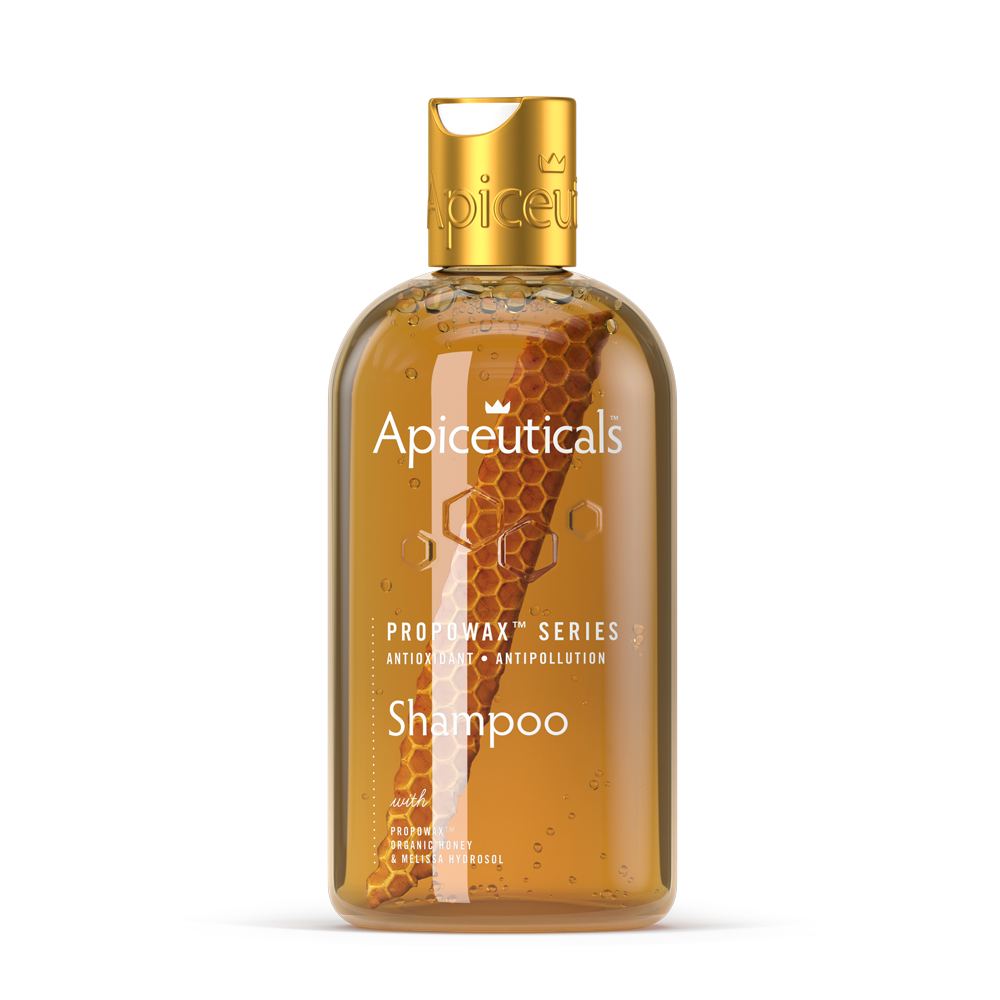
For anyone building a skin protection routine grounded in science rather than trend, the antioxidant skincare range at Apiceuticals offers a starting point that is clean, dermatologically tested on sensitive skin with 0% irritation, and free from over 2,000 potentially harmful ingredients. The HONEY BALM™ Series delivers clinically proven 26% wrinkle reduction. The PROPOWAX™ Series addresses scalp, hair, and body with the same antioxidant foundation. For a full overview of the science behind the formulations, visit the PROPOWAX™ technology page.
FAQ
What SPF level do dermatologists recommend for daily use?
Dermatologists recommend broad-spectrum SPF 30 or higher for all skin types. SPF 30 blocks 97% of UVB radiation and, when labeled broad-spectrum, also provides meaningful UVA protection.
How much sunscreen should you apply per application?
One ounce per full-body application is the standard, equivalent to a shot glass volume. Most people apply significantly less, which reduces the effective SPF delivered to the skin.
Do antioxidants in skincare actually protect against UV damage?
Antioxidants do not replace sunscreen, but they neutralize free radicals generated by UV exposure that sunscreen does not capture. PROPOWAX™ Living Honeycomb, validated by the Aristotle University of Thessaloniki, holds a global patent for the highest antioxidant activity in cosmetics.
Is sunscreen necessary when staying indoors?
Yes. UVA radiation passes through window glass and contributes to photoaging and pigmentation. Daily broad-spectrum sunscreen use is recommended regardless of whether you plan to go outdoors.
What is the correct order for applying skincare products?
Apply products from thinnest to thickest consistency: cleanser, serum, moisturizer, then sunscreen as the final step. This sequence maximizes absorption of active ingredients and prevents thicker formulas from blocking penetration of lighter ones.
Recommended


Related posts

How bees and biodiversity sustain each other, what the science says about Greece and the Aegean, and how antioxidant beauty can start from a hive...

How organic propolis extraction works, from hive to extract: collection, solvents, EU organic rules, Greek propolis phenolics and what it means for skincare.

Build an anti pollution skincare routine that fits Greek city life: what pollution does to skin, the morning and evening steps, and the antioxidants with...

Honey moisture content explained: the EU and Greek limits, how to take a refractometer reading, what excess water does to honey, and why it matters...

How antioxidant activity measurement works: DPPH, ABTS, FRAP and ORAC explained, why results differ, and what a lab number can and cannot say about skin...