No products in the cart.
Return To Shop
Up to 70% Skin Barrier Boost From Dark Honey, When Formulated Right
Dark honey benefits topical formulations because its phenolic acid and flavonoid content runs measurably higher than lighter varieties, translating into stronger antioxidant, anti-inflammatory, and barrier-support effects when a lab actually formulates it correctly. Clinical and lab studies back real improvements in skin barrier function and hair-shaft repair. But the honey itself is only half the equation. Dilution, vehicle, and processing determine whether that phenolic potential ever reaches your skin or scalp.
TL;DR:
- Dark honey contains higher phenolic acids and flavonoids than light honey, leading to stronger antioxidant, anti-inflammatory, and barrier-support effects.
- In vitro and clinical studies show that fermented black honey extract can significantly reduce oxidative stress and enhance skin barrier function when formulated properly.
- Honey-based hair repair results demonstrate improved shaft integrity and surface smoothness but do not support hair regrowth claims.
- Delivery vehicles like hydrogels and emulsions substantially increase phenolic compound absorption compared to raw honey, making formulation choice crucial.
- Patch testing and avoiding raw honey on open wounds are essential, and formulations should specify active extract percentages and validated delivery systems for effective results.
Table of Contents
- What Makes Dark Honey Benefits Different From Light Honey Topically
- Skin Benefits Backed by Clinical and Lab Data
- Hair and Scalp Benefits: What Dark Honey Can and Cannot Do
- Formulation and Delivery: Why the Vehicle Matters as Much as the Honey
- Safety, Patch Testing, and When to Be Cautious
- How to Choose and Use Dark Honey Topical Products
- Apiceuticals’ Bee-Science Credentials
- When Dark Honey Topicals Make Sense, and When They Don’t
- Explore Apiceuticals’ Antioxidant Formulations
- Sources
- FAQ
What Makes Dark Honey Benefits Different From Light Honey Topically
Every honey contains phenolic acids and flavonoids, the plant-derived compounds responsible for color, flavor, and biological activity. Darker honeys, drawn from forest and mountain botanical sources rather than clover or acacia fields, consistently test higher on both counts. Research comparing honey types found that dark varieties like heather honey carry significantly higher total phenolic content and antioxidant activity than their pale counterparts, a pattern echoed in broader work on how botanical origin shapes honey’s bioactive retention.
Mechanically, these phenolics work the way antioxidants generally do: they neutralize reactive oxygen species before those molecules can oxidize lipids and proteins in skin cells, the same oxidative cascade that ages collagen the way rust corrodes iron. Alongside that, honey’s natural acidity (typically pH 3.5 to 4.5) helps flatten the hair cuticle on contact, which is part of why honey-based rinses leave hair feeling smoother. Its humectant property, meaning it pulls and holds moisture from the surrounding air, supports hydration in both skin and hair fiber. Some dark honeys also carry modest antimicrobial activity through hydrogen peroxide generation and non-peroxide factors, though this plays a secondary role in cosmetic contexts compared to the antioxidant and moisture-retention effects.
Skin Benefits Backed by Clinical and Lab Data
The most detailed evidence on honey-derived cosmetic ingredients comes from research on MOSY PHYCOLLREPAIR, a fermented black bee honey extract tested in vivo. Across dose ranges, it produced measurable effects on several fronts at once, and the spread of results is worth seeing laid out rather than summarized in a single adjective.
- Anti-ROS activity: 29.10% to 62.48%, meaning meaningful reduction in oxidative molecules depending on concentration
- Anti-inflammatory effect: 11.08% to 27.84%
- Skin barrier protection: 39.36% to 70.26%
- UVB protection: 20.15% to 68.45%
- Collagen, elastin, and sirt1 gene expression: measurable upregulation across tested doses
These figures come from a peer-reviewed evaluation of fermented black bee honey as a cosmetic ingredient, and the dose-dependence matters: low-concentration products will not replicate the upper end of that range. Separately, phenolic acids like gallic acid, caffeic acid, and coumaric acid, all more concentrated in dark honeys, have documented roles in limiting oxidative damage and moderating pigment-forming enzymes, which is why formulators reach for darker sources when anti-aging or brightening claims are the goal.
A broader review of honey phytochemicals in dermatology confirms the pattern across antimicrobial, antioxidant, anti-inflammatory, and photoprotective activity, while flagging that human clinical trials remain thinner than the lab data would suggest is warranted. The takeaway for shoppers: the biology is sound, but the size of the benefit depends entirely on concentration and vehicle, not on the word “honey” appearing on a label. You can read more on how these compounds behave in skincare formulations generally.

Hair and Scalp Benefits: What Dark Honey Can and Cannot Do
Hair-focused research gives some of the clearest numbers in the entire category. A study combining four honey types on hair damaged by UV-A exposure and airborne pollutants found:
- 54% repair in hair shaft integrity and porosity (statistically significant, p<0.001)
- Notable improvement in hair shaft surface roughness, statistically significant
That data, published through the Journal of Investigative Dermatology, points to honey’s role as a repair-supporting humectant rather than a structural rebuilder. It smooths the cuticle, reduces the roughness that makes hair look dull and catches on itself, and improves manageability during detangling. Honey’s moisture-binding property also explains why diluted, rinse-off formulations tend to outperform thick raw applications, which can leave residue and are harder to remove without hot water that further stresses the shaft.
What dark honey does not do is regrow hair. Consumer-facing summaries on honey’s role in hair care note it can improve softness and manageability in properly diluted products but offer no reliable path for androgenetic hair loss. If shedding is progressive or accompanied by visible scalp changes, that is a conversation for a dermatologist, not a jar of honey balm.
Formulation and Delivery: Why the Vehicle Matters as Much as the Honey
Raw honey applied directly to skin faces a delivery problem: it is thick, sticky, and hygroscopic, meaning it pulls moisture from the air in ways that can make it feel tacky rather than absorbed. Comparative permeation testing found that hydrogels and emulsions substantially increase how much phenolic acid actually reaches and accumulates in skin compared to unmodified honey applied on its own, with hydrogels frequently outperforming emulsions for key compounds like gallic acid.
Fermentation and controlled extraction processes, the same category of technology behind MOSY PHYCOLLREPAIR, address the sensory and stability problems that kept raw honey out of premium formulations for so long. When you’re comparing labels, look for:
- A stated percentage of active honey extract, not just “honey” on the ingredient list
- Mention of fermented, processed, or extracted honey derivatives rather than raw honey alone
- A named delivery vehicle (hydrogel, emulsion, balm base) rather than a water base with honey stirred in
Safety, Patch Testing, and When to Be Cautious
Before applying any dark honey topical to your face or scalp, patch-test on your inner arm and wait 24 to 48 hours for redness, itching, or swelling. Raw honey should never go on open wounds or infected lesions. Medical-grade honey formulations exist for wound care and are regulated differently than cosmetic products. If irritation appears, rinse thoroughly and discontinue use. For hair applications, always rinse off rather than leaving honey-based masks in overnight, and see a dermatologist if scalp irritation persists beyond a day or two.

How to Choose and Use Dark Honey Topical Products
Cosmetic formulations typically use active concentrations in the 1% to 10% range, with specialty leave-on treatments occasionally running higher. Here’s a practical shopping and use sequence:
- Check for a stated active percentage or named extract rather than generic “honey” on the label
- Confirm the delivery vehicle: hydrogels and emulsions consistently outperform raw honey for skin penetration
- Look for clinical endpoints the brand actually reports, such as barrier protection percentages or repair metrics, rather than vague antioxidant claims
- Favor brands with independent validation or patent status behind their extraction process, such as PROPOWAX™ technology
- Apply leave-on formulations two to three times weekly to start; rinse-off hair treatments can be used more frequently
Pro Tip: If you’re mixing your own honey treatment at home, skip hot water entirely. Heat above roughly 104°F begins breaking down the same phenolic compounds you’re trying to apply, which defeats the purpose before it ever touches your skin.
Apiceuticals’ Bee-Science Credentials
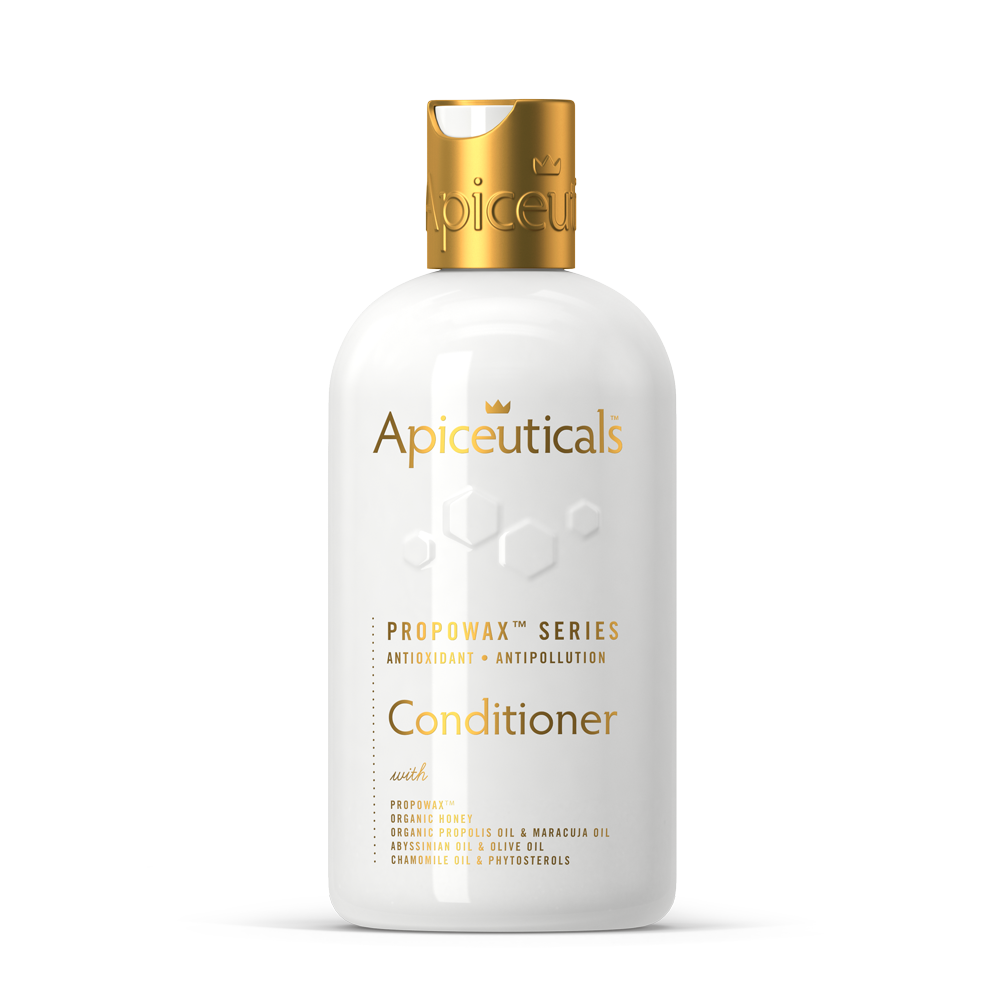
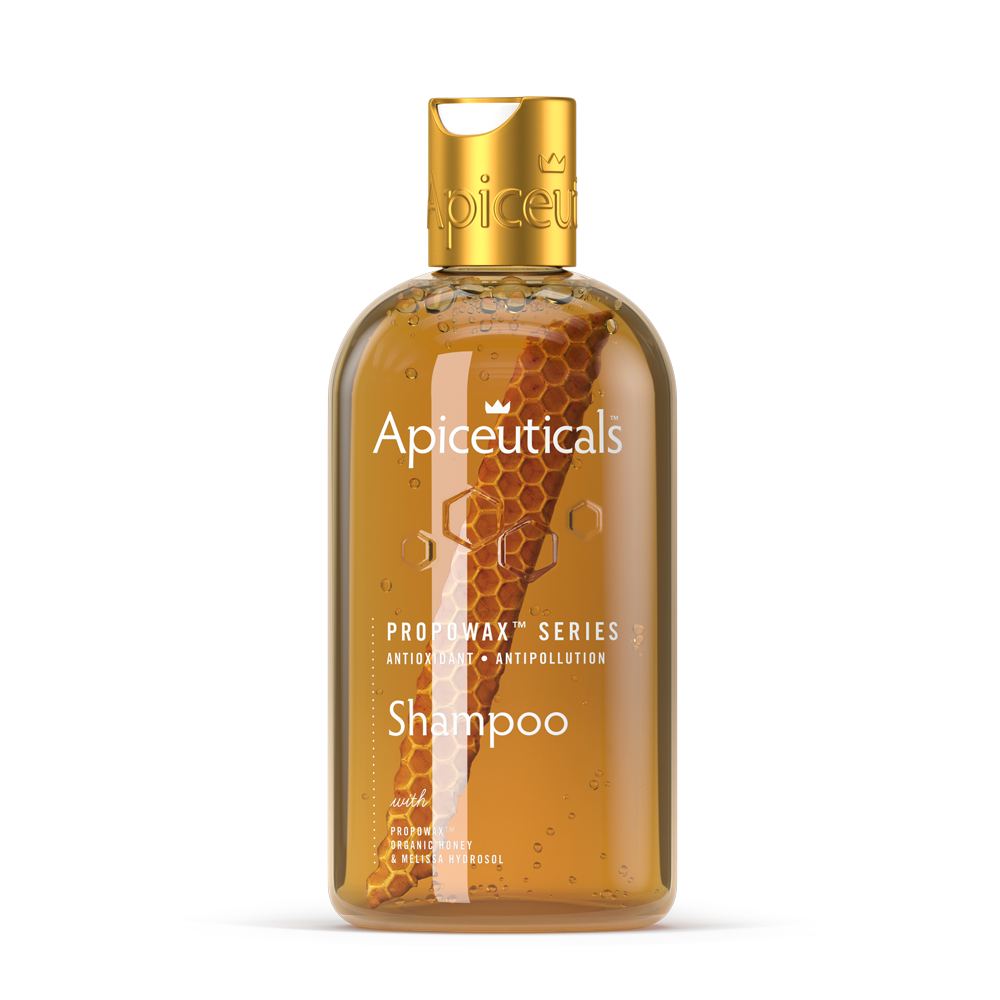
Apiceuticals was founded by the Roumeliotis family, who have kept bees in Arcadia since 1981 and were the first family in Greece to move that practice toward organic, sustainable beekeeping. That heritage sits behind PROPOWAX™, a patented Living Honeycomb structure that continuously releases antioxidants onto skin, scalp, and hair rather than delivering a single dose that fades.
- PROPOWAX™ is a patented technology designed to provide high antioxidant activity in cosmetics
- The technology has been independently validated by research institutions
- Some waterless facial balm series report a clinically measured wrinkle reduction
- Continuous release addresses the stickiness and instability that limit raw honey in leave-on products
You can review the ingredient science behind this approach on the honey ingredient page.
When Dark Honey Topicals Make Sense, and When They Don’t
Dark honey formulations earn their place when your goals are antioxidant support, barrier maintenance, and hair conditioning. They are not a substitute for dermatologist-prescribed retinoids or for treating diagnosed hair loss. Choose formulations built on validated delivery systems, not raw honey improvised at home.
— Apiceuticals
Explore Apiceuticals’ Antioxidant Formulations
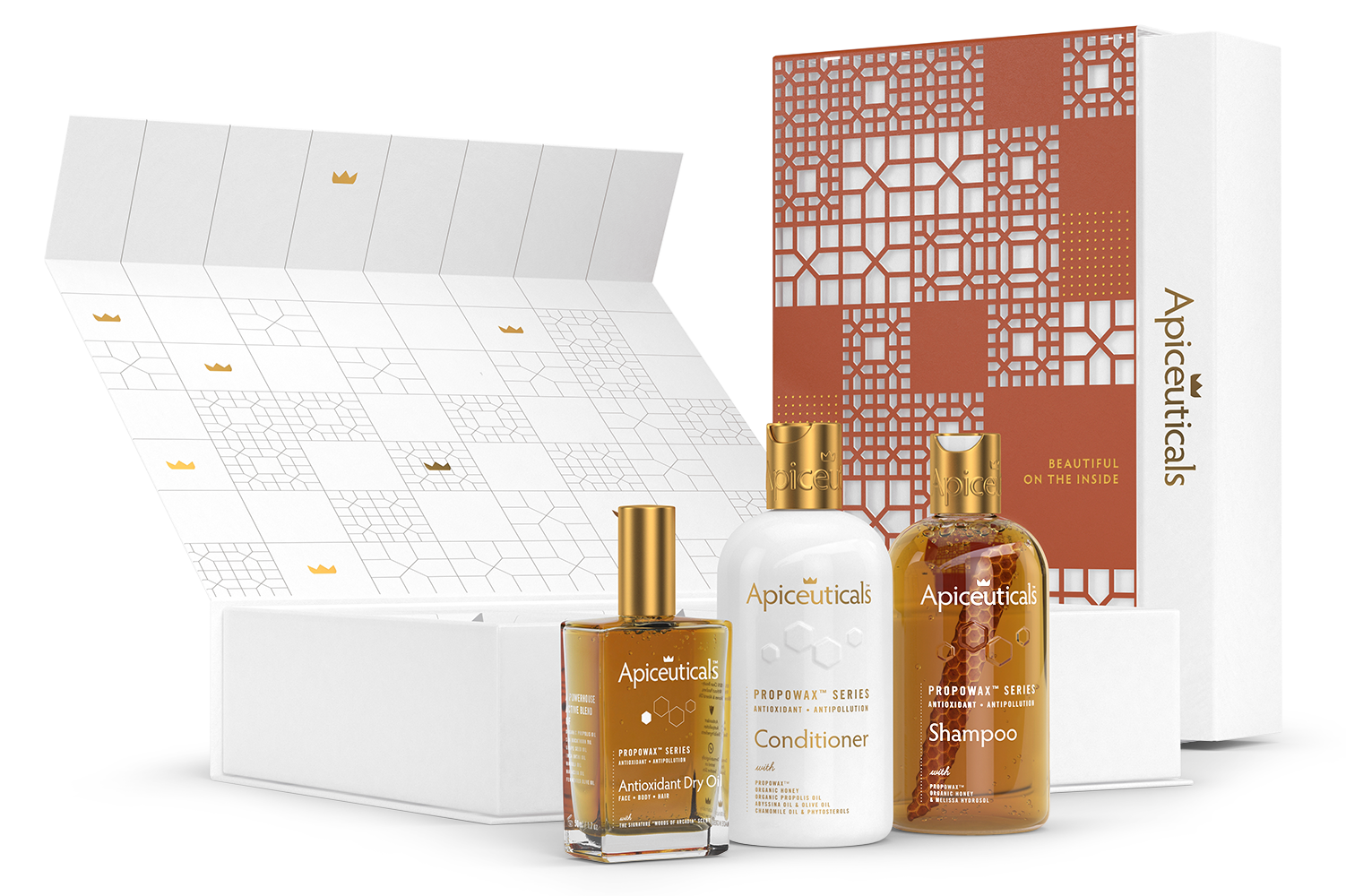
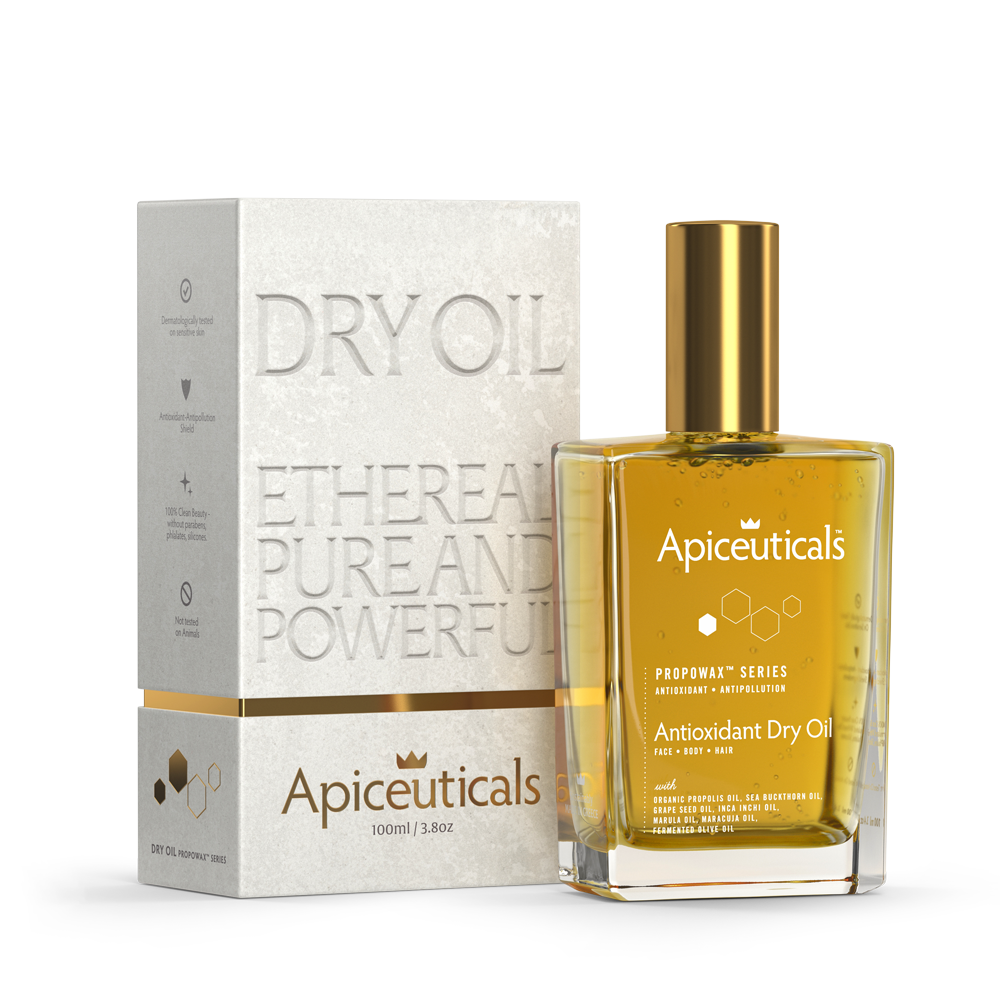
Apiceuticals builds its topical antioxidant products around PROPOWAX™ Living Honeycomb rather than raw honey stirred into a base, which is the difference between a formulation that keeps releasing antioxidants over time and one that degrades on contact with air and heat.

The PROPOWAX™ Series and HONEY BALM™ Series are built specifically around the mechanisms described above: continuous antioxidant release, validated delivery vehicles, and clinically reported endpoints rather than unspecified “honey” claims. If you want to see how the formulation science compares to the studies referenced here, review the PROPOWAX™ technology page and browse the ingredient listings and clinical notes on each product page before you buy.
Sources
- Comprehensive Evaluation of the Safety and Efficacy of MOSY PHYCOLLREPAIR : A Novel Fermented Black Bee Honey‑Derived Cosmetic Ingredient (PMC)
- A combination of honey to repair Asian hair from UV-A and environmental pollution-induced damage | Journal of Investigative Dermatology (abstract)
- Assessment of in vitro skin permeation and accumulation of phenolic acids from honey and honey-based pharmaceutical formulations | BMC Complementary Medicine and Therapies
FAQ
Is dark honey good for you when used on skin?
Yes, when formulated into a proper vehicle like a hydrogel or emulsion, dark honey’s higher phenolic content supports measurable antioxidant and barrier benefits, including barrier protection ranging from 39.36% to 70.26% in lab testing of a fermented honey extract. Raw honey applied without processing delivers a weaker, less consistent effect.
What is the difference between dark honey and light honey benefits?
Dark honey, sourced from forest and mountain botanicals rather than clover or acacia, generally contains more phenolic acids and shows higher antioxidant activity than lighter honey. That gap is what drives formulators toward dark varieties for antioxidant skincare specifically.
Can dark honey repair damaged hair?
Lab data on a four-honey blend showed 54% repair in hair shaft integrity and porosity after UV and pollution damage, plus a 61% improvement in surface roughness. It smooths and conditions existing hair but does not regrow hair or treat hair loss.
Does forest honey or mountain honey work better for skin than regular honey?
Forest and mountain honeys tend to carry higher phenolic and flavonoid concentrations than single-flower honeys, which generally supports stronger antioxidant activity in topical use. The formulation vehicle still determines how much of that activity actually reaches your skin.
How do I patch test a dark honey skincare product?
Apply a small amount to your inner arm and wait 24 to 48 hours, watching for redness, itching, or swelling before using it on your face or scalp. Skip products entirely on open wounds or active skin infections.
Does Apiceuticals use dark honey in its products?
Apiceuticals builds its antioxidant formulations around PROPOWAX™, a patented Living Honeycomb technology validated by the Aristotle University of Thessaloniki for the highest documented antioxidant activity in cosmetics. Current pricing and full ingredient listings are available on the Apiceuticals shop.
Recommended


Related posts

Explore how a trial lasting 24 weeks and Malassezia research link scalp oxidative stress to shedding, and where PROPOWAX™ fits continuous antioxidant care.

See when silicones smooth hair or build up, and how PROPOWAX™ holds a global patent for highest antioxidant activity, validated by Aristotle University.

Explore mountain honey benefits for skin and body, from floral polyphenols and antioxidant activity to evidence on cough relief, wound care, and safe use.

Propolis delivers stronger antioxidant and antimicrobial action. Royal jelly boosts hydration and repair. Learn which suits your skin or scalp and why...

Pick sulfate-free or sulfate shampoo by your scalp, porosity, and color needs. Read evidence-backed guidance, antioxidant options, and a 4-step switch...