No products in the cart.
Return To Shop
Forest Honey Benefits: When Antioxidant Tests Don’t Match Results
Forest honey often carries higher concentrations of antioxidant phenolics than light blossom varieties, and as food adjunct it can support specific outcomes like cough relief or wound care in certain settings. It is not a medical cure, and the gap between a laboratory antioxidant reading and a clinical result is wider than most marketing suggests. The sections below separate what the chemistry shows from what actually happens in the body, then outline how to choose and use forest honey with some confidence.
TL;DR:
- Forest honey generally contains higher phenolic and mineral content compared to light blossom honey, but regional and botanical differences significantly influence antioxidant levels.
- Laboratory tests like TPC, TFC, DPPH, and FRAP measure chemical antioxidant potential, yet these do not directly translate to clinical benefits once consumed or applied.
- Clinical evidence supports modest benefits for honey in specific uses such as pediatric cough relief and wound care, primarily when applied topically with medical-grade honey, not culinary varieties.
- Authenticity and antioxidant content are best verified through traceability, botanical origin, and compositional testing, since label claims alone are unreliable due to regional variability and adulteration risks.
- Honey should be used as a dietary supplement or topical aid with caution, especially avoiding infants under one year, consulting a clinician if managing uncontrolled diabetes, and choosing sterilized medical-grade products for wound treatment.
Table of Contents
- What Forest Honey Is and How It Differs From Blossom Honey
- Laboratory Evidence: Phenolics, Flavonoids, and Antioxidant Assays Explained
- Human Clinical Evidence and Its Limits
- How to Choose Authentic, High-Antioxidant Forest Honey
- Using Forest Honey Safely in Food and on Skin
- Apiceuticals’ Bee-Science Perspective on Antioxidant Honey
- Allergic Reactions and Who Should Be Cautious
- Storing Forest Honey to Preserve Its Antioxidant Content
- Contaminants, Adulteration, and How to Verify Quality
- How Forest Honey Compares to Other Honey Types
- Where the Antioxidant Story Meets Real Expectations
- Where Formulated Antioxidant Honey Fits Into a Skincare Routine
- Sources
- FAQ
What Forest Honey Is and How It Differs From Blossom Honey
Forest honey, sometimes labeled honeydew honey, comes from a different source than the nectar-based honeys most people know. Bees collect it from the sugary secretions of aphids and other sap-feeding insects on trees such as chestnut, pine, oak, and heather, rather than directly from flowers. That distinction in origin explains much of what follows: honeydew honeys tend to run darker, taste less sweet and more mineral-forward, and carry a different sugar architecture than blossom honey.
Color is not decorative here. Darker honeys generally correlate with higher phenolic content, and phenolics are the compound family most antioxidant assays are built to detect. Mineral content follows a similar pattern, since forest and honeydew honeys typically show higher ash and mineral values than pale blossom varieties. None of this is uniform, though. Botanical source, regional soil chemistry, harvest timing, and how the honey is handled after extraction all shift the final measurements.
- Common forest sources include chestnut, pine, oak, and heather, each contributing a distinct phenolic and mineral signature.
- Honeydew honey originates from insect secretions on trees, not floral nectar, which is the core chemical difference from blossom honey.
- Darker color and higher mineral content often, but not always, track with higher phenolic readings in comparative testing.
Laboratory Evidence: Phenolics, Flavonoids, and Antioxidant Assays Explained
Antioxidant claims about honey almost always trace back to a handful of standardized lab tests. Total phenolic content (TPC) and total flavonoid content (TFC) measure the concentration of specific plant-derived compound families known to neutralize free radicals, the unstable molecules that drive oxidative damage much the way unchecked moisture drives rust through metal. DPPH and FRAP assays go a step further, measuring how effectively a honey sample can actually quench free radicals or reduce iron ions in a controlled reaction, which is the closest a test tube gets to simulating antioxidant activity.
A comparative laboratory study found that some honeydew honey samples reached notably high FRAP values exceeding those typical of many blossom honeys, according to comparative lab data on honeydew antioxidant activity. That is a meaningful chemical signal, but it describes a reaction in a test tube, not an outcome in a person.
Regional variability complicates any tidy narrative. A multi-region analysis of forest honeys found that TPC, TFC, DPPH, and FRAP values swung widely by geography, with some regional samples testing notably higher than others gathered from the same general honey type.
- TPC and TFC quantify the raw concentration of antioxidant compound families in a sample.
- DPPH and FRAP measure how actively those compounds neutralize free radicals or reduce oxidative agents in a reaction.
- High assay numbers describe chemistry, not a guarantee of measurable benefit once the honey is consumed.
Human Clinical Evidence and Its Limits
Laboratory chemistry is only half the story, and the clinical half is more cautious. A 2023 review of 48 clinical trials involving 3,655 participants found that honey showed potential benefit for cough in children, for oral mucositis in some cancer treatment settings, and for wound healing when applied topically, alongside modest effects on certain metabolic markers in a subset of trials. The same review was explicit about heterogeneity across studies and about honey remaining, first and foremost, a high-sugar food.
Context mattered in nearly every positive finding. Cough relief in children was tied to small nightly doses rather than continuous consumption, and mucositis benefits came largely from topical mouthwash regimens rather than oral intake. Wound-healing results were almost entirely tied to topical, clinically formulated application rather than kitchen-grade honey spread on a cut.
Regulators have drawn a firm line around how far these findings can be marketed. EFSA’s framework for health claims requires that any claim tying a food to disease prevention meet a specific evidentiary standard and receive formal authorization, which is why credible sources describe honey as containing antioxidant compounds rather than claiming it prevents oxidative disease in people.
- Clinical benefit was strongest for pediatric cough at small doses and for topical wound or mucositis care, not general oral consumption.
- The reviewed trials varied widely in honey type, dose, and population, which limits how far any single result can be generalized.
- EFSA’s standard means a food can legitimately contain bioactive compounds without being permitted to claim disease prevention.
How to Choose Authentic, High-Antioxidant Forest Honey
Given how much regional and botanical variation shapes antioxidant readings, a jar simply labeled “forest honey” tells you less than it implies. A few checks narrow the gap between marketing language and what is actually in the jar.
- Confirm the botanical origin on the label: chestnut, oak, pine, and heather each carry distinct phenolic profiles, and a vague “forest blend” without a named source is harder to verify.
- Look for organic or geographic certification, which typically requires traceability back to a specific region and harvest.
- Ask the producer whether compositional testing, such as NMR analysis or a published TPC/FRAP result, backs the antioxidant claim, since the regional variability documented in forest honey research means marketing language alone is not reliable evidence.
- Check viscosity and clarity: honeydew honeys are typically denser and darker than blossom honey, and unusually thin, pale product sold as “forest honey” is a red flag.
Pro Tip: Buy from a producer who names the region and tree source on the label, since traceable origin is a stronger antioxidant indicator than the word “forest” alone.
For actual wound care, reach for a clinician-recommended medical-grade honey product rather than culinary forest honey, since the two occupy different regulatory categories with different sterility and dosing standards.
Using Forest Honey Safely in Food and on Skin
Forest honey works best as a small daily substitution rather than a therapeutic dose. Swapping a spoonful for refined sugar in tea, yogurt, or dressing is a reasonable way to bring some phenolic content into a diet without treating honey as medicine, since it remains, nutritionally, a concentrated sugar.
A few groups need a different approach entirely. Infants under one year should never be given honey in any form due to the risk of infant botulism. People with uncontrolled diabetes should talk with a clinician before adding any honey regularly, given its sugar load. For topical wound applications, culinary forest honey is not a substitute for medical-grade honey products, which are manufactured and sterilized to a clinical standard that kitchen honey does not meet.
- Use forest honey in small daily portions as a sugar substitute rather than a treatment.
- Avoid giving honey of any kind to infants under one year.
- Consult a clinician before regular use if diabetes is uncontrolled, and use medical-grade products for wound care rather than table honey.
Apiceuticals’ Bee-Science Perspective on Antioxidant Honey
The distance between a phenolic reading in a lab and a change you can see on skin or hair is exactly the problem antioxidant formulation exists to solve, as detailed in antioxidants for skin backed by science. A honey sample can test high for TPC and FRAP and still deliver almost nothing once diluted, oxidized, or poorly stabilized inside a finished product, which is the translation gap most beauty formulas never address directly.
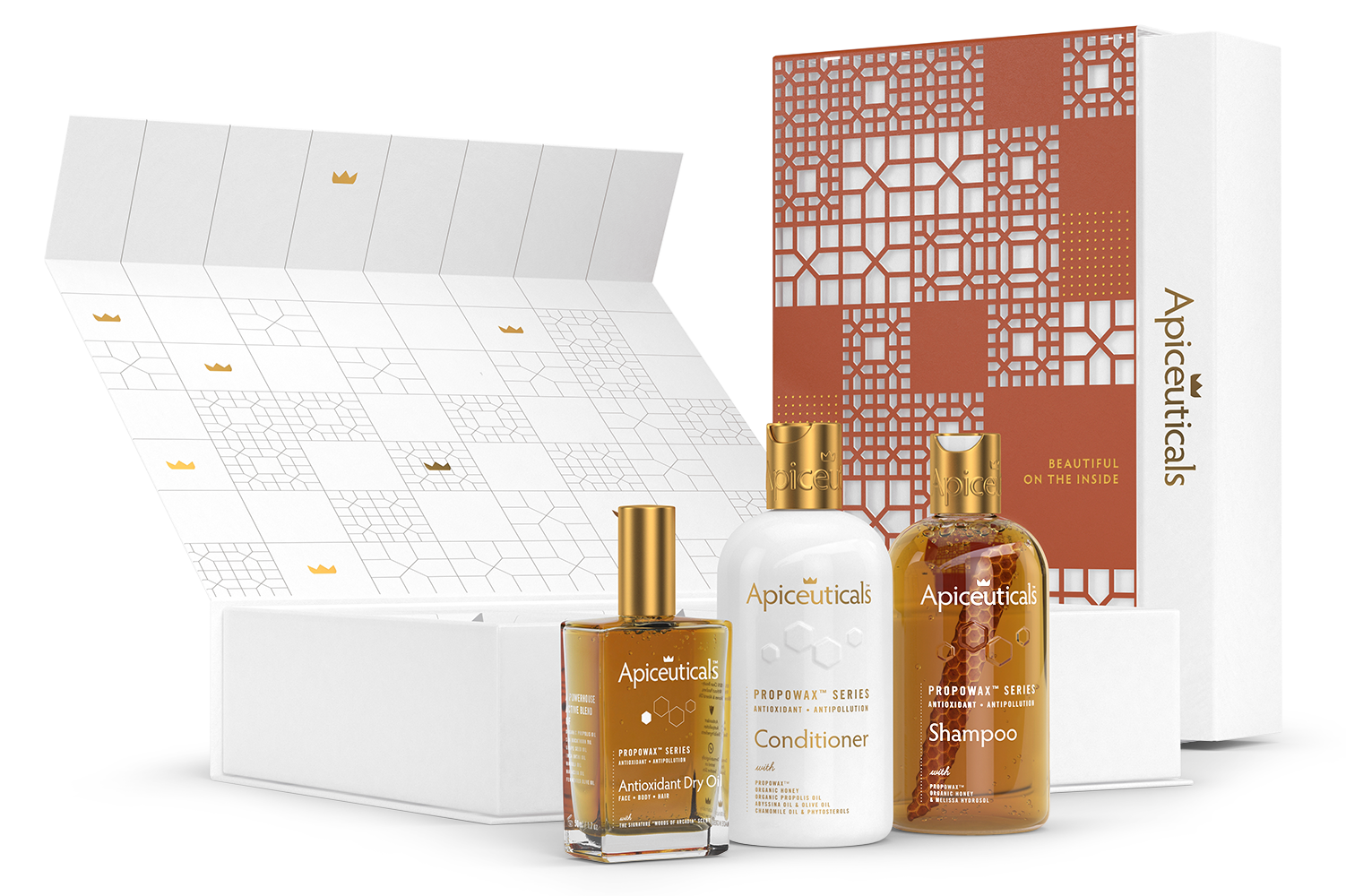
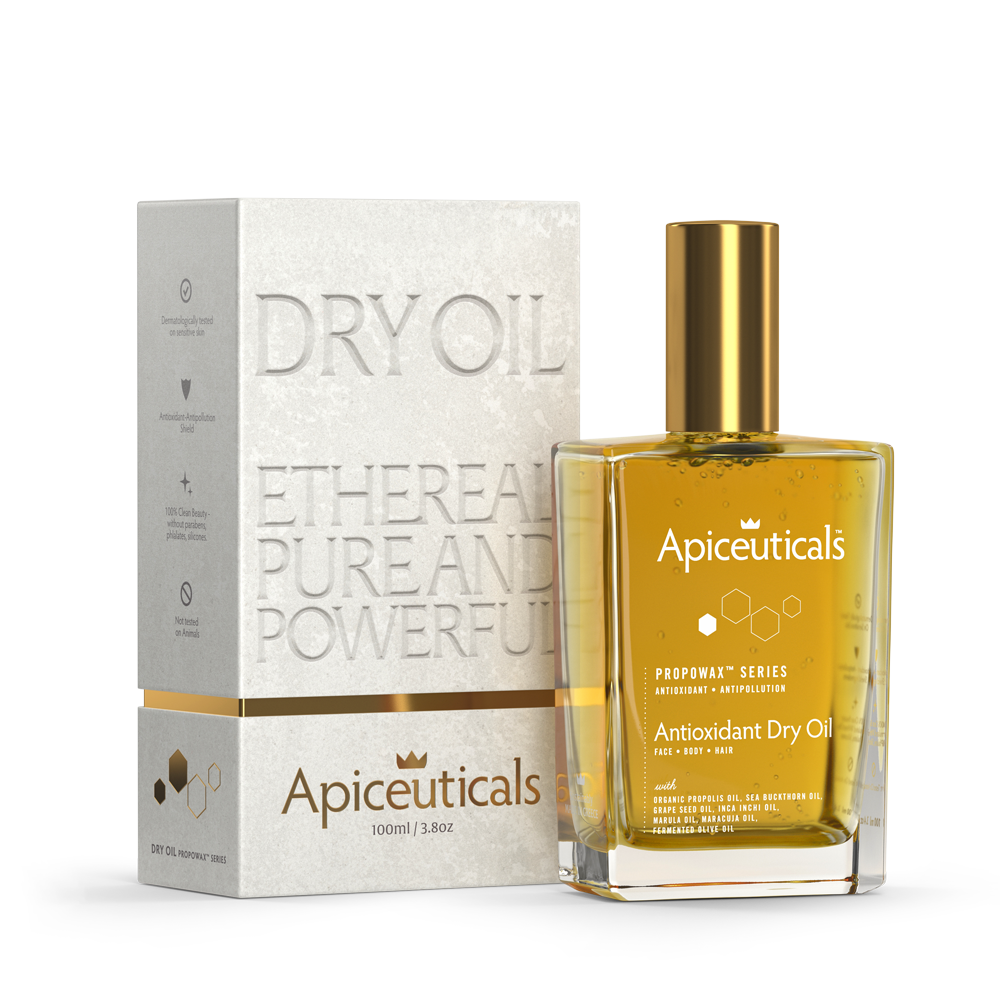
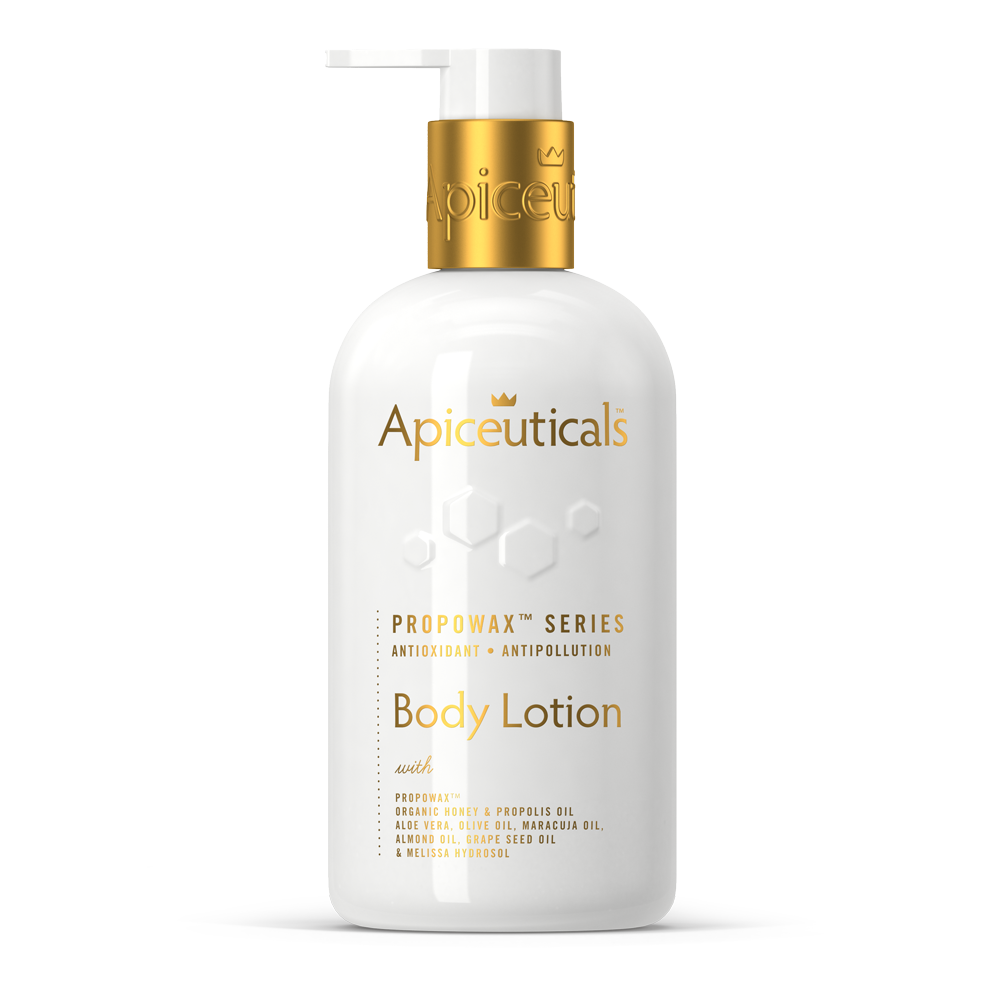
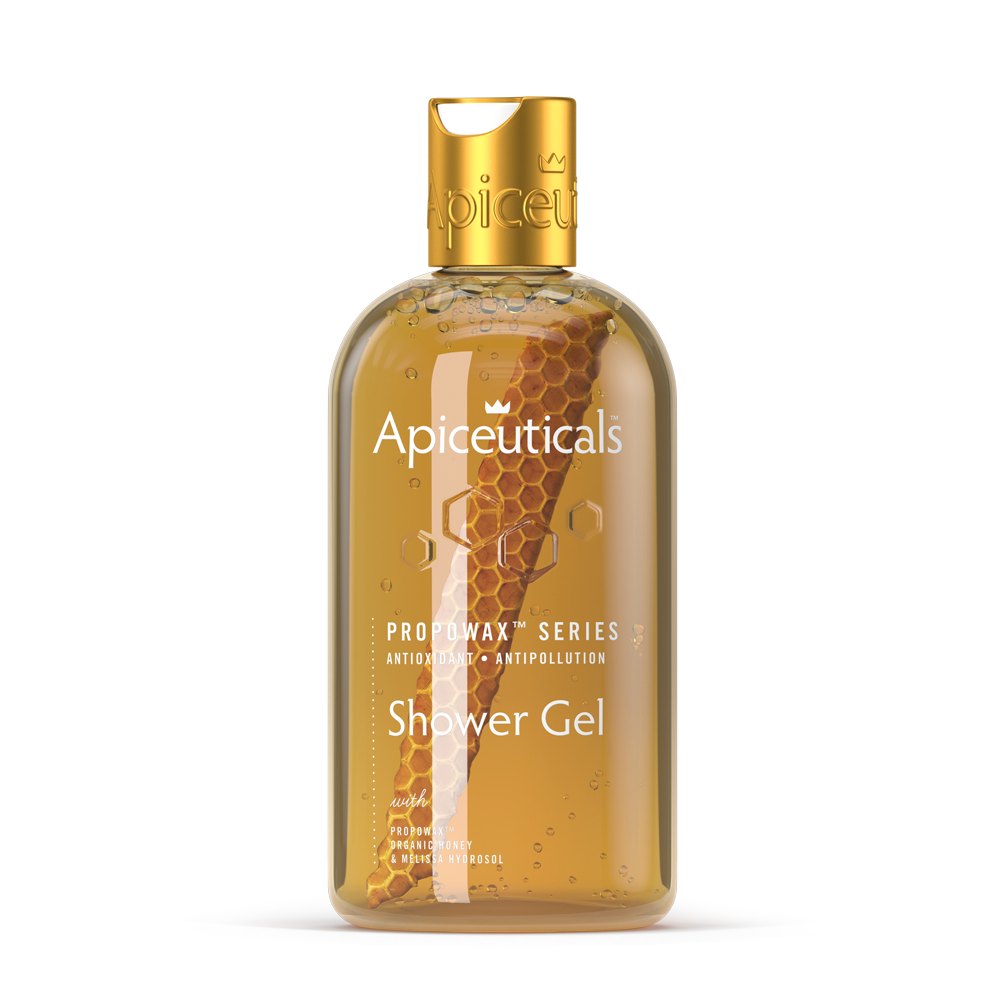
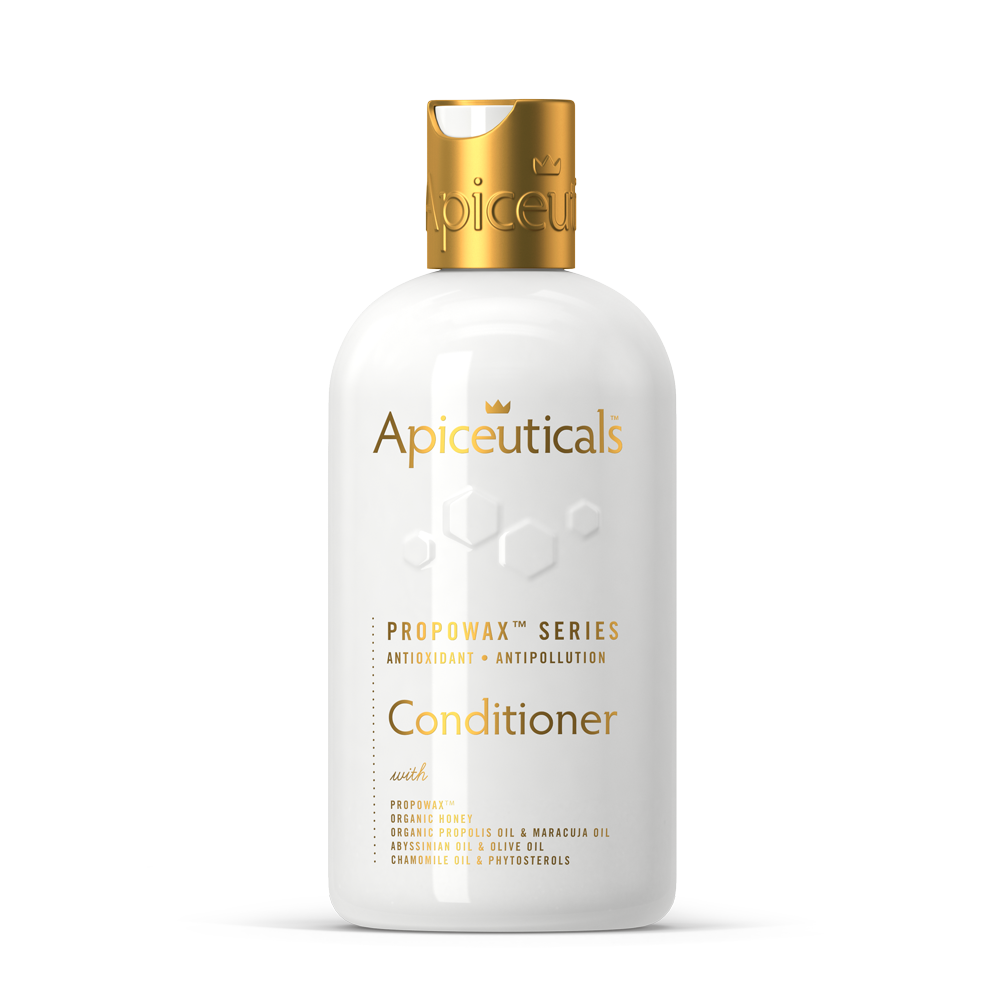
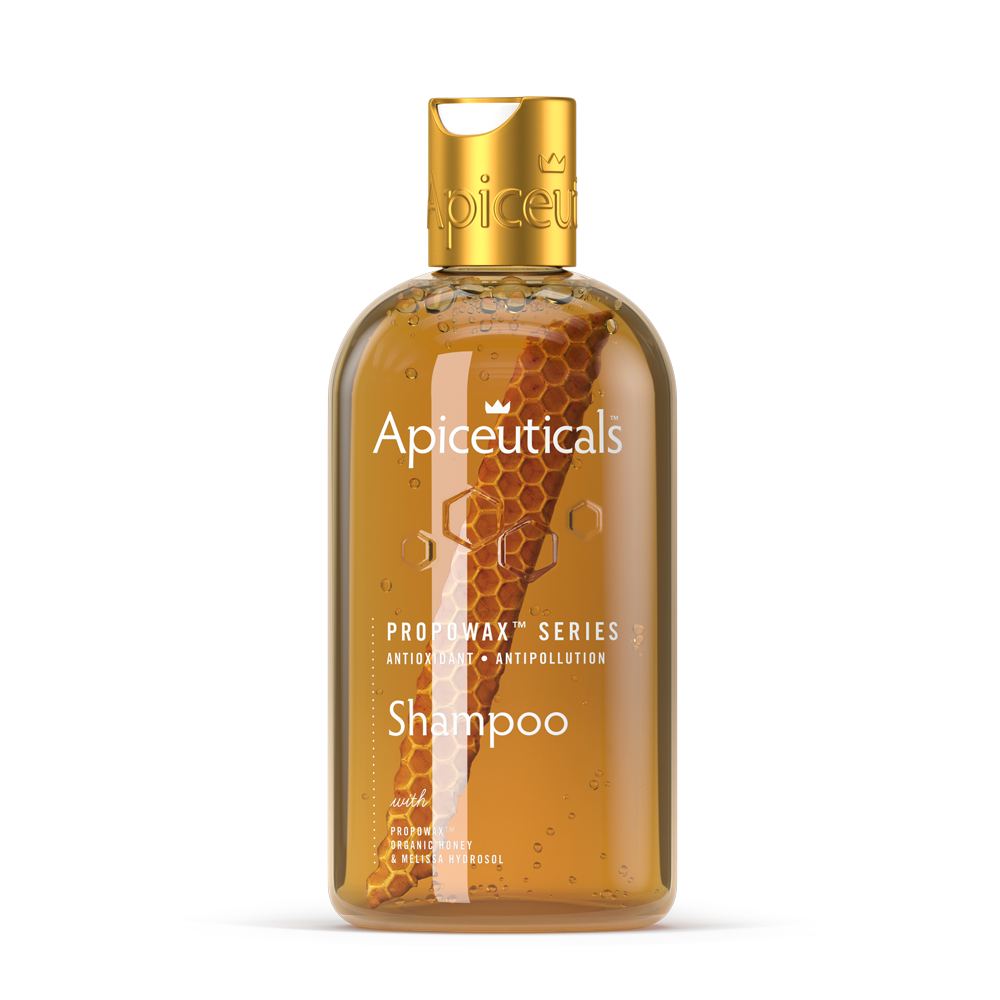
Apiceuticals approaches that gap through PROPOWAX™, a patented Living Honeycomb structure built into its formulations that continuously releases antioxidant compounds onto skin, scalp, and hair rather than delivering a single diluted dose at the moment of application. The technology holds a global patent for the highest antioxidant activity recorded in cosmetics, independently validated by the Aristotle University of Thessaloniki, which grounds the claim in measurement rather than description alone. That validation sits alongside a beekeeping practice dating to 1981, the kind of sustained apicultural relationship that shapes how raw material variability, the same variability documented across forest honey studies, gets managed before it ever reaches a formula.
- PROPOWAX™ Living Honeycomb is designed to release antioxidant compounds continuously rather than in a single application dose.
- The technology’s antioxidant activity has been independently validated by the Aristotle University of Thessaloniki under a global patent.
- Readers curious about the underlying chemistry can review the science-backed benefits of honey in skincare or the PROPOWAX™ technology page directly.
Allergic Reactions and Who Should Be Cautious
Honey allergy is uncommon but real, and it typically traces back to pollen, bee proteins, or propolis residue carried over from the hive rather than to the sugars themselves. Reactions can range from mild oral irritation and hives to, in rare cases, a more serious systemic response, and anyone with a known bee product or pollen allergy should treat a new forest honey the same way they would any unfamiliar allergen: with a small first taste and attention to how the body responds afterward.
People on strict blood sugar management, including those with diabetes, need a different kind of caution. Forest honey is still primarily sugar, and even a phenolic-rich sample will raise blood glucose the way any concentrated sweetener does. That caution applies regardless of how dark or antioxidant-rich the honey tests in a lab.
Topical use carries its own considerations. Honey applied directly to skin, particularly on broken skin or wounds, should be a clinically formulated medical-grade product rather than kitchen honey, since unregulated culinary honey has not been sterilized to the standard wound care requires. Anyone with a known sensitivity to bee products should patch-test before broader topical use, and infants under one year should never consume honey in any form due to the botulism risk already noted for dietary use. As with any bioactive food, moderation and attention to personal history matter more than the marketing claim on the jar.

Storing Forest Honey to Preserve Its Antioxidant Content
Honey’s reputation for near-indefinite shelf life is broadly true, but antioxidant content is not as stable as the sugar matrix around it. Heat, light, and prolonged air exposure gradually degrade phenolic compounds, which means a jar left near a stove or in direct sunlight can lose measurable antioxidant activity well before the honey itself spoils in any visible way.
A cool, dark cupboard away from heat sources is the simplest way to protect both flavor and phenolic content. Glass containers with a tight seal limit oxidation better than loosely capped jars, and repeated exposure to air each time the lid is left open adds up over months of use.

Crystallization is a normal, harmless change rather than a sign of spoilage, and it happens faster in honeys with a higher glucose-to-fructose ratio, a trait forest and chestnut honeys sometimes show relative to lighter blossom varieties, as noted in comparative research on forest and honeydew honey composition. Gently warming a crystallized jar in warm water restores its texture without meaningfully damaging the antioxidant compounds inside, as long as the temperature stays moderate rather than approaching a boil.
Contaminants, Adulteration, and How to Verify Quality
Forest honey’s premium positioning makes it a frequent target for adulteration, most commonly through the addition of cheaper sugar syrups that mimic honey’s viscosity and sweetness without carrying any of its phenolic content. Because dark color and forest origin are already associated with higher prices, some blended or diluted products are marketed under forest labeling that a compositional test would not support.
Compositional testing, including NMR analysis and isotope ratio testing, remains the most reliable way to confirm authenticity, since these methods can detect syrup dilution and mismatched sugar profiles that a taste test cannot catch. Producers who publish this kind of testing, or who can provide it on request, offer a meaningfully stronger authenticity signal than label language alone.
Environmental contaminants are a separate, smaller concern. Honey can carry trace pesticide residues or heavy metals depending on the surrounding land use near the hives, which is one reason organic certification and documented sourcing regions matter beyond the antioxidant conversation. Buying from producers who disclose harvest region and testing practices addresses both the adulteration risk and the contaminant question at once, and it is the same due diligence outlined earlier for confirming botanical origin.
How Forest Honey Compares to Other Honey Types
Set beside common blossom honeys like acacia or wildflower varieties, forest and honeydew honeys typically test higher on TPC and FRAP measures, largely a function of their darker pigmentation and distinct compound profile rather than any single “healthier” ingredient. Acacia honey, prized for its light color and mild taste, generally sits at the lower end of antioxidant assay results precisely because it lacks the phenolic density darker honeys carry.
Chestnut honey, a specific forest and honeydew type, has repeatedly ranked among the higher-phenolic options in comparative European research on pine, oak, and chestnut honeys, alongside a distinct sugar profile and characteristic bitterness that some readers find harder to enjoy than milder blossom varieties. Manuka honey, widely marketed for its antibacterial rather than antioxidant profile, occupies a different research lane entirely and is not directly comparable on phenolic content alone.
The practical takeaway is that no single honey type wins across every metric. Antioxidant assay strength favors darker forest and honeydew honeys, flavor preference varies by palate, and clinical evidence for specific outcomes, such as pediatric cough or topical wound support, has been documented across multiple honey types rather than forest honey exclusively.
Where the Antioxidant Story Meets Real Expectations
The honest read is that forest honey’s antioxidant numbers are real, sample-dependent, and consistently overstated in casual marketing. Health-conscious readers do better choosing tested, traceable jars, treating honey as a moderate dietary addition rather than treatment, and reaching for clinical products when the goal is therapeutic. For antioxidant skincare specifically, exploring formulated antioxidant options from Apiceuticals is a reasonable next step.
— Apiceuticals
Where Formulated Antioxidant Honey Fits Into a Skincare Routine
Forest and dark honeydew honeys carry the phenolic density that laboratory studies keep flagging, but getting that chemistry to actually do something on skin or scalp requires more than a spoonful applied at home. Some skincare lines incorporate Living Honeycomb antioxidant delivery to hair and body care, or use waterless formulation approaches for facial care, aiming to reflect underlying antioxidant chemistry without relying on unsupported marketing language.

- Certain product series are formulated based on dark, phenolic-dense honey chemistry rather than light blossom varieties.
- Readers who want the technical foundation behind these formulations can review the PROPOWAX™ technology page directly.
For anyone who has read this far and wants to see how antioxidant honey chemistry translates into an actual product line, the full range is available at the Apiceuticals shop.
Sources
- A Comprehensive Review of the Effect of Honey on Human Health
- Comparative study reporting high antioxidant/phenolic measures in certain honey samples
- Physicochemical and antioxidant properties of Apis dorsata forest honeys (PMC)
- Distinctive properties of the pine, oak, chestnut and multifloral blossom and honeydew honeys
- Health claims | EFSA
FAQ
Is forest honey healthy?
Forest honey can be part of a healthy diet in moderate amounts, and lab studies show it often carries higher phenolic and antioxidant assay values than light blossom honey. It is still a concentrated sugar, so the 48-trial clinical review frames its benefits as context-specific rather than a general health guarantee.
Is forest honey real honey?
Yes, forest honey is real honey, produced when bees collect honeydew secretions from aphids and other insects on trees like chestnut, pine, and oak rather than from floral nectar. This origin, not any additive or processing difference, is what separates it from blossom honey.
Is a spoonful of raw honey good for you daily?
A small daily spoonful of raw honey, including forest varieties, can be a reasonable substitute for refined sugar and may offer modest phenolic intake, but it should not replace medical treatment for any condition. People with uncontrolled diabetes or infants under one year should avoid regular honey consumption without a clinician’s guidance.
What is the healthiest honey to eat in the world?
There is no single honey crowned healthiest, since antioxidant assay results vary widely by region and botanical source, as shown in research on regional forest honey variability. Darker forest and honeydew honeys, including chestnut varieties, tend to test higher on phenolic and antioxidant measures than pale blossom types, but traceable sourcing matters more than any single label.
How does forest honey differ from blossom honey?
Forest honey comes from honeydew, insect secretions on trees, while blossom honey comes directly from floral nectar, and this difference in origin drives forest honey’s typically darker color and higher mineral and phenolic content. Comparative research on pine, oak, and chestnut honeys documents these compositional distinctions directly.
Can forest honey help wounds heal?
Topical honey has shown wound-support benefits in some clinical settings, but those results came from medical-grade honey products manufactured to a sterile clinical standard, not culinary forest honey from a kitchen jar. Anyone considering honey for wound care should use a clinician-recommended medical-grade product rather than substituting table honey.
Recommended


Related posts

Explore how a trial lasting 24 weeks and Malassezia research link scalp oxidative stress to shedding, and where PROPOWAX™ fits continuous antioxidant care.

See when silicones smooth hair or build up, and how PROPOWAX™ holds a global patent for highest antioxidant activity, validated by Aristotle University.

Explore mountain honey benefits for skin and body, from floral polyphenols and antioxidant activity to evidence on cough relief, wound care, and safe use.

Propolis delivers stronger antioxidant and antimicrobial action. Royal jelly boosts hydration and repair. Learn which suits your skin or scalp and why...

Pick sulfate-free or sulfate shampoo by your scalp, porosity, and color needs. Read evidence-backed guidance, antioxidant options, and a 4-step switch...