No products in the cart.
Return To Shop
24 Week Evidence for Honeycomb Skincare: What PROPOWAX™ Shows
Honeycomb skincare, in the sense that matters for evidence-based buying, refers to PROPOWAX™ Living Honeycomb, a patented antioxidant delivery system built by Apiceuticals and independently validated by the Aristotle University of Thessaloniki. The patent covers the highest antioxidant activity documented in a cosmetic formulation of its kind. Dermatological and clinical testing back specific formulas, but not every antioxidant claim on the market rests on the same evidence, and this article shows you how to tell the difference.
TL;DR:
- PROPOWAX™ is a patented antioxidant delivery system that continuously releases compounds from a honeycomb structure embedded in skincare formulas, validated by university research.
- The strongest evidence for antioxidants affecting skin, scalp, and hair comes from human trials lasting at least 8 weeks, not just laboratory or model tests.
- Results from antioxidant treatments typically appear after at least eight weeks of consistent use, with visible improvements measured at 16 to 24 weeks in clinical studies.
- The effectiveness of PROPOWAX™-based products depends on their format, with leave-on treatments providing more significant antioxidant delivery than rinse-offs like shampoos.
- When evaluating antioxidant claims, it is crucial to verify if the outcome was tested on humans, if the target endpoint improved, and if the study duration aligns with realistic expectations.
Table of Contents
- What Is PROPOWAX™ Living Honeycomb and How Does It Work?
- What Does the Peer-Reviewed Science Say About Antioxidants for Skin, Scalp, and Hair?
- How Should You Evaluate an Antioxidant Skincare Claim?
- Which PROPOWAX™ Format Fits Your Skin, Scalp, or Body Goal?
- An Expert View: Where Antioxidants Realistically Fit in a Skincare Routine
- Explore PROPOWAX™ Products for Your Routine
- Sources
- FAQ
What Is PROPOWAX™ Living Honeycomb and How Does It Work?
Picture a small honeycomb structure suspended inside a jar or tube, gradually yielding its compounds into the surrounding formula the way a beehive slowly releases propolis into its cells. That is the physical premise behind PROPOWAX™: a solid honeycomb stick embedded in the product base that continuously feeds antioxidant material into the formula, and from there onto skin, scalp, or hair, rather than dispersing everything at the moment of manufacture. Apiceuticals holds a global patent for this delivery method, specifically for achieving the highest antioxidant activity recorded in a cosmetic application of this kind, and the claim has been independently checked by [Aristotle University of Thessaloniki](https://www.apiceuticals.lv/propowax-technology/researchers, not simply asserted in marketing copy.
The brand’s antioxidant activity has been noted in prominent publications, describing it with terms rarely applied to bee-derived formulations. That kind of recognition matters less than the underlying chemistry, but it signals that the claim has survived scrutiny beyond the brand’s own labs.
PROPOWAX™ appears across two lines built around distinct goals:
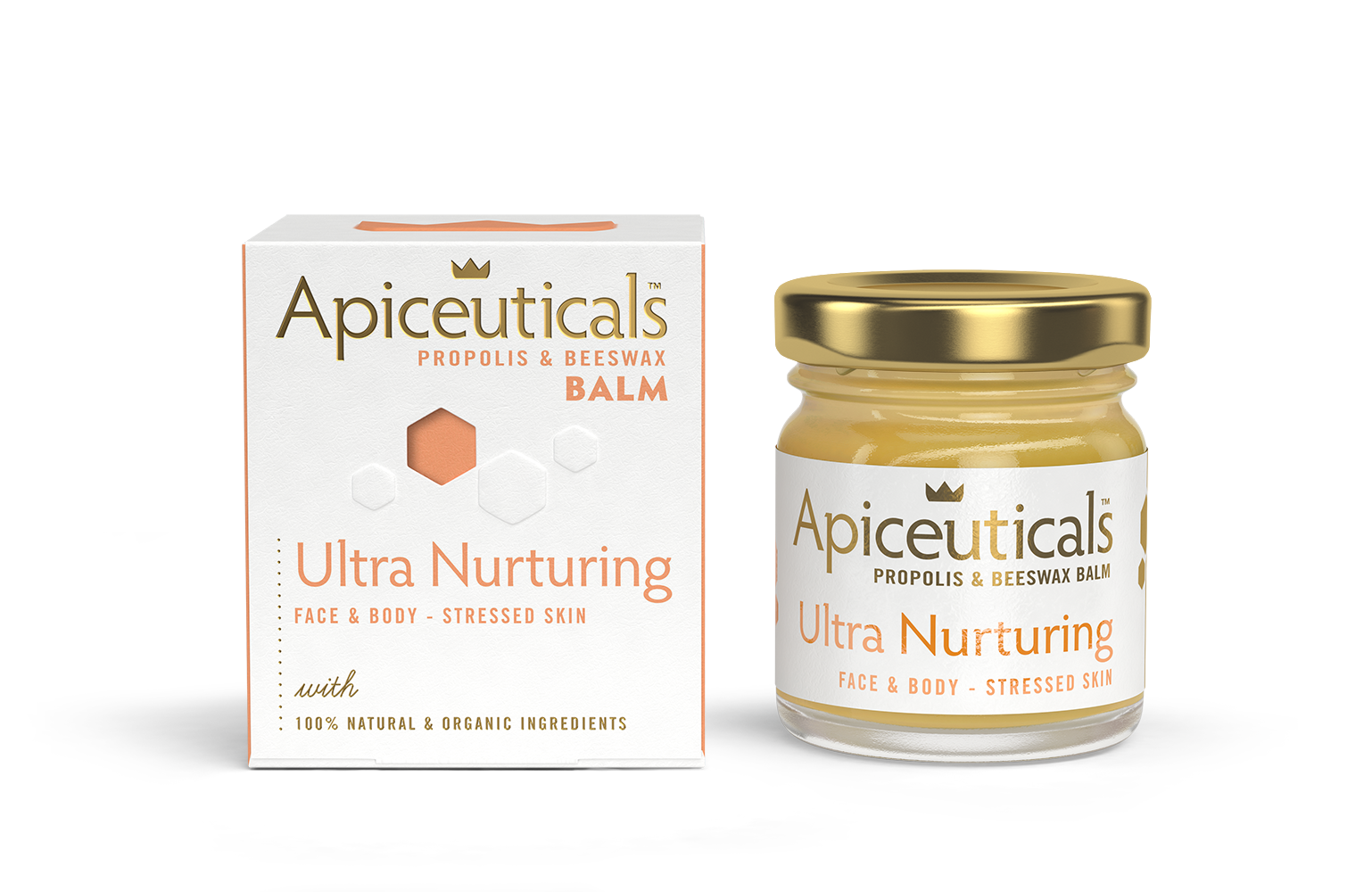
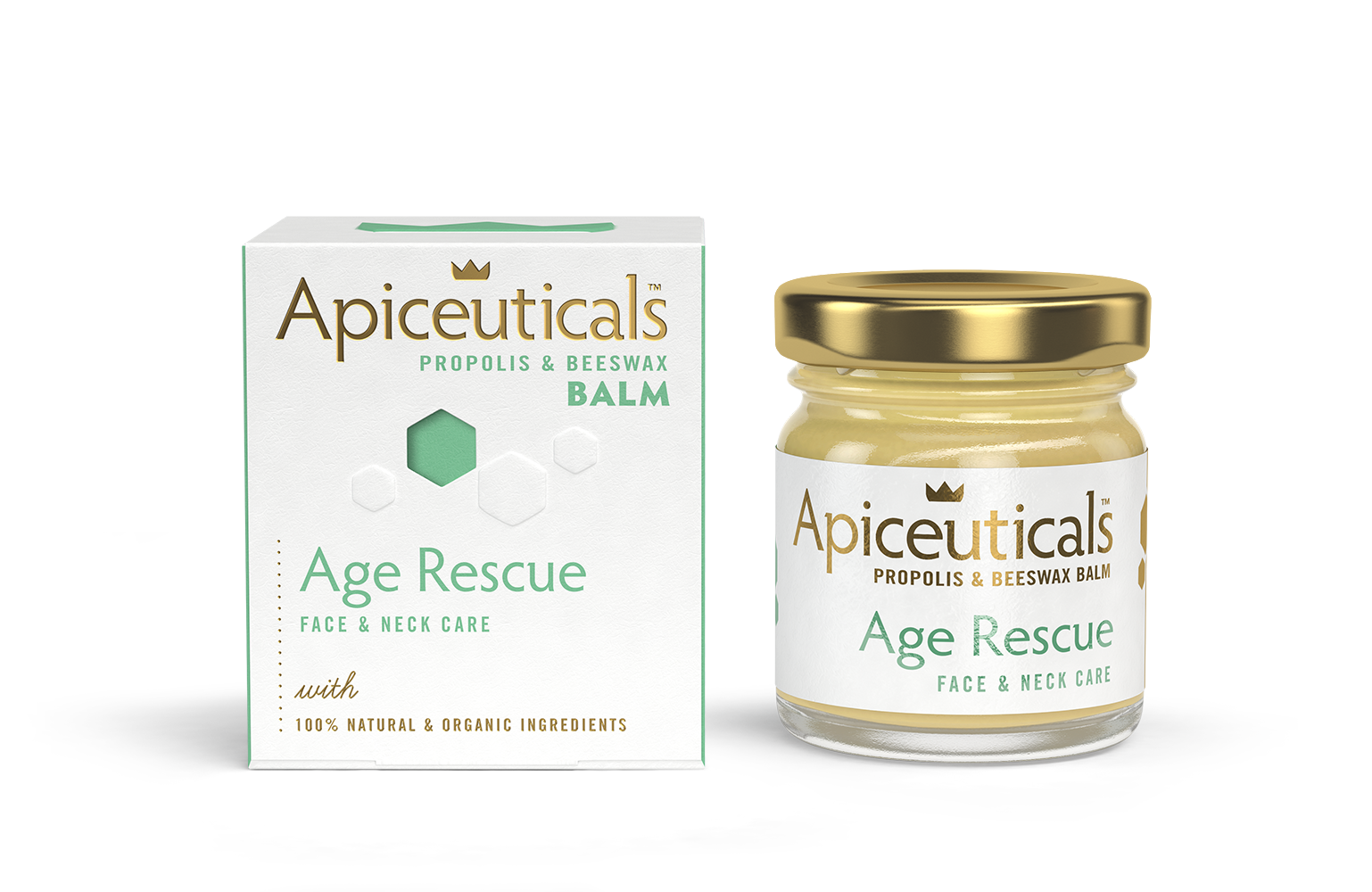
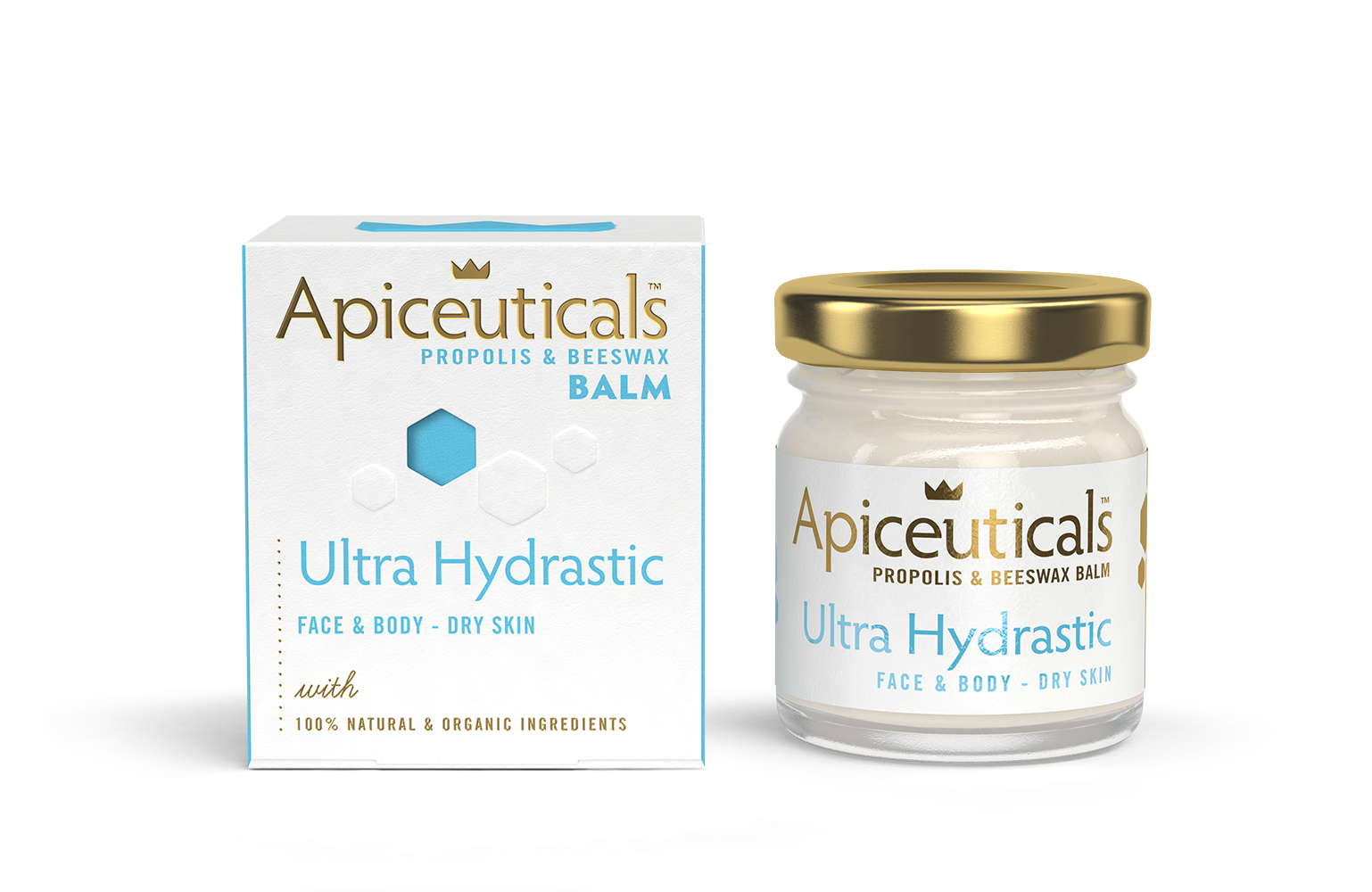
- The waterless HONEY BALM™ Series, formulated for facial antioxidant delivery and clinically associated with a notable reduction in wrinkle depth.
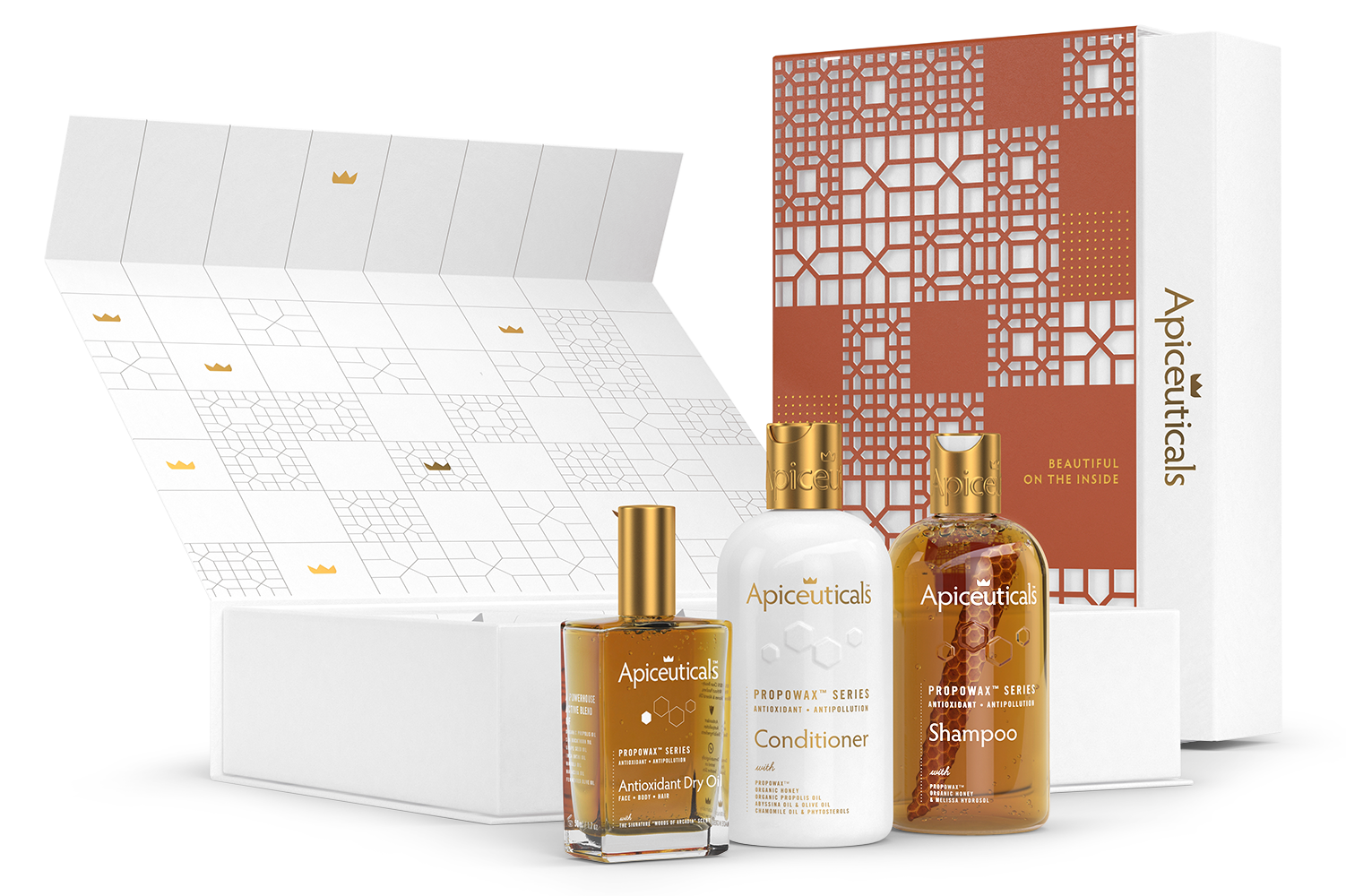
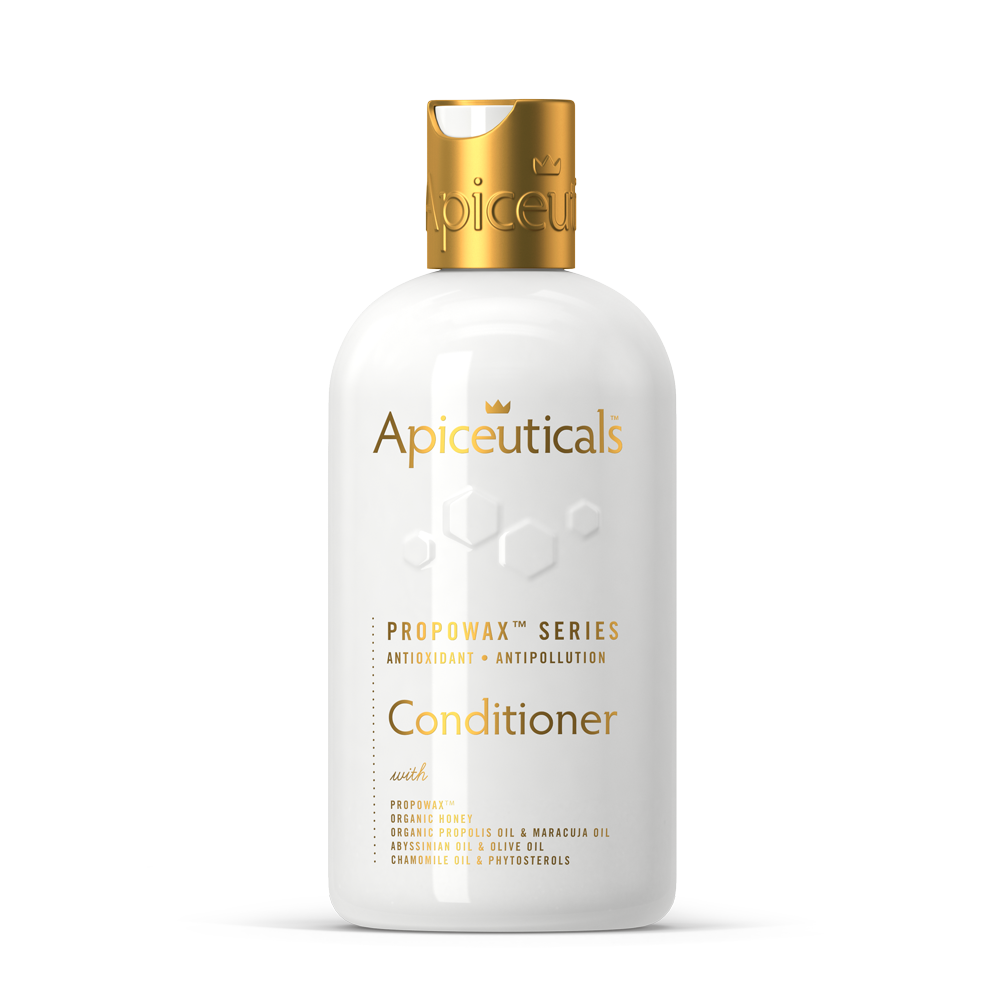
- The PROPOWAX™ Series for hair and body, designed to distribute antioxidant material across scalp and skin surfaces over repeated use.
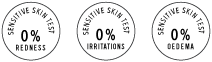
Every formula excludes numerous ingredients considered potentially harmful and is dermatologically tested on sensitive skin with a reported 0% irritation rate.
What Does the Peer-Reviewed Science Say About Antioxidants for Skin, Scalp, and Hair?
Antioxidant research moves through layers, and conflating them is where most marketing claims fall apart. A compound first proves it neutralizes free radicals in a test tube (an ORAC assay), then that it activates protective pathways in cultured cells (Nrf2 signaling), then that it behaves the same way in a 3D skin model, and only at the end does anyone test it on living, breathing scalps and faces over weeks or months. Each step narrows the gap between “this molecule is chemically reactive” and “this product changed something you can measure on a real person.”
The evidence gap that matters most: A 2024 methodological review found that antioxidant activity demonstrated in assays or cell models does not, by itself, establish that a finished product delivers a clinical outcome. Layered evidence, assay through human trial, is what closes that gap.
The strongest human data in this category comes from a 24-week randomized, double-blind, placebo-controlled trial testing a shampoo and leave-on regimen built around antioxidant and barrier-enhancing ingredients. Measured at 8, 16, and 24 weeks, the regimen reduced hair shedding, increased total hair count by phototrichogram, lowered transepidermal water loss, and improved scalp biomarkers compared to placebo. It is worth stating plainly: the ingredients tested in that trial were not PROPOWAX™. The trial demonstrates that antioxidant and barrier support, delivered consistently over months, can measurably change scalp condition in humans. It does not, on its own, prove what any specific PROPOWAX™ formula does.
A related line of research on botanical extracts showed similar promise at earlier evidence stages. ORAC and Nrf2 assays confirmed chemical and biological antioxidant activity, and testing in 3D skin models showed reduced reactive oxygen species after UV exposure. A four-week consumer test using a rosemary-based leave-on treatment found a significant drop in scalp oxidative markers (HODE) within the first week. That is a genuinely encouraging signal for topical antioxidant delivery, and it still falls short of the 24-week trial’s scale and rigor. Review-level literature on oxidative stress and scalp pathology reinforces the biological plausibility, noting that Malassezia-driven ROS production contributes to conditions like dandruff and seborrheic dermatitis, while cautioning that many antioxidant strategies still lack unequivocal human confirmation.

How Should You Evaluate an Antioxidant Skincare Claim?
Marketing language around antioxidants tends to blur three very different things: a chemical property, a lab result, and a lived outcome. A practical framework for reading clinical evidence narrows the question to five checks that answer most of what a shopper actually needs to know.
- Was the outcome tested on humans, or only in a dish or model? Assay and 3D-model data show mechanism; only a human trial shows whether skin, scalp, or hair actually changed.
- What exact endpoint improved? “Antioxidant activity” is not an outcome. Reduced shedding, lower TEWL, decreased wrinkle depth, or fewer oxidative markers are outcomes.
- How long did the study run? A one-week marker change and a 24-week structural improvement are not comparable claims, even when both get called “clinically tested.”
- What ingredient, at what concentration, in what formula? A trial on a botanical extract at a specific dose says nothing about a different product using a different concentration of the same plant.
- Is there dermatological tolerance data? Efficacy without a tolerance profile is only half the picture, particularly for reactive or sensitive skin.
Pro Tip: Read the study’s own conclusion section before the press release summarizing it. Press coverage routinely upgrades “may support” into “proven to,” and that gap is where most inflated antioxidant claims live.
Before adopting anything new, patch test on the inner forearm for 48 hours, scan the full ingredient list for known personal allergens, and match the format to your actual goal: a leave-on for scalp or facial exposure, a rinse-off if your priority is cleansing rather than deposition. Give any regimen at least eight weeks before judging results; the trials that found real change measured at 8, 16, and 24 weeks, not eight days.

Which PROPOWAX™ Format Fits Your Skin, Scalp, or Body Goal?
Format determines exposure time, and exposure time is what separates a marker change from a meaningful one. A leave-on treatment sits on skin or scalp far longer than anything rinsed away in ninety seconds, which is part of why the strongest trial data in this category comes from leave-on regimens rather than shampoos alone.
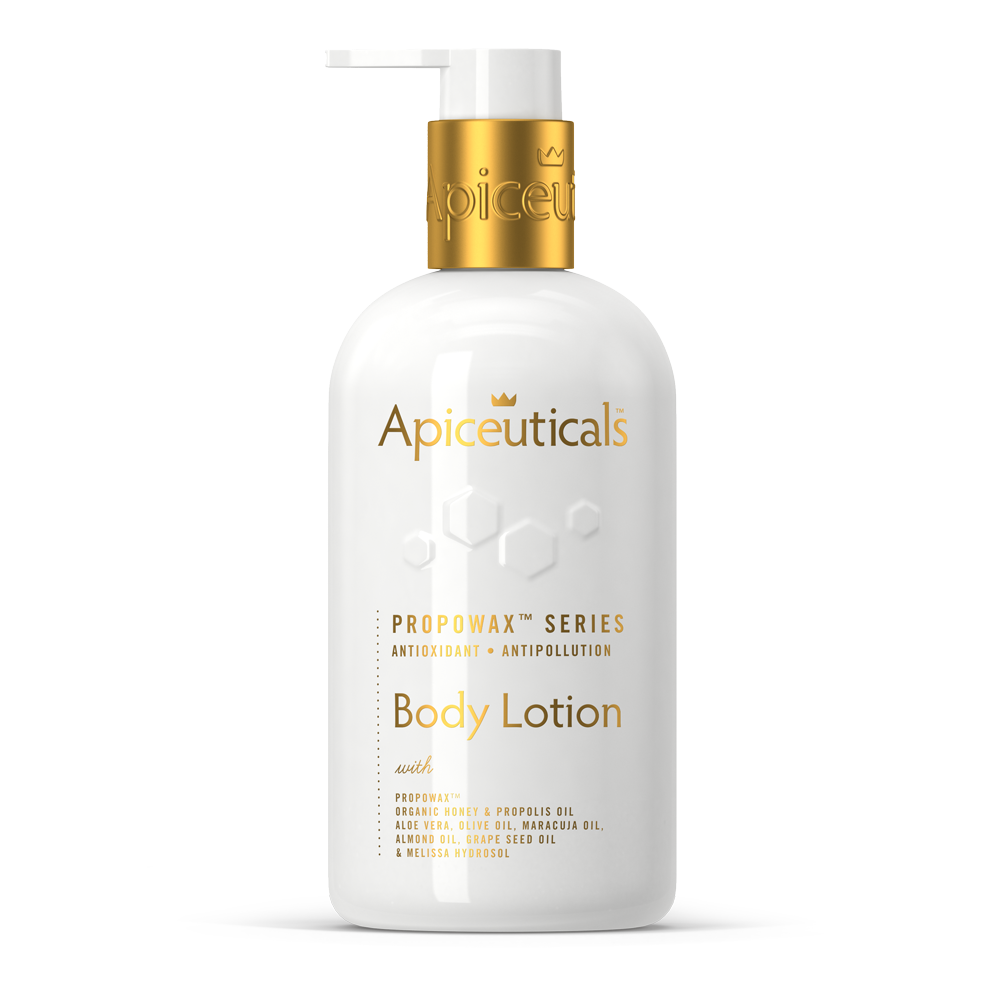
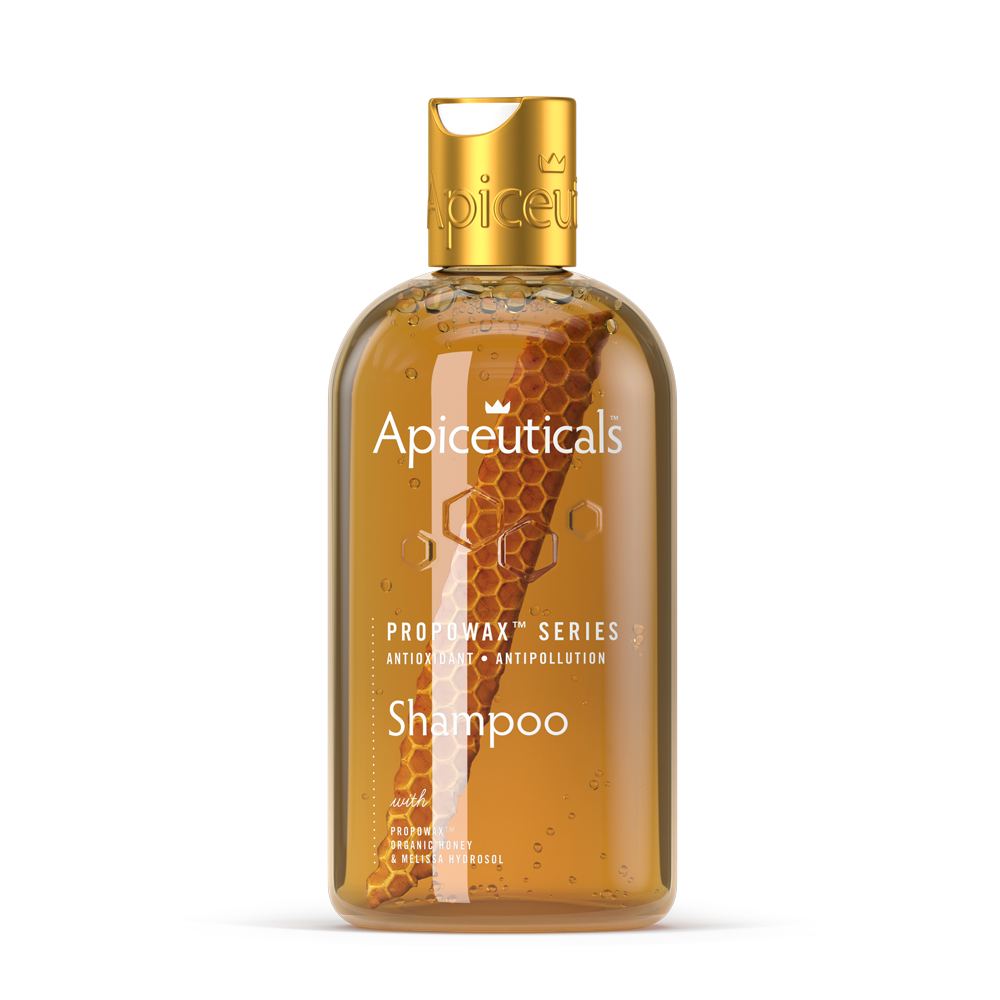
For facial antioxidant targeting, the waterless HONEY BALM™ Series is built for direct, repeated contact without a water base diluting the delivery. For scalp and hair, pairing a PROPOWAX™ shampoo with a leave-on treatment mirrors the layered approach used in the 24-week trial discussed above, applying antioxidant material at both the cleansing and the resting stage. For broader body coverage, a body balm format spreads the same delivery principle across larger skin areas where UV and environmental exposure accumulate daily.
A few practical notes apply across all three:
- Layer antioxidant treatments underneath sunscreen in the morning; antioxidants support the skin’s own defenses, they do not replace UV filtration.
- Apply leave-on scalp treatments to a dry or towel-dried scalp for better contact time before styling products go on top.
- Expect visible or measurable change on a multi-week timeline, not overnight, consistent with how the underlying human trials were designed.
Every formula is dermatologically tested on sensitive skin with a reported 0% irritation result, and the exclusion of common irritant ingredients is part of the formulations, as seen in products like Foundation – Spiced Honey — Maison Dovellé.
An Expert View: Where Antioxidants Realistically Fit in a Skincare Routine
Antioxidants are not the whole story of skin or scalp health. They sit alongside barrier repair and photoprotection as one of three primary levers, and the strongest published trial in this category improved outcomes by supporting the scalp barrier, not by regrowing follicles. That distinction should temper expectations for any antioxidant product, ours included.
What makes PROPOWAX™ worth a closer look is the layer of independent verification behind it: a global patent tied to a specific, testable claim, and validation from a university research team rather than an in-house lab alone. That does not exempt any single formula from needing its own outcome data. Readers evaluating a specific claim should go to the PROPOWAX™ technology page or a formula’s own clinical summary rather than assume one study’s results transfer wholesale.
— Apiceuticals
Explore PROPOWAX™ Products for Your Routine
If the evidence above has you thinking about where a patented antioxidant delivery system fits into your own routine, the Apiceuticals shop is the direct next step, not another comparison chart. Unlike raw honey or beeswax add-ins with no delivery mechanism behind them, PROPOWAX™ is built around a documented, patented release process with university-level validation attached to it.

Start with the goal you care about most: the waterless HONEY BALM™ Series for facial antioxidant work and wrinkle depth, the PROPOWAX™ hair and body lines for scalp and skin coverage, or the organic honey collection if you want to start with ingestible antioxidant support. Whatever you choose, read the full ingredient list against your own allergy history and patch test before full application. Browse the current lineup and pick the format that matches the routine you just read about.
Sources
- Scalp application of antioxidants improves scalp condition and reduces hair shedding in a 24‐week randomized, double‐blind, placebo‐controlled clinical trial
- Review linking oxidative stress with ageing and scalp conditions
- 2024 research emphasizing layered evidence for antioxidant claims
- Antioxidant Propowax™ Technology – Apiceuticals
FAQ
What Is Honeycomb Skincare?
Honeycomb skincare, as used here, refers to PROPOWAX™ Living Honeycomb, a patented honeycomb structure inside Apiceuticals formulas that continuously releases antioxidant material into the product and onto skin, scalp, or hair. The delivery method has been independently validated by Aristotle University of Thessaloniki.
Is PROPOWAX™ Different From Regular Honey or Beeswax Ingredients?
Yes. Standard honey or beeswax ingredients are mixed into a formula once and do not continue releasing compounds afterward, while PROPOWAX™ is a patented structure designed for ongoing release. The patent covers the delivery mechanism itself, not simply the inclusion of a bee-derived ingredient.
Has PROPOWAX™ Been Tested in a Clinical Trial?
The 24-week human trial referenced in antioxidant scalp research tested a different antioxidant and barrier-enhancing regimen, not PROPOWAX™ directly, so that specific data point should not be read as proof of PROPOWAX™’s clinical outcome.
Do Antioxidants Actually Reduce Hair Shedding?
In at least one 24-week randomized, double-blind trial, a shampoo and leave-on antioxidant regimen reduced shedding and increased hair count versus placebo. The effect worked through improved scalp barrier function and condition rather than new follicle growth, so it supports retention, not regrowth.
How Long Before I See Results From an Antioxidant Skincare Routine?
Published trials measured meaningful change at 8, 16, and 24 weeks, with earlier consumer tests showing marker shifts within one to four weeks. Give any antioxidant regimen at least eight weeks of consistent use before judging whether it is working for you.
What Products Should I Start With for Antioxidant Skincare?
For facial goals, the waterless HONEY BALM™ Series targets antioxidant delivery and wrinkle depth. For scalp and hair, pairing a PROPOWAX™ shampoo with a leave-on treatment mirrors the layered approach shown effective in published trials. Current pricing and full formulas are listed on the Apiceuticals shop.
Recommended


Related posts

Explore how a trial lasting 24 weeks and Malassezia research link scalp oxidative stress to shedding, and where PROPOWAX™ fits continuous antioxidant care.

See when silicones smooth hair or build up, and how PROPOWAX™ holds a global patent for highest antioxidant activity, validated by Aristotle University.

Explore mountain honey benefits for skin and body, from floral polyphenols and antioxidant activity to evidence on cough relief, wound care, and safe use.

Propolis delivers stronger antioxidant and antimicrobial action. Royal jelly boosts hydration and repair. Learn which suits your skin or scalp and why...

Pick sulfate-free or sulfate shampoo by your scalp, porosity, and color needs. Read evidence-backed guidance, antioxidant options, and a 4-step switch...