No products in the cart.
Return To Shop
Pump Dispensers Are 7x Risk: Hotel Hygiene Checklist for Procurement
Hotel dispensers hygiene comes down to two variables working together: the hardware you specify and the refill discipline behind it. A peer-reviewed contamination study found refillable pump dispensers contaminated at nearly seven times the rate of sealed press systems, but the fix isn’t abandoning refillable formats. It’s pairing the right dispenser design with documented back-of-house routines, the same operational discipline Hospitality Net argues separates trusted amenity programs from the ones guests photograph and complain about. Apiceuticals builds its PROPOWAX™ amenity systems around exactly that principle.
TL;DR:
- Refillable pump dispensers in hotel rooms have contamination rates nearly seven times higher than sealed press systems, primarily due to stagnant residual liquid and pump mechanisms.
- Lower contamination risks are associated with sealed cartridge systems and sealed refill pouches, which isolate the product from the dispensing mechanism and limit biofilm formation.
- Proper back-of-house routines, including sealing refills, scheduled pump head swaps, and routine inspections, are essential to maintaining dispenser hygiene and guest trust.
- Hardware specifications should prioritize materials like stainless steel and drainable, lockable designs, paired with visible fill indicators for easy verification and sanitation.
- Visible guest-facing hygiene practices, such as daily wipe standards and clear labeling, significantly influence guest perceptions of cleanliness and overall trust.
Table of Contents
- Why Dispenser Hygiene Shapes Guest Trust and Compliance
- Which Dispenser Types Carry the Most Contamination Risk?
- What Does the Contamination Evidence Actually Show?
- How Should Housekeeping Refill and Inspect Dispensers?
- What Materials and Design Specs Should Procurement Require?
- How Do You Make Dispenser Hygiene Visible to Guests?
- Apiceuticals’ Approach to Hotel Amenity Hygiene
- An Operational Lens on What Actually Prevents Contamination
- Request a PROPOWAX™ Amenity Sample for Your Property
- Sources
- FAQ
Why Dispenser Hygiene Shapes Guest Trust and Compliance
A cloudy pump head or a dispenser bracket rimmed with residue tells a guest something about the rest of the room they haven’t even inspected yet. Perception moves fast in this category. Once a guest photographs a dirty dispenser and posts it, the review reads as a hygiene failure for the entire property, not a single fixture.
The public health stakes are real, not just reputational. Contaminated liquid soap can undercut the very handwashing it’s meant to support, since a dispenser delivering bacteria-laden product defeats the purpose of the wash. Where dispensers sit near food-preparation or breakfast-service areas, hygiene expectations converge with HACCP-adjacent EU regulatory standards governing food-contact hygiene, which puts amenity procurement on inspectors’ radar in ways many facility teams underestimate.
The number that should reset procurement priorities: refillable pump dispensers tested in hotel rooms showed a high contamination rate, against a much lower contamination rate for nonrefillable press dispensers, according to the PMC study.
Which Dispenser Types Carry the Most Contamination Risk?
Not all dispenser formats fail the same way, and procurement teams specifying hardware need to understand where risk actually lives inside each design.
- Refillable pump dispensers: The primary contamination routes run through the pump head and threaded connections, where residual liquid sits and stagnates between refills.
- Press or nonrefillable sealed systems: These carry substantially lower contamination risk because there’s no reopened seal or standing liquid reservoir, though the trade-off is higher unit cost and more packaging waste.
- Cartridge systems: Sealed cartridges isolate product from the dispensing mechanism until use, limiting the biofilm pathway that plagues open-refill pumps.
- Touchless or automatic dispensers: These reduce hand contact with the unit itself, but they still require scheduled maintenance and liquids formulated for the sensor mechanism, or they clog and fail.
Design features matter regardless of format. Drainable pump heads, lockable brackets that prevent tampering, and visible fill windows that let housekeeping confirm product level without opening the unit all reduce risk independent of which category you choose.
What Does the Contamination Evidence Actually Show?
The PMC study on soap dispenser contamination is the most cited piece of evidence in this space, and its numbers are stark enough to justify a hardware review at most properties. Researchers found a majority of refillable pump dispensers pulled from hotel rooms were contaminated, with a mean total bacterial count of 2.2 × 10^5 CFU/mL, compared with just 10.6% of nonrefillable press dispensers. The organisms recovered included Pluralibacter gergoviae, Pseudomonas species, and Serratia marcescens, all capable of causing infections in vulnerable guests.
The mechanism explains the gap: pump pressure release creates a loophole where air and residual liquid mix inside the mechanism, and that damp, low-flow environment is ideal for biofilm formation. A press dispenser’s sealed reservoir simply doesn’t offer that same pathway.
- 70.2% of pump dispensers contaminated vs. 10.6% of press dispensers
- Pressure-release mechanism identified as the primary contamination route
- Findings drew mainstream attention, including coverage from Travel + Leisure that pushed guest awareness of the issue into the consumer press
The practical implication for procurement is not “switch to disposable everything.” It’s that hardware choice has to be paired with process. A pump dispenser managed with strict refill discipline can outperform a poorly maintained sealed system, but you’re starting from a harder baseline.
How Should Housekeeping Refill and Inspect Dispensers?
Safe refilling is a back-of-house operation, not something that happens in the guest room with a pitcher and a funnel. Here’s the sequence that eliminates most contamination pathways:
- Never top off in-room. Remove the empty or low bottle and swap in a prefilled, sealed replacement from the housekeeping cart.
- Refill only in a dedicated back-of-house area, using sealed bulk pouches rather than open containers, and sanitize the vessel before each refill cycle.
- Replace pump heads on a fixed schedule rather than relying on wiping alone, since internal biofilm resists surface cleaning even when the exterior looks spotless.
- Log every swap and inspection on a checklist that records pump condition, fill level, and bracket cleanliness at each room clean.
- Mount units in tamper-proof, lockable brackets and keep labeling visible so guests can see the product and its source at a glance.
Pro Tip: Treat pump heads like a consumable, not a durable part. Swapping them on schedule costs less than the guest complaint or review that follows a visibly failed one.
Assign responsibility clearly. Housekeeping handles the swap and daily visual check; engineering or a designated supervisor owns the pump-head replacement schedule and the documentation trail that proves it happened.
What Materials and Design Specs Should Procurement Require?

Specification sheets should do more work than most RFPs currently ask of them. For public-facing hardware, request AISI 304 stainless steel housings and brackets, since the finish resists corrosion, cleans easily, and holds up to repeated sanitizing without pitting.
Beyond the shell material, the internal mechanism is where hygiene is won or lost:
- Drainable pump-head designs that don’t trap residual liquid between uses
- Compatibility with sealed cartridge or pouch refill systems, not open-pour refilling
- Lockable mounting hardware that prevents tampering or unauthorized removal
- Visible fill windows so staff can check product level without opening the unit
- HACCP-aligned construction for any dispenser located in or near food-preparation zones, where EU hygiene regulation applies directly
A commercial water hygiene audit checklist is a useful reference model here too, since the same documented, scheduled inspection logic that governs water hygiene programs applies cleanly to amenity dispenser fleets.
How Do You Make Dispenser Hygiene Visible to Guests?
Hygiene that exists only in a back-of-house log doesn’t do much for guest confidence. It has to show up in the room. Daily visual standards matter as much as the underlying microbiology, since a guest can’t verify CFU counts but can absolutely spot a smudged pump or a peeling label.
- Set a daily visual standard: pump exterior wiped, bracket clean, no residue at the nozzle
- Use clear, consistent labeling so guests know exactly what product they’re using and where it comes from
- Train front-line and housekeeping staff with a simple response if a guest raises a hygiene question, one that points to the documented refill and swap schedule rather than a vague reassurance
- Track complaint volume tied to amenities as a leading indicator, since a drop usually follows the introduction of visible, documented routines
Hospitality Net’s analysis of the guest trust problem makes the point directly: operations, not hardware alone, are what guests are actually reacting to when they distrust a dispenser.
Apiceuticals’ Approach to Hotel Amenity Hygiene
Apiceuticals designs its hotel amenity systems around the same contamination science this article has laid out, not as an afterthought but as the starting brief. The brand’s credentials sit on a scientific foundation most amenity suppliers can’t claim.
- A global patent for the highest antioxidant activity in cosmetics, delivered through PROPOWAX™ Living Honeycomb technology
- Independent validation of that antioxidant activity by the Aristotle University of Thessaloniki
- Dermatological testing on sensitive skin, with formulations free of SLS, SLES, parabens, silicones, and mineral oils
- A beekeeping heritage tracing to 1981, with organic, ethically harvested ingredients from Arcadia
For hotel deployment, Apiceuticals ships sealed refill pouches built for back-of-house filling rather than in-room top-offs, paired with a swap routine designed for the exact inspection discipline this article recommends. Procurement teams can review the hotel amenity systems built for 4- and 5-star properties directly.
An Operational Lens on What Actually Prevents Contamination
Most amenity failures we’ve analyzed trace back to process gaps, not bad hardware choices. A pilot program, run in a single wing before a full rollout, is the fastest way to confirm a chosen dispenser and refill workflow actually holds up under daily housekeeping pressure. Apiceuticals works with hotel partners this way, testing the pairing before scale, because the science only protects guests when the routine behind it never slips.
— Apiceuticals
Request a PROPOWAX™ Amenity Sample for Your Property
Most hotel amenity decisions come down to a trade-off between guest-facing polish and the operational headache of keeping dispensers actually clean. Apiceuticals removes that trade-off by building the sealed refill logic this article recommends directly into its PROPOWAX™ amenity systems, so procurement doesn’t have to reverse-engineer a hygiene protocol around hardware that wasn’t designed for one.
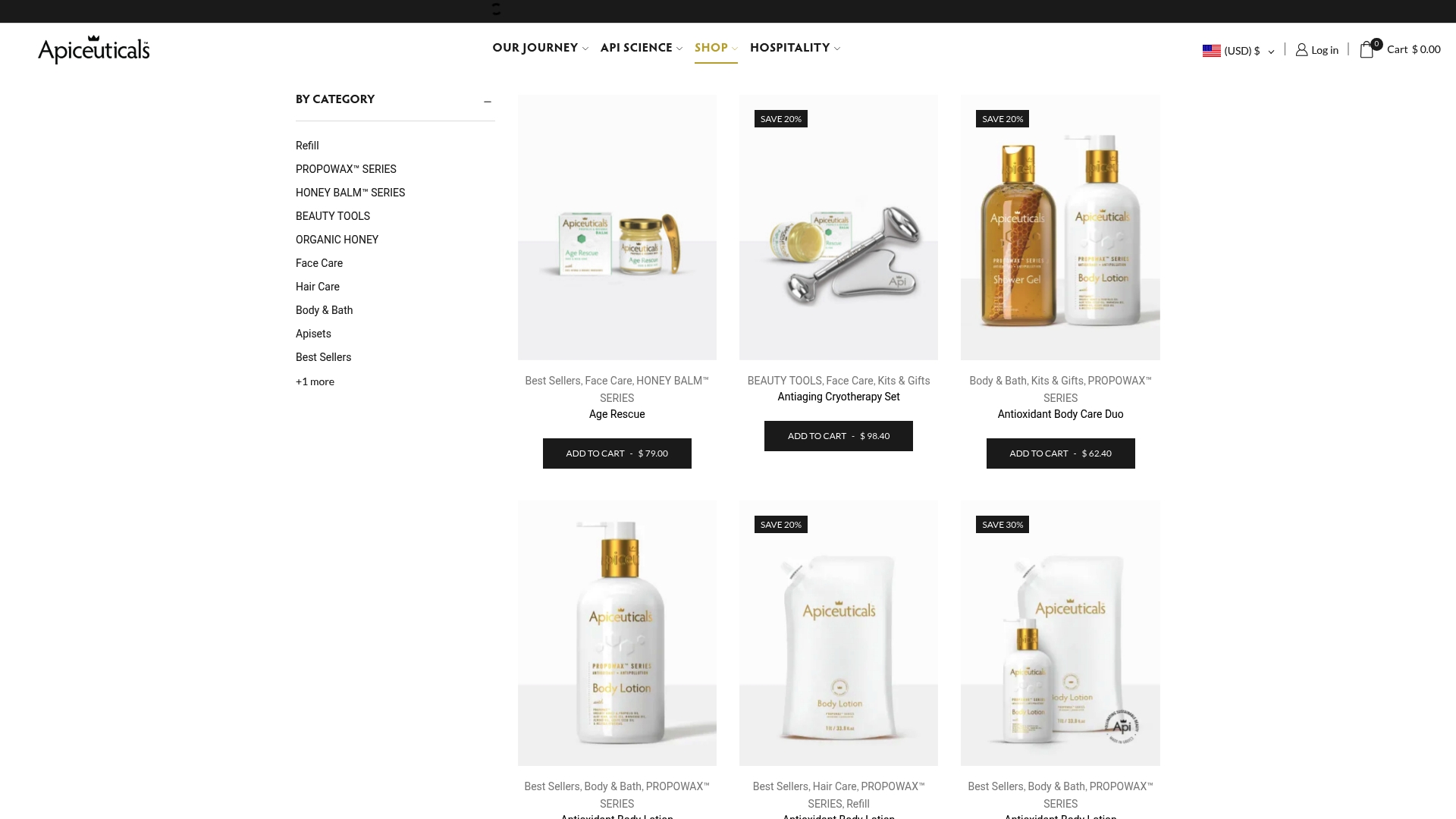
Every amenity system carries the same antioxidant science behind Apiceuticals’ consumer lines, backed by the PROPOWAX™ technology patent and its Aristotle University validation. If you’re evaluating amenity suppliers for a 4- or 5-star property, request a sample and review the hotel amenity program details directly, and bring your engineering team into the conversation early so the refill schedule is built before the units ever reach a guest room.
Sources
- A loophole in soap dispensers mediates contamination with Gram‐negative bacteria – PMC
- Hotel Dispensers in 2026: Solving the trust problem in guest bathrooms – Hospitality Net
- Hotel refillable toiletry dispensers may be more bacteria-ridden — Travel + Leisure
- EUR-Lex: Relevant EU regulatory texts
FAQ
Are Soap Dispensers Sanitary?
They can be, but refillable pump dispensers carry meaningfully higher contamination risk than sealed press systems, according to the PMC study showing a a high contamination rate for pumps versus 10.6% for press dispensers. Sanitary outcomes depend on design plus a documented refill and replacement routine.
Do You Need to Clean Soap Dispensers?
Yes, and cleaning the exterior alone isn’t enough. Internal components like the pump head and threaded connections need scheduled replacement, since biofilm inside the mechanism resists surface wiping.
What Toiletries Do 5-Star Hotels Use?
Five-star properties increasingly specify amenity systems built on clean formulations and traceable, sealed refill sources rather than generic bulk soap. Apiceuticals supplies antioxidant-based amenity products formulated around PROPOWAX™ technology specifically for this tier.
What Is the Best Shower Soap Dispenser?
The best option combines a drainable, sealed-cartridge or pouch-refill mechanism with a stainless steel housing, ideally AISI 304 grade, and a lockable bracket that prevents tampering. Format matters less than whether the operation behind it includes back-of-house refilling and a documented swap schedule.
How Often Should Hotel Dispensers Be Replaced or Sanitized?
Pump heads should be swapped on a fixed schedule rather than cleaned indefinitely in place, since internal biofilm builds up regardless of exterior wiping. Bottles or reservoirs should be fully sanitized in a back-of-house area at each refill cycle, not topped off in the guest room.
Recommended


Related posts

Explore how a trial lasting 24 weeks and Malassezia research link scalp oxidative stress to shedding, and where PROPOWAX™ fits continuous antioxidant care.

See when silicones smooth hair or build up, and how PROPOWAX™ holds a global patent for highest antioxidant activity, validated by Aristotle University.

Explore mountain honey benefits for skin and body, from floral polyphenols and antioxidant activity to evidence on cough relief, wound care, and safe use.

Propolis delivers stronger antioxidant and antimicrobial action. Royal jelly boosts hydration and repair. Learn which suits your skin or scalp and why...

Pick sulfate-free or sulfate shampoo by your scalp, porosity, and color needs. Read evidence-backed guidance, antioxidant options, and a 4-step switch...