No products in the cart.
Return To Shop
How to Detox Your Skin Naturally: A Science Guide
TL;DR:
- A natural skin detox primarily removes surface debris and supports barrier health, not internal detoxification. Combining internal nutrition with external care, including gentle cleansing and antioxidant-rich treatments like PROPOWAX™ Living Honeycomb, enhances skin clarity and resilience. A slow, consistent detox routine of one to two weeks with proper habits yields lasting results and barrier recovery.
Knowing how to detox your skin naturally starts with one clarifying fact: the skin is not a primary detox organ. The liver and kidneys handle the body’s true detoxification work. What a natural skin detox actually does is remove surface debris, reduce oxidative stress, and support the skin’s barrier so it can function at its biological best. That distinction matters because it separates science-backed practice from marketing fiction. The most effective approach combines internal support through nutrition and hydration with external care using botanical ingredients, gentle exfoliation, and antioxidant-rich formulas such as Apiceuticals’ patented PROPOWAX™ Living Honeycomb.
How to detox your skin naturally from the inside out
The skin reflects what happens inside the body. When the liver and kidneys process waste efficiently, the skin stays clearer. When those pathways are burdened by poor diet, dehydration, or chronic stress, inflammation often surfaces as dullness, congestion, or breakouts.
Hydration is the most direct lever you can pull. Experts recommend drinking at least 8 glasses of water daily alongside 25–30 grams of dietary fiber to support kidney and liver function. Fiber binds to waste compounds in the gut and moves them out before they recirculate into the bloodstream. That recirculation is one of the underappreciated drivers of chronic skin inflammation.
Anti-inflammatory foods accelerate the process. Berries, leafy greens, walnuts, and fatty fish supply polyphenols and omega-3 fatty acids that reduce systemic inflammation and support collagen synthesis. Think of free radicals attacking skin cells the way rust corrodes metal: antioxidant-rich foods slow that oxidative damage at the cellular level.
The gut-skin connection adds another layer. Probiotic-rich foods like yogurt, kefir, kimchi, and sauerkraut support a balanced gut microbiome. A disrupted gut microbiome correlates with elevated skin inflammation, making probiotic intake a legitimate part of any internal skin detox strategy.
- Hydration: 8+ glasses of water daily to support kidney filtration
- Fiber: 25–30g daily from whole grains, legumes, and vegetables
- Antioxidant foods: Berries, green tea, dark leafy greens, and turmeric
- Probiotics: Yogurt, kefir, and fermented vegetables for gut-skin balance
- Omega-3s: Fatty fish, flaxseed, and walnuts to reduce systemic inflammation
Pro Tip: Add a tablespoon of ground flaxseed to your morning smoothie. It delivers both fiber and omega-3 fatty acids in one step, supporting two internal detox pathways simultaneously.
What are the best external natural skin cleansing practices?
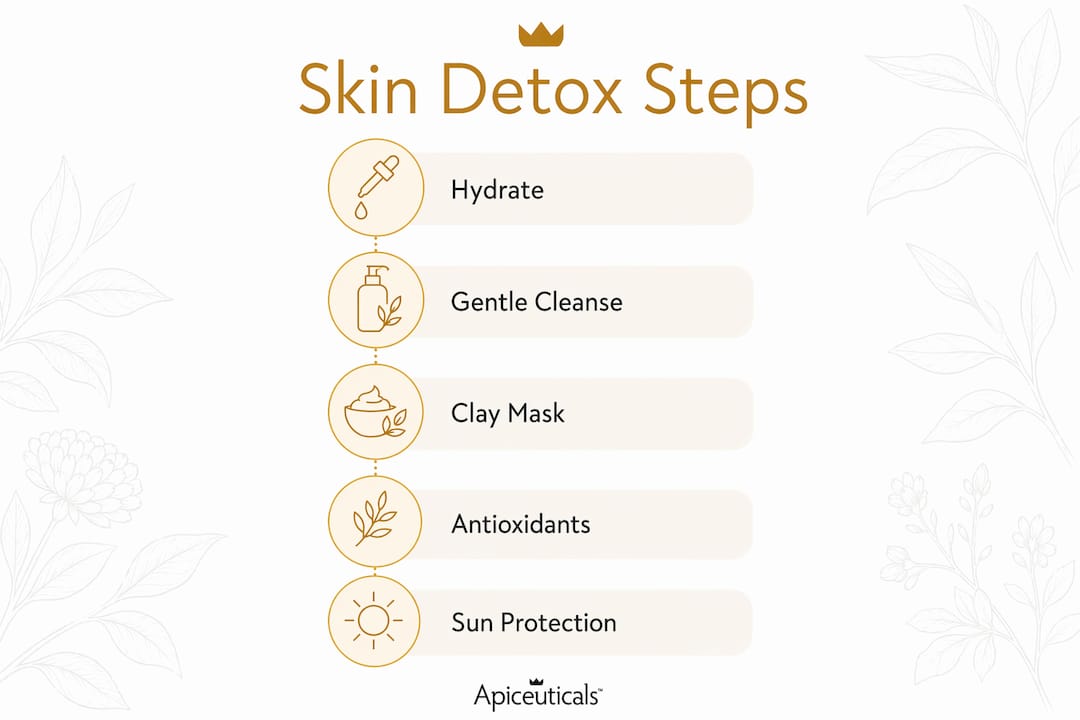
External natural skin cleansing is not about stripping the skin. It is about removing the layer of pollutants, sebum, and dead cells that accumulate daily and block the skin’s natural renewal cycle. The goal is a clean surface without a compromised barrier.

Double cleansing is the most reliable method for thorough surface purification. The first cleanse, ideally with a gentle oil-based or balm formula free from SLS and SLES, dissolves sunscreen and sebum. The second cleanse with a water-based sulfate-free cleanser removes residual impurities. This two-step process clears the skin without the dryness that single harsh cleansers cause.
Steam is an underused tool in a home detox routine. Holding your face over a bowl of warm water for 5–8 minutes softens sebum inside pores and makes subsequent cleansing more effective. It does not “open” pores in a permanent sense, but it does make them temporarily more receptive to extraction and cleansing.
Exfoliation requires precision. Over-exfoliating more than 1–3 times per week compromises the skin’s acid mantle and disrupts its microbial flora. Both chemical exfoliants like AHAs (glycolic acid, lactic acid) and BHAs (salicylic acid) and physical exfoliants like konjac sponges work well when used within that frequency. Exceeding it causes micro-tears, sensitivity, and a weakened barrier that is more vulnerable to environmental damage than before you started. For barrier repair after exfoliation, replenishing with a nourishing serum or balm is non-negotiable.
A structured detox cycle gives the skin time to respond. Detox routines typically run one to two weeks, with twice-monthly maintenance sessions recommended for sustained clarity. A quarterly one-week reset is also a practical schedule for those with generally healthy skin.
- Remove makeup and SPF with a gentle oil-based cleanser or cleansing balm
- Follow with a water-based cleanser free from sulfates and synthetic fragrance
- Steam for 5–8 minutes twice weekly to soften congestion
- Exfoliate 1–3 times per week using AHAs, BHAs, or a konjac sponge
- Apply a botanical serum or balm immediately after to replenish the barrier
Pro Tip: If your skin feels tight after cleansing, your cleanser is too harsh. Switch to a pH-balanced formula with no sulfates. Tightness signals barrier disruption, not cleanliness.
Which natural topical treatments work best for a skin detox routine?
Topical treatments are where a natural skin detox routine becomes most targeted. Two categories stand out for their evidence base: clay-based masks for impurity extraction and antioxidant-rich serums for repair and protection.
Bentonite clay is the most studied botanical clay for skin detox. Its negatively charged particles attract positively charged impurities, heavy metals, and excess sebum, drawing them to the surface for removal. The critical detail most people miss: remove clay masks when still slightly tacky, at the 8–12 minute mark, never when fully dry and cracked. A fully dried clay mask pulls moisture from the skin itself, defeating the purpose of the treatment. Avoid metal utensils when mixing bentonite clay; metal ions interfere with the clay’s ionic charge and reduce its drawing capacity. Use glass, ceramic, or wooden tools instead.
Customizing the mask base to your skin type makes a measurable difference. The table below outlines the most effective combinations:
| Skin Type | Clay Base | Mixing Liquid | Key Benefit |
|---|---|---|---|
| Oily / Acne-prone | Bentonite clay | Apple cider vinegar (diluted) | Balances pH, reduces excess sebum |
| Dry / Sensitive | Kaolin clay | Water and raw honey | Draws impurities without stripping moisture |
| Combination | Bentonite or kaolin | Rose water | Targets congested zones while calming dry areas |
| Normal | Either clay | Plain water or aloe vera gel | General purification and tone refinement |
After any clay treatment, the skin needs antioxidant replenishment. This is where the science of PROPOWAX™ Living Honeycomb becomes directly relevant. Apiceuticals holds a global patent for highest antioxidant activity in cosmetics, independently validated by the Aristotle University of Thessaloniki. The PROPOWAX™ Living Honeycomb structure continuously releases antioxidants onto the skin, which is precisely what post-detox skin needs: a steady supply of free-radical neutralizers as the barrier rebuilds. British Vogue recognized it as “arguably the global leader in antioxidant activity.”
Sun protection is non-negotiable during and after a detox cycle. Exfoliation and clay treatments temporarily increase photosensitivity. SPF 30 or higher applied every morning prevents UV-induced oxidative damage from undoing the cellular repair work the detox initiated. Replacing synthetic fragrances and mineral oils with ingredients like green tea extract, colloidal oats, and raw honey supports microbial balance and barrier repair far more effectively than layering complex product cocktails. You can explore honey’s enzymatic properties in skincare for a deeper understanding of why it outperforms many synthetic humectants.
What lifestyle habits support natural skin detox outcomes?
Lifestyle is the foundation that determines whether any detox routine produces lasting results. Without it, even the most carefully chosen products work against a current of daily damage.
Sleep is the body’s primary skin repair window. Getting 7–9 hours of sleep allows cellular repair processes to reduce inflammation and promote skin renewal. During deep sleep, growth hormone release peaks, driving tissue regeneration. Cutting sleep short consistently suppresses this cycle and accelerates visible aging faster than most environmental factors.
Stress management belongs in any serious skin detox plan. Elevated cortisol increases sebum production, disrupts the gut microbiome, and triggers inflammatory cascades that show up as acne, redness, and accelerated collagen breakdown. Practices like breathwork, yoga, and consistent sleep schedules reduce cortisol measurably. The skin responds within weeks.
Exercise supports natural skin detox through two mechanisms. Increased circulation delivers oxygen and nutrients to skin cells more efficiently. Sweating during exercise provides a mild physical exfoliation effect by flushing debris from the surface of pores. Showering promptly after exercise prevents that debris from reabsorbing.
- Sleep 7–9 hours nightly to allow full cellular repair and inflammation reduction
- Manage stress actively through breathwork, movement, or structured rest
- Exercise regularly to boost circulation and support natural surface exfoliation
- Clean your phone screen daily and avoid touching your face to reduce bacterial transfer
- Avoid synthetic fragrances, sulfates, and alcohol-based toners that disrupt the skin’s microbial balance
Building an antioxidant-rich skincare routine alongside these habits compounds the results. The skin’s natural detox capacity improves when it is not simultaneously fighting oxidative stress from UV exposure, pollution, and barrier-disrupting products.
Key takeaways
Natural skin detox works best when internal support through nutrition and hydration is paired with gentle external cleansing, targeted botanical treatments, and consistent antioxidant replenishment.
| Point | Details |
|---|---|
| Skin is not the primary detox organ | The liver and kidneys handle true detoxification; skin detox clears surface debris and supports barrier function. |
| Internal nutrition drives skin clarity | Drink 8+ glasses of water daily and consume 25–30g of fiber to support liver and kidney detox pathways. |
| Exfoliation frequency is critical | Limit exfoliation to 1–3 times per week to protect the acid mantle and skin microbiome. |
| Clay masks require precise timing | Remove bentonite clay at 8–12 minutes, still slightly tacky, to avoid stripping skin moisture. |
| Antioxidants repair post-detox skin | PROPOWAX™ Living Honeycomb continuously releases antioxidants, validated by Aristotle University of Thessaloniki. |
The slow detox is the right detox
The most common mistake in natural skin detox is treating it as a reset button rather than a recalibration. Skin that has been exposed to years of oxidative stress, synthetic irritants, and inconsistent care does not transform in 72 hours. The biology simply does not work that way.
At Apiceuticals, we have observed that clients who approach detox as a sustained practice, not a periodic purge, see the most durable improvements. The skin’s barrier takes approximately 28 days to complete one full renewal cycle. Expecting visible results before that cycle completes leads to over-intervention: more exfoliation, stronger masks, more products. That cascade is the opposite of what the skin needs.
The insight that consistently gets overlooked is this: removing irritants produces faster visible improvement than adding new actives. Swapping a fragrance-laden toner for a clean, pH-balanced formula often clears congestion within two weeks. No new ingredient required. Tracking skin changes with photographs every two weeks during a detox routine provides objective feedback that prevents the impatience-driven decisions that derail progress.
PROPOWAX™ Living Honeycomb earns its place in a post-detox routine not because it is a new active to layer on, but because it works continuously and passively. The Living Honeycomb structure releases antioxidants at a controlled rate, protecting the skin from the free-radical damage that would otherwise undo the cellular repair the detox initiated. That is the kind of ingredient a detox routine actually needs: one that defends, not one that demands.
Consult a dermatologist if your skin shows persistent inflammation, cystic acne, or barrier damage that does not respond to gentle methods within four to six weeks. Natural approaches are powerful within their scope. Recognizing that scope is part of practicing them well.
— Apiceuticals
Antioxidant skincare that works after your detox
A natural skin detox clears the surface and resets the barrier. What happens next determines whether that clarity holds.

Apiceuticals formulates every product around PROPOWAX™ Living Honeycomb, the only cosmetic ingredient in the world with a global patent for highest antioxidant activity, validated by the Aristotle University of Thessaloniki. The HONEY BALM™ Series delivers waterless facial care with clinically proven results, free from SLS, SLES, parabens, silicones, and mineral oils. For anyone who has just completed a detox cycle and wants to protect that progress, the antioxidant skincare routine guide explains exactly how to build a daily regimen that keeps oxidative stress from reversing your results. You can also explore how to prevent skin oxidation for a deeper look at the science behind lasting skin radiance.
FAQ
Is the skin actually a detox organ?
The skin is not a primary detox organ; the liver and kidneys perform the body’s true detoxification. Skin detox routines work by clearing surface debris and supporting barrier function, not by removing internal toxins.
How often should you do a natural skin detox?
A full detox cycle runs one to two weeks, with twice-monthly maintenance recommended for healthy skin. A quarterly one-week reset is also effective for those with generally clear skin.
Can over-exfoliating damage your skin during a detox?
Yes. Exfoliating more than 1–3 times per week compromises the acid mantle and disrupts the skin’s microbial balance, leaving it more vulnerable to irritation and environmental damage.
What is the correct way to use a bentonite clay mask?
Apply the mask and remove it at the 8–12 minute mark, when it is still slightly tacky. Allowing it to dry completely pulls moisture from the skin and reduces the treatment’s effectiveness.
How does PROPOWAX™ living honeycomb support skin after detox?
PROPOWAX™ Living Honeycomb continuously releases antioxidants onto the skin, neutralizing free radicals that cause oxidative stress. Its highest antioxidant activity is globally patented and validated by the Aristotle University of Thessaloniki, making it a scientifically grounded choice for post-detox skin repair.
Recommended


Related posts

Explore how a trial lasting 24 weeks and Malassezia research link scalp oxidative stress to shedding, and where PROPOWAX™ fits continuous antioxidant care.

See when silicones smooth hair or build up, and how PROPOWAX™ holds a global patent for highest antioxidant activity, validated by Aristotle University.

Explore mountain honey benefits for skin and body, from floral polyphenols and antioxidant activity to evidence on cough relief, wound care, and safe use.

Propolis delivers stronger antioxidant and antimicrobial action. Royal jelly boosts hydration and repair. Learn which suits your skin or scalp and why...

Pick sulfate-free or sulfate shampoo by your scalp, porosity, and color needs. Read evidence-backed guidance, antioxidant options, and a 4-step switch...