
No products in the cart.
Return To Shop
How to Evaluate Luxury Skincare: A Science-First Guide
TL;DR:
- Genuine luxury skincare relies on transparent ingredients, clinical validation, and innovative formulation technology. It emphasizes ingredient synergy, stability, and precise delivery systems, not just packaging or marketing hype. Brands with validated scientific research and ethical sourcing provide true efficacy and trust.
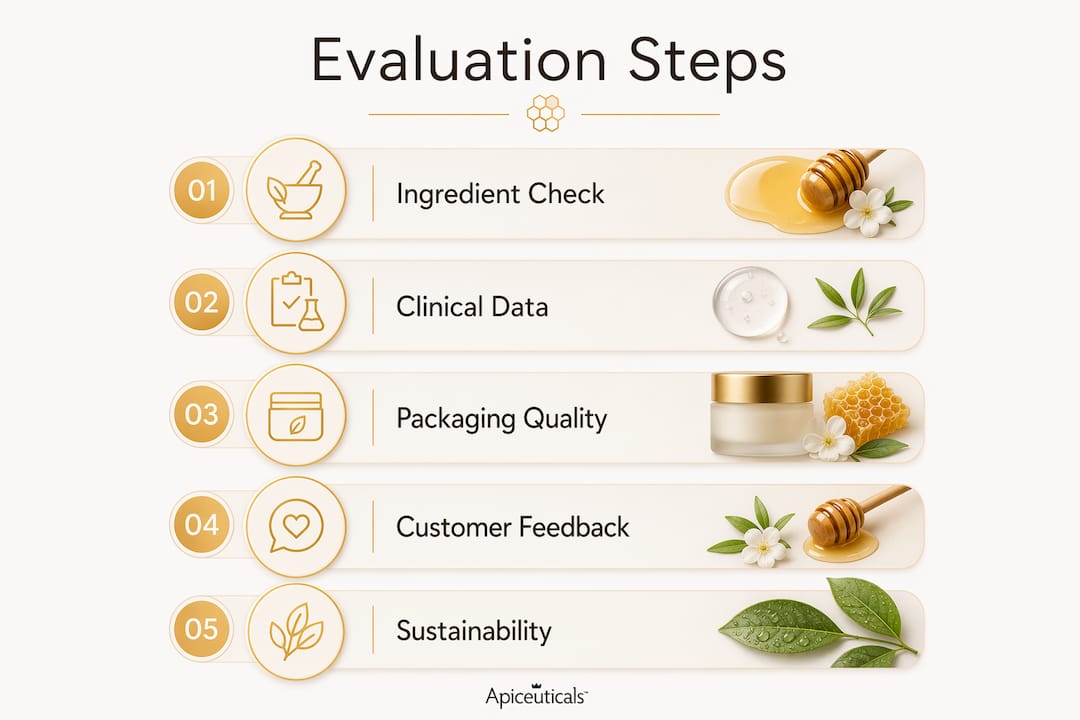
The most reliable way to evaluate luxury skincare is to look past the packaging and the price tag and ask three questions: What are the active ingredients, at what concentration, and is there peer-reviewed evidence that this specific formulation delivers them effectively? Brands that answer all three with published data and full INCI lists earn their premium. Those that cannot are selling a story, not a formula. The core markers to assess are:
- Ingredient transparency: Full INCI disclosure with actives listed near the top of the formula
- Formulation quality: Demonstrated stability, ingredient synergy, and bioavailability technology
- Clinical validation: Peer-reviewed studies with clear endpoints, methodology, and sample sizes
- Packaging integrity: Airtight, opaque, or airless formats that protect potency from oxidation
- Brand authenticity: Independent third-party testing, not self-reported consumer surveys
What genuinely sets high-end skincare apart from the rest
Price alone does not define quality in luxury skincare assessment. What separates a truly differentiated formula from a well-marketed one is a cluster of formulation decisions that most consumers never see on the label.
Ingredient synergy is the first signal. High-end formulations combine actives in ratios that amplify each other’s performance. Niacinamide paired with zinc, or hyaluronic acid combined with glycerin, produces effects greater than either alone. Bioavailability technology matters equally: microencapsulation and liposomes protect fragile actives like vitamin C and retinol from oxidation during transit and improve epidermal penetration. A vitamin C serum that has turned orange in the bottle before you open it has already lost its efficacy, regardless of the price.
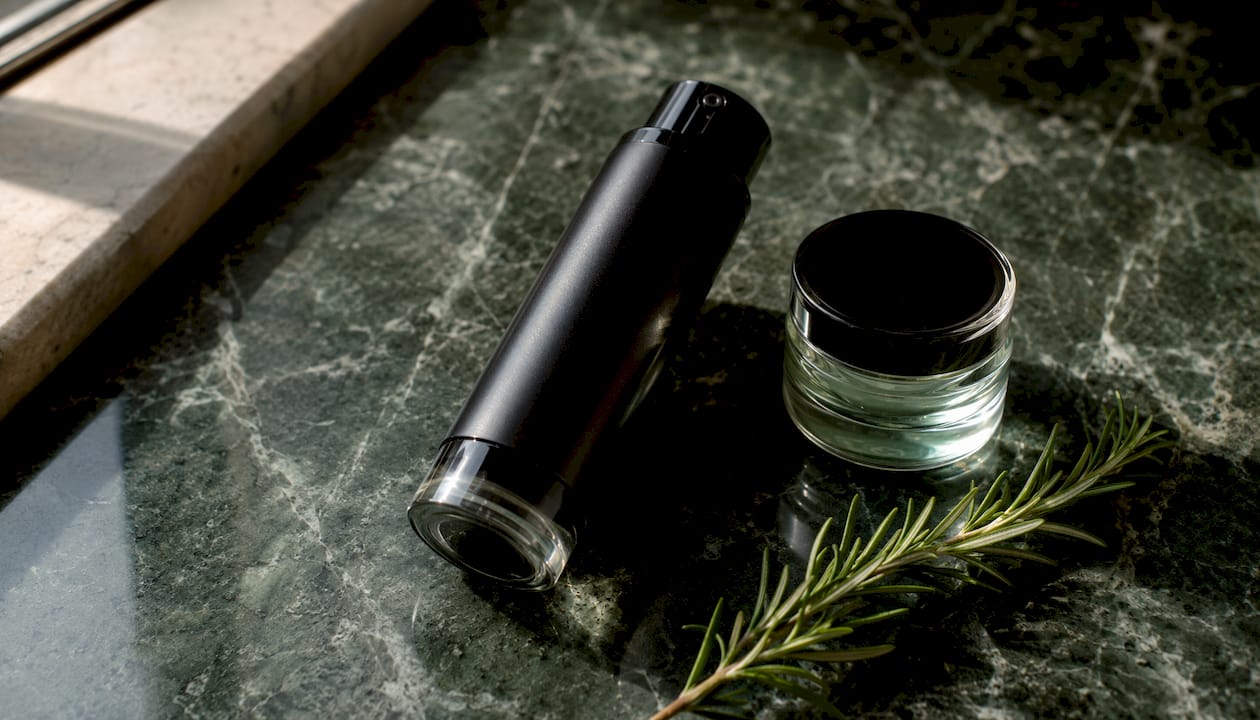
Stability and packaging are inseparable from formulation quality. Airtight pumps and opaque glass containers protect antioxidant-rich formulas from light and air degradation. Smaller container sizes for eye creams and targeted treatments help ensure the product is used within its effective period after opening.
Pro Tip: When evaluating a formula, check whether the brand publishes clinical data or discloses active concentrations. Brands that do are investing in formulation, not just positioning.
Sensory texture also plays a functional role. A cream that absorbs without residue increases the likelihood of daily use, and consistent application is what produces long-term results. Patented complexes with independent validation, such as the PROPOWAX™ Living Honeycomb technology developed by Apiceuticals and validated by the Aristotle University of Thessaloniki for the highest antioxidant activity in cosmetics, represent the clearest form of this investment.
How luxury skincare differs from medical-grade products
Understanding the distinction between luxury and medical-grade skincare helps calibrate expectations before any purchase.
- Regulatory threshold. Medical-grade products meet stricter regulatory standards set by bodies like the FDA and are often distributed through licensed clinical channels. Luxury skincare operates under cosmetic regulations, which govern safety but not clinical efficacy claims in the same way.
- Intended use. Medical-grade formulations target specific clinical conditions, such as acne, rosacea, or post-procedure recovery. Luxury skincare addresses general skin health, aging, and barrier maintenance, often with a stronger emphasis on sensory experience.
- Clinical evidence. The best luxury brands invest in peer-reviewed, independently validated trials on final formulations. This is the standard that builds genuine consumer trust, and it is the criterion that separates authentic scientific investment from marketing-driven claims.
- Distribution and access. Medical-grade products are typically sold through dermatologists or licensed practitioners. Luxury skincare reaches consumers through retail, direct-to-consumer channels, and specialty boutiques.
- Patented technology. Luxury brands with genuine R&D investment often hold proprietary patents. Apiceuticals holds a global patent for the highest antioxidant activity in cosmetics through PROPOWAX™ Living Honeycomb, independently validated by the Aristotle University of Thessaloniki, a level of scientific credibility that bridges the gap between luxury and clinical rigor.
Red flags that signal a misleading or fake luxury brand
Knowing how to evaluate luxury skincare means knowing what to walk away from. Several patterns consistently signal that a premium price reflects branding rather than formulation.
- Vague proprietary complex claims. If a brand references an exclusive “LuminoBlend technology” or similar coined term but cannot point to peer-reviewed research or explain the mechanism, the complex is likely a marketing term without substance.
- Missing or incomplete INCI lists. Full ingredient disclosure is a baseline requirement. Brands that hide behind “proprietary blend” language without any transparency fail the first test of formula quality auditing.
- Sweeping clinical claims without data. “Clinically proven” means nothing without disclosed sample sizes, study duration, and methodology. Ask for the study.
- Excessive fragrance. Fragrance is one of the most common contact allergens in skincare. Its presence in a formula designed for sensitive or compromised skin is a formulation compromise, not a premium feature.
- Identical actives to mass-market alternatives. Hyaluronic acid, glycerin, and basic niacinamide are available at every price point. A formula built primarily on these without a differentiated delivery system or patented complex does not justify a significant premium.
- Influencer-heavy, data-light marketing. When a brand’s primary evidence is testimonials and social media reach rather than published clinical results, the premium is paying for reach, not research.
“The most important question to ask about any serum is not ‘is this brand good?’ It is: what are the active ingredients, at what concentration, and is there evidence that this specific formulation delivers them effectively?” — Glow Protocol
How to evaluate antioxidant quality and clinical transparency
Antioxidant efficacy is one of the most measurable and clinically meaningful criteria in luxury skincare assessment. Free radicals generated by UV exposure, pollution, and metabolic stress degrade collagen, disrupt the skin barrier, and accelerate visible aging. A formula that genuinely neutralizes this oxidative load must demonstrate its activity through both in vitro and in vivo testing, not just ingredient presence.
| Evaluation Criterion | What to Look For |
|---|---|
| Antioxidant measurement | In vitro ORAC or DPPH assay data, plus in vivo skin resilience outcomes |
| Clinical study design | Randomized, controlled trials with defined endpoints and published methodology |
| Wrinkle and barrier outcomes | Quantified reduction in wrinkle depth and transepidermal water loss |
| Irritation testing | Dermatological testing on sensitive skin with documented irritation rates |
| Packaging protection | Airless or opaque formats that preserve antioxidant stability through the product’s lifespan |
The PROPOWAX™ Living Honeycomb technology from Apiceuticals holds a global patent for the highest antioxidant activity in cosmetics, validated by the Aristotle University of Thessaloniki. Its mechanism, a continuous release of antioxidants from a living honeycomb matrix embedded in the formula, is a benchmark of what independent scientific validation looks like in practice. Apiceuticals’ HONEY BALM™ Series, built on this technology, has demonstrated clinically proven wrinkle reduction, with dermatological testing on sensitive skin showing 0% irritation.
Pro Tip: Ask whether a brand’s clinical results were conducted on the final formulation or on isolated ingredients. Testing an ingredient in isolation does not prove the finished product performs the same way.
How to read luxury skincare labels and certifications
The INCI (International Nomenclature of Cosmetic Ingredients) list is the most objective tool available for evaluating high-end skincare. Ingredients are listed in descending order by concentration, so actives appearing in the top third of the list are more likely present at effective levels. Actives buried near the bottom, after preservatives and fragrance, are often present in trace amounts that contribute little to efficacy.
Certifications add a layer of verification, but their scope varies. Organic certifications such as USDA Organic or COSMOS Organic confirm sourcing standards, not clinical performance. Dermatological testing seals indicate the formula has been assessed for skin tolerance, typically on a panel of volunteers. The FDA does not pre-approve cosmetic products before sale, but it does regulate labeling claims, and any claim that crosses into drug territory (treating or preventing a disease) requires a different regulatory pathway entirely. Apiceuticals publishes a full ingredients list for all products, a practice that reflects the transparency standard the industry should hold broadly.
How to evaluate customer reviews and expert opinions critically
Consumer reviews are useful data, but they require filtering. Look for reviews from people with documented similar skin types and concerns, not aggregate star ratings, which blend incompatible skin profiles. A five-star review from someone with oily skin tells you little if your primary concern is barrier repair on dry, sensitive skin.
Expert opinions carry more weight when the expert has no financial relationship with the brand and cites specific formulation criteria rather than general impressions. Dermatologists affiliated with institutions like the American Academy of Dermatology or the Cleveland Clinic tend to evaluate products against clinical benchmarks. Reviews that reference ingredient concentrations, delivery systems, or published study data are more reliable than those built on sensory impressions alone. For a structured approach to reading ingredient lists and spotting reliable markers, cross-referencing expert guidance with label data is the most defensible method.
Sustainability and ethical sourcing as quality indicators
Sustainability in skincare is not just an ethical position. It is increasingly a proxy for formulation integrity. Brands that invest in traceable, ethically sourced raw materials tend to apply the same rigor to their formulation and testing processes. Greenwashing, however, is common: vague claims like “eco-friendly” or “natural” without third-party certification or documented supply chain practices are the sustainability equivalent of a proprietary complex with no data.
Meaningful indicators include third-party organic certification, documented harvesting limits that protect biodiversity, and refillable or recyclable packaging systems. Apiceuticals collects only 60% of its bee-derived production, leaving 40% for the bees, a practice that reflects a genuine commitment to ecosystem health rather than a marketing claim. For consumers who want a structured framework for assessing these standards, the ethically sourced beauty checklist developed by Apiceuticals provides a practical starting point. Skincare formulation costs typically represent 5–15% of retail price, with marketing and distribution accounting for 40–50%, so a brand’s willingness to invest in ethical sourcing and transparent practices is a meaningful signal about where its priorities actually lie.
For a broader view of how long-term skincare effectiveness relates to formulation quality and sensory adherence, cross-referencing global skincare guidance with label-level analysis produces the most complete picture.

Apiceuticals brings together every criterion covered here: full ingredient transparency, globally patented antioxidant technology validated by independent academic research, dermatological testing with documented outcomes, and ethical harvesting practices rooted in four decades of organic beekeeping. Explore the antioxidant skincare range to see what evidence-based formulation looks like in practice.
Key Takeaways
The most reliable luxury skincare assessment combines ingredient transparency, peer-reviewed clinical evidence, packaging integrity, and verified ethical sourcing to separate genuine formulation investment from marketing-driven pricing.
| Point | Details |
|---|---|
| Ingredient transparency | Full INCI lists with actives in the top third signal effective concentrations. |
| Clinical evidence | Peer-reviewed trials on final formulations, not isolated ingredients, confirm real efficacy. |
| Formulation cost reality | Formulation costs represent 5–15% of the retail price, while marketing and distribution account for 40–50%. |
| Antioxidant validation | PROPOWAX™ Living Honeycomb holds a global patent for highest antioxidant activity, validated by the Aristotle University of Thessaloniki. |
| Sustainability as a signal | Documented ethical sourcing and harvesting limits indicate broader formulation rigor. |
FAQ
What makes a skincare brand genuinely high-end?
Authentic high-end skincare combines peer-reviewed clinical evidence on final formulations, full ingredient transparency, and patented delivery technologies, not just premium packaging or celebrity endorsements.
What does “clinically proven” actually mean on a skincare label?
The phrase is only meaningful when a brand discloses the study’s methodology, sample size, duration, and endpoints. Without those details, the claim is unverifiable and should be treated with skepticism.
How do you evaluate luxury skincare for antioxidant efficacy?
Look for brands that publish both in vitro assay data and in vivo skin outcome results, and whose antioxidant technology has been independently validated by a recognized academic or research institution.
What is the 1% rule in skincare?
The 1% threshold is a commonly cited guideline suggesting that ingredients listed below 1% concentration can appear in any order on an INCI list. This means actives near the bottom of a long formula may be present in amounts too small to produce a measurable effect.
What separates luxury skincare from medical-grade products?
Medical-grade products meet stricter regulatory standards and target specific clinical conditions through licensed distribution channels. The best luxury skincare bridges this gap through independent clinical trials and patented technologies, but it operates under cosmetic rather than pharmaceutical regulation.
Recommended


Related posts

How bees and biodiversity sustain each other, what the science says about Greece and the Aegean, and how antioxidant beauty can start from a hive...

How organic propolis extraction works, from hive to extract: collection, solvents, EU organic rules, Greek propolis phenolics and what it means for skincare.

Build an anti pollution skincare routine that fits Greek city life: what pollution does to skin, the morning and evening steps, and the antioxidants with...

Honey moisture content explained: the EU and Greek limits, how to take a refractometer reading, what excess water does to honey, and why it matters...

How antioxidant activity measurement works: DPPH, ABTS, FRAP and ORAC explained, why results differ, and what a lab number can and cannot say about skin...















