
No products in the cart.
Return To Shop
How to Identify Natural Ingredients in Skincare
TL;DR:
- Knowing how to read ingredient lists is essential for identifying natural products. Certifications such as COSMOS Natural, ECOCERT, and USDA Organic verify genuine natural ingredients beyond marketing claims. PROPOWAX™ Living Honeycomb exemplifies scientific validation with its peer-reviewed antioxidant data and high-performance standards.
Knowing how to identify natural ingredients is the single most reliable skill a clean beauty consumer can develop. The ingredient list, not the front of the package, is the only legally mandated source of formulation truth. The top five ingredients on any label typically constitute 80%–90% of the total product weight, which means they define what a product actually does to your skin. Certifications such as COSMOS Natural, ECOCERT, and USDA Organic provide independent verification that front-of-pack claims cannot. Apiceuticals’ PROPOWAX™ Living Honeycomb, which holds a global patent for the highest antioxidant activity in cosmetics, validated by the Aristotle University of Thessaloniki, serves as a scientific benchmark for what a genuinely natural, high-performance ingredient looks like.
How to identify natural ingredients by reading the ingredient order
Ingredient lists follow a strict legal rule: every ingredient appears in descending order of concentration by weight. The first three to five entries define the product’s character. If those positions are occupied by plant-based oils such as Rosa canina (rosehip oil), Butyrospermum parkii (shea butter), or Aloe barbadensis leaf juice, the formula is genuinely plant-forward. If they are occupied by synthetic detergents like sodium laureth sulfate or polyethylene glycol derivatives, the product is synthetic regardless of what the front label claims.
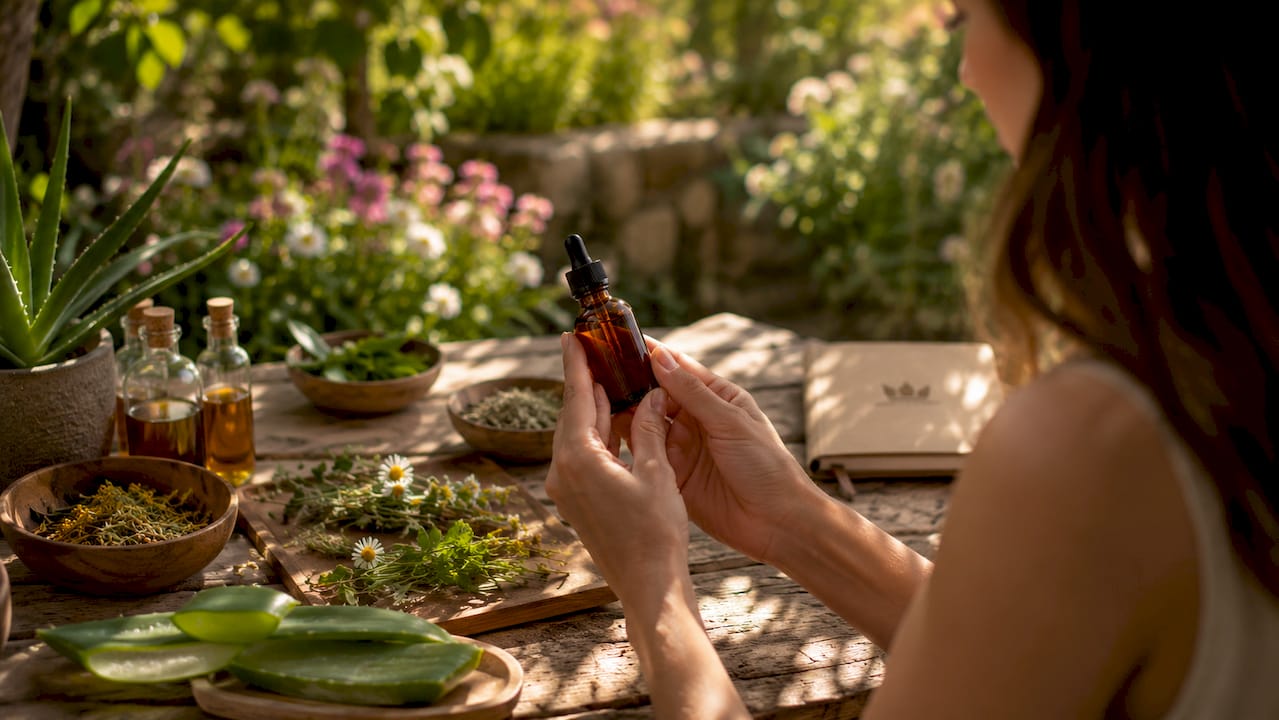
Front-of-pack marketing is largely unregulated. A product can legally call itself “botanical” or “nature-inspired” while listing petrochemical derivatives in positions one through three. Experienced consumers skip the front entirely and go straight to the ingredient list. That habit, once formed, takes roughly 20–30 seconds per product and is the most efficient method for recognizing natural ingredients in practice.
The 1% threshold rule introduces a significant complication. Ingredients present at concentrations below 1% can be listed in any order at the bottom of the list. Brands exploit this by placing a single high-profile natural ingredient, such as a rare botanical extract, near the middle of the list to imply meaningful concentration when the actual amount is negligible. The position of an ingredient only guarantees its relative rank among ingredients above 1%. Below that threshold, order is meaningless.
A practical evaluation sequence looks like this:
- Locate the ingredient list. Ignore all front-of-pack text.
- Read the first five ingredients. These are the formula’s foundation.
- Identify plant-derived names. Look for Latin botanical names, plant oils, and mineral-derived compounds.
- Flag synthetic red flags. Ingredients ending in -eth (e.g., ceteareth-20), -oxynol, or -siloxane in the top five signal a synthetic base.
- Scan the bottom third. Check for parabens, synthetic fragrance, or sulfates even in small quantities.
Pro Tip: Download a free ingredient decoder app such as EWG Skin Deep® before your next shopping trip. You can scan a barcode and get a full ingredient breakdown in seconds, which removes the guesswork from identifying organic components on the spot.
What ingredient names reveal about natural versus synthetic origin
Natural ingredients are substances derived from nature with minimal processing that does not alter their chemical composition. Acceptable processing methods include cold pressing, steam distillation, and mechanical separation. Solvent extractions using anything other than water typically disqualify an ingredient from natural status. This distinction matters because the same plant source can yield a natural ingredient or a synthetic derivative depending entirely on how it was processed.
Recognizing natural ingredient nomenclature is a learnable skill. The key markers are:
- Latin binomial names (Lavandula angustifolia, Cocos nucifera) indicate plant-derived ingredients at the species level.
- Mineral-origin terms such as kaolin, zinc oxide, and titanium dioxide (non-nano) are naturally occurring and minimally processed.
- Animal-derived terms like beeswax (Cera alba), honey (Mel), and propolis extract are natural when ethically sourced.
- Synthetic suffixes to avoid in the top positions: -eth, -oxynol, -cone (silicones), -paraben, and PEG- prefixes all indicate synthetic or heavily modified compounds.
- The fragrance loophole. The single word “fragrance” or “parfum” on a label can legally hide dozens of undisclosed chemicals, including potential hormone disruptors, under trade secret provisions. A genuinely natural product names its scent sources specifically, such as Citrus aurantium (neroli) or Rosa damascena (rose) flower water.
The fragrance loophole is one of the most consequential gaps in ingredient transparency. A product can contain no synthetic actives in its first ten ingredients and still deliver a significant synthetic chemical load through a single “fragrance” entry. When recognizing natural ingredients, treat any unlabeled fragrance as a red flag regardless of where it appears in the list.
Pro Tip: When a brand lists “natural fragrance” without specifying the botanical source, that claim is still unverified. Look for brands that name every aromatic ingredient individually, such as listing “Lavandula angustifolia flower oil” rather than “natural fragrance.”
How to verify natural ingredient claims with certifications and label audits
No universally regulated legal definition for “natural” exists in cosmetics and personal care products across most jurisdictions as of 2026. That absence is the core problem. Any brand can print “natural” on a label without meeting any standard. The word carries no legal weight in the United States, the European Union, or most other markets unless it is paired with a recognized third-party certification.
The certifications that carry genuine authority are independently audited and require documented ingredient sourcing. The table below compares the three most recognized standards:
| Certification | Issuing body | Key requirement |
|---|---|---|
| COSMOS Natural | COSMOS-standard AISBL | Minimum 95% natural-origin ingredients; restricted synthetic processing |
| ECOCERT | ECOCERT Group | Audited supply chain; minimum natural content thresholds by product type |
| USDA Organic | U.S. Department of Agriculture | 95%+ certified organic ingredients for full certification |
These certifications include supply chain audits, ingredient transparency requirements, and sourcing standards that front-of-pack claims simply do not. A certification logo on the back of a product, near the ingredient list, is a meaningful signal. A “natural” claim on the front, without any logo, is not.
Label auditing goes beyond certifications. Brands committed to ingredient transparency publish ingredient glossaries on their websites, explain the origin and processing method of each component, and disclose the percentage of natural-origin content. Apiceuticals, for example, publishes detailed information on its natural ingredient sourcing and excludes over 2,000 potentially harmful ingredients from all formulations. That level of disclosure is the standard worth holding other brands to.
What practical steps help you spot natural products while shopping
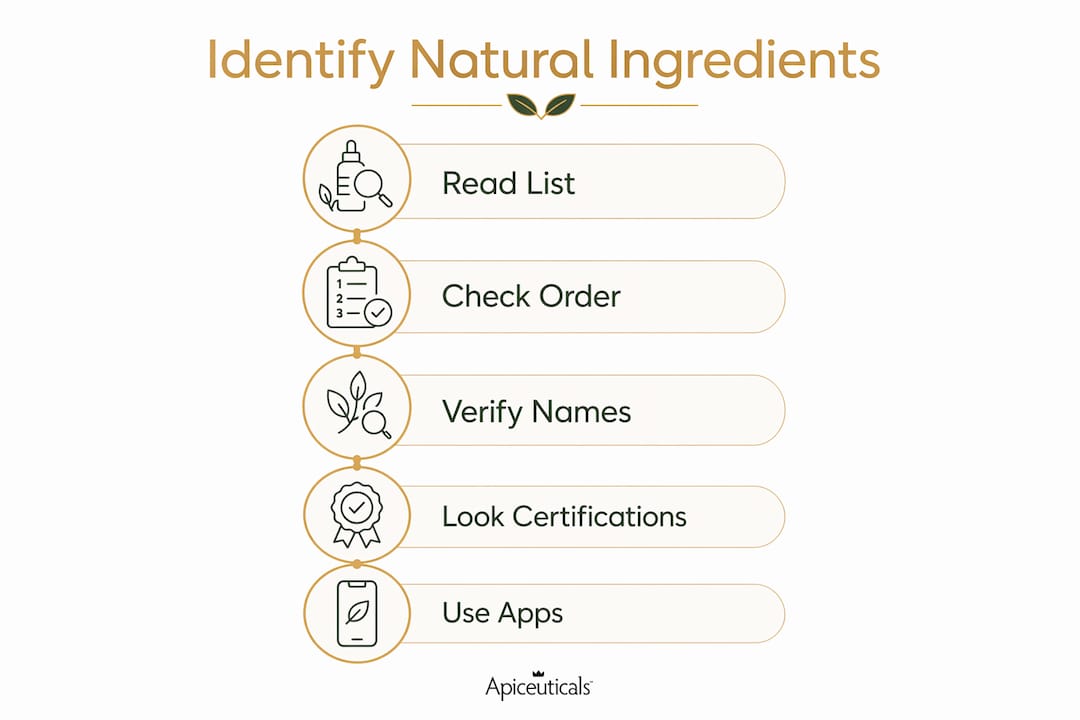
Spotting natural products confidently requires a repeatable process. The following sequence works for skincare, haircare, and body care products alike.
- Ignore the front of the package entirely. Front claims are marketing, not formulation data.
- Find the ingredient list and read the first five entries. These constitute the majority of the formula. Look for water (Aqua), plant-based oils, butters, and botanical extracts in these positions.
- Check for recognizable plant names. Latin binomials and common plant-derived terms (aloe vera, jojoba oil, oat extract) in the top five are positive indicators.
- Scan the bottom third for red flags. Parabens (methylparaben, propylparaben), synthetic sulfates (sodium lauryl sulfate, sodium laureth sulfate), and unlabeled “fragrance” entries warrant caution even at low concentrations.
- Cross-reference with EWG Skin Deep®. The Environmental Working Group’s database rates thousands of ingredients for safety and transparency. It is one of the most reliable free tools for identifying organic components and verifying ingredient safety profiles.
- Check the brand’s website for an ingredient glossary. Brands with nothing to hide explain their ingredients. Look for transparency pages that describe sourcing, processing, and the rationale for each ingredient choice.
The natural ingredient checklist approach works because it removes reliance on brand trust and replaces it with verifiable data. You are reading the same legally mandated list that a cosmetic chemist would read. The skill is not technical. It is simply knowing where to look and what to look for.
How does PROPOWAX™ Living Honeycomb set the benchmark for natural antioxidant ingredients?
PROPOWAX™ Living Honeycomb is a patented natural ingredient technology developed by Apiceuticals that holds a global patent for the highest antioxidant activity in cosmetics. The Aristotle University of Thessaloniki independently validated this claim. British Vogue described Apiceuticals as “arguably the global leader in antioxidant activity.” That combination of independent academic validation and peer recognition in the beauty press represents the standard of evidence that genuinely natural, high-performance ingredients should meet.
The technology works by embedding a living honeycomb matrix inside each product formulation. This matrix continuously releases antioxidants onto skin, scalp, and hair over time, rather than delivering a single dose at application. Antioxidants neutralize free radicals, which are unstable molecules that damage skin cells, accelerate visible aging, and degrade hair structure. Think of free radical damage as rust forming on metal. Antioxidants are the protective coating that prevents that oxidation from taking hold.
What makes PROPOWAX™ Living Honeycomb relevant to the broader question of how to identify natural ingredients is the transparency of its validation. The ingredient’s antioxidant activity is not a marketing claim. It is a measured, peer-reviewed result from an independent university. That is the model every natural ingredient claim should aspire to. When you evaluate a product and see an ingredient backed by published research, a named institution, and a verifiable patent, you are looking at genuine scientific credibility. Most “natural” claims on the market offer none of those three elements.
Apiceuticals’ formulations are also free from SLS, SLES, parabens, silicones, and mineral oils, and are dermatologically tested on sensitive skin with 0% irritation. The bee ingredients used in PROPOWAX™ are organically and ethically harvested, with only 60% of production collected and 40% left for the bees. That sourcing standard is directly relevant to antioxidant skincare benefits because ingredient quality at the source determines efficacy in the final formula.
Key Takeaways
Identifying natural ingredients requires reading the ingredient list from the top down, verifying certifications, and treating unsubstantiated front-of-pack claims as marketing rather than formulation fact.
| Point | Details |
|---|---|
| Ingredient order is law | The first five ingredients constitute 80%–90% of product weight and define its true character. |
| Certifications over claims | COSMOS Natural, ECOCERT, and USDA Organic provide audited verification that “natural” labels do not. |
| The fragrance loophole is real | “Fragrance” or “parfum” can legally conceal dozens of synthetic chemicals; demand named botanical sources. |
| The 1% rule enables deception | Ingredients below 1% can appear in any order, allowing brands to imply natural prominence without meaningful concentration. |
| Scientific validation is the gold standard | Ingredients like PROPOWAX™ Living Honeycomb, validated by the Aristotle University of Thessaloniki, represent the benchmark for verified natural efficacy. |
Why ingredient literacy matters more than brand trust
The clean beauty space has a transparency problem that certifications alone cannot fully solve. After years of working with bee-derived ingredients and studying what genuine natural formulation looks like at the molecular level, one conclusion stands out: most consumers are looking in the wrong place. They read the front of the package and form a judgment. The front of a package is a marketing document. The ingredient list is a scientific one.
The widespread confusion between “natural” and “chemical-free” is scientifically incorrect and commercially convenient for brands that benefit from vague language. Every substance, including water, is a chemical. The relevant question is not whether an ingredient is a chemical. It is whether that ingredient is derived from a natural source, processed in a way that preserves its original composition, and present in a concentration that actually affects the skin.
What PROPOWAX™ Living Honeycomb represents, beyond its antioxidant performance, is a model of ingredient accountability. A named ingredient, a named institution, a verifiable patent, and a published result. That is the framework consumers should apply to every natural claim they encounter. Not trust, but verification. The brands worth choosing are the ones that make verification easy.
The non-toxic skincare conversation will continue to grow. The consumers who benefit most from it will be the ones who learned to read an ingredient list rather than a front label.
— Apiceuticals
Apiceuticals and the science behind genuinely natural antioxidant beauty
Apiceuticals builds every formulation around PROPOWAX™ Living Honeycomb, the only cosmetic ingredient in the world with a global patent for the highest antioxidant activity, independently validated by the Aristotle University of Thessaloniki. The PROPOWAX™ Series covers antioxidant haircare and bodycare. The HONEY BALM™ Series delivers waterless facial care with clinically proven 26% wrinkle reduction. Every product excludes over 2,000 potentially harmful ingredients and is dermatologically tested on sensitive skin with 0% irritation.

For readers who want to apply the ingredient literacy principles covered here to their own skincare routine, Apiceuticals offers a full range of antioxidant skin and body care products formulated to the highest standard of natural ingredient transparency. The PROPOWAX™ technology page details the science behind the patent, the validation process, and what continuous antioxidant release means for skin health in practice.
FAQ
What are natural ingredients in skincare?
Natural ingredients are substances derived from plants, minerals, or animals with minimal processing that does not alter their chemical composition. Acceptable methods include cold pressing, steam distillation, and mechanical separation.
How do I identify natural ingredients on a product label?
Read the first five ingredients on the ingredient list. Look for Latin botanical names, plant-derived oils, and mineral compounds. Avoid products where synthetic detergents or PEG derivatives appear in the top positions.
Does “natural” on a label have a legal definition?
No universal legal definition for “natural” exists in cosmetics across most jurisdictions as of 2026. Rely on third-party certifications such as COSMOS Natural, ECOCERT, or USDA Organic instead of front-of-pack claims.
What does “fragrance” mean on an ingredient list?
“Fragrance” or “parfum” is a legally protected umbrella term that can conceal dozens of undisclosed synthetic chemicals. A transparent natural product names every aromatic ingredient by its specific botanical source.
What is PROPOWAX™ Living Honeycomb and why does it matter?
PROPOWAX™ Living Honeycomb is a patented natural ingredient technology by Apiceuticals with a global patent for the highest antioxidant activity in cosmetics, validated by the Aristotle University of Thessaloniki. It sets a measurable, peer-reviewed standard for what a genuinely natural, high-performance ingredient looks like.
Recommended


Related posts

How bees and biodiversity sustain each other, what the science says about Greece and the Aegean, and how antioxidant beauty can start from a hive...

How organic propolis extraction works, from hive to extract: collection, solvents, EU organic rules, Greek propolis phenolics and what it means for skincare.

Build an anti pollution skincare routine that fits Greek city life: what pollution does to skin, the morning and evening steps, and the antioxidants with...

Honey moisture content explained: the EU and Greek limits, how to take a refractometer reading, what excess water does to honey, and why it matters...

How antioxidant activity measurement works: DPPH, ABTS, FRAP and ORAC explained, why results differ, and what a lab number can and cannot say about skin...















