
No products in the cart.
Return To Shop
How to Improve Skin Barrier: A Science-Backed Guide
TL;DR:
- The skin barrier, or stratum corneum, protects against moisture loss and environmental damage through a lipid matrix. Rebuilding this barrier involves restoring correct lipid ratios, supporting the microbiome, and neutralizing oxidative damage with antioxidants like PROPOWAX™ Living Honeycomb. Proper skincare habits, diet, and lifestyle are essential for maintaining and repairing barrier health.
The skin barrier, formally known as the stratum corneum, is the outermost layer of the epidermis and the body’s primary defense against moisture loss, pathogens, and environmental damage. Knowing how to improve skin barrier function means understanding that repair is not simply about adding more products. It requires restoring the correct lipid architecture, reducing chemical stress, and supporting the skin’s living microbial ecosystem. Apiceuticals’ PROPOWAX™ Living Honeycomb, validated by the Aristotle University of Thessaloniki for the highest antioxidant activity in cosmetics, represents one of the most scientifically grounded tools available for antioxidative barrier defense.
What is the skin barrier and how does it function?
The skin barrier operates as a multilayered defense system, integrating physical, chemical, immune, and microbial components that work in concert. Think of the stratum corneum as a brick wall: corneocytes are the bricks, and a lipid mortar of ceramides, cholesterol, and free fatty acids fills the gaps between them. When that mortar degrades, water escapes and irritants enter.
Ceramides account for roughly half of the lipid content in healthy skin. Cholesterol, often misunderstood as a cosmetic villain, is in fact a critical structural component that organizes ceramide lamellae and maintains membrane flexibility. Free fatty acids complete the trio, regulating pH and antimicrobial activity at the skin surface.
Natural Moisturizing Factors, or NMFs, including amino acids, lactic acid, and urea, sit within the corneocytes and bind water at the cellular level. These compounds are effective for barrier hydration only at concentrations of 5% or lower. Above that threshold, lactic acid and urea shift from humectants to exfoliants, actively disrupting the barrier they are meant to support.
“The skin barrier is not a static wall. It is a dynamic, living interface that continuously negotiates between the body’s internal environment and the external world. Its microbiome is not a passenger — it is an active co-regulator of ceramide production and immune signaling.”
The skin microbiome reinforces this system by producing short-chain fatty acids and antimicrobial peptides that signal keratinocytes to synthesize ceramides. A disrupted microbiome, caused by antibacterial cleansers or pH-altering products, removes that signal and slows barrier self-repair. Skin barrier health, at its core, is microbial health.
Which habits and products harm the skin barrier?
Barrier disruption follows predictable patterns, and most of them originate in the bathroom. Frequent washing with harsh cleansers and hot water disrupts the barrier faster than it can self-repair, leading to chronic dysfunction. Surfactants strip the lipid mortar directly. Hot water accelerates that stripping and simultaneously impairs the tight junctions between corneocytes.
The pH of a cleanser matters as much as its surfactant profile. Healthy skin sits at a pH of approximately 4.5 to 5.5. Many bar soaps and foaming cleansers exceed pH 8, which alkalizes the skin surface, deactivates acid-dependent enzymes, and shifts the microbiome toward pathogenic species. Maintaining correct pH balance in skincare is not a cosmetic preference. It is a biochemical requirement for barrier integrity.
UV radiation compounds the damage by generating reactive oxygen species that degrade ceramides and oxidize lipids in the stratum corneum. Pollution particles, particularly fine particulate matter, penetrate the outer layers and trigger inflammatory cascades that further impair barrier function. The result is a barrier under simultaneous chemical, physical, and oxidative attack.
- Switch to a gentle, pH-balanced cleanser with a pH between 4.5 and 5.5.
- Wash with lukewarm water, never hot, and limit face washing to twice daily.
- Remove all retinoids, AHAs, BHAs, and physical scrubs from your routine temporarily.
- Apply a fragrance-free moisturizer within 60 seconds of cleansing while skin is still damp.
- Use broad-spectrum SPF 30 or higher every morning to block UV-driven lipid oxidation.
Pro Tip: If your skin stings, flushes, or feels tight after cleansing, your cleanser’s pH is almost certainly too high. Test strips designed for cosmetics can confirm this in seconds.
How to rebuild and strengthen the skin barrier with the right ingredients
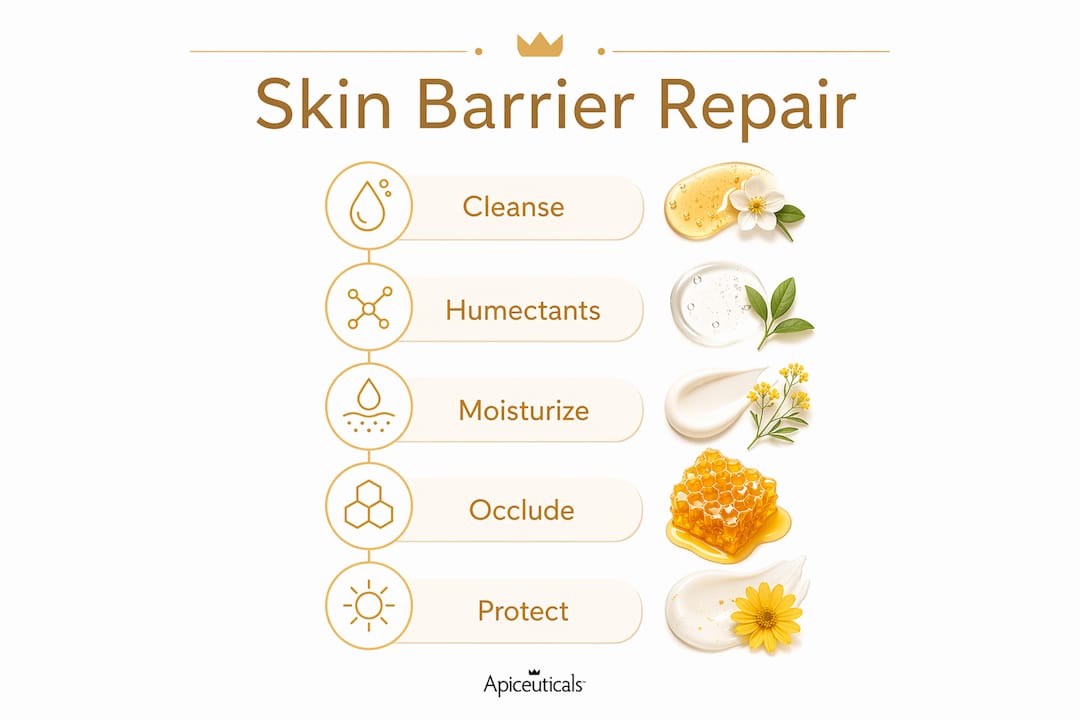
Rebuilding barrier function requires formulations that mimic the skin’s own lipid lamellae. Ceramides, cholesterol, and free fatty acids must be present in an approximately 3:1:1 ratio to integrate into the stratum corneum and restore hydration. Simply adding ceramide-rich products without respecting this ratio produces limited results. The physiological ratio is what allows the lipids to self-assemble into lamellar structures that the skin actually recognizes and incorporates.
Humectants draw water into the epidermis and hold it there. The most clinically validated options include:
- Hyaluronic acid at molecular weights below 50 kDa, which penetrates beyond the surface layer
- Glycerin, which mimics the skin’s own NMFs and is well tolerated by sensitive skin
- Panthenol (provitamin B5), which supports keratinocyte proliferation and reduces transepidermal water loss
- Niacinamide, which upregulates ceramide synthesis and reduces inflammatory signaling
Occlusives form a physical seal over the skin surface to prevent water evaporation. Petrolatum is the most effective occlusive available, but targeted application to dry, cracked areas is the correct approach. Applying it over the entire face traps heat, risks congestion in oilier zones, and does not improve outcomes compared to targeted use.
Antioxidant protection addresses a dimension of barrier repair that lipid-focused formulations alone cannot cover. Free radicals generated by UV exposure and pollution oxidize the lipid mortar, creating a cycle of damage that outpaces the skin’s natural repair rate. Apiceuticals’ PROPOWAX™ Living Honeycomb delivers validated antioxidant defense through a patented continuous-release mechanism, confirmed by the Aristotle University of Thessaloniki and recognized by British Vogue as “arguably the global leader in antioxidant activity.” This positions antioxidant-rich formulations not as a luxury addition but as a structural component of barrier repair science.
| Ingredient category | Primary barrier function | Key consideration |
|---|---|---|
| Ceramides (3:1:1 ratio) | Restore lipid lamellae | Ratio with cholesterol and fatty acids is critical |
| Humectants (glycerin, panthenol) | Bind and retain water | Layer under occlusives for best retention |
| Occlusives (petrolatum) | Prevent transepidermal water loss | Use on targeted dry zones only |
| Antioxidants (PROPOWAX™) | Neutralize oxidative lipid damage | Continuous-release mechanism extends protection |
| Niacinamide | Upregulate ceramide synthesis | Also reduces redness and inflammatory signaling |
Pro Tip: Apply humectants to damp skin, then layer a ceramide moisturizer on top, and finish with a targeted occlusive on any cracked or peeling zones. This three-step sequence mirrors the skin’s own moisture-binding architecture.
How to safely reintroduce active ingredients after repair
A complete pause from active ingredients is the most underused and most effective step in barrier recovery. Stopping all retinoids, acids, and scrubs temporarily, followed by slow reintroduction after the skin calms, gives the stratum corneum uninterrupted time to rebuild its lipid lamellae. Most people skip this step because it feels like regression. It is the opposite.
- Pause all actives for a minimum of two to four weeks, or until the skin shows no redness, tightness, or sensitivity.
- Confirm stability by testing your barrier: apply a gentle, fragrance-free moisturizer and check for stinging. No sting means the barrier has recovered sufficiently.
- Reintroduce one active at a time, starting with the mildest option, such as a low-concentration niacinamide serum or a gentle polyhydroxy acid.
- Wait two full weeks between each new introduction to isolate any reaction and identify the specific trigger.
- Maintain your barrier routine throughout reintroduction. A ceramide moisturizer and daily SPF are non-negotiable anchors during this phase.
Building a skincare routine that works long-term depends on this sequential discipline. Rushing the reintroduction phase is the single most common reason people cycle repeatedly through barrier damage.
What role do diet and lifestyle play in skin barrier health?
Topical care addresses the surface, but the barrier’s raw materials come from within. Dietary omega-3 fatty acids support skin barrier function and may enhance repair capacity through systemic effects on membrane composition and inflammatory signaling. Fatty fish, flaxseed, and walnuts supply the eicosapentaenoic and docosahexaenoic acids that the body incorporates into cell membranes throughout the epidermis.
The gut-skin axis connects intestinal microbiome diversity to skin barrier integrity. A diet rich in fermented foods, prebiotic fiber, and polyphenols supports microbial diversity that, in turn, reduces systemic inflammation and supports the skin’s immune barrier. Conversely, high-glycemic diets and processed foods correlate with elevated inflammatory markers that degrade barrier function from the inside out.
Environmental protection rounds out the lifestyle picture:
- Daily SPF use blocks UV-driven ceramide degradation and oxidative lipid damage.
- Antioxidant-rich formulations neutralize the free radicals that UV and pollution generate after they penetrate the outer layers.
- Clean beauty formulations that exclude SLS, SLES, parabens, and silicones reduce the cumulative chemical load on the barrier. Apiceuticals excludes over 2,000 potentially harmful ingredients and is dermatologically tested on sensitive skin with 0% irritation, making it a clinically sound choice for barrier-compromised skin.
- Adequate sleep and stress management reduce cortisol, which at elevated levels suppresses ceramide synthesis and accelerates transepidermal water loss.
The science behind natural ingredients confirms that barrier support is a whole-body process. No single product corrects a barrier that is being undermined by chronic sleep deprivation, a pro-inflammatory diet, or unprotected UV exposure.
Key Takeaways
Improving the skin barrier requires restoring the correct lipid ratio, eliminating chemical irritants, supporting the microbiome, and neutralizing oxidative damage through antioxidant-rich formulations.
| Point | Details |
|---|---|
| Lipid ratio is non-negotiable | Ceramides, cholesterol, and fatty acids must be in a 3:1:1 ratio to rebuild the barrier effectively. |
| Pause actives before reintroducing | A two-to-four-week break from retinoids and acids allows uninterrupted natural repair. |
| pH balance protects the microbiome | Cleansers above pH 5.5 disrupt the skin’s microbial ecosystem and slow ceramide synthesis. |
| Antioxidants address oxidative damage | PROPOWAX™ Living Honeycomb’s continuous-release mechanism neutralizes free radicals that lipid creams cannot reach. |
| Diet supports barrier from within | Omega-3 fatty acids and a diverse gut microbiome contribute directly to epidermal membrane integrity. |
The case for antioxidant-first barrier science
Most barrier repair conversations stop at ceramides and occlusives. That is a half-answer. The lipid mortar in the stratum corneum is not just depleted by washing and friction. It is actively oxidized by UV radiation and airborne pollutants every day. Replacing ceramides without neutralizing the oxidative environment that destroys them is like patching a roof during a storm.
Apiceuticals’ approach to antioxidant skin care starts from this premise. PROPOWAX™ Living Honeycomb does not simply deposit antioxidants on the skin surface. It releases them continuously, extending the window of protection beyond what a single topical application can achieve. That mechanism, validated independently by the Aristotle University of Thessaloniki, addresses the oxidative dimension of barrier damage that most formulations ignore entirely.
The other misconception worth correcting is the idea that more products equal better results. A five-step routine with two actives, a vitamin C serum, and a retinol applied to a compromised barrier does not repair it. It extends the damage. Simplicity, correct formulation science, and antioxidant protection are the three pillars that actually move the needle. Everything else is noise.
— Apiceuticals
Apiceuticals and the science of barrier-protective antioxidants
Apiceuticals builds every product around PROPOWAX™ Living Honeycomb, a patented technology that holds the global record for highest antioxidant activity in cosmetics. The HONEY BALM™ Series delivers waterless facial care with clinically proven results, and the full antioxidant skin care range is formulated without SLS, SLES, parabens, silicones, or mineral oils. Every formula is dermatologically tested on sensitive skin with 0% irritation.
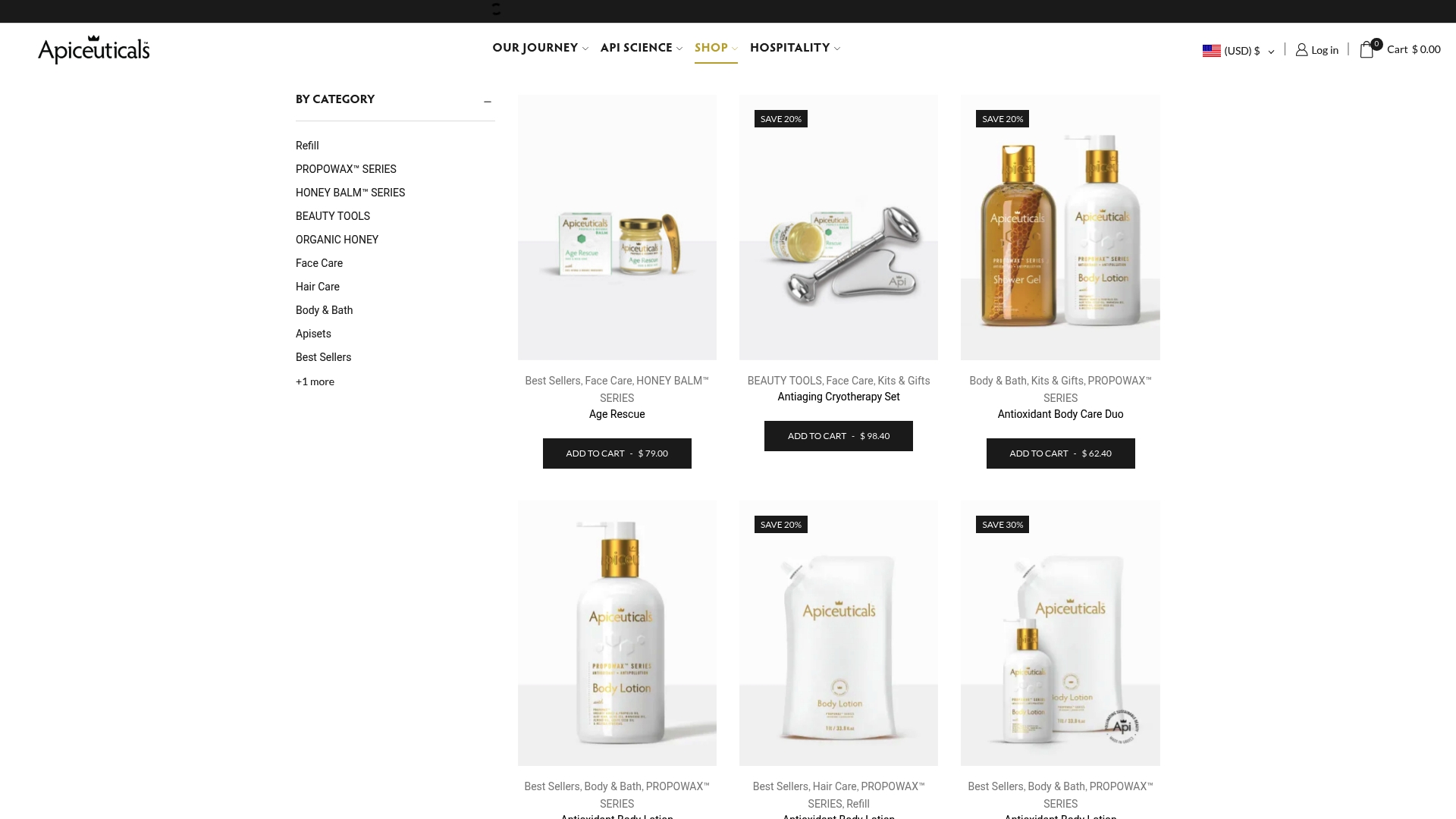
For those rebuilding a compromised barrier, the HONEY BALM™ Series offers waterless, antioxidant-dense facial care that works with the skin’s repair cycle rather than against it. The PROPOWAX™ technology page details the full science behind the continuous-release antioxidant mechanism. Rooted in Arcadia, Greece, and backed by a global patent, Apiceuticals represents where bee science and barrier science converge.
FAQ
What is skin barrier function?
The skin barrier is the outermost layer of the epidermis that prevents moisture loss and blocks pathogens, pollutants, and irritants. It operates through a lipid matrix of ceramides, cholesterol, and free fatty acids, supported by the skin microbiome and immune signaling.
How do I know if my skin barrier is damaged?
A damaged barrier typically presents as persistent redness, stinging after applying products, tightness after cleansing, flaking, or sudden sensitivity to products previously well tolerated. These signs indicate that the lipid mortar has been compromised.
How long does it take to repair the skin barrier?
Mild barrier disruption can resolve in two to four weeks with a simplified routine. More significant damage, particularly from prolonged use of strong actives or chronic over-washing, may require six to eight weeks of consistent barrier-focused care.
What ingredients most effectively strengthen the skin barrier?
Ceramides in a 3:1:1 ratio with cholesterol and free fatty acids are the most structurally targeted option. Humectants like glycerin and panthenol support hydration, while antioxidants such as those delivered by PROPOWAX™ Living Honeycomb address oxidative damage that lipid-only formulations cannot correct.
Does diet affect skin barrier health?
Dietary omega-3 fatty acids directly support barrier function by contributing to epidermal membrane composition. A gut microbiome supported by prebiotic fiber and polyphenols also reduces systemic inflammation that would otherwise degrade barrier integrity from within.
Recommended


Related posts

How bees and biodiversity sustain each other, what the science says about Greece and the Aegean, and how antioxidant beauty can start from a hive...

How organic propolis extraction works, from hive to extract: collection, solvents, EU organic rules, Greek propolis phenolics and what it means for skincare.

Build an anti pollution skincare routine that fits Greek city life: what pollution does to skin, the morning and evening steps, and the antioxidants with...

Honey moisture content explained: the EU and Greek limits, how to take a refractometer reading, what excess water does to honey, and why it matters...

How antioxidant activity measurement works: DPPH, ABTS, FRAP and ORAC explained, why results differ, and what a lab number can and cannot say about skin...















