
No products in the cart.
Return To Shop
How to Switch to Organic Hair Care: A Science-Backed Guide
TL;DR:
- Switching to organic hair care involves replacing synthetic products with formulations made from certified organic ingredients. This transition improves scalp health by restoring natural oil balance and providing antioxidant protection against environmental damage. Patented PROPOWAX™ technology exemplifies the scientific advancements in delivering bioactive compounds that support long-term hair health.
Switching to organic hair care is the process of replacing conventional hair products with formulations made from certified organic ingredients that nourish the scalp and hair without synthetic chemicals. The transition removes sulfates, silicones, parabens, and mineral oils from your routine, allowing the scalp to function as the living ecosystem it is. Organic hair care routines work by restoring the scalp’s natural oil balance, reducing oxidative stress on the hair fiber, and delivering bioactive compounds that support long-term hair health. Apiceuticals’ PROPOWAX™ Living Honeycomb technology represents the scientific frontier of this category, holding a global patent for the highest antioxidant activity in cosmetics, independently validated by the Aristotle University of Thessaloniki. Knowing how to switch to organic hair care correctly means understanding the detox period, selecting the right products, and building a routine that fits your specific hair type.
Why switch to organic hair care and what benefits to expect
Organic hair care delivers measurable benefits beyond basic cleansing. Removing synthetic surfactants like SLS and SLES stops the cycle of stripping the scalp’s natural sebum, which forces the scalp to overproduce oil and creates the greasy-then-dry pattern many people recognize. The benefits of organic hair care extend from scalp detoxification to reduced systemic chemical exposure over time.

Antioxidant ingredients are the most scientifically significant component of an organic hair care routine. Free radicals generated by UV exposure, pollution, and heat styling damage the hair’s protein structure in the same way rust corrodes metal. PROPOWAX™ Living Honeycomb continuously releases antioxidants onto the scalp and hair fiber, neutralizing free radical activity at the source. British Vogue recognized this technology as “arguably the global leader in antioxidant activity.”
The environmental case for organic hair care is equally strong. Certified organic formulations exclude petrochemical derivatives and biodegradable more cleanly than conventional products. Apiceuticals’ approach goes further: only 60% of bee production is collected, leaving 40% for the bees, and over 1,000 beehives pollinate 4 billion flowers daily in Arcadia, Greece.
Key benefits of switching from chemical to organic hair care include:
- Scalp detoxification: The scalp recalibrates sebum production within 2–4 weeks, reducing chronic oiliness or dryness.
- Reduced chemical exposure: Eliminating parabens, silicones, and synthetic fragrances lowers the cumulative chemical load on the body.
- Antioxidant protection: Organic ingredients rich in polyphenols and propolis compounds protect the hair fiber from oxidative damage.
- Improved hair texture: Once silicone coatings are removed, natural hair texture becomes visible and manageable with the right routine.
- Suitability for all hair types: Organic hair care for curly hair is particularly effective because sulfate-free formulas preserve the natural curl pattern and moisture retention.
What you need before switching: essential products and tools
Preparation determines how smoothly the transition goes. The right product set removes the guesswork and prevents the most common mistakes.
Core product types for an organic hair care routine
- Sulfate-free organic shampoo: The foundation of the routine. Look for formulations with certified organic plant-based cleansers rather than sodium lauryl sulfate.
- Natural conditioner: Applied to mid-lengths and ends only. Ingredients like shea butter, argan oil, and propolis extracts provide slip and moisture without synthetic silicones.
- Clarifying rinse: A diluted apple cider vinegar rinse at a 1:3 ratio with water, applied for three minutes, effectively removes silicone buildup before the first organic wash. This step prepares the hair for a clean transition.
- Treatment oil or mask: Used once or twice weekly for deep conditioning. Pre-wash oil treatments work particularly well for dry or curly hair types.
- PROPOWAX™ Living Honeycomb products: These provide continuous antioxidant release during and after washing, supporting scalp resilience at a cellular level.
How to choose organic shampoo without falling for greenwashing
Greenwashing is widespread in the personal care industry. Vague terms like “natural extracts” or “plant-derived” carry no regulatory weight. The first five ingredients on any label tell you what the product is actually made of. Seek certification marks from recognized bodies and cross-reference ingredient lists against known harmful compounds. Apiceuticals excludes over 2,000 potentially harmful ingredients and is dermatologically tested on sensitive skin with 0% irritation, which sets a clear benchmark for what clean beauty actually means.
Pro Tip: When reading a shampoo label, if the first ingredient is aqua (water) followed by a sulfate, the product is conventional regardless of its marketing claims. Certified organic products list plant-based cleansers or botanical extracts in the top five positions.
| Feature | Conventional shampoo | Organic sulfate-free shampoo |
|---|---|---|
| Primary cleanser | Sodium lauryl sulfate (SLS) | Plant-based surfactants (e.g., decyl glucoside) |
| Conditioning agents | Synthetic silicones | Natural oils, butters, propolis |
| Foam level | High | Low to moderate |
| Scalp impact | Strips natural oils | Preserves sebum balance |
| Antioxidant activity | None | Present in quality formulations |
| Certification | Not required | Look for organic certification |
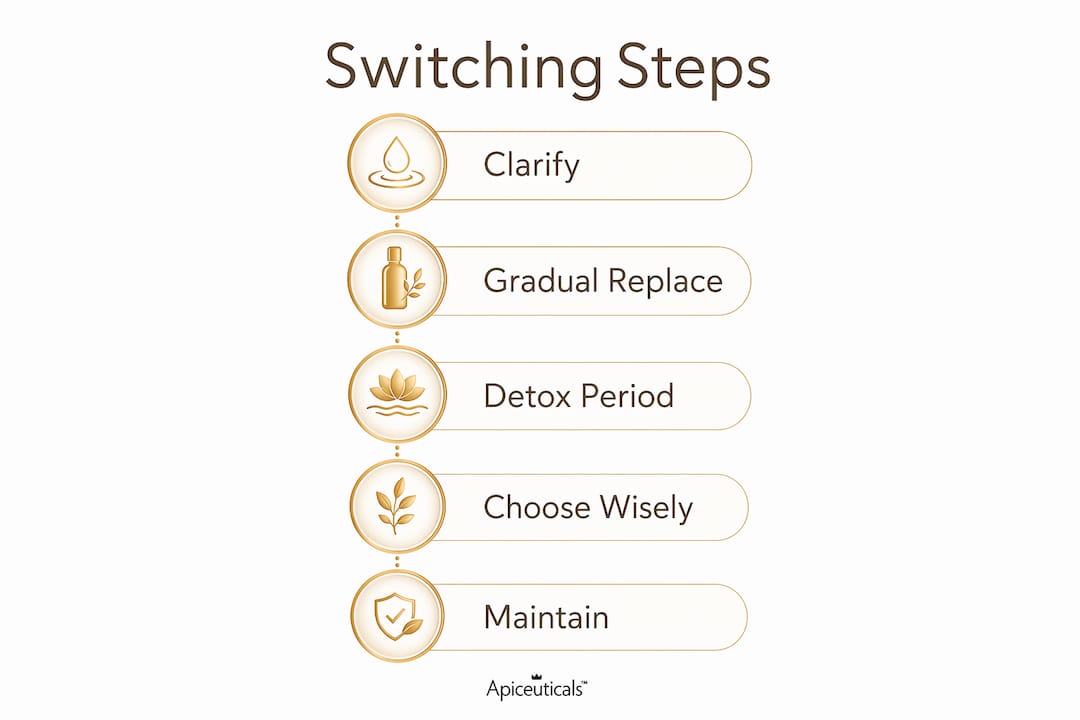
How to switch to organic hair care step by step
A gradual transition is more effective than replacing every product at once. Replacing one product at a time allows the scalp to adapt and helps you identify which formulas work for your hair type.
Perform the clarifying wash first. Mix apple cider vinegar with water at a 1:3 ratio. Apply to damp hair, leave for three minutes, then rinse thoroughly. This removes the silicone layer that conventional products deposit on the hair shaft.
Replace your shampoo. Switch to a certified organic, sulfate-free shampoo for your first full wash. Use your fingertips to massage the scalp in firm circular motions for at least two minutes. Organic shampoos produce less foam because they contain no synthetic surfactants. Physical friction from the massage compensates for the lower lather and ensures effective cleansing.
Introduce the organic conditioner. Apply conditioner only to mid-lengths and ends. Applying conditioner to the scalp causes buildup that directly undermines the benefits of the transition. Leave the conditioner on for two to three minutes, then rinse with cool water to seal the cuticle.
Add a treatment oil or mask. Introduce a weekly deep conditioning treatment in week two. Apply a natural oil or mask before washing as a pre-treatment, or use a leave-in mask after washing on towel-dried hair. Products containing PROPOWAX™ Living Honeycomb deliver antioxidant compounds directly to the scalp during this step.
Adjust your washing frequency. Oily hair benefits from daily washing, normal hair every 2–3 days, and dry or curly hair 1–2 times per week. Consistency matters more than frequency. Stick to a schedule for at least four weeks before evaluating results.
Expect and accept the detox period. The transition period lasts 2–4 weeks. During this phase, hair may feel heavy, rough, or waxy as silicones are removed and the scalp recalibrates. This is not a product failure. It is the natural hair state becoming visible for the first time in years.
Pro Tip: Take a photo of your hair before the transition begins. After four weeks, compare the texture, shine, and scalp condition. The visual record makes the adjustment period easier to manage and helps you track genuine progress.
Common challenges when switching to organic hair care
The most common reason people abandon the transition is misreading the detox symptoms as product failure. Conventional shampoos coat hair with silicones, masking its true condition. When those coatings are removed, the hair’s actual texture is revealed. That rough or waxy feeling is not damage. It is your hair without its synthetic coating for the first time.
“The detox phase is the most critical window in the transition. Scalp biology needs time to recalibrate. Abandoning the process at week two is the equivalent of stopping a course of treatment before it takes effect.”
Common challenges and their solutions:
- Low lather anxiety: Organic shampoos clean effectively without high foam. Vigorous fingertip massage for two full minutes delivers the same cleansing result as a sulfate-based lather.
- Over-conditioning: Applying conditioner to the scalp creates buildup that mimics the heaviness of conventional products. Keep conditioner strictly to mid-lengths and ends.
- Moisture loss in curly or textured hair: Moisture retention for textured hair requires a three-step approach: cleanse with a sulfate-free shampoo, moisturize with a water-based conditioner, then seal with a natural oil like jojoba or argan. This sequence prevents dryness and breakage.
- Reverting to conventional products: The temptation peaks around days 10–14. Staying the course through the full 2–4 week window is the single most important factor in a successful transition.
Maintaining your organic hair care routine long term
Once the detox period ends, the routine shifts from adaptation to optimization. Long-term organic hair care is about fine-tuning, not constant change.
Schedule weekly scalp massages with an antioxidant treatment. Products containing PROPOWAX™ Living Honeycomb deliver continuous antioxidant release to the scalp, protecting against oxidative stress from UV exposure and environmental pollution. The antioxidants for hair that matter most are those that remain bioavailable on the scalp between washes.
Monitor oil production monthly. If the scalp becomes oily faster than expected, reduce the interval between washes by one day. If the scalp feels tight or dry, extend the interval and add a pre-wash oil treatment.
Incorporate natural styling products. Replace synthetic hold sprays and serums with water-based styling creams or natural waxes. Avoid products containing mineral oils or synthetic polymers, which reintroduce the silicone-buildup problem.
Run a clarifying cycle every 4–6 weeks. Natural oils and mineral deposits from hard water accumulate over time. A periodic apple cider vinegar rinse or a certified organic clarifying shampoo resets the scalp without stripping it.
Evaluate your routine seasonally. Hair behavior changes with humidity, temperature, and diet. A routine that works in summer may need adjustment in winter. Reviewing washing frequency and treatment intensity every three months keeps the routine calibrated to your hair’s current state.
Key takeaways
Switching to organic hair care succeeds when you combine a clarifying first wash, a gradual product-by-product replacement, and patience through the 2–4 week detox period.
| Point | Details |
|---|---|
| Start with a clarifying wash | Use a 1:3 apple cider vinegar rinse to remove silicone buildup before your first organic shampoo. |
| Replace products gradually | Swap one product at a time to let the scalp adapt and identify what works for your hair type. |
| Expect a detox period | Hair may feel rough or waxy for 2–4 weeks as synthetic coatings are removed. This is normal. |
| Avoid scalp conditioning | Apply conditioner only to mid-lengths and ends to prevent buildup and preserve scalp health. |
| Prioritize antioxidant ingredients | Antioxidant-rich formulations like PROPOWAX™ Living Honeycomb protect the scalp from oxidative damage long term. |
What the transition taught us about scalp science
The conventional hair care industry spent decades solving a problem it created. Sulfates strip the scalp’s natural oils, so brands added silicones to restore the appearance of softness. The result was hair that looked healthy but was progressively weakened underneath a synthetic coating. When people first switch to organic products, they encounter their actual hair, often for the first time in years, and it surprises them.
At Apiceuticals, we have observed that the readers who succeed with the transition are those who understand the biology first. The scalp is not a passive surface. It is a living ecosystem with its own microbiome, sebaceous gland activity, and antioxidant defense mechanisms. When you remove synthetic chemicals, those mechanisms begin to function again. The rough texture at week two is not failure. It is recovery.
The antioxidant dimension of organic hair care is still underappreciated by most consumers. Free radical damage to the hair fiber and scalp is cumulative and largely invisible until it manifests as breakage, thinning, or premature graying. PROPOWAX™ Living Honeycomb addresses this at the molecular level, continuously releasing antioxidants validated by the Aristotle University of Thessaloniki. That is not a marketing claim. It is a global patent.
The readers who get the best results are those who treat the transition as a recalibration rather than a product swap. The goal is not to find an organic product that behaves like a conventional one. The goal is to let your hair behave like itself.
— Apiceuticals
Apiceuticals and the science of antioxidant-rich organic hair care
Apiceuticals was built on a single conviction: that the most effective hair and scalp care is also the cleanest. The PROPOWAX™ Living Honeycomb, patented for the highest antioxidant activity in cosmetics, continuously releases bioactive compounds onto the scalp and hair fiber throughout the day. Every formulation in the PROPOWAX™ Series excludes SLS, SLES, parabens, silicones, and mineral oils, and is dermatologically tested on sensitive skin with 0% irritation.
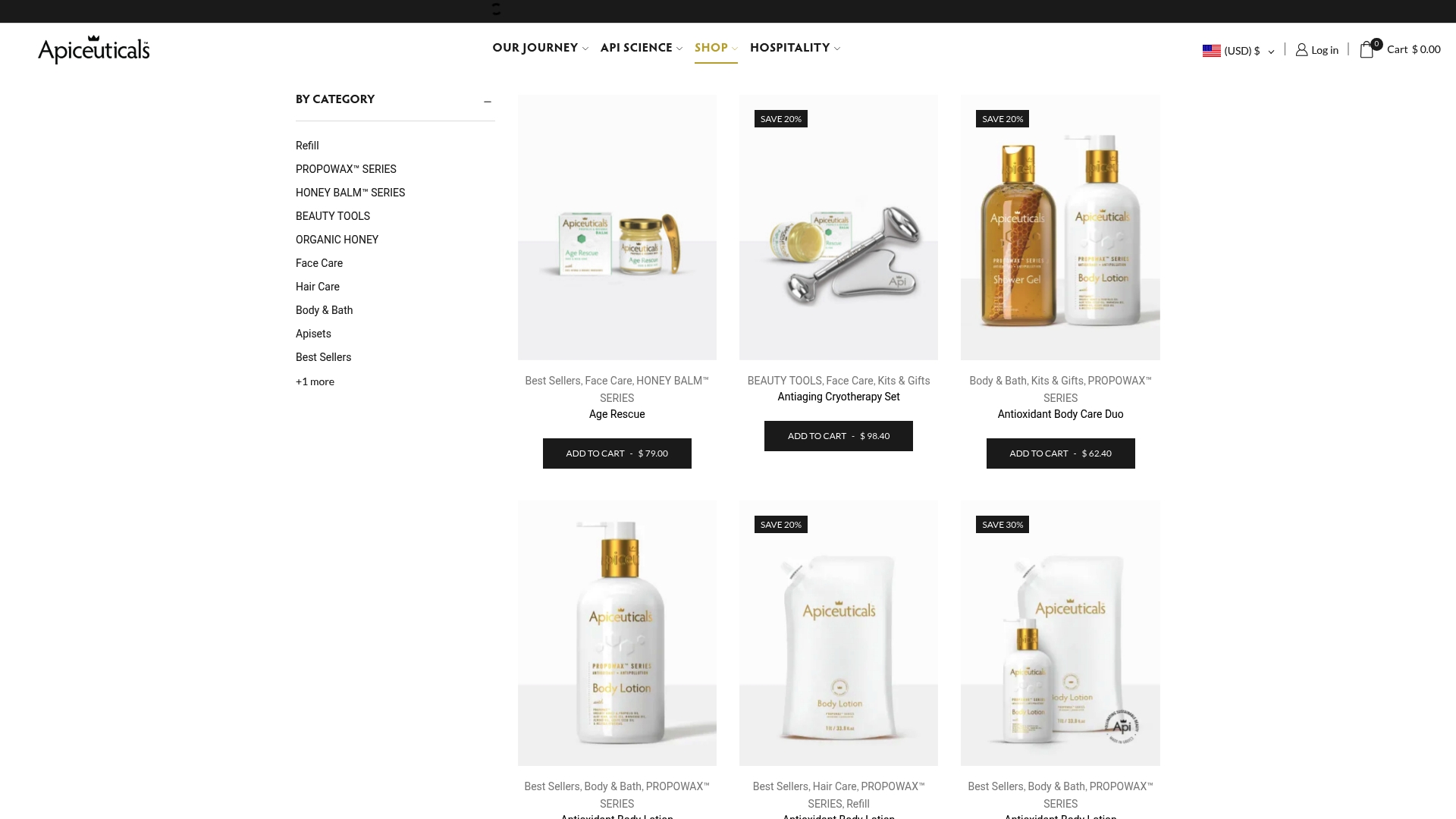
For readers building a natural skincare and hair care routine grounded in antioxidant science, the PROPOWAX™ Series offers a scientifically validated starting point. Rooted in Arcadia, Greece, and backed by family beekeeping heritage since 1981, Apiceuticals represents what organic hair care looks like when it is held to a scientific standard.
FAQ
What is the detox period when switching to organic hair care?
The detox period lasts 2–4 weeks. During this time, hair may feel heavy, rough, or waxy as the scalp removes silicone buildup and recalibrates its natural oil production.
How do I choose an organic shampoo without being misled by greenwashing?
Check the first five ingredients on the label and look for recognized organic certification marks. Vague terms like “natural extracts” carry no regulatory weight and are a common sign of greenwashing.
How often should I wash my hair with organic shampoo?
Washing frequency depends on hair type. Oily hair benefits from daily washing, normal hair every 2–3 days, and dry or curly hair 1–2 times per week. Consistency matters more than frequency.
Why does organic shampoo produce less lather than conventional shampoo?
Organic shampoos use plant-based surfactants instead of synthetic sulfates, which produce less foam. Effective cleansing comes from two minutes of firm fingertip massage on the scalp, not from foam volume.
What is PROPOWAX™ Living Honeycomb and why does it matter for organic hair care?
PROPOWAX™ Living Honeycomb is a patented technology developed by Apiceuticals that continuously releases antioxidants onto the scalp and hair fiber. Its antioxidant activity is the highest recorded in cosmetics, independently validated by the Aristotle University of Thessaloniki.
Recommended


Related posts

How bees and biodiversity sustain each other, what the science says about Greece and the Aegean, and how antioxidant beauty can start from a hive...

How organic propolis extraction works, from hive to extract: collection, solvents, EU organic rules, Greek propolis phenolics and what it means for skincare.

Build an anti pollution skincare routine that fits Greek city life: what pollution does to skin, the morning and evening steps, and the antioxidants with...

Honey moisture content explained: the EU and Greek limits, how to take a refractometer reading, what excess water does to honey, and why it matters...

How antioxidant activity measurement works: DPPH, ABTS, FRAP and ORAC explained, why results differ, and what a lab number can and cannot say about skin...















