
No products in the cart.
Return To Shop
How to Use Face Masks Effectively for Radiant Skin
To use face masks effectively, follow this sequence every time: cleanse your skin, choose a formula matched to your skin type, apply a thin even layer while avoiding the eye and lip area, follow the product’s stated timing precisely, remove as directed, then seal results with a serum, moisturizer, and SPF if it is daytime. The American Academy of Dermatology confirms that masks work by giving active ingredients a concentrated window to absorb, and that they should complement, not replace, your foundational routine.
Quick-start checklist:
- Cleanse thoroughly before applying any mask
- Match the mask formula to your current skin concern, not just your skin type
- Apply a thin, even layer, avoiding eyes and lips
- Set a timer and remove before the product dries out or exceeds the stated limit
- Pat, do not rub, during removal
- Follow immediately with serum and moisturizer
Pro Tip: Before trying any new mask, apply a small amount behind your ear or on your inner wrist and wait 24 hours. Ingredient conflicts between masks and your existing actives, particularly retinoids and strong acids, are the most common cause of unexpected irritation.
Key Takeaways
Effective masking follows a fixed sequence: cleanse, apply the right formula, follow the product’s timing precisely, remove gently, then seal with an antioxidant serum, moisturizer, and SPF.
| Point | Details |
|---|---|
| Match formula to skin concern | Clay for oily skin, hydrating sheet or gel for dry or sensitive, overnight for dehydrated or mature. |
| Timing is a hard limit | Most rinse-off masks work in 10–20 minutes; leaving clay on until fully dry pulls moisture from skin. |
| Removal technique matters | Pat sheet mask essence in; rinse clay with lukewarm water using gentle circular motions, never scrub. |
| Antioxidants extend results | Apply an antioxidant serum immediately after removal while skin permeability is elevated. |
| Apiceuticals PROPOWAX™ | Continuously releases antioxidants post-mask, validated by Aristotle University of Thessaloniki. |
Table of Contents
- How to Use Face Masks Effectively by Mask Type
- How to Remove Each Mask Type and Lock In the Results
- Prep, Safety, and How Often You Should Mask
- How Long Should You Wear a Mask, and How Do You Know It Worked?
- Are DIY Face Masks Worth It?
- Why Antioxidants Determine How Much Your Mask Actually Does
- Masking Is a Tool, Not a Treatment Plan
- Antioxidant Mask Support from Apiceuticals
- Sources
- FAQ
How to Use Face Masks Effectively by Mask Type
Not all masks behave the same way on skin, and applying a clay mask the way you apply a sheet mask will undermine both. The Healthline application guide notes that sheet masks typically do not require rinsing, while most rinse-off formulas should be removed within a short timeframe. Understanding the mechanics of each type is the foundation of using face masks properly.
Cream masks
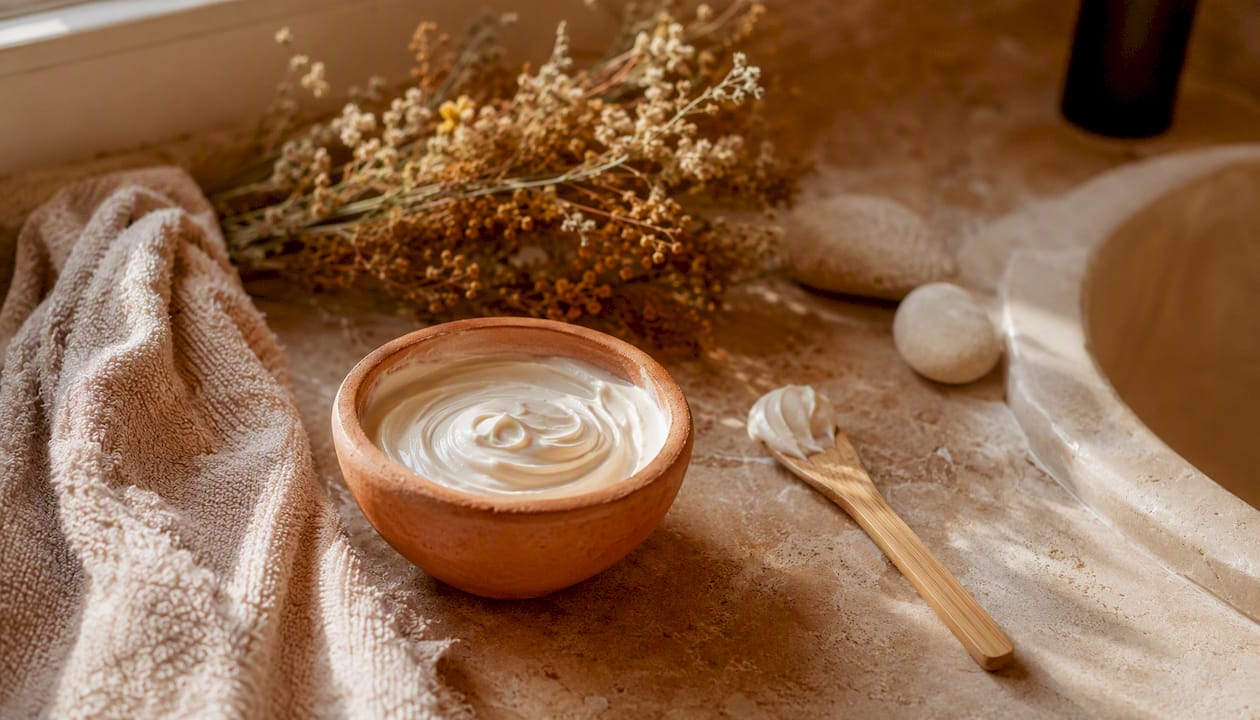
Cream masks are occlusive by design, delivering humectants and emollients to dry or dehydrated skin. Apply a layer roughly 2–3 millimeters thick across the face and neck, avoiding the orbital bone and lip line. Leave on for the time stated on the packaging, usually 10–15 minutes, then rinse with lukewarm water and a soft cloth. Dry and combination-dry skin types benefit most from cream formulas; if your skin is oily, look for a cream mask labeled “non-comedogenic” before committing.
Sheet masks
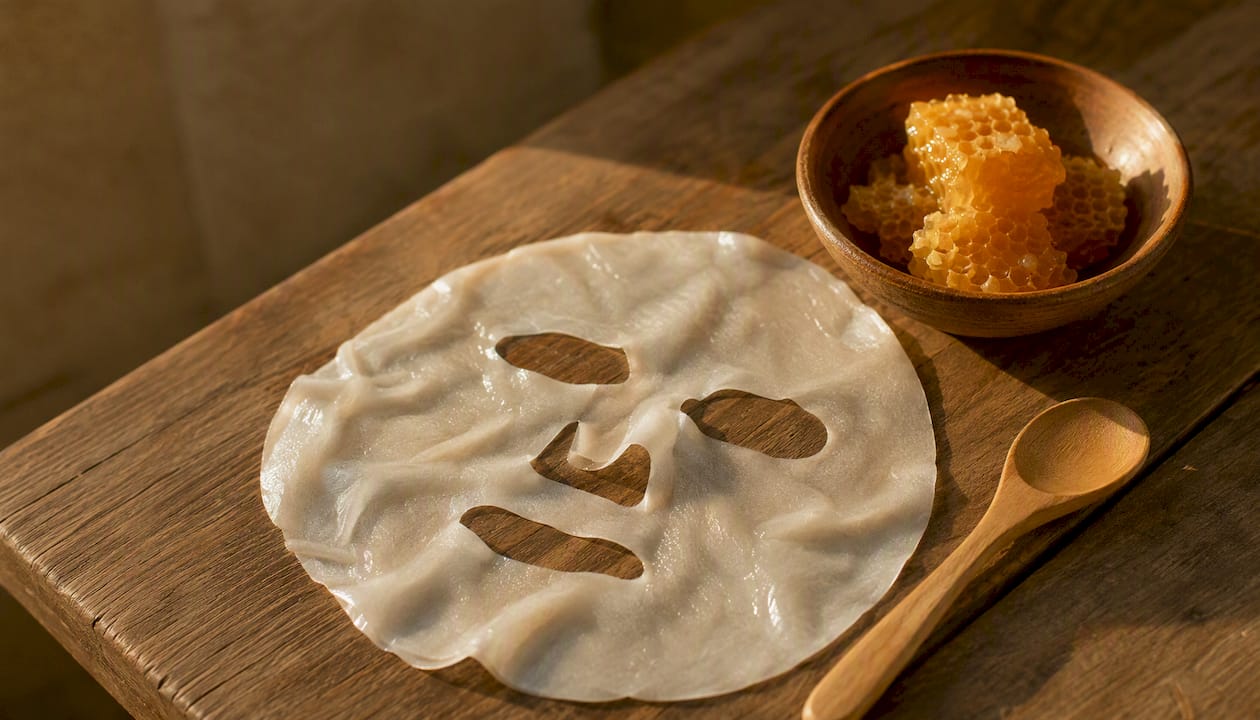
Unfold the sheet and align it carefully with your brows, nose, and mouth cutouts before pressing it flat against the skin. Smooth out air pockets from the center outward. Most sheet masks are worn for a duration recommended on the packaging. When you remove the sheet, do not rinse: pat the remaining essence gently into the skin with clean fingertips. Sheet masks suit all skin types, though those formulated with niacinamide or centella asiatica are particularly well-tolerated by sensitive skin.
Clay and mud masks
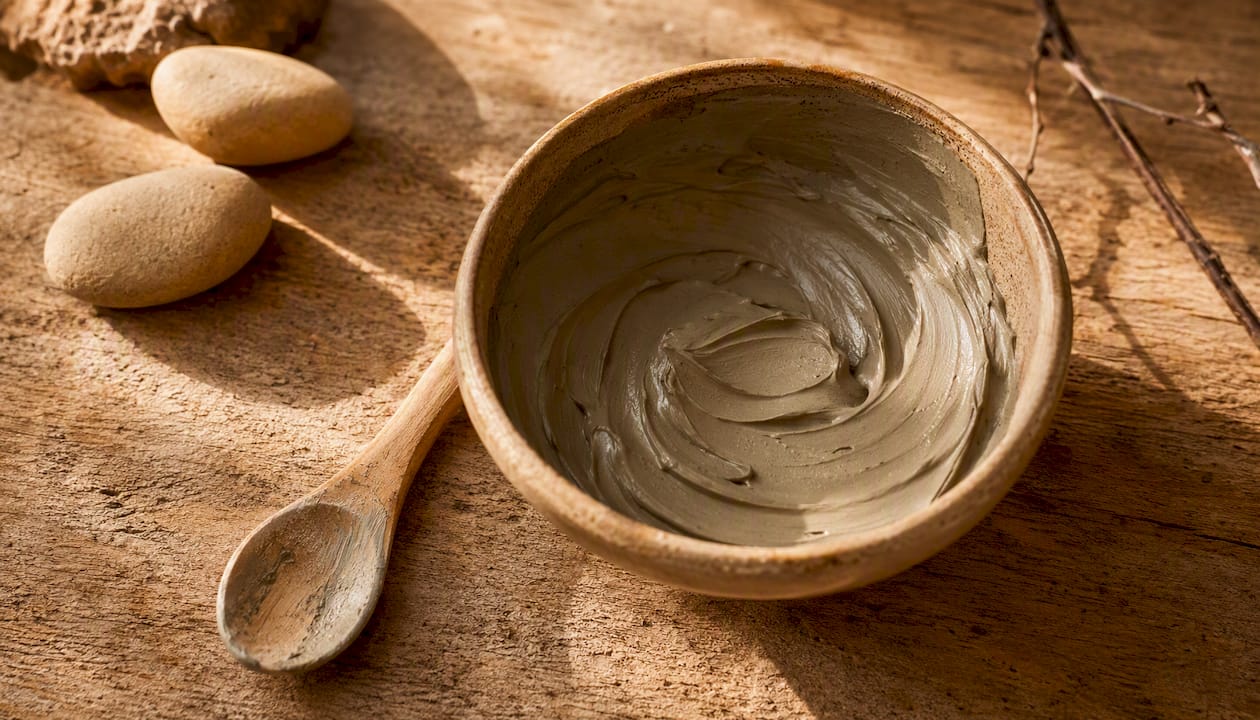
Clay draws excess sebum and environmental debris from pores, making it the go-to formula for oily and acne-prone skin. Apply a thin, uniform layer and remove it while it is still slightly tacky, before it dries completely and begins to crack. A fully dried clay mask pulls moisture from the skin rather than from the pore, which defeats its purpose and can compromise the barrier. Clay formulas should generally be removed before fully drying to avoid skin moisture loss.
Gel masks
Gel masks are primarily soothing and cooling, often containing aloe vera, hyaluronic acid, or botanical extracts. They suit sensitive, reactive, or post-procedure skin well. Some gel masks are designed to be left on as a thin hydrating film, so always check whether the product is rinse-off or leave-on before applying.
Overnight masks
Overnight masks, sometimes called sleeping masks, are leave-on formulas designed to work during the skin’s natural repair cycle. Apply as the final step in your evening routine, after serum and before any occlusive balm if you use one. Use them one to three times per week rather than nightly, as the skin still needs to breathe and regulate. Dry and mature skin types gain the most from overnight formulas; oily skin types should choose gel-textured overnight masks to avoid congestion.
A consistent finding across beauty-industry guidance is that choosing the wrong formula for your skin type is the single most common error that reduces mask effectiveness. Matching formula to skin concern, not just skin type, is what separates a genuinely productive masking session from one that simply feels pleasant.
How to Remove Each Mask Type and Lock In the Results
Removal technique matters as much as application. Pulling a sheet mask off quickly, or scrubbing away a clay mask, can introduce micro-irritation that negates the treatment you just completed.
- Rinse-off masks (cream, clay, mud, enzyme): Wet your hands with lukewarm water and work the mask loose with gentle circular motions before rinsing. Avoid hot water, which strips the skin barrier, and avoid rough wash cloths that create friction on freshly treated skin.
- Sheet masks: Peel the sheet away slowly from the edges, working inward. Do not rinse. Press any remaining essence into the skin with clean fingertips using a light tapping motion.
- Peel-off masks: Lift one edge gently and peel in a slow, continuous motion parallel to the skin surface. Pulling at an angle perpendicular to the skin increases the risk of capillary irritation, particularly around the nose.
- Overnight masks: Rinse with your normal morning cleanser. There is no need for a second cleanse unless the formula is particularly heavy.
After removal, the skin is primed for absorption. Apply a targeted serum first, let it settle for 60–90 seconds, then follow with your moisturizer. For maximum skincare absorption, layer from the thinnest texture to the thickest: water-based serum, then emulsion or lotion, then cream or balm. If it is daytime, SPF is the final, non-negotiable step. Avoid vigorous exfoliation, high-concentration retinoids, or undiluted essential oils immediately after masking, as the skin’s permeability is temporarily elevated and the risk of irritation rises accordingly. Understanding how to layer skincare products for maximum results will help you sequence these steps correctly every time.
Pro Tip: After removing a sheet mask, fold it in half and use the remaining essence to pat along your neck and décolletage. The essence that saturates the sheet is the same concentration as what absorbs into your face, and the neck is frequently undertreated.
Prep, Safety, and How Often You Should Mask
Why cleansing before masking is non-negotiable
A mask applied to uncleansed skin is working against a layer of sebum, sunscreen residue, and environmental particulates. Those barriers reduce how much active ingredient reaches the dermis. Cleanse with a gentle, pH-balanced formula before every masking session. Gentle exfoliation, either a low-concentration AHA toner or a soft enzyme powder, can improve absorption further, but only when your skin is not already sensitized or compromised. If your skin is reactive, red, or recovering from a procedure, skip exfoliation entirely and apply the mask directly after cleansing.
Patch testing and recognizing irritation
Apply a small amount of any new mask to the inner arm or behind the ear. Wait 24 hours. Redness, itching, or swelling at the test site means the formula is not compatible with your skin chemistry. If irritation occurs during a mask session, remove the product immediately with cool water, do not apply additional actives, and allow the barrier to recover for at least 48 hours before trying another treatment. The AAD’s guidance on facial masks specifically flags patch testing as a critical step for sensitive or reactive skin.
Active ingredient conflicts
Avoid using a mask that contains retinoids or strong AHAs on the same day you have applied a retinol serum or exfoliating toner. Doubling up on these actives does not double the benefit; it doubles the irritation risk. Similarly, combining a vitamin C mask with a niacinamide-heavy serum immediately afterward can cause temporary flushing in some skin types. When in doubt, keep the post-mask routine simple: one targeted serum, one moisturizer, one SPF. Knowing which sunscreen and active combinations to avoid is equally relevant when you are applying SPF after an exfoliating mask.
Recommended masking frequency
| Mask Type | Skin Type Best Suited | Suggested Frequency |
|---|---|---|
| Hydrating gel or sheet | All, especially dry and sensitive | 3–4 times per week |
| Clay or mud | Oily, combination, acne-prone | 1–2 times per week |
| Enzyme or exfoliating | Normal, oily, combination | 1 time per week |
| Overnight sleeping mask | Dry, mature, dehydrated | 2–3 times per week |
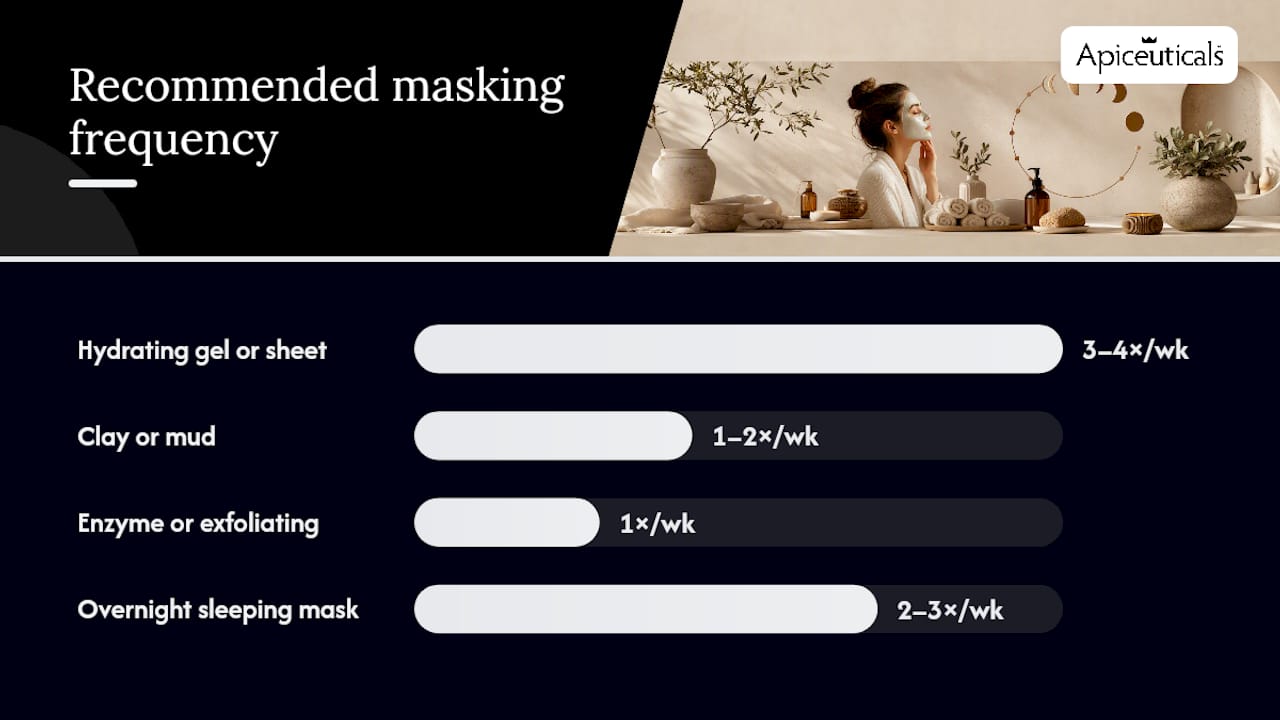
Board-certified dermatologists consistently note that masks give actives a concentrated absorption window, and that this window is most productive when the skin barrier is intact. Masking more frequently than the table above suggests, particularly with exfoliating formulas, erodes that barrier rather than strengthening it.
How Long Should You Wear a Mask, and How Do You Know It Worked?
Timing is where most people quietly undermine an otherwise correct routine. The general rule is straightforward: follow the product’s stated instructions. Most rinse-off masks are formulated to be worn for a limited time; leaving them on longer does not intensify the result and, in the case of clay, actively draws moisture from the skin once the formula has dried. Overnight masks are the only category designed for extended wear, and even those are intended for a single sleep cycle, not multiple days.
Short-term results you can assess immediately after removal:
- Skin feels noticeably softer or more supple (hydrating masks)
- Pores appear temporarily tighter and skin looks less shiny (clay masks)
- Redness or heat has subsided (soothing gel masks)
- Skin texture feels smoother to the touch (enzyme or exfoliating masks)
Longer-term improvement takes consistency. Visible changes in skin texture, barrier resilience, and breakout frequency typically emerge over four to six weeks of regular, correctly timed masking. Taking a photograph in consistent lighting before and after a four-week masking cycle gives you a reliable baseline for comparison. Avoid the common error of attributing short-term hydration to long-term structural change: a single sheet mask can plump the skin for several hours through osmotic hydration, but sustained improvement in skin quality requires a steady cadence of correctly applied treatments paired with a sound daily routine.
Are DIY Face Masks Worth It?
The appeal of DIY masks is understandable, but the risk-to-benefit ratio is less favorable than most home recipes suggest. Formulated skincare products are pH-balanced, preserved against microbial growth, and tested for skin compatibility. Most kitchen ingredients are none of those things.
Generally safe in moderation: Raw honey, in small amounts, has documented antimicrobial properties and a long history of topical use. Plain oatmeal, ground fine, can soothe reactive skin without disrupting the barrier. Plain yogurt contains lactic acid at concentrations low enough to be gentle for most skin types.
High-risk ingredients to avoid:
- Raw egg: Carries Salmonella risk when applied near mucous membranes; the protein film it creates on skin offers no clinically meaningful benefit.
- Undiluted citrus juice (lemon, lime, grapefruit): pH of 2.0–2.5, far below the skin’s natural 4.5–5.5 range; can cause chemical burns and phototoxic reactions, particularly in sunlight.
- Baking soda: pH of approximately 9, which disrupts the acid mantle and creates conditions favorable to bacterial overgrowth.
- Cinnamon or spices: Common contact allergens that cause irritant dermatitis even in people with no known allergies.
- Sugar or salt scrubs used as masks: Abrasive particles on an occluded skin surface cause micro-tears rather than exfoliation.
If you want to incorporate honey into your skincare, a formulated product that uses honey at a calibrated concentration, preserved and pH-adjusted, delivers the benefit without the contamination risk. Apiceuticals’ honey in skincare approach reflects exactly this principle: the ingredient is real and traceable, but the formulation science is what makes it effective.
Why Antioxidants Determine How Much Your Mask Actually Does
A mask opens a window of elevated skin permeability. What you apply during and immediately after that window either capitalizes on it or wastes it. Antioxidants, specifically those capable of neutralizing free radicals generated by UV exposure and environmental pollution, are among the most productive ingredients to introduce during this period. Oxidative stress degrades collagen, disrupts melanin regulation, and accelerates barrier breakdown; an antioxidant delivered at the right moment can intercept that cascade before it compounds.
This is where the science behind PROPOWAX™ Living Honeycomb becomes directly relevant. Apiceuticals holds a global patent for the highest antioxidant activity in cosmetics through PROPOWAX™ technology, independently validated by the Aristotle University of Thessaloniki. The Living Honeycomb structure continuously releases antioxidants onto the skin rather than delivering a single-dose burst, which means the protective effect persists well beyond the initial application window.
Practical sequencing for an antioxidant-led post-mask routine:
- Remove your mask as directed and pat skin dry
- Apply an antioxidant serum (vitamin C, niacinamide, or a PROPOWAX™-containing formula) while skin is still slightly warm and receptive
- Follow with your moisturizer to seal the antioxidant layer
- Apply SPF if it is morning or you are going outdoors
Pro Tip: Do not layer an antioxidant serum directly over an exfoliating mask without rinsing thoroughly first. Residual acid on the skin surface can alter the pH environment and reduce the stability of certain antioxidants, particularly ascorbic acid (vitamin C). A complete rinse and a 60-second wait before applying your serum preserves both ingredients.
Pairing masks with antioxidant facial treatments designed to sustain the post-mask environment is the most scientifically coherent way to extend what a single masking session can achieve.
Masking Is a Tool, Not a Treatment Plan
The beauty industry has a persistent tendency to position face masks as transformative events. They are not. A mask is a targeted delivery mechanism, one that concentrates actives against the skin for a defined period and then ends. The real work of skin improvement happens in the hours and days between masking sessions, driven by a consistent routine of cleansing, antioxidant protection, moisturization, and SPF.
What masking does well is amplify a routine that is already functioning. A hydrating sheet mask on well-maintained skin produces a noticeably better result than the same mask applied to a compromised barrier. This is not a coincidence; it reflects the fact that intact skin absorbs and retains active ingredients more efficiently. Frequency matters less than consistency. A clay mask used correctly once a week for three months will produce more visible improvement in pore appearance than four clay masks used in a single week followed by a month of neglect. The skin’s barrier is a living system, and it responds to steady, moderate inputs rather than periodic intensity. Building a skincare routine that treats masking as a periodic boost, rather than the centerpiece, is the approach most likely to produce cumulative, measurable results.
Antioxidant Mask Support from Apiceuticals
For readers who want to carry the benefits of a masking session further into their day, Apiceuticals offers a science-grounded path. The PROPOWAX™ Living Honeycomb technology, validated by the Aristotle University of Thessaloniki and holding a global patent for the highest antioxidant activity in cosmetics, is formulated to deliver continuous antioxidant release rather than a single-dose application. That sustained delivery is precisely what the post-mask window calls for.

For those focused on preventing skin oxidation and sustaining the results of a consistent masking routine, the PROPOWAX™ range offers a clean, clinically grounded complement. Visit the PROPOWAX™ technology page to understand the science, then explore the full antioxidant skincare range to find the right post-mask step for your routine.
Sources
The following sources support the guidance in this article and offer reliable further reading for anyone who wants to verify specific claims or go deeper on a particular topic.
- How to Use a Face Mask: Instructions to Apply and Remove
- Do facial masks work, and should I add one to my skin care routine?
- How To Use a Face Mask: 6 Mistakes To Avoid | L’Oréal Paris
FAQ
How often should you use a face mask?
Frequency depends on the formula: hydrating sheet or gel masks can be used 3–4 times per week, while clay and exfoliating enzyme masks are best limited to once or twice per week to protect the skin barrier.
Do you need to rinse off a sheet mask?
No. Sheet masks do not require rinsing. After removing the sheet, pat any remaining essence gently into the skin with clean fingertips and follow with your serum and moisturizer.
Can you use a face mask if you have sensitive skin?
Yes, with care. Choose fragrance-free, non-exfoliating formulas such as hydrating gel or oat-based masks, always patch test 24 hours before full application, and remove at the first sign of stinging or redness.
How long should a face mask stay on?
Most rinse-off masks are designed for 10–20 minutes. Clay masks should be removed before they dry completely. Overnight masks are the only type intended for extended wear through a sleep cycle.
What should you apply after removing a face mask?
Apply a targeted serum first, allow 60–90 seconds for it to absorb, then follow with a moisturizer. Add SPF as the final step if it is daytime. Avoid high-concentration exfoliants or retinoids immediately after masking, as skin permeability is temporarily elevated.
Recommended


Related posts

How bees and biodiversity sustain each other, what the science says about Greece and the Aegean, and how antioxidant beauty can start from a hive...

How organic propolis extraction works, from hive to extract: collection, solvents, EU organic rules, Greek propolis phenolics and what it means for skincare.

Build an anti pollution skincare routine that fits Greek city life: what pollution does to skin, the morning and evening steps, and the antioxidants with...

Honey moisture content explained: the EU and Greek limits, how to take a refractometer reading, what excess water does to honey, and why it matters...

How antioxidant activity measurement works: DPPH, ABTS, FRAP and ORAC explained, why results differ, and what a lab number can and cannot say about skin...















