No products in the cart.
Return To Shop
Itchy Scalp Triggers: What Sets Off the Itch and Why
Itchy scalp triggers fall into a handful of families: an inflammatory response to the yeast that lives on every scalp, contact reactions to hair products and dyes, a weakened skin barrier, stress, and, less often, nerve-related itch with nothing visible on the skin. Which one applies to you depends on what accompanies the itch: flakes, redness, bumps, a burning sensation, or nothing at all. This guide walks through each trigger, the clues that separate them, and the habits that quiet a reactive scalp, with a view of how antioxidant science fits into the picture.
TL;DR
- The most common of all itchy scalp triggers is seborrheic dermatitis, an inflammatory reaction to the yeast-like fungus Malassezia, which is worsened by stress, cold dry air, sweat and excess oil.
- Hair dye allergy to para-phenylenediamine (PPD) can appear 24 to 72 hours after a color, and can start suddenly after years of problem-free use.
- Shampoo residue at the hairline and behind the ears, and scrubbing with nails, can cause itching even with a mild formula.
- “Organic” or “natural” does not mean hypoallergenic: fragrance, citrus and essential oils are frequent contact triggers.
- Itch with no visible rash, or itch that persists despite treatment, deserves a dermatologist’s assessment.
Table of Contents
- Why the scalp itches: a living ecosystem under pressure
- The most frequent of the itchy scalp triggers: yeast and seborrheic dermatitis
- Dry scalp versus dandruff: two itches that look alike
- Hair dye, fragrance and other contact triggers
- Itchy scalp after shampooing
- Stress, hormones and the skin barrier
- When nothing is visible: scalp dysesthesia and neurodermatitis
- Oxidative stress: the trigger that sits underneath the others
- A practical way to identify your own trigger
- When to see a dermatologist
- Where our products fit
- Our perspective: the itch deserves a diagnosis before a product
- FAQ
- Sources
Why the scalp itches: a living ecosystem under pressure
The scalp is not simply the skin of the head with hair on top. It is a living ecosystem: sebaceous glands, a resident microbial community, a skin barrier, a dense network of sensory nerves, and a constant exposure to water, detergents, heat and styling products. Itch is what that ecosystem reports when one of those elements is out of balance.
The Cleveland Clinic puts it plainly: there is no single reason a scalp itches, but there are common suspects, and accompanying symptoms such as flakes, bumps, a rash or hair loss help narrow them down. That is the working principle of this article. Instead of asking only “what do I put on it?”, ask “what else is happening on the scalp, and when did it start?”
If you want a useful mental model, think of oxidation as rust on metal. Moisture, heat and friction expose a surface to attack, and a damaged surface corrodes faster. A scalp whose barrier is compromised behaves similarly: it loses water, becomes more permeable to irritants, and reacts to things it previously tolerated. We return to that idea below, after the main triggers.
The most frequent of the itchy scalp triggers: yeast and seborrheic dermatitis
According to the Cleveland Clinic, seborrheic dermatitis is the most frequent cause of an itchy, scaly scalp. It is an inflammatory response to Malassezia, a yeast-like fungus that lives on the scalp of most people without causing any trouble. The problem is not the presence of the yeast but the way the skin reacts to it.
Dandruff is the mild end of the same spectrum. The NHS describes white flakes of skin on the scalp and in the hair, often more visible on darker hair and on the shoulders, with a scalp that may also feel dry and itchy. Heavier forms bring redness and greasy, yellowish scale, and can extend to the eyebrows, the sides of the nose and behind the ears.
The triggers that tip a quiet scalp into a flare are well documented: cold and dry air, stress, sweat (its salt content can irritate skin), and excess oil production. Hormonal changes and infrequent washing also raise the likelihood. For readers in Greece, this has a practical meaning. The itch often changes character with the seasons: dry indoor heating and cold wind in winter in the mountain regions, and heat, sweat and sea water in a long summer.
One point from the American Academy of Dermatology is worth remembering: skin with seborrheic dermatitis is easily irritated, and irritating it can cause a flare. Aggressive scrubbing, very hot water and harsh products can therefore make the very condition you are trying to calm worse.
Dry scalp versus dandruff: two itches that look alike
Dry scalp and dandruff are routinely confused, and the distinction changes what helps. A dry scalp lacks moisture. It tends to produce small, white, dry flakes, often alongside dry skin elsewhere, and it is aggravated by hot showers, dry air and some styling products. Harvard Health lists simple dry skin among the benign causes, next to irritation, infection and infestation.
Dandruff and seborrheic dermatitis, by contrast, are linked to oil and yeast. The flakes are usually larger and may look yellowish or feel greasy, and the scalp is often oilier rather than drier. Dermatology specialists quoted by Scripps Health stress that the first step is to separate an inflammatory scalp condition, such as psoriasis or seborrheic dermatitis, from simple irritant contact dermatitis, because the treatment paths differ and a wrong choice can worsen things. Treating a dry scalp with an anti-dandruff routine, or the reverse, is one of the most common reasons an itch drags on.
Hair dye, fragrance and other contact triggers
Contact dermatitis occurs when an irritant or allergen meets the skin and provokes a reaction, and the scalp is a frequent site. Scripps Health lists it among the principal causes of an itchy scalp.
Para-phenylenediamine in permanent hair dye
PPD is a recognized contact allergen found in many permanent hair dyes. The NHS describes reactions that range from stinging and blistering to intense itching, and notes that they can take up to 72 hours to appear. That delay misleads people: the itch begins two days after a salon visit, and nobody connects the two.
The second surprise is timing across years. DermNet explains that the exposure which initiates an allergy may cause no symptoms; contact dermatitis occurs on subsequent contact. In practice, someone who has colored their hair for a decade without trouble can react severely to an ordinary application. Prior exposure to a so-called black henna temporary tattoo is a known route to sensitization, because black henna reactions are a form of allergic contact dermatitis to PPD. Pure henna itself is not the culprit.
If a reaction has occurred, see a dermatologist before the next color. Sensitization to PPD is likely to be lifelong, according to the clinical sources above, and a patch test can confirm what you are reacting to.

Fragrance, botanicals and the myth of the harmless label
A frequent assumption is that organic or natural products cannot irritate. The AAD’s guidance cautions otherwise for reactive scalps: citrus extracts, essential oils and certain fragrances are common triggers for contact dermatitis, and a certified organic label does not make a product hypoallergenic. Complex botanical mixtures can even raise the odds of a reaction in someone already sensitized.
We hold ourselves to the same standard. Organic certification describes how an ingredient was grown and harvested. It says nothing about whether a particular person’s immune system will tolerate it. If your scalp is reactive, a short, fragrance-free ingredient list is a more rational starting point than any marketing term. Our own guide to fragrance-free shampoo for reactive scalps covers what to look for.
Surfactants, and what the label actually tells you
Sulfates and other cleansing agents attract blame, sometimes fairly and sometimes not. The evidence is more nuanced than the internet suggests; our review of when SLS actually damages hair separates dose, rinse time and formulation from myth, and our note on cocamidopropyl betaine explains why many reactions attributed to it trace back to impurities rather than true allergy. For a broader checklist, see shampoo ingredients to avoid.
Itchy scalp after shampooing
A scalp that itches during or just after washing is a specific pattern, and it points to a short list of causes. The Sensitive Skin Lab describes it as an itch or prickle that starts during or soon after shampooing, sometimes with tingling, burning, or dryness and flaking in the following hours, and sometimes redness at the hairline.
The usual explanations are these:
Residue is the first. Shampoo or conditioner left behind at the hairline and behind the ears can sit against the skin and irritate it over time, even with a mild formula. The same source notes that a thorough rinse and massaging with fingertips rather than nails resolves symptoms for many people without a product change. Rinse longer than feels necessary, and apply conditioner to the lengths rather than the scalp.
Water temperature is the second. Hot water strips lipids from the barrier and encourages dryness and flaking, so lukewarm is kinder to a reactive scalp.

The third is a genuine ingredient reaction, often to fragrance or a preservative. If the itch appears reliably within minutes of a particular product, stop using it and see whether the pattern stops.
The fourth is the opposite of overwashing: infrequent washing. Oil, sweat and yeast accumulate, and the Malassezia response gets stronger. The goal is consistency rather than extremes.
Stress, hormones and the skin barrier
Stress is not just “in your head”. The AAD’s experts, as summarized in our research, describe stress as a systemic trigger: it creates a physiological state that lowers the skin’s tolerance for irritants, and stress-related hormonal changes can alter sebum composition and weaken the barrier. In that state, an otherwise harmless shampoo, a windy day or a tight hairstyle can provoke an inflammatory reaction. The AAD lists stress among the factors that bring on seborrheic dermatitis flares.
This helps explain a pattern many readers recognize: the scalp is calm for months, then itches during an exam period, a bereavement or a demanding season at work. Treating the scalp matters, but so does sleep, movement and whatever reliably lowers your own stress load.
When nothing is visible: scalp dysesthesia and neurodermatitis
Sometimes the scalp itches, burns or crawls and a dermatologist finds clear skin. Scripps Health documents scalp dysesthesia and neurodermatitis as causes of chronic itch without visible lesions, with triggers that include trauma, neck conditions such as arthritis, and neurological issues. Stress and anxiety can keep the itch active even when external treatment is applied.
The itch-scratch cycle in these cases is often resistant to conventional topical products. People then buy a succession of anti-dandruff shampoos, none of which address the actual mechanism. If you have tried two or three sensible routines over several weeks and the itch persists with no flakes or rash, the useful next step is not another shampoo but a dermatology appointment, where nerve-related causes can be considered alongside stress management.
Oxidative stress: the trigger that sits underneath the others
Several triggers above share a mechanism. UV light, pollution, heat, friction and chemical exposure generate free radicals, unstable molecules that damage lipids and proteins in skin. When the scalp’s own antioxidant defenses are outpaced, the barrier weakens and inflammation becomes easier to provoke. This is the rust analogy in biological terms.
We should be careful about what is established. Antioxidants are not a treatment for seborrheic dermatitis, a hair dye allergy or dysesthesia, and no cosmetic replaces a diagnosis. What the science supports is a more modest and still meaningful idea: a scalp that is well defended against oxidative stress is a more resilient surface. Our article on scalp oxidative stress and the trial evidence examines that evidence, including a link to yeast, and our primer on antioxidants for hair explains why hair and scalp need them.
How our PROPOWAX™ Living Honeycomb is built around this idea
PROPOWAX™ is our patented Living Honeycomb, placed inside every product, which continuously releases antioxidants onto skin, scalp and hair. The technology holds a global patent for the highest antioxidant activity in cosmetics, and its antioxidant activity was independently validated by the Aristotle University of Thessaloniki. You can read the technical background on the PROPOWAX™ technology page, and the role of propolis polyphenols in this section of our hair antioxidant guide.
It is a reference point for how antioxidant delivery can be engineered rather than a claim that it cures an itch. The distinction matters, and it is the one we ask readers to apply to every product, ours included.
A practical way to identify your own trigger
Work from the clues, one at a time, and change one thing at a time. A short diary for three to four weeks is more informative than any list.
Start with the appearance. Greasy yellowish flakes with redness suggest seborrheic dermatitis. Fine white flakes with tight, dry skin suggest a dry scalp. A sudden, severe itch with swelling, weeping or blisters within one to three days of coloring suggests a dye allergy and warrants prompt medical attention. Itch with silvery, well-defined thick plaques may be psoriasis, which needs a dermatologist rather than a cosmetic routine.
Then look at timing. Itch during washing points to temperature, residue or an ingredient. Itch that worsens in winter points to dry air and seborrheic flares. Itch during stressful weeks points to the stress-barrier link. Itch every time you wear a tight style or use a particular product points to mechanical or contact causes. Environmental and routine-related flares are also discussed from the label-reading side in this guide to eczema-safe skincare and label checks, a useful companion when you are deciding which ingredients to avoid.
Finally, adjust the routine gently: lukewarm water, thorough rinsing, fingertips rather than nails, a fragrance-free cleanser, and washing often enough that oil and sweat do not accumulate. Our hair care essentials list sets out a routine built on those principles.
When to see a dermatologist
Book an appointment with a dermatologist (δερματολόγος) when the itch lasts more than a few weeks despite a gentler routine, when there are sores, crusting, bleeding, patches of hair loss or visible infection, when you suspect a reaction to hair dye, or when the scalp feels painful or burning with clear skin. Hair dye reactions with swelling of the face, eyelids or difficulty breathing are an emergency: seek urgent care. In Greece, you can contact your public health unit or a private dermatology practice; bring the product names or dye box to the visit, since they help identify the culprit.
Where our products fit
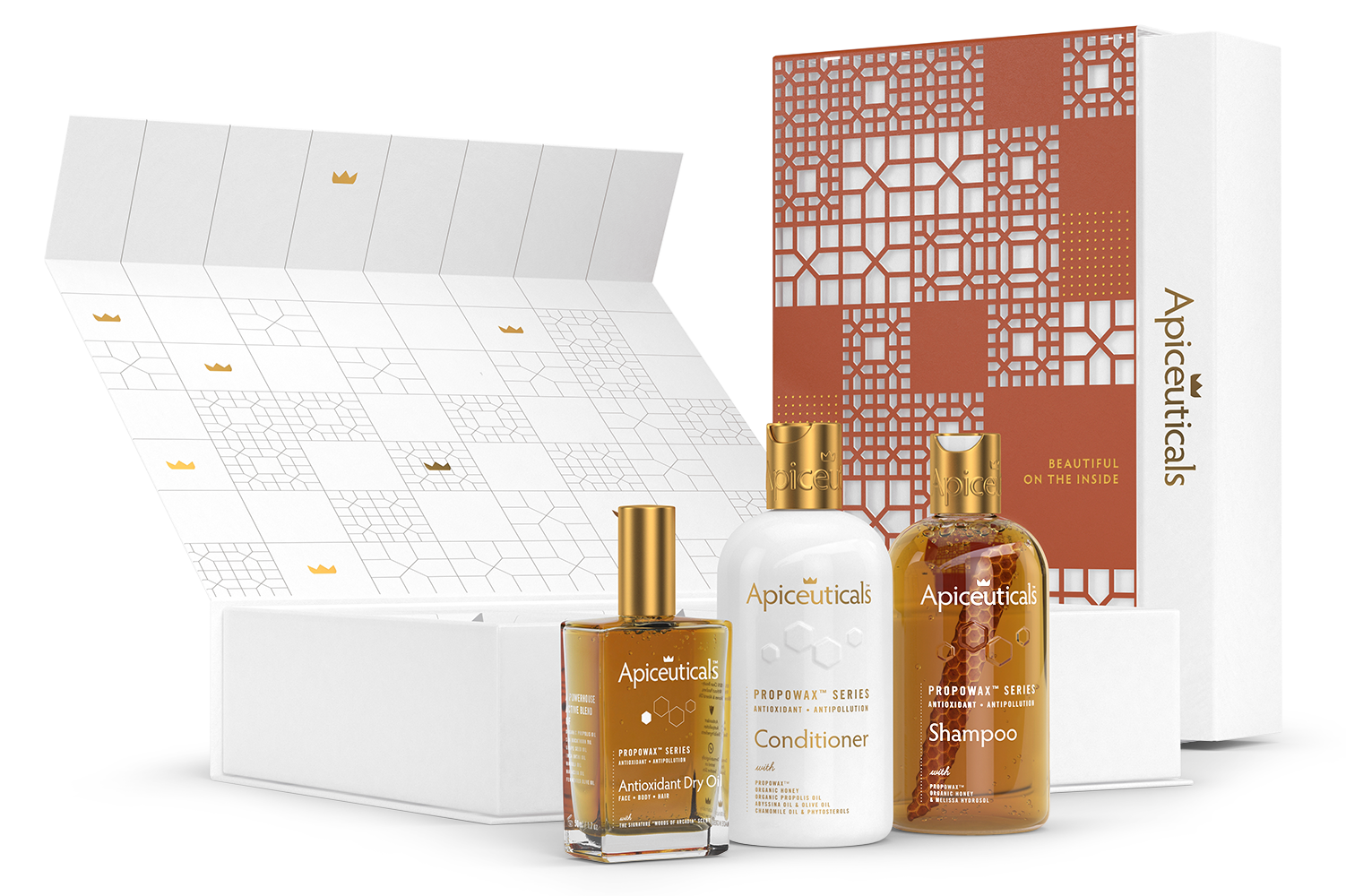
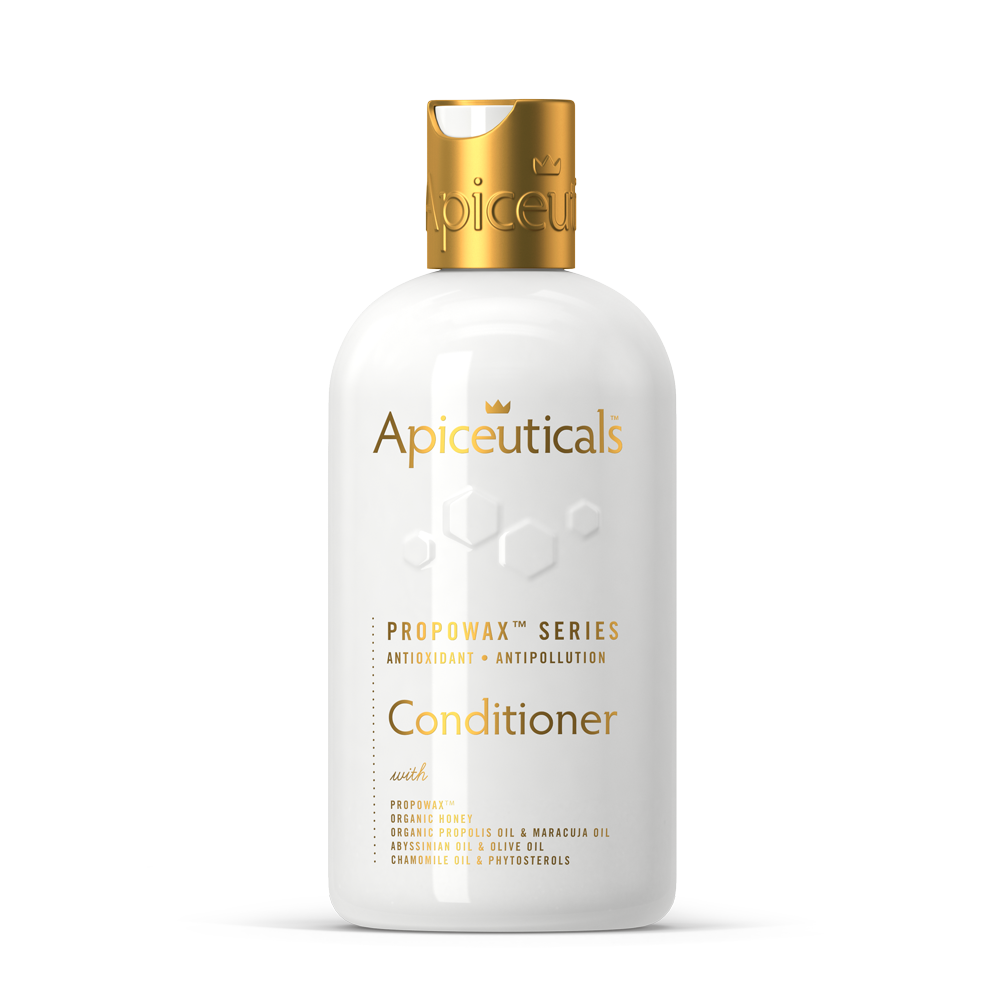
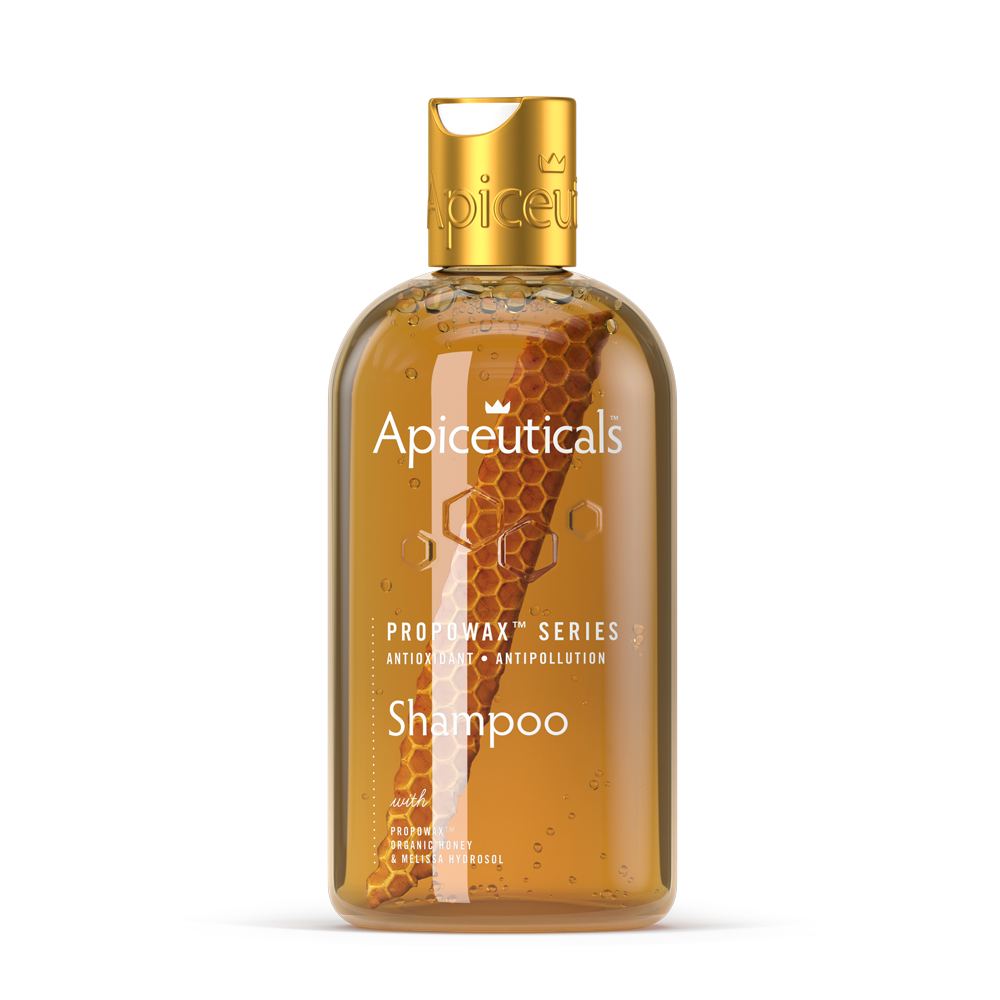
Our role is the maintenance layer: clean formulas for an ecosystem that is already under pressure. The PROPOWAX™ Series brings antioxidant haircare and bodycare built on the Living Honeycomb, formulated without SLS, SLES, parabens, silicones or mineral oils, and dermatologically tested on sensitive skin with 0% irritation. We are explicit about the limits: if you have a diagnosed scalp condition, our products complement your dermatologist’s plan and do not replace it. If you react to specific ingredients, read the label, patch test, and introduce one product at a time.
Our perspective: the itch deserves a diagnosis before a product
We come from a family of beekeepers in Arcadia who have worked with propolis and honey since 1981, and that background has taught us to respect both the power and the variability of natural materials. Propolis is a rich source of polyphenols, and it is also a material that a small number of people react to. That is why we never tell readers that natural means safe, and why we have built our approach around measurable antioxidant activity and a deliberately clean ingredient list.
Our view is that scalp care has been poorly served by guesswork. People cycle through anti-dandruff shampoos, sulfate-free shampoos and oils while the real cause, whether a dye allergy, a seborrheic flare, residue or stress, goes unexamined. Identify the trigger first, then choose the product that does the least harm and the most defense. Antioxidant protection is a sensible part of that routine, and the evidence for it is worth reading critically, which is why we publish it in full.
— Apiceuticals
FAQ
What causes an itchy scalp most often?
Seborrheic dermatitis, including its mild form dandruff, is the most frequent cause according to the Cleveland Clinic. It is an inflammatory reaction to the Malassezia yeast that naturally lives on the scalp. Dry skin, contact dermatitis, psoriasis and head lice are other common causes.
Why does my scalp itch after shampooing?
The common reasons are leftover product at the hairline and behind the ears, water that is too hot, scratching with nails while washing, or a reaction to fragrance or another ingredient. Rinse thoroughly, use lukewarm water and massage with your fingertips, as the Sensitive Skin Lab suggests. If it persists after those changes, a fragrance-free formula is a sensible next step.
Does stress make your scalp itchy?
Yes, it can. Stress can change sebum composition and weaken the skin barrier, lowering the scalp’s tolerance for irritants, and it is a recognized trigger of seborrheic dermatitis flares per the AAD. Stress and anxiety can also sustain itch without visible skin changes.
Can hair dye cause scalp itching?
Yes. Para-phenylenediamine in permanent dyes is a known allergen, and the NHS states that reactions can take up to 72 hours to appear. An allergy can develop even after years of uneventful use, so a delayed itch after coloring should be taken seriously and assessed by a doctor.
Is an organic shampoo safer for an itchy scalp?
Not automatically. The AAD notes that fragrances, citrus extracts and essential oils can trigger contact dermatitis regardless of an organic label. For a reactive scalp, a short, fragrance-free ingredient list and a patch test matter more than the certification.
Sources
- Why Is My Scalp So Itchy? 8 Common Causes, Cleveland Clinic
- Dandruff, NHS
- Hair dye reactions, NHS
- Seborrheic dermatitis: Self-care, American Academy of Dermatology
- Paraphenylenediamine and hair dye contact allergy, DermNet
- Black henna tattoo reactions, DermNet
- How to Relieve Itchy Scalp, Scripps Health
- What could be causing your itchy scalp? Harvard Health
- Itchy Scalp After Shampooing, The Sensitive Skin Lab
- Skincare for Eczema: 3 Label Checks, Then Choose by Feel
Recommended


Related posts

How bees and biodiversity sustain each other, what the science says about Greece and the Aegean, and how antioxidant beauty can start from a hive...

How organic propolis extraction works, from hive to extract: collection, solvents, EU organic rules, Greek propolis phenolics and what it means for skincare.

Build an anti pollution skincare routine that fits Greek city life: what pollution does to skin, the morning and evening steps, and the antioxidants with...

Honey moisture content explained: the EU and Greek limits, how to take a refractometer reading, what excess water does to honey, and why it matters...

How antioxidant activity measurement works: DPPH, ABTS, FRAP and ORAC explained, why results differ, and what a lab number can and cannot say about skin...