No products in the cart.
Return To Shop
Mountain Honey Benefits for Skin: Antioxidants Start With Flowers
Mountain honey benefits come primarily from its elevated antioxidant activity, a function of the polyphenols and flavonoids concentrated in floral sources at high altitude. Research measuring antioxidant assays in wildflower honeys has recorded notably higher ABTS values in mountain-sourced samples compared with lowland equivalents. We see this chemistry translate into both topical and systemic antioxidant support when the honey is chosen for its botanical pedigree and used with intention rather than as a generic sweetener.
TL;DR:
- Mountain honey’s antioxidant profile depends on forage, not altitude alone; chestnut, rhododendron, and thyme varieties can differ markedly in phenolic composition.
- Wildflower samples reached 6.12 ± 0.22 μmol TE/g in ABTS testing, a laboratory antioxidant measure that does not guarantee a clinical health benefit.
- Honey may ease cough after age one, but evidence is low to moderate; infants must never receive it because of botulism risk.
- Controlled trials linked about 40 grams daily for eight weeks with improved markers only when honey replaced added sugars; evidence certainty remained low to moderate.
Table of Contents
- Why Mountain Honey Is Chemically Distinct From Lowland Varieties
- Evidence-Backed Benefits of Mountain Honey
- What’s Inside: Sugars, Minerals, Enzymes, and Polyphenols
- What the Research Actually Measures
- Using Mountain Honey Safely, Inside and Out
- A Food With a Long Memory
- The Environmental Case for Mountain Beekeeping
- Mountain Honey Versus Other Honey Types
- Allergens and Interactions Worth Knowing
- Our Perspective on Mountain Honey in Antioxidant Beauty
- Where to Find Mountain and Forest Honey in Our Range
- FAQ
- Sources
Why Mountain Honey Is Chemically Distinct From Lowland Varieties
Altitude itself does not create antioxidant activity. What matters is the chain of cause and effect it sets in motion: higher elevations host a different mix of wildflowers, shrubs, and forest understory plants, and bees foraging that mix produce honey with a distinct phytochemical signature. A 2026 review of honey’s biological activities makes this point directly: therapeutic potential depends on the combined action of polyphenols and flavonoids, not on sugar content, and floral diversity in the bee pasture is the operative driver behind any altitude-related difference.
This is why “mountain” is a meaningful label only when it also describes the pasture, not just the elevation marker on a map.
- Bees foraging mixed mountain wildflora tend to produce honey with broader phenolic diversity than single-crop lowland honey.
- Analytic signals such as ABTS and FRAP assays, which measure free-radical-scavenging capacity, consistently register higher in mountain multifloral samples in controlled comparisons.
- Botanical variance within mountain regions is real: a honey dominated by chestnut behaves differently, chemically and sensorially, than one dominated by rhododendron or thyme.
Understanding mountain honey benefits starts here, in the relationship between where bees forage and what ends up in the jar.
Evidence-Backed Benefits of Mountain Honey
The research on honey and health has matured past anecdote, though the certainty of each claim varies by outcome measured. Here is what the evidence currently supports, organized by strength of signal.
- Antioxidant and anti-inflammatory activity. The mechanism is well characterized: polyphenols and flavonoids neutralize free radicals and modulate inflammatory pathways, and mountain-sourced honeys with richer floral diversity tend to carry more of these compounds.
- Respiratory symptom and cough relief. A systematic review of honey for acute cough in children found consistent improvement in cough frequency and severity compared with usual care, with the caveat that evidence quality ranges from low to moderate and that honey is recommended only for children older than one year.
- Topical and wound-healing properties. Antibacterial activity and tissue-repair signals observed in honey research support its long use in wound care and inform why formulated antioxidant skincare draws on similar bioactive classes.
- Cardiometabolic signals. A 2022 systematic review and meta-analysis of 18 controlled trials found that honey intake at a median dose of about 40 grams over roughly eight weeks reduced fasting glucose and several lipid markers, with effects modified by floral source and processing method.
One figure worth sitting with: mountain-sourced wildflower honey measured ABTS antioxidant activity up to 6.12 ± 0.22 μmol TE/g, a level distinctly higher than plain or lowland comparison samples in the same study. That number is a laboratory measure of free-radical-scavenging capacity, not a guarantee of clinical outcome, but it is the clearest chemical signature behind mountain honey’s reputation.
The cardiometabolic data deserves a qualifier: the same meta-analysis graded its evidence low to moderate certainty, and the benefit applies specifically to honey replacing other added sugars, not honey added on top of an existing diet.
What’s Inside: Sugars, Minerals, Enzymes, and Polyphenols
The benefits described above come from a composition that is more intricate than “natural sugar.” A broad compositional review notes that honey runs roughly 80% sugars by weight, with the remainder made up of enzymes, amino acids, minerals, vitamins, and phenolic compounds, and that darker honeys tend to carry higher phenolic content and antioxidant activity than pale ones.
- Sugars: a fructose-to-glucose ratio that varies by floral source, which is part of why some honeys crystallize faster and why glycemic response differs between varieties.
- Minerals: trace elements including potassium, calcium, and iron appear in measurable, if small, amounts and contribute to honey’s role as more than an empty-calorie sweetener.
- Enzymes: glucose oxidase generates hydrogen peroxide as honey is diluted, a non-phenolic contributor to its antibacterial reputation.
- Volatile compounds: aroma molecules specific to the dominant forage plant act almost like a chemical fingerprint of botanical origin.
Mineral and enzyme content vary by batch and should be understood as typical ranges rather than fixed values for any single jar.
What the Research Actually Measures
It helps to see the primary data rather than take antioxidant claims on faith. A 2025 study on altitude and wildflower honey recorded FRAP values as high as 2.75 ± 0.1 μmol TE/g in mountain samples alongside the elevated ABTS figures already noted, giving two independent assay confirmations of the same pattern.
Mountain-sourced wildflower honey showed meaningfully higher antioxidant assay values than lowland comparison samples, with variability driven by the specific plant mix foraged rather than elevation alone.
Separately, botanical and melissopalynological analysis of Italian Alpine wildflower honeys found that honeys labeled simply “mountain” ranged widely in phenolic composition and functional activity, from rhododendron-dominant to chestnut-dominant profiles, each behaving differently in antioxidant and wound-closure testing. The researchers concluded that pollen and chemical characterization, not a geographic label alone, is what makes a quality claim reliable.
- The 2022 meta-analysis on honey intake found certainty levels described as low to moderate, graded using standard GRADE methodology, a reminder that honey is a modifier of metabolic markers, not a treatment.
- The Alpine characterization study underscores that “mountain honey” is a category, not a single product, and that rigorous sourcing matters more than the word on the label.
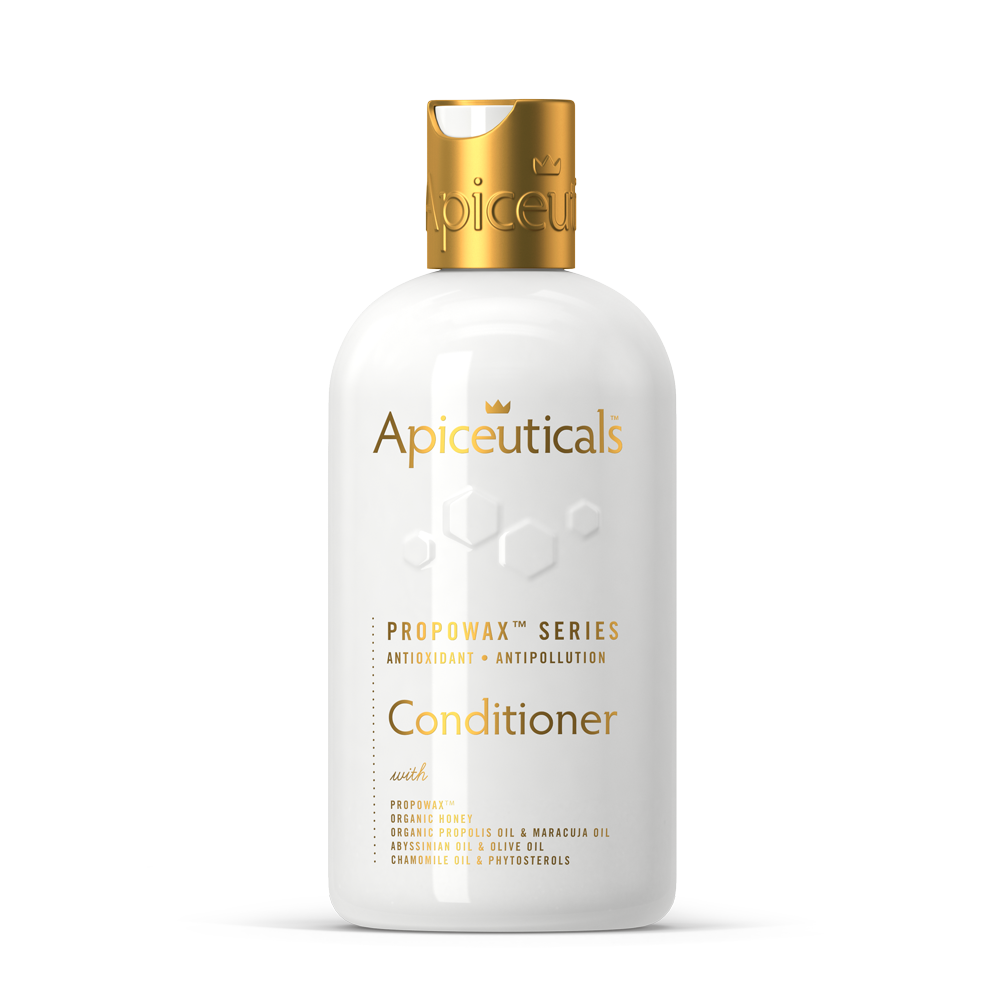
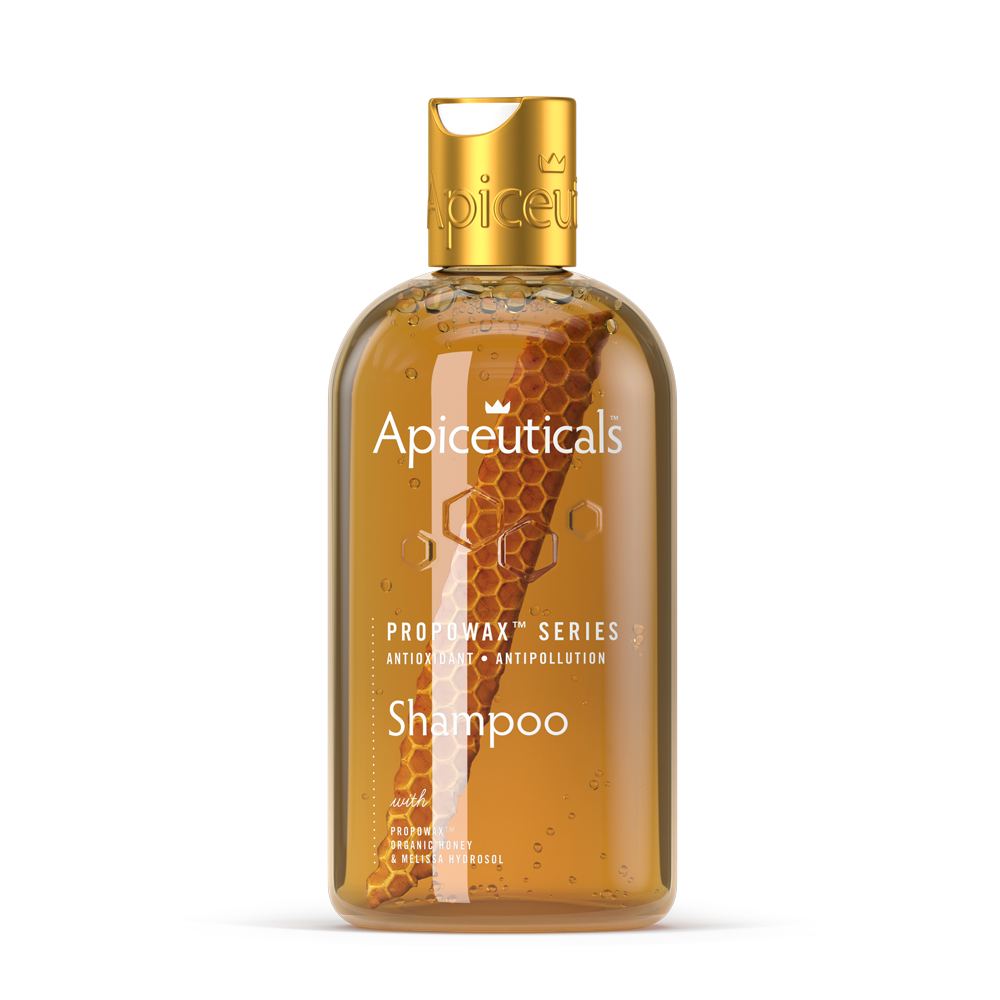
We use triple-certified organic forest and mountain honeys in our products, emphasizing verified botanical origin rather than a geographic label alone, which also informs our PROPOWAX™ Living Honeycomb antioxidant delivery system, independently validated by Aristotle University of Thessaloniki for the highest antioxidant activity recorded in a cosmetic formulation globally. That validation sits alongside the academic literature rather than apart from it.
Using Mountain Honey Safely, Inside and Out
Moderation is the operative word. The meta-analysis referenced above used a median dose near 40 grams, roughly two tablespoons, taken over about eight weeks, and its benefit held specifically when honey replaced other added sugars rather than supplementing them. The World Health Organization’s guidance on free sugars still applies to honey, since it counts as a free sugar regardless of its antioxidant content.
- Keep total added sugar, honey included, within general public health limits rather than treating honey as a health food with no ceiling.
- Never give honey to infants under one year of age because of the botulism spore risk.
- Patch-test topical honey or honey-based formulations if you have known pollen or bee-product allergies.
- If you manage diabetes, treat honey as a carbohydrate source and discuss portion with a physician before substituting it for other sugars.
For topical use, raw honey applied directly can irritate sensitive or broken skin, while formulated antioxidant products are designed to deliver the same bioactive classes at stable, tested concentrations. Our guide to honey’s role in skincare goes deeper into that distinction.
Pro Tip: Add mountain honey to a cup of warm, not boiling, water or tea; excess heat degrades some of the enzymes and phenolics responsible for its antioxidant activity.
A Food With a Long Memory
Long before antioxidant assays existed, mountain communities across the Mediterranean, the Alps, and the Balkans treated honey gathered from high-altitude forage as a distinct, prized substance, different from honey harvested on cultivated lowland crops. Beekeepers moved hives seasonally to follow blooming cycles on forested slopes, a practice called transhumance that still shapes how serious apiaries operate today.
This heritage matters for more than nostalgia. It encoded, generations before chemistry could confirm it, an intuitive understanding that forage diversity changes what honey can do. Traditional medicine across mountain cultures used specific varietals for specific purposes: chestnut honey for respiratory complaints, thyme honey for wound dressing, fir honey for its stronger, more mineral character. Modern botanical characterization studies are, in effect, validating distinctions that beekeeping families had already mapped through generations of observation.
Our origin traces to a beekeeping family working organically from early on, maintaining hives in forested and mountainous terrain where bees access complex floral sources rather than single monoculture crops. That continuity between traditional practice and later scientific confirmation is part of why mountain honey carries more cultural weight than its lowland counterparts, and why its reputation survived long enough for laboratories to eventually explain it.

The Environmental Case for Mountain Beekeeping
Mountain honey production tends to depend on ecosystems that are harder to industrialize, which is both a limitation and, environmentally, an advantage. Forested and mountainous terrain resists the monoculture conversion that affects lowland agricultural land, so bees foraging there typically draw from more stable, less chemically treated floral sources.
Responsible mountain apiculture also tends to follow harvest practices that leave a meaningful share of honey in the hive for the colony’s own winter use, supporting colony survival rather than maximizing short-term yield.
Mountain beekeeping, done this way, functions as a low-intensity land use that benefits from, and in turn supports, intact forest and wildflower habitat. It is one of the more direct examples of an agricultural product whose quality and whose ecological footprint improve together rather than trading off against each other.
Mountain Honey Versus Other Honey Types
Not every honey delivers the same profile, and the differences are measurable rather than marketing distinctions. Lowland monofloral honeys, harvested from a single cultivated crop such as canola or clover, tend to show more uniform but generally lower antioxidant assay values than honeys drawn from diverse mountain forage. Dark honeys in general, a category that includes many but not all mountain varietals, tend to carry higher phenolic content and antioxidant activity than pale honeys, according to compositional review data.

The distinction is not strictly mountain versus lowland, though. The Alpine characterization research found wide variation even among honeys labeled “mountain,” depending on which plants dominated that particular harvest. A rhododendron-dominant mountain honey and a chestnut-dominant mountain honey are chemically distinct products despite sharing a regional label.
What mountain honey reliably offers over most commodity-grade lowland honey is floral complexity: a broader phytochemical mix resulting from bees working multiple wild species rather than one cultivated crop. That complexity is the mechanistic reason mountain and forest honeys tend to post higher antioxidant assay values, and it is the same reasoning that led us to build our Gods’ Nectar line around seven distinct varieties rather than a single blended product.
Allergens and Interactions Worth Knowing
Honey is a bee product, and anyone with known allergies to bee stings, pollen, or other bee-derived substances such as propolis should approach it cautiously, starting with a small amount or a patch test for topical use. Pollen content varies by varietal and harvest, so a reaction to one honey does not necessarily predict a reaction to another.
Honey’s sugar content also interacts with blood glucose management. If you take glucose-lowering medication, introducing a new regular source of carbohydrate, even one shown to improve some lipid markers in research, is a conversation for your physician rather than a self-directed experiment.
Certain unprocessed honeys can carry Clostridium botulinum spores, harmless to older children and adults but dangerous to infants under one year, whose digestive systems cannot yet neutralize them. This is the single firm rule in otherwise moderate guidance: honey has no place in an infant’s diet regardless of its source or antioxidant content.
For topical use, raw honey applied directly to compromised or broken skin carries a small infection risk if the honey is not medical-grade or properly processed, which is part of why formulated antioxidant skincare, rather than a spoonful from the pantry, is the more reliable route for consistent topical results.
Our Perspective on Mountain Honey in Antioxidant Beauty
We approach mountain honey as a beekeeping family first, having worked organically since 1981 across Arcadian forest and mountain terrain, and as formulators second. That sequencing matters: our triple-certified Gods’ Nectar honeys and our patented PROPOWAX™ Living Honeycomb delivery system, validated by Aristotle University of Thessaloniki for the highest antioxidant activity recorded in a cosmetic formulation, both grew from decades of hive management before either became a product claim.
— Apiceuticals
Where to Find Mountain and Forest Honey in Our Range
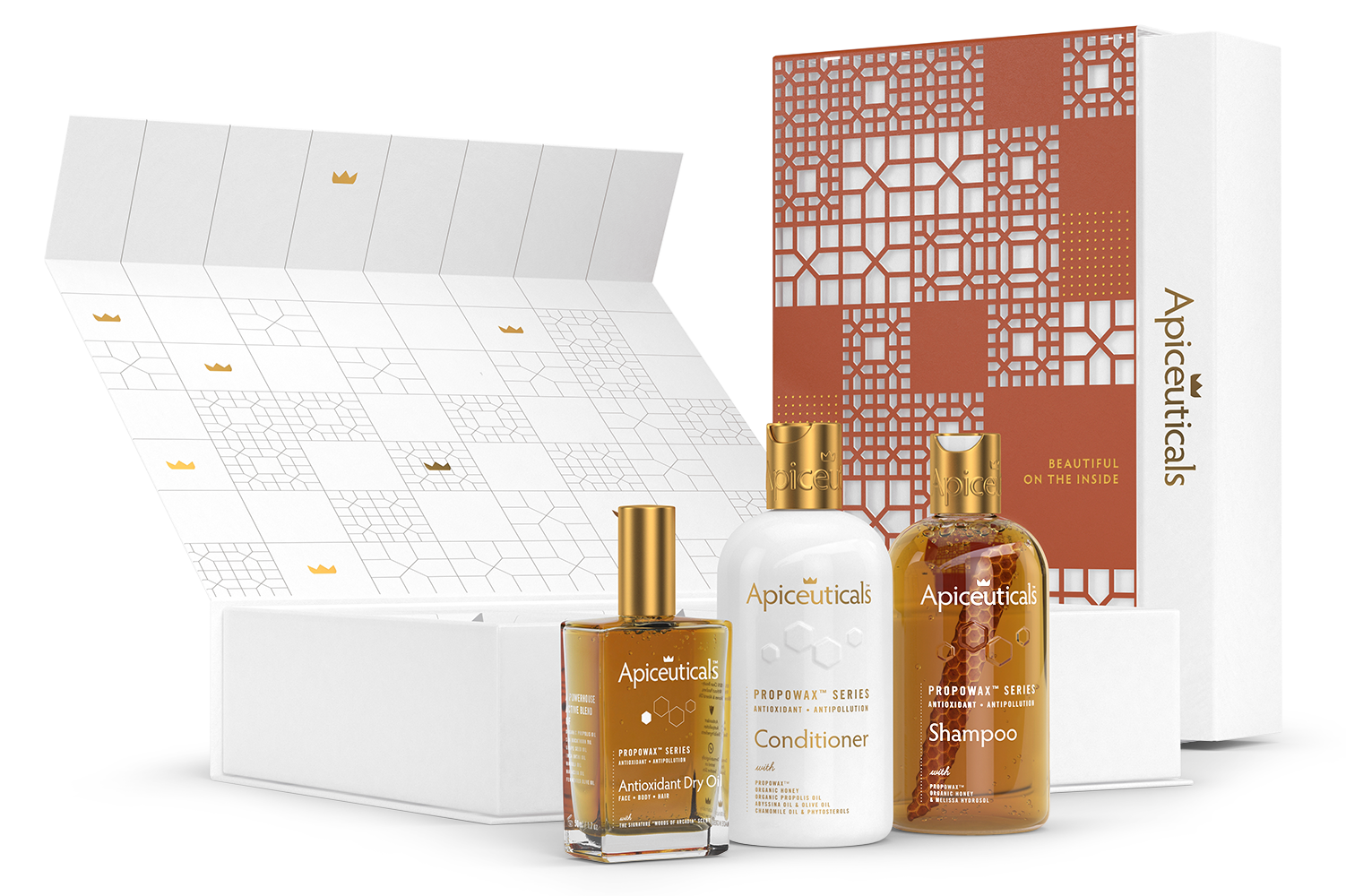
We translate the antioxidant chemistry described above into two distinct product paths, both based on the same sourcing standards. One line offers several triple-certified organic honey varietals from forest and mountain terrain, suited for direct consumption. Other product series apply this antioxidant chemistry topically through formulations built around patented Living Honeycomb technology rather than raw honey alone.

| Product line | What it delivers | Best suited for |
|---|---|---|
| Gods’ Nectar | Triple-certified organic mountain and forest honey varietals | Dietary antioxidant intake, culinary use |
| PROPOWAX™ Series | Patented Living Honeycomb antioxidant delivery for hair and body | Ongoing topical antioxidant exposure |
| HONEY BALM™ Series | Waterless facial care with clinically measured wrinkle reduction | Targeted facial antioxidant skincare |
- Explore the full range, including PROPOWAX™ formulations and certified honeys, on our main product page.
- Read the technology behind our antioxidant delivery system on the PROPOWAX™ page.
- Browse our certified organic honey collection if dietary use is your priority.
For a clinical-aesthetic view of how antioxidants function in professional skincare practice, this 2026 guide offers useful context alongside our own formulation research. If you are ready to put mountain honey’s antioxidant chemistry to work in your own routine, start with our shop.
This article is general information, not a substitute for advice from a qualified doctor. Consult a qualified healthcare professional about your own circumstances before acting on anything here.
FAQ
Is mountain honey better than regular honey for antioxidants?
Mountain honey often shows higher antioxidant assay values than lowland honey because bees forage a more diverse mix of wild plants, but the difference depends on which specific flora dominate that harvest. Research on wildflower honey found mountain samples reaching ABTS values up to 6.12 ± 0.22 μmol TE/g, notably higher than plain comparison samples.
What is considered the healthiest type of honey?
There is no single honey that qualifies as universally healthiest, since benefits depend on floral source, processing, and how the honey is used. Darker, minimally processed honeys with diverse botanical origin, a category that includes many mountain and forest varietals, tend to carry the highest measured phenolic and antioxidant activity.
What happens if you eat a spoonful of honey every day?
A 2022 meta-analysis found that a median intake of about 40 grams of honey daily, replacing other added sugars, modestly improved fasting glucose and some lipid markers over roughly eight weeks, though evidence certainty was graded low to moderate. Honey still counts as added sugar, so it should replace other sweeteners rather than supplement them.
Which type of honey has the most health benefits?
Honeys with higher phenolic and flavonoid content, generally darker varietals sourced from diverse wild forage rather than a single cultivated crop, tend to show the strongest antioxidant and anti-inflammatory signals in research. Mountain and forest wildflower honeys frequently fall into this category, though botanical characterization is needed to confirm it for any specific batch.
Can mountain honey help with skin antioxidant support?
Mountain honey’s polyphenol and flavonoid content gives it plausible topical antioxidant relevance, and this chemistry is part of the research basis behind antioxidant skincare formulations. We apply that same principle in our PROPOWAX™ Series, where a patented Living Honeycomb structure, validated by Aristotle University of Thessaloniki for the highest antioxidant activity recorded in a cosmetic formulation, delivers antioxidants to skin and hair continuously rather than through a single application.
Sources
- Effect of Altitude on Polyphenol Content, Antioxidant Activity and Multi-Element Composition of Wildflower Honey
- A Comprehensive Review of the Effect of Honey on Human Health
- Honey as a Natural Flavorful Product: A Comprehensive Review of Its Potential Biological Activities and Recent Studies
- Multidisciplinary analysis of Italian Alpine wildflower honey reveals criticalities, diversity and value
Recommended


Related posts

How bees and biodiversity sustain each other, what the science says about Greece and the Aegean, and how antioxidant beauty can start from a hive...

How organic propolis extraction works, from hive to extract: collection, solvents, EU organic rules, Greek propolis phenolics and what it means for skincare.

Build an anti pollution skincare routine that fits Greek city life: what pollution does to skin, the morning and evening steps, and the antioxidants with...

Honey moisture content explained: the EU and Greek limits, how to take a refractometer reading, what excess water does to honey, and why it matters...

How antioxidant activity measurement works: DPPH, ABTS, FRAP and ORAC explained, why results differ, and what a lab number can and cannot say about skin...