No products in the cart.
Return To Shop
1–10% Is Not Enough: Oak Honey Benefits Require Delivery Science
Oak honey benefits show up most clearly in the laboratory, where its phenolic compounds scavenge free radicals with measurable, repeatable results. That is genuine antioxidant chemistry, not a marketing flourish. What it is not, yet, is proof that a jar of oak honey or a cream containing it will visibly change human skin or hair. The gap between those two facts is where formulation, delivery science, and honest labeling all matter.
TL;DR:
- Laboratory assays confirm oak honey’s phenolic compounds can scavenge free radicals, but this does not guarantee visible skin or hair benefits.
- Formulation and delivery systems significantly affect antioxidant activity, with extracts often showing higher potency than raw honey once diluted in products.
- Permeation studies demonstrate phenolic acids can pass through skin, supporting topical antioxidant delivery, but no clinical evidence proves anti-aging or hair growth effects.
- Including oak honey at 1 to 10 percent in cosmetic formulations is typical, but stability and activity can diminish during manufacturing and shelf life without proper formulation.
- Consumers and formulators should prioritize traceability and finished-product testing over raw assay results, as manufacturing conditions can erode polyphenol activity.
Table of Contents
- What Oak Honey Contains That Matters for Skin, Scalp, and Hair
- Assays Versus Cosmetic Outcomes: What the Evidence Actually Shows
- How to Formulate With Oak Honey as an Antioxidant Ingredient
- How Should Shoppers and Formulators Evaluate Oak Honey Products?
- Safety, Claim Language, and Regulatory Guardrails
- Apiceuticals’ Approach: PROPOWAX™ and the Assay-to-Product Gap
- What This Article’s Evidence Actually Supports
- Where to See Oak Honey and Antioxidant Formulations in Practice
- Sources
- FAQ
What Oak Honey Contains That Matters for Skin, Scalp, and Hair
Oak honey is not a single, uniform substance. It is honeydew honey, meaning bees collect sap secretions from oak trees rather than floral nectar, and its chemical fingerprint depends heavily on species, terrain, and season. What consistently shows up across studies is a cluster of phenolic acids and flavonoids known to neutralize oxidative compounds in vitro.
Researchers analyzing oak honey and related honeydew varieties commonly report:
- Phenolic acids: gallic acid, ferulic acid, p-coumaric acid, and phenylacetic acid
- Flavonoids: quercetin and related compounds tied to radical-scavenging activity
- Volatile markers: aromatic compounds that shift with oak species and processing method
A 2019 analysis of 59 Spanish oak (Quercus) honeydew samples found mean total phenolics near 130.2 mg/100 g and flavonoids around 11.3 mg/100 g, with clear evidence of free-radical scavenging and lipid peroxidation inhibition. Those numbers sound precise, but a separate study of Romanian oak and fir honeydew honeys found wide variation in phenolic content between batches, with fir honeydew sometimes outperforming oak on the same assays. One harvest is not a category-wide guarantee.
Assays Versus Cosmetic Outcomes: What the Evidence Actually Shows

DPPH, FRAP, and TEAC are the three assays behind most antioxidant claims in cosmetic marketing, and each measures a slightly different chemical reaction. DPPH tracks how efficiently a compound quenches a stable free radical in solution. FRAP measures reducing power against iron ions. TEAC expresses activity relative to a reference antioxidant, vitamin E’s water-soluble analog. All three are ingredient-characterization tools. None of them test what happens on a scalp, in a follicle, or across the stratum corneum of real skin.
A 2010 study on Quercus frainetto honeydew reported DPPH values of 4.5 to 5.1 mmol TEAC/kg and FRAP values of 4.8 to 16.1 mmol Fe2+/kg in the intact honey. Once researchers ran the same honey through ultrasonic solvent extraction, antiradical capacity jumped several dozen times higher.
That single finding reframes the entire ingredient conversation: the raw honey and the concentrated extract are not interchangeable, and a percentage on a label means little without knowing which form was measured.
Where the science gets more encouraging is permeation. A 2025 in-vitro study using porcine skin found that phenolic acids including gallic acid and coumaric acid accumulate in and pass through skin when delivered in honey, hydrogel, and emulsion formulations. That is a legitimate signal that topical delivery is chemically plausible. It is not a clinical trial, and no published human study currently shows oak honey reversing visible skin aging or accelerating hair growth. Responsible claim language reflects that distinction: “contains antioxidant phenolic compounds” is defensible; “reverses aging” is not.
How to Formulate With Oak Honey as an Antioxidant Ingredient
Getting oak honey’s chemistry to survive the trip from raw ingredient to finished bottle takes deliberate formulation choices, not just a good source.
- Choose the vehicle deliberately. Hydrogels and certain emulsion systems showed favorable phenolic acid release and permeation in ex-vivo testing, making them sensible starting points for leave-on balms. Rinse-off formats like shampoos still deliver humectant and conditioning benefits, just with shorter skin or scalp contact time.
- Decide between intact honey and extract. Solvent-concentrated extracts can show antiradical activity many times higher than raw honey, but that potency does not transfer automatically once diluted into a surfactant-heavy base.
- Work within realistic concentration ranges. Cosmetic literature generally places honey inclusion around 1 to 10% for standard formulations, with higher loads requiring polymer entrapment or waterless delivery systems to remain stable.
- Build a specification sheet before sourcing. Require botanical and geographic traceability, a marker-compound or total-phenolics specification, microbiological limits, and stability data through the full shelf life.
Pro Tip: Never trust a raw-honey assay number as a proxy for what survives in the finished product. Surfactants, pH shifts, heat, and oxygen exposure during manufacturing can quietly erode polyphenol activity, so the only number that matters is the one measured after formulation and again at the end of shelf life.
How Should Shoppers and Formulators Evaluate Oak Honey Products?
Reading a label correctly matters as much as the ingredient itself. Look for whether the listing says “oak honey,” “oak honey extract,” or simply “honey” buried in a longer botanical blend. Extract and intact honey behave differently, as the extraction research above makes clear, and a formula that lists honey last on the ingredient panel is unlikely to be delivering meaningful phenolic load.
Before committing to daily use, a short patch test protects against unnecessary irritation. A seven to ten day patch test on the inner forearm, applying the product once daily and watching for redness, itching, or bumps, is a reasonable standard before introducing any honey-based leave-on product to the face or scalp.
- Rinse-off formats (shampoos, cleansers) carry lower allergy risk due to brief contact time.
- Leave-on balms and conditioners warrant more caution given prolonged skin contact.
- Realistic timelines for noticing conditioning or moisture changes run four to six weeks of consistent use, not overnight.
Safety, Claim Language, and Regulatory Guardrails
Honey is generally well tolerated in cosmetic use, but people with pollen or bee-product sensitivities can react, which is why patch testing before regular use is worth the extra week of patience. Exposure risk differs by product type: a rinse-off shampoo contacts skin for seconds, while a leave-on balm sits against skin or scalp for hours, so the same ingredient carries different practical risk depending on format.

Defensible label language stays close to what the evidence supports: “helps support moisturization” and “delivers antioxidant phenolic compounds” are accurate. Claims implying medical treatment or guaranteed visible transformation are not. Finished-product safety testing, preservation adequate to the water content, and microbiological control checks belong in every batch release, regardless of how compelling the raw-ingredient assay numbers look.
Apiceuticals’ Approach: PROPOWAX™ and the Assay-to-Product Gap
Apiceuticals holds a global patent for the highest antioxidant activity in cosmetics, achieved through PROPOWAX™ Living Honeycomb and independently validated by the Aristotle University of Thessaloniki. Rather than relying on a single raw-ingredient assay reading, PROPOWAX™ is engineered as a continuous release system, designed to keep delivering antioxidant compounds to skin, scalp, and hair over time rather than at a single moment of application. That structural answer to the stability problem outlined above, where polyphenol activity degrades during manufacturing, is precisely the translation step raw honey assays cannot provide on their own.
What This Article’s Evidence Actually Supports
The honest reading of the evidence is that oak honey earns its place as a legitimate antioxidant ingredient candidate, not as a proven cosmetic miracle. Where the conventional wisdom fails is in treating a DPPH or FRAP number on a supplier data sheet as if it were a finished-product guarantee. It never was, and the extraction research showing dozens-fold swings in measured activity should make anyone skeptical of a bare percentage on packaging.
What formulators and informed shoppers should prioritize is traceability and finished-product testing over raw assay bragging rights. A honey with a documented species, harvest region, and marker-compound specification is worth more than one with an impressive but unverifiable lab number attached to a different batch entirely. The permeation research on phenolic acids in hydrogel and emulsion systems is genuinely encouraging, but it describes plausibility, not a clinical outcome. Readers who want antioxidant delivery engineered around that exact gap, rather than left to chance, are better served by systems built to sustain activity after formulation, not just before it.
— Apiceuticals
Where to See Oak Honey and Antioxidant Formulations in Practice
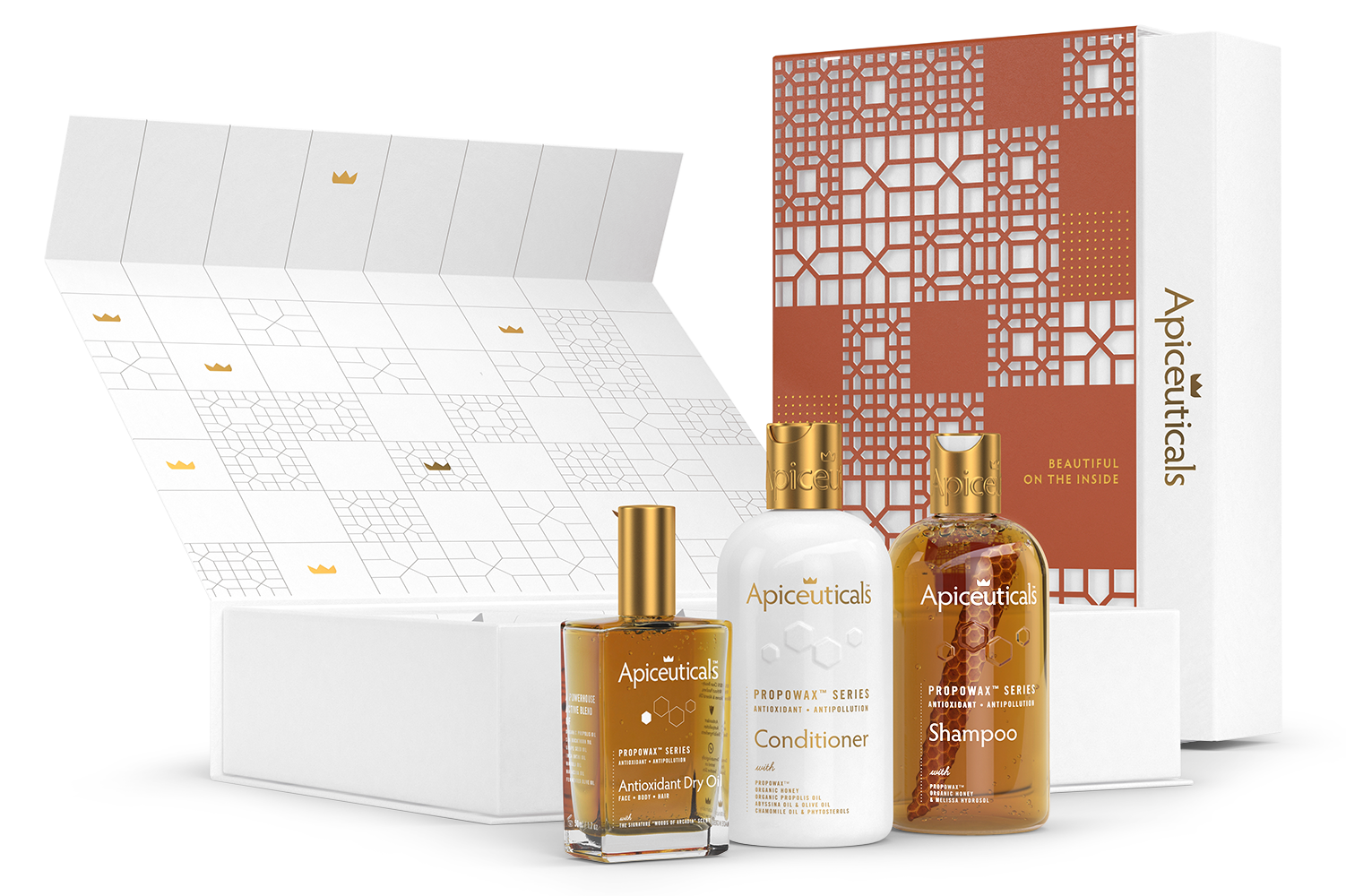
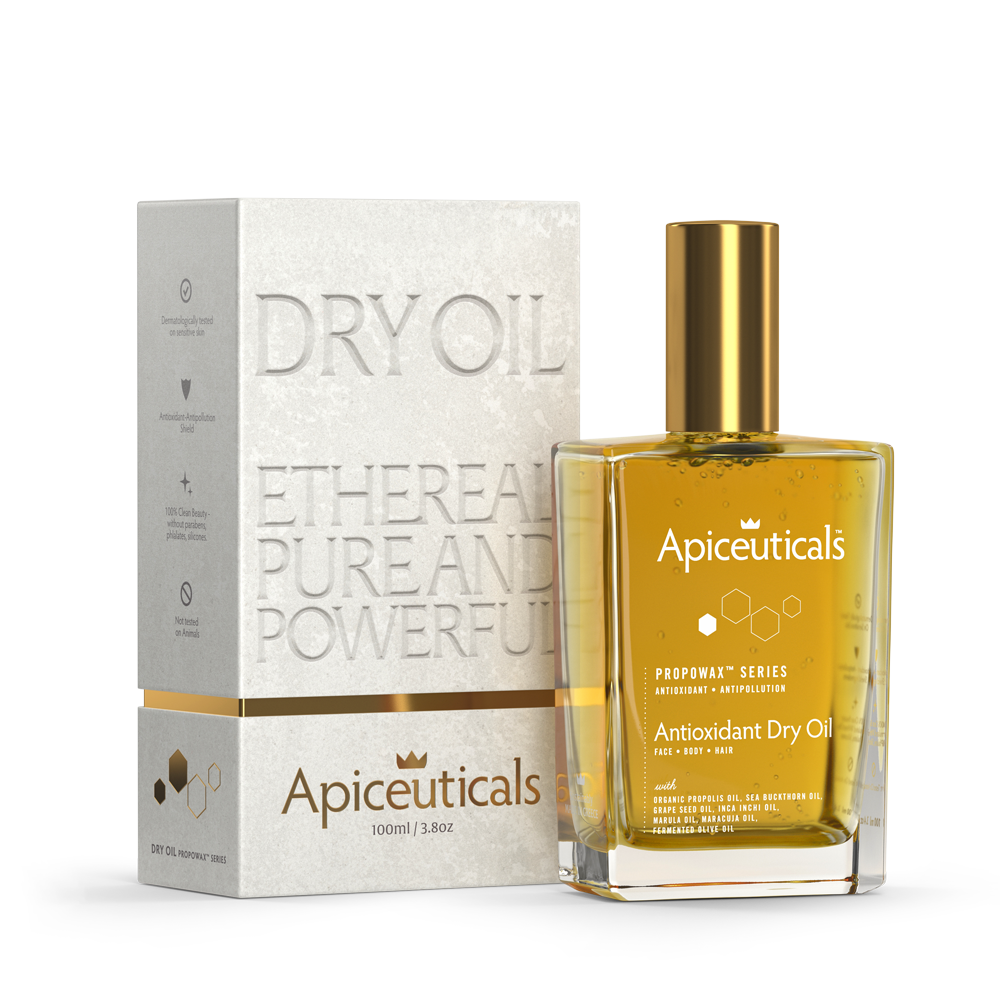
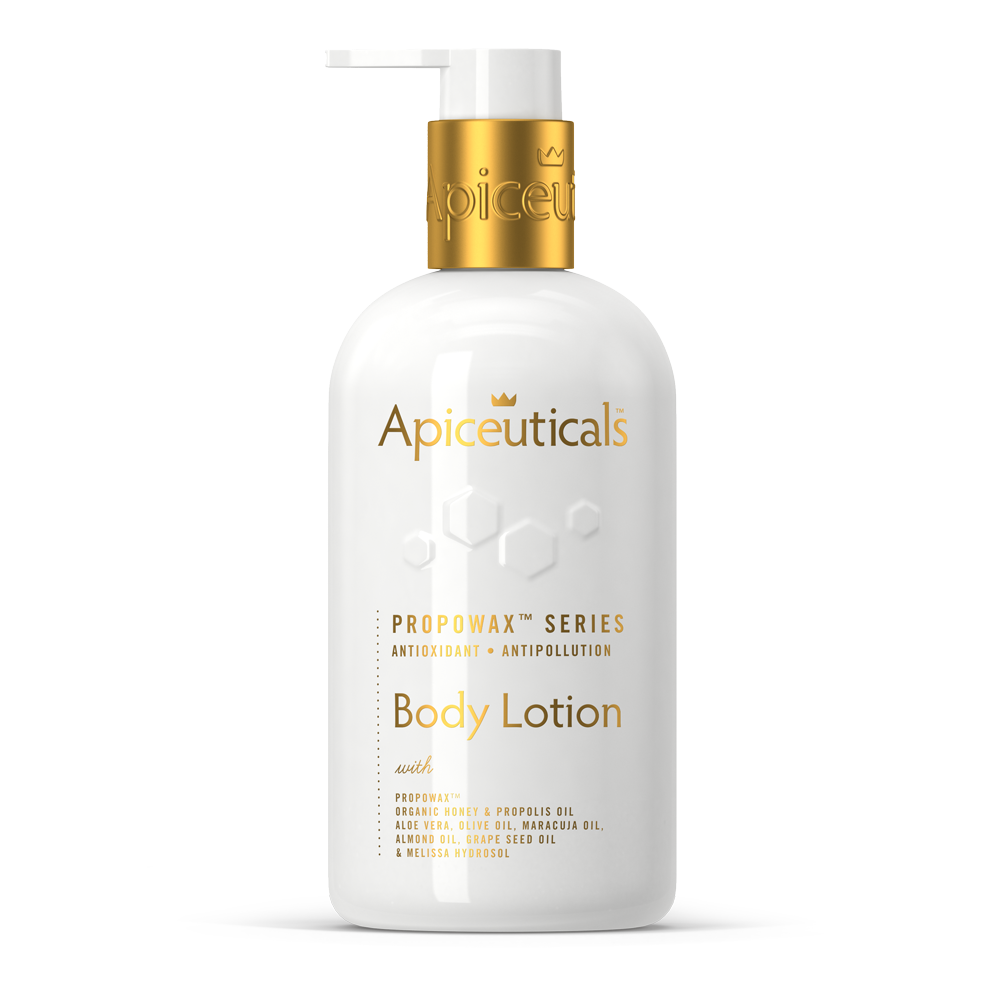
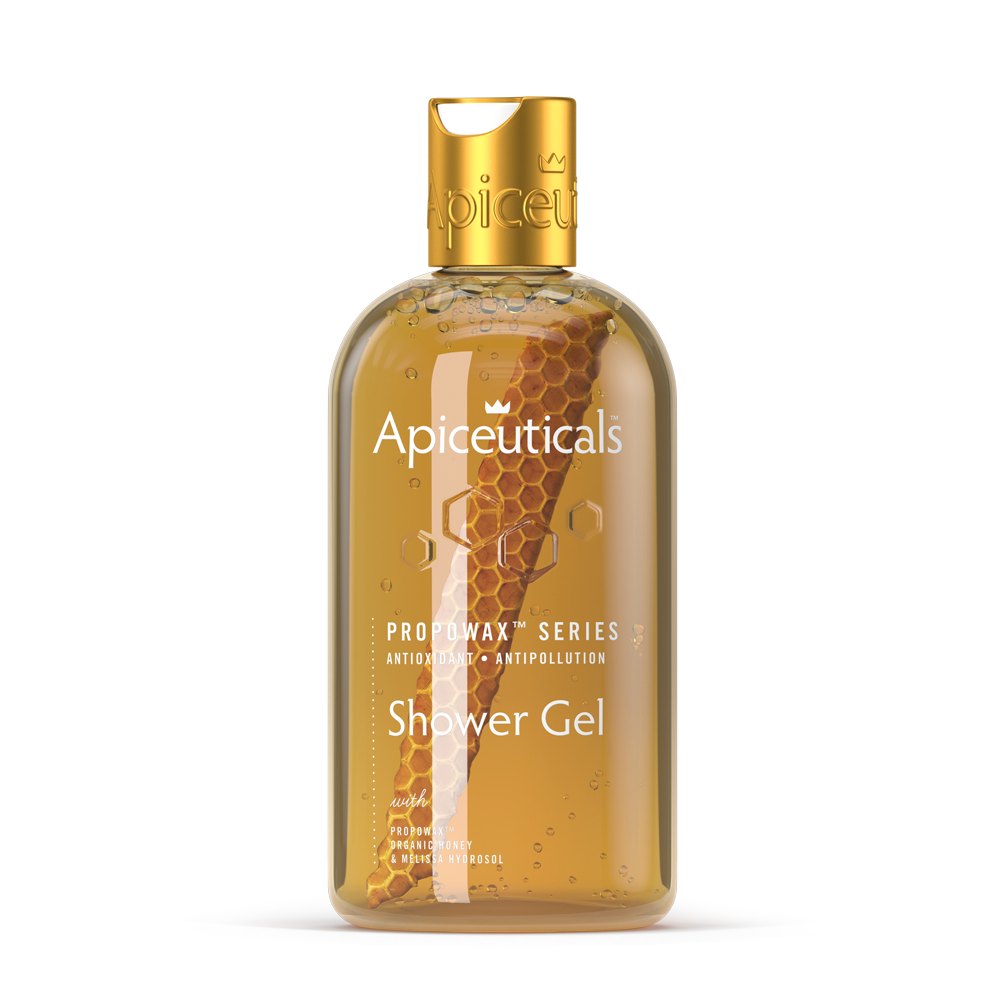
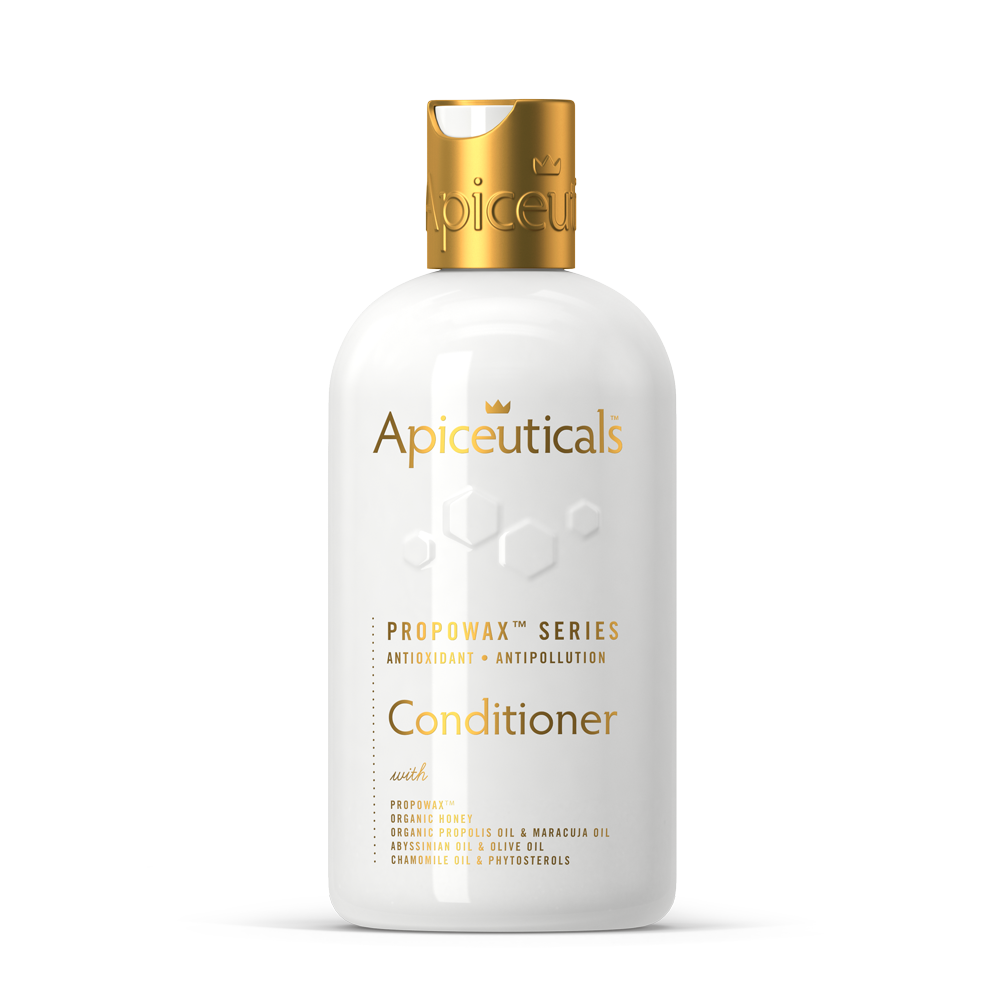
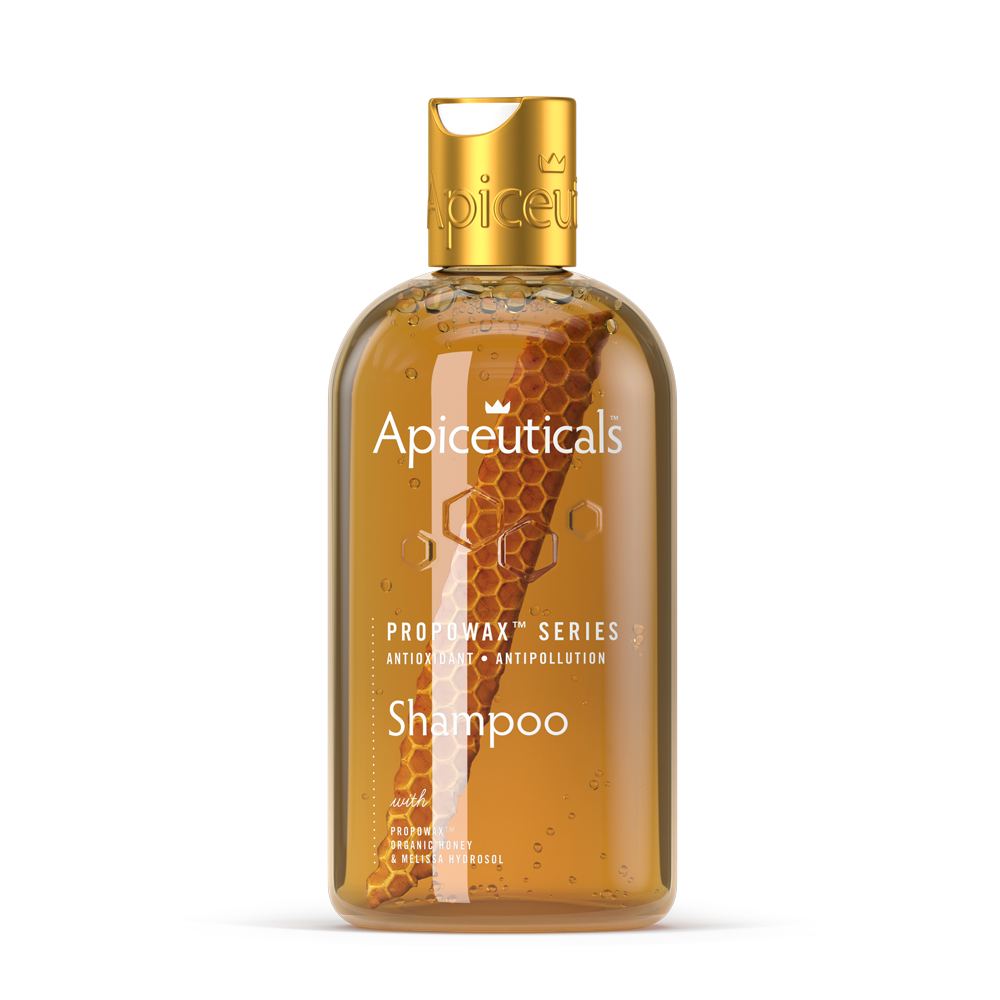
Apiceuticals builds its formulations around the same gap this article has walked through: the difference between what an ingredient measures in a lab and what it delivers once it reaches skin, scalp, or hair. The PROPOWAX™ Series applies Living Honeycomb technology across antioxidant haircare and bodycare, while the HONEY BALM™ Series uses waterless facial formulations to keep phenolic activity concentrated rather than diluted.

Both lines are built on the same patented delivery mechanism validated by the Aristotle University of Thessaloniki, so specifications and test claims are available for anyone who wants to see the formulation data before buying. Explore the PROPOWAX™ technology page for the science behind the delivery system, or browse the full product range to find the format, balm, conditioner, or body lotion, that matches your skin, scalp, or hair goals.
Sources
- Physicochemical properties, colour, chemical composition, and antioxidant activity of Spanish Quercus honeydew honeys
- Assessment of in vitro skin permeation and accumulation of phenolic acids from honey and honey-based pharmaceutical formulations
- Honey in dermatology and skin care: a review
FAQ
Is Oak Honey Good for Skin and Hair?
Oak honey contains measurable phenolic acids and flavonoids that show antioxidant activity in laboratory assays, which makes it a reasonable ingredient candidate for moisturizing and conditioning formulations. It has not been proven in human clinical trials to reverse skin aging or stimulate hair growth, so claims should stay limited to what assay and permeation evidence actually supports.
What Are the Main Health Benefits of Oak Honey for Topical Use?
The primary topical benefits are humectancy, emollience, and antioxidant compound delivery, functions well documented for honey generally in dermatology reviews. These are cosmetic support functions, not medical treatments.
How Is Oak Honey Different From Other Honeys in Skincare?
Oak honey is a honeydew honey made from tree sap secretions rather than floral nectar, giving it a distinct phenolic profile compared to floral varieties. Antioxidant activity varies significantly by species and region, so one oak honey sample does not represent all oak honey.
What Percentage of Oak Honey Should a Formula Contain?
Cosmetic literature places typical honey inclusion around 1 to 10% for standard emulsions and balms. Higher concentrations usually require polymer entrapment or waterless delivery systems to remain stable through shelf life.
Does Apiceuticals Use Oak Honey in Its Formulations?
Apiceuticals formulates with organic honey and propolis within its patented PROPOWAX™ Living Honeycomb system, engineered for continuous antioxidant release rather than a single application burst. Specific product formulations and ingredient details are available on individual product pages.
Can Oak Honey Cause Skin Irritation or Allergic Reactions?
Honey is generally well tolerated, but people with pollen or bee-product sensitivities can react to it. A patch test of seven to ten days before regular use is the safest way to check for irritation before applying any honey-based leave-on product broadly.
Recommended


Related posts

Explore how a trial lasting 24 weeks and Malassezia research link scalp oxidative stress to shedding, and where PROPOWAX™ fits continuous antioxidant care.

See when silicones smooth hair or build up, and how PROPOWAX™ holds a global patent for highest antioxidant activity, validated by Aristotle University.

Explore mountain honey benefits for skin and body, from floral polyphenols and antioxidant activity to evidence on cough relief, wound care, and safe use.

Propolis delivers stronger antioxidant and antimicrobial action. Royal jelly boosts hydration and repair. Learn which suits your skin or scalp and why...

Pick sulfate-free or sulfate shampoo by your scalp, porosity, and color needs. Read evidence-backed guidance, antioxidant options, and a 4-step switch...