
No products in the cart.
Return To Shop
Organic skincare routines with antioxidant bee science
The organic beauty aisle has never been more crowded, and honestly, that’s part of the problem. Buzzwords like “natural,” “clean,” and “eco-friendly” appear on labels everywhere, yet many products still contain synthetic fillers, vague ingredient sourcing, and zero clinical validation behind their claims. For those of us who care deeply about what goes on our skin, and about the environmental cost of getting it there, this noise is exhausting. What the market genuinely needs is a framework rooted in bee science, antioxidant evidence, and transparent sourcing, and that is exactly what we want to share with you today.
Table of Contents
- How to evaluate organic skincare routines
- Morning organic skincare routine: Antioxidant-focused example
- Evening organic skincare routine: Repair and nourish
- Comparing popular organic routines: Ingredients and sustainability at a glance
- Why most ‘organic’ routines aren’t enough—and what really works
- Experience bee science–powered organic skincare for yourself
- Frequently asked questions
Key Takeaways
| Point | Details |
|---|---|
| Choose authentic ingredients | Select certified and transparent organic products for real benefits. |
| Bee-derived actives add value | Propolis and honey support skin barriers and deliver unique antioxidants. |
| Antioxidants need SPF pairing | Daily sun protection remains vital even with antioxidant use. |
| Routine matters | Both morning and evening regimens play distinct roles in skin health. |
| Allergy and sensitivity checks | Patch-test with bee ingredients and adjust exfoliation to your skin’s needs. |
How to evaluate organic skincare routines
With the challenge of choosing clear, let’s lay out what to look for in a genuine organic routine. Not every product wearing an “organic” label deserves a place in your bathroom cabinet. True organic skincare earns that title through certified ingredients, responsible sourcing practices, and a deliberate absence of synthetic fillers that compromise both skin health and environmental integrity.
When scanning an ingredient list, look for these key indicators:
- Certified organic raw materials: Verified by recognized certification bodies, not self-declared
- No SLS, SLES, parabens, silicones, or mineral oils: These synthetic additives can interfere with skin barrier function
- Traceable origin: Know where your actives come from and how they were harvested
- Dermatological testing on sensitive skin: Products should show documented tolerance, not just marketing claims
- Ethical sourcing commitments: For bee-derived products especially, responsible harvesting matters enormously
Antioxidants are the functional backbone of any premium organic routine. They work by neutralizing free radicals, the unstable molecules generated by UV exposure, pollution, and metabolic stress, which otherwise break down collagen and accelerate visible aging. Vitamin C, vitamin E, polyphenols, and flavonoids are among the most studied antioxidant types. However, propolis benefits go well beyond what most plant-derived antioxidants can deliver, thanks to the extraordinary biodiversity of bioactive compounds bees synthesize from thousands of plant resins. Propolis contains flavonoids, phenolic acids, and esters that act synergistically on the skin, offering both antioxidant and antimicrobial properties in a single ingredient.
Beeswax for sensitive skin is another deeply underrated ingredient. It forms a protective, breathable barrier that locks in moisture without clogging pores, making it genuinely well-suited to reactive and easily irritated skin types. Unlike petroleum-derived occlusives, beeswax is a living biomaterial whose molecular structure aligns naturally with skin’s own lipid barrier.
Safety, however, always comes first. Anyone exploring bee-based routines should know that patch testing is essential because propolis and venom-derived ingredients carry anaphylaxis risk for bee-allergic individuals. A small test on the inner wrist for 24 hours before full application is a non-negotiable step. For sensitive skin, gentle exfoliation performed two to three times per week supports cell renewal without triggering inflammation. And regardless of how powerful your antioxidant formula is, SPF remains a daily requirement because antioxidants do not replace UV protection.
Pro Tip: When reading an ingredient list, find the propolis or honey extract and check its position. Ingredients are listed in descending concentration order, so meaningful bee-derived actives should appear in the first half of the list, not buried near the preservatives.
Morning organic skincare routine: Antioxidant-focused example
Once you know what to look for, here’s how a top-tier morning routine comes together. The goal of any morning routine is defensive: you want to neutralize incoming environmental stressors before they reach your skin cells, reinforce your barrier, and maintain the moisture balance that keeps skin resilient throughout the day.
Cleanse gently: Begin with a mild, antioxidant-enriched cleanser that removes overnight sebum and residue without stripping the skin’s natural acid mantle. Look for formulas featuring honey or propolis extract alongside plant-based surfactants. The act of cleansing at the right pH, typically 4.5 to 5.5, sets the tone for every product that follows.
Apply a propolis or honey toner or serum: This is where your antioxidant protection truly begins. A propolis-infused toner delivers fast-absorbing bioactives directly onto freshly cleansed skin, reinforcing barrier function and calming early morning inflammation. For antioxidant skin care routines built around bee science, this step is particularly powerful because propolis flavonoids penetrate quickly and begin neutralizing free radicals before SPF even goes on.
Moisturize with an antioxidant-rich formula: Choose a cream or lotion that carries meaningful concentrations of bee-derived actives, paired with plant-based humectants like hyaluronic acid or aloe vera. Our antioxidant body lotion from the PROPOWAX™ Series, for example, features our patented Living Honeycomb technology that continuously releases antioxidants throughout the day, unlike conventional formulas that deliver a single burst at application and then go silent.
Finish with SPF: This step cannot be skipped. Antioxidants and UV filters work in complementary ways: antioxidants mop up the free radicals that UV filters miss, but UV filters block the initial photon damage that no antioxidant can reverse. Together, they form a genuinely complete defense. Separately, neither is enough.
Gentle exfoliation (two to three mornings per week): For skin types that tolerate it, a mild enzyme exfoliant or low-concentration AHA applied before moisturizer helps remove dead cells that would otherwise muffle antioxidant absorption. Exfoliation frequency matters because even the most potent formula cannot penetrate a thick layer of dull, congested surface cells.
Pro Tip: Apply your propolis serum to skin that is still slightly damp from toner. That slight moisture layer helps carry water-soluble bioactives deeper into the stratum corneum and noticeably improves the sensory feel of layering products.
Evening organic skincare routine: Repair and nourish
As effective as a morning routine is for defense, evening is your best opportunity for repair. While you sleep, your skin’s cellular renewal rate increases significantly, and transepidermal water loss rises, meaning your skin is both more receptive to actives and more vulnerable to dehydration. A well-constructed evening routine capitalizes on this biological rhythm.
Double cleanse if you wore SPF or makeup: Begin with an oil-based cleanser or honey-enriched balm cleanser to dissolve sunscreen and environmental residue, followed by a gentle foam or gel wash. This ensures the next active ingredients land on truly clean skin, not on a film of SPF chemistry.
Exfoliate gently, but not every night: According to research on skin tolerance, gentle exfoliation two to three times weekly is the optimal frequency for sensitive skin. Over-exfoliating at night disrupts the skin barrier precisely when it needs the most support for repair.
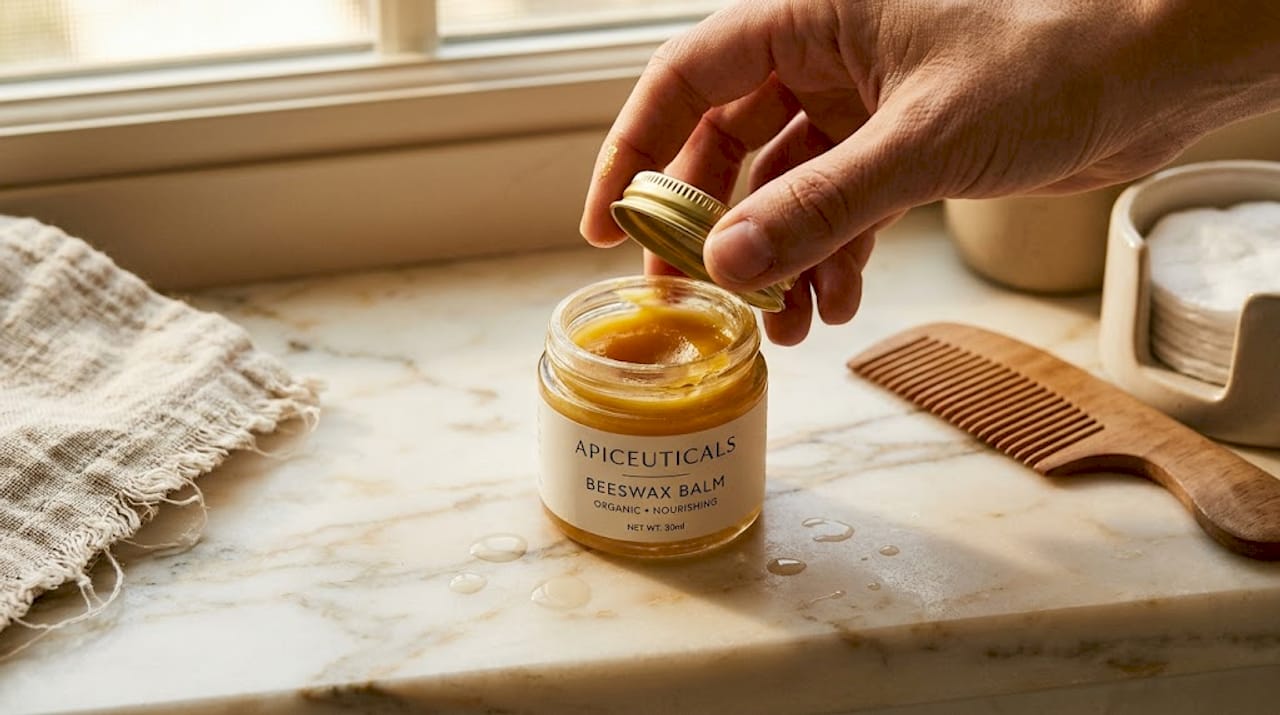
Treat with propolis or honey balm: This is the most nourishing step in your evening sequence. Honey skincare benefits are remarkable at night: honey is a natural humectant that draws atmospheric moisture into the skin, and its enzymatic activity gently supports surface renewal. Propolis, meanwhile, works as an overnight antimicrobial shield, keeping inflammation quiet so the skin can focus its energy on rebuilding.
Seal with a rich cream or facial oil: Occlusive agents applied as the final step lock in all the actives layered beneath. Look for beeswax-based formulas or plant-origin oils rich in omega fatty acids. Our calming honey balm from the HONEY BALM™ Series is a waterless concentrate that delivers clinically proven 26% wrinkle reduction over a consistent routine, without a single drop of mineral oil or silicone.
“Skin does not rest at night. It works. Give it the right ingredients and it will show you the results every morning.”
Here is a concise reference for building your evening routine by skin type:
- Oily or acne-prone: Prioritize propolis actives for antimicrobial support; use lighter occlusive layers
- Dry or mature: Layer honey humectants under a richer beeswax-based cream; do not skip the sealing step
- Sensitive or reactive: Choose fragrance-free honey formulas; exfoliate only twice weekly and always patch-test new actives
- Combination: Apply targeted treatments to specific zones rather than one formula across the full face
Comparing popular organic routines: Ingredients and sustainability at a glance
You’ve seen routines in detail, now compare them side-by-side to decide what suits you best. The table below contrasts three common approaches: bee-science-based, purely plant-based, and blended organic routines.
| Feature | Bee-science organic | Plant-based organic | Blended organic |
|---|---|---|---|
| Primary antioxidants | Propolis flavonoids, honey enzymes, beeswax polyphenols | Vitamin C, green tea, resveratrol | Both sources combined |
| Barrier support | Beeswax, propolis resin | Shea butter, plant ceramides | Beeswax plus plant lipids |
| Allergen considerations | Patch test required for bee allergies | Generally lower allergen risk | Patch test if bee ingredients present |
| Sustainability cues | Ethical hive harvesting, pollinator support, refillable packaging | Organic farm certification, fair trade | Dependent on brand sourcing standards |
| Clinical validation | Patented PROPOWAX™ technology, 26% wrinkle reduction (HONEY BALM™) | Varies widely by formula | Varies widely by formula |
| Best suited for | Antioxidant-focused, eco-conscious, premium users | Vegan, bee-allergy users | Those easing into bee-derived ingredients |
Ingredient transparency is not a luxury feature. It is a baseline expectation for anyone managing allergies, sensitivities, or genuine sustainability values. Propolis in skincare has been shown to carry anaphylaxis risk for bee-allergic individuals, which is why every reputable brand using it must disclose its presence clearly and prominently, not bury it under a Latin synonym on line 28 of a 30-ingredient list.
For eco-focused consumers, the sustainability question goes further than ingredient sourcing. Packaging choices, refillability, carbon footprint of production, and the brand’s actual relationship with its bee populations all matter. We maintain over 1,000 beehives across Arcadia, Greece, where our bees pollinate 4 billion flowers daily. We harvest only 60% of production, leaving 40% for the colonies because healthy bees are the foundation of everything we make.
Why most ‘organic’ routines aren’t enough—and what really works
To move from confusion to clarity, let’s address what most experts miss about true organic skincare. The uncomfortable truth is that most routines marketed as “organic” are built around label optics, not measurable skin outcomes. They feature one or two certified ingredients as headline actives, then fill the rest of the formula with water, glycerin, and a long tail of synthetic preservatives. The organic certification covers a fraction of the total formula, and consumers have no easy way to know that.
We have seen this pattern firsthand across the industry, and it is precisely why we built Apiceuticals from the opposite direction. Starting with our family’s organic beekeeping heritage in Arcadia since 1981, every formula begins with the question: what does this skin actually need, and which bee-derived actives deliver that result measurably? The answer led us to develop PROPOWAX™ technology, independently validated by the Aristotle University of Thessaloniki and recognized by British Vogue as “arguably the global leader in antioxidant activity.” That is not marketing language. It is a globally patented, evidence-based result.
The second gap most organic routines leave is in the fundamentals. Knowing that patch testing protects against propolis and venom risks is non-negotiable for safe use, yet the majority of brands including bee-derived ingredients include no such guidance. Exfoliation cadence, SPF pairing, and layering order are equally critical, but rarely addressed. An antioxidant routine without SPF is like installing a high-end security system and leaving the front door open.
The third gap is sourcing integrity. Sustainable harvesting is not just an ethical stance. It is a scientific one. Bees under stress from over-harvesting produce inferior propolis with measurably lower flavonoid content. When we protect 40% of our colonies’ own production, we are not just being kind to bees. We are ensuring that the propolis in your product contains the full spectrum of bioactives that makes it clinically effective. Sustainable sourcing and safe propolis usage are inseparable in any routine worth trusting.
Experience bee science–powered organic skincare for yourself
At Apiceuticals, we believe the best organic routines are the ones you can trust completely, from the first flower our bees visit in Arcadia to the moment the formula reaches your skin. Our product lines are built on decades of family beekeeping knowledge and validated by independent science, so you never have to take our word for it.

Whether you are ready to shop antioxidant skincare that genuinely delivers on its promises, or you simply want to discover honey benefits before committing to a full routine, we invite you to explore our collections with confidence. Every formula we create excludes over 2,000 potentially harmful ingredients, carries 0% irritation in dermatological testing on sensitive skin, and is built on ethically harvested, organic-certified bee ingredients from the ancient forests of Arcadia. This is what bee science in its purest, most purposeful form looks like.
Frequently asked questions
What makes bee-derived ingredients special in organic skincare?
Bee-derived ingredients like propolis and honey provide a uniquely complex blend of antioxidants, antimicrobials, and barrier-supporting compounds that most plant extracts simply cannot replicate in a single ingredient. Because propolis contains anaphylaxis risk for bee-allergic individuals, always patch-test before full use.
How can people with bee allergies use organic routines safely?
Anyone with a known bee allergy should patch-test any product containing propolis, beeswax, or honey before applying it to a wider area, and should consult a dermatologist if uncertain. As noted by skincare safety guidance, bee allergy risks include anaphylaxis, so bee-free plant-based organic alternatives are a genuinely safe and effective option.
Is it enough to use antioxidants in my skincare without SPF?
No. Antioxidants neutralize free radicals that UV filters miss, but they cannot block the initial photon damage from UV radiation. Daily SPF is still required because antioxidants don’t replace UV protection and the two work best when used together.
How often should I exfoliate in an organic routine?
Two to three times per week is the recommended frequency, particularly for sensitive skin. Gentle exfoliation 2-3x weekly supports cell renewal and maximizes antioxidant absorption without disrupting the skin barrier.
Recommended


Related posts

How bees and biodiversity sustain each other, what the science says about Greece and the Aegean, and how antioxidant beauty can start from a hive...

How organic propolis extraction works, from hive to extract: collection, solvents, EU organic rules, Greek propolis phenolics and what it means for skincare.

Build an anti pollution skincare routine that fits Greek city life: what pollution does to skin, the morning and evening steps, and the antioxidants with...

Honey moisture content explained: the EU and Greek limits, how to take a refractometer reading, what excess water does to honey, and why it matters...

How antioxidant activity measurement works: DPPH, ABTS, FRAP and ORAC explained, why results differ, and what a lab number can and cannot say about skin...















