No products in the cart.
Return To Shop
Pollution Damaged Hair: Signs, Science and a Better Routine
Pollution damaged hair is the result of fine particles and combustion residues settling on the hair fibre and scalp, where they dull the surface and, according to current research, may provoke oxidative stress and inflammation around the follicle. The practical answer is a two-part routine: remove deposits regularly with a mild cleanse, and give the hair and scalp an antioxidant defence between washes. If you live in Athens, Thessaloniki or anywhere that sees smoke in summer, this is worth understanding in detail.
TL;DR
- Airborne particulate matter deposits on hair and is associated with loss of shine and structural change, and with inflammatory signalling at the scalp.
- Greece’s annual mean PM2.5 is reported by the WHO at 15 μg/m³, three times its guideline value, so urban exposure is an everyday matter, not only a wildfire one.
- Frequent, gentle cleansing and antioxidant-based care are the two measures the scientific literature most consistently suggests.
- A thin protective film on the hair can act as a barrier, while heavy, sticky stylers tend to hold particles against the strand.
- PROPOWAX™ Living Honeycomb is our patented antioxidant delivery system, validated by the Aristotle University of Thessaloniki.
Table of Contents
- Why Pollution Damaged Hair Looks and Feels Different
- How Much Pollution Do Greek Cities Actually Bring?
- Recognising the Signs on Your Hair and Scalp
- What the Research Says About Follicles
- How to Repair Pollution Damaged Hair Step by Step
- Standard Conditioner vs Antioxidant Conditioner
- The PROPOWAX™ Living Honeycomb Approach
- Building a Weekly Routine for City Hair
- When Smoke Is in the Air
- Where to Start With Apiceuticals
- FAQ
- Sources
Why Pollution Damaged Hair Looks and Feels Different
Hair is a dead, keratinised fibre, which means it cannot repair itself. Every particle that lands on it, and every oxidative reaction that follows, accumulates over weeks and months. Think of a bicycle left outdoors in a port city: the first week shows nothing, but salt and grime work slowly into the metal until rust appears. Hair behaves in a comparable way, and its outermost layer, the cuticle, takes the first hit.
A 2024 review of environmental exposures describes particulate matter depositing on hair and causing loss of shine and structural changes. That is the visible side. The less visible side is chemical: polycyclic aromatic hydrocarbons (PAHs) travel on the surface of soot particles, and the same literature links them to reactive oxygen species and inflammatory responses. Free radicals are the unstable molecules behind this process, and they are the reason antioxidants are central to this category of hair care.
The scalp is the second front. We prefer to describe it as a living ecosystem rather than a blank canvas, because its oil balance, microbial community and barrier function all respond to what settles on it. A 2025 review of urban particulate matter proposes that it triggers inflammation through pathways involving ROS and COX, and suggests anti-inflammatory and antioxidant agents could help limit pollution-related hair and scalp problems.
How Much Pollution Do Greek Cities Actually Bring?
It is easy to assume that pollution-related hair concerns belong to megacities far away. The WHO’s 2023 country profile reports that Greece’s annual mean PM2.5 was 15 μg/m³, three times the WHO guideline value. Greek law already addresses this: the Ministry of Environment and Energy lists national legislation, including the Joint Ministerial Decision incorporating EU Directive 2008/50/EC, that sets limit values for PM10 and PM2.5 to protect health.
Traffic, central heating in winter, and seasonal wildfire smoke all contribute. For hair, the practical consequence is that exposure is chronic and low-grade for most people, punctuated by heavier episodes. Chronic exposure is exactly the pattern that suits cumulative, oxidative damage to a fibre that cannot regenerate.
Recognising the Signs on Your Hair and Scalp
No single sign proves that pollution is the cause, and several of them overlap with sun, heat styling and colour treatments. Even so, a pattern tends to emerge for people who spend long hours outdoors in traffic-heavy areas. Hair loses its shine first, because particles on the cuticle scatter light instead of reflecting it. It then feels rougher and more tangle-prone, as the surface becomes uneven. Strands may look flat and coated a day after washing, even though the scalp is not especially oily.
On the scalp, watch for tightness, itch or a sensitive feeling that appears after days of heavy city exposure and eases after a thorough but gentle wash. If you notice these changes alongside sudden or patchy shedding, speak to a dermatologist. Research does show that air pollutants have been linked to hair loss, with particulate matter associated with alopecia areata and tobacco smoke with early-onset androgenetic alopecia, but diagnosing the cause of shedding is a clinical task, not a cosmetic one.
As for the common worry about daily shedding, many people lose some hairs each day as part of the normal growth cycle. What matters is a change from your own baseline, and that is the point at which professional advice is useful.
What the Research Says About Follicles
The laboratory evidence is interesting, though it needs careful reading. In ex vivo experiments, particulate matter induced apoptosis in follicular keratinocytes, and in a zebrafish model PM2.5 reduced hair-cell numbers in a dose-dependent way and was associated with mitochondrial damage. A separate review notes that PAHs on particulate matter may trigger ROS and inflammatory responses in skin and follicle cells.
These are mechanisms, not guarantees about what will happen on your head. They explain why researchers take an interest in antioxidants: if oxidative stress is part of the chain, then reducing it at the surface is a rational point of intervention. The same evidence also tells us what to avoid claiming. Antioxidant efficacy in hair care is more often assessed in vitro, and the authors of one review call for further in vivo methods. We read that as a reason to look for formulations with independent validation, not as a reason to ignore the question.
How to Repair Pollution Damaged Hair Step by Step
Repair is a generous word for a fibre that cannot regrow itself, so the realistic goals are to remove deposits, protect the surface and support the scalp so that new hair grows from a calmer environment.

The first step is cleansing. Reviews of hair-protection strategies suggest frequent scalp washing with mild shampoos and the use of special antioxidant shampoos. Frequency here means as often as your scalp needs, which in a polluted city can be every second day, with warm rather than hot water and a gentle massage rather than scrubbing. Our guide to what an antioxidant shampoo does to scalp oxidative stress explains the logic in more depth.
The second step is conditioning with an eye on residue. Heavy waxes, thick gels and sticky finishing products can hold particles against the strand, so a lighter approach to styling is wiser in polluted areas. Where you do want a barrier, a thin film is the idea: work on Asian hair describes how a polymer film on hair can provide a protective layer against airborne pollutants. A weightless dry oil applied to the lengths serves a similar purpose without a tacky feel.
The third step is continuous antioxidant support. A single wash removes what has landed, but oxidative stress continues as long as the hair is exposed to UV, ozone and fine particles. This is where a product designed to keep working between washes has a logical advantage, which brings us to the technology behind our own range.
Standard Conditioner vs Antioxidant Conditioner
A standard conditioner smooths the cuticle by depositing conditioning agents. That improves feel and combability, and it matters, but its role is cosmetic and mechanical. An antioxidant-led formula has a second job: to neutralise free radicals on the hair and scalp before they react with lipids and proteins. The difference is something like that between polishing a metal surface and also coating it so that it resists rust.
The distinction is also one of duration. Ordinary antioxidant ingredients can degrade quickly once they are exposed to air and light, which limits how long they stay active. Stability is therefore as important as the antioxidant itself, and it is the reason we developed a delivery system rather than relying on a single ingredient. For a broader view of which antioxidant families are used in hair care, see our overview of why hair needs antioxidants and the three antioxidant approaches.
The PROPOWAX™ Living Honeycomb Approach

PROPOWAX™ is a patented technology in which a Living Honeycomb sits inside each product and continuously releases antioxidants onto skin, scalp and hair. It holds a global patent for the highest antioxidant activity in cosmetics, and its performance was independently validated by the Aristotle University of Thessaloniki. The bee-derived ingredients, including propolis, are rich in polyphenols, which we explain in our note on propolis polyphenols for hair. For the full technical background, see our page on PROPOWAX™ technology.
In the shampoo, the aim is a cleanse that removes deposits while leaving an antioxidant layer in place. We describe the mechanism in detail in the section on the science of PROPOWAX™ shampoo. Our formulas exclude SLS, SLES, parabens, silicones and mineral oils, and they are dermatologically tested on sensitive skin, which matters for a scalp that is already under environmental pressure. The complete routine is laid out in our guide to anti-pollution haircare.
Our Perspective
We began as a family of beekeepers in Arcadia in 1981, and we learned early that a hive defends itself with chemistry. Propolis is how bees protect the colony from the environment, which is why antioxidant protection against external stress has always felt like a natural fit for our science.
When we look at the research on particulate matter and hair, we see an oxidative problem that a cleansing step alone cannot fully answer. Cleansing removes what has landed; it does not continue working after you rinse. That is the gap PROPOWAX™ Living Honeycomb was built to address, by releasing antioxidants continuously across the day.
We believe hair care for city life should be judged on stability, independent validation and gentleness together. A patent for the highest antioxidant activity in cosmetics, tested at the Aristotle University of Thessaloniki, is our way of putting that belief on the record.
Apiceuticals
Building a Weekly Routine for City Hair
A workable routine does not need many steps. On wash days, cleanse the scalp thoroughly with a mild antioxidant shampoo, rinse with lukewarm water, and condition the lengths rather than the roots. After washing, a few drops of dry oil on the mid-lengths and ends give a light surface layer. In between, avoid touching your scalp with unwashed hands, tie long hair up on heavy-traffic commutes, and brush gently to shift loose dust before bed.
If you have colour-treated or fine hair, which is more vulnerable to oxidative stress, consider a slightly higher frequency of antioxidant care. If you have a dry or sensitive scalp, wash with lower heat and lean on a cleanser formulated without sulphates. And since a pillowcase collects whatever the day deposited, changing it regularly is a small habit with an outsized effect.
When Smoke Is in the Air
Wildfire smoke is a different order of exposure from background urban pollution. Greece’s General Secretariat for Civil Protection advises, during smoke episodes, keeping windows and doors closed, sealing gaps with wet towels, and avoiding cooking or vacuuming. If you must go out, the same guidance says an FFP3 (EN149:2001) mask with valve is the better protection against particles, though it does not protect against carbon monoxide. A mask protects your lungs first; for hair, a scarf or hat and a wash on returning home will remove most of the smoke residue before it settles.
After a smoke episode, wash the hair twice if needed, the first time to lift deposits and the second to cleanse the scalp, and follow with an antioxidant conditioning step.
Where to Start With Apiceuticals
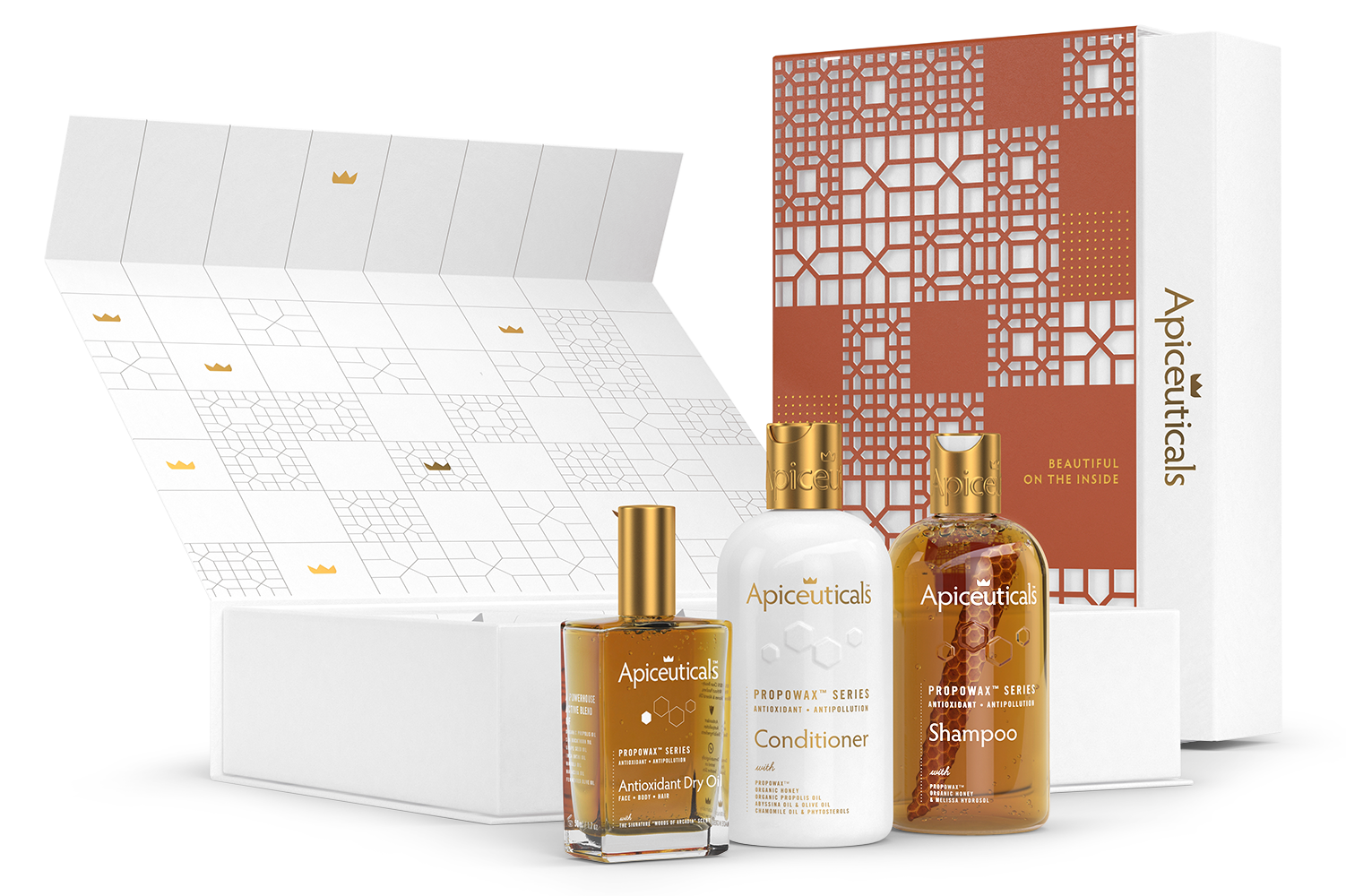
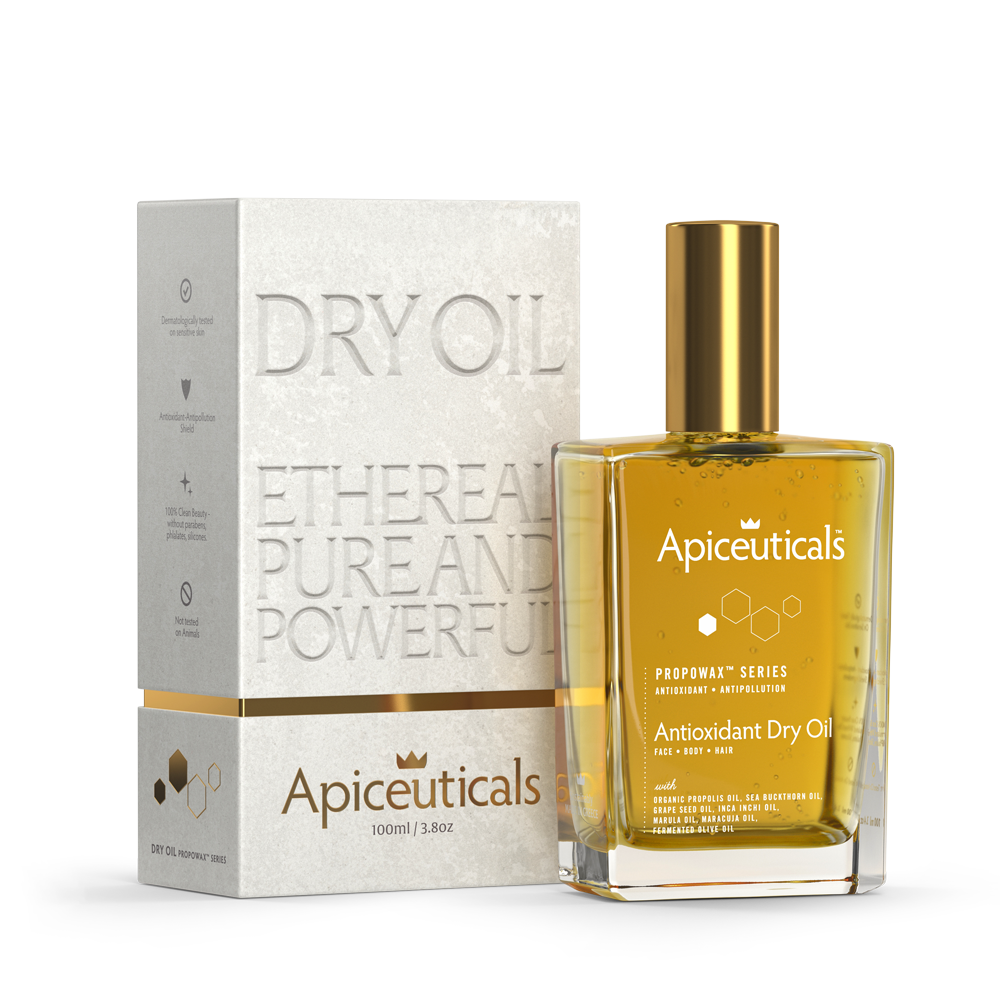
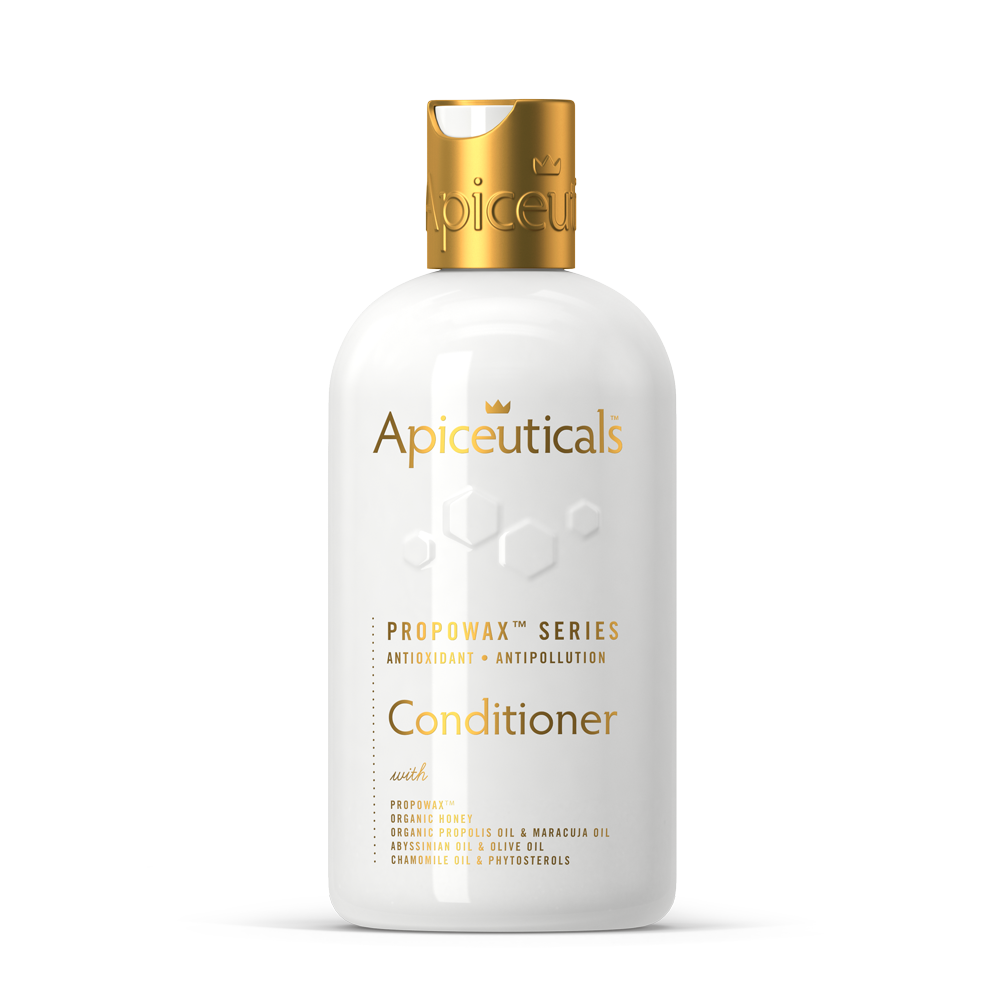
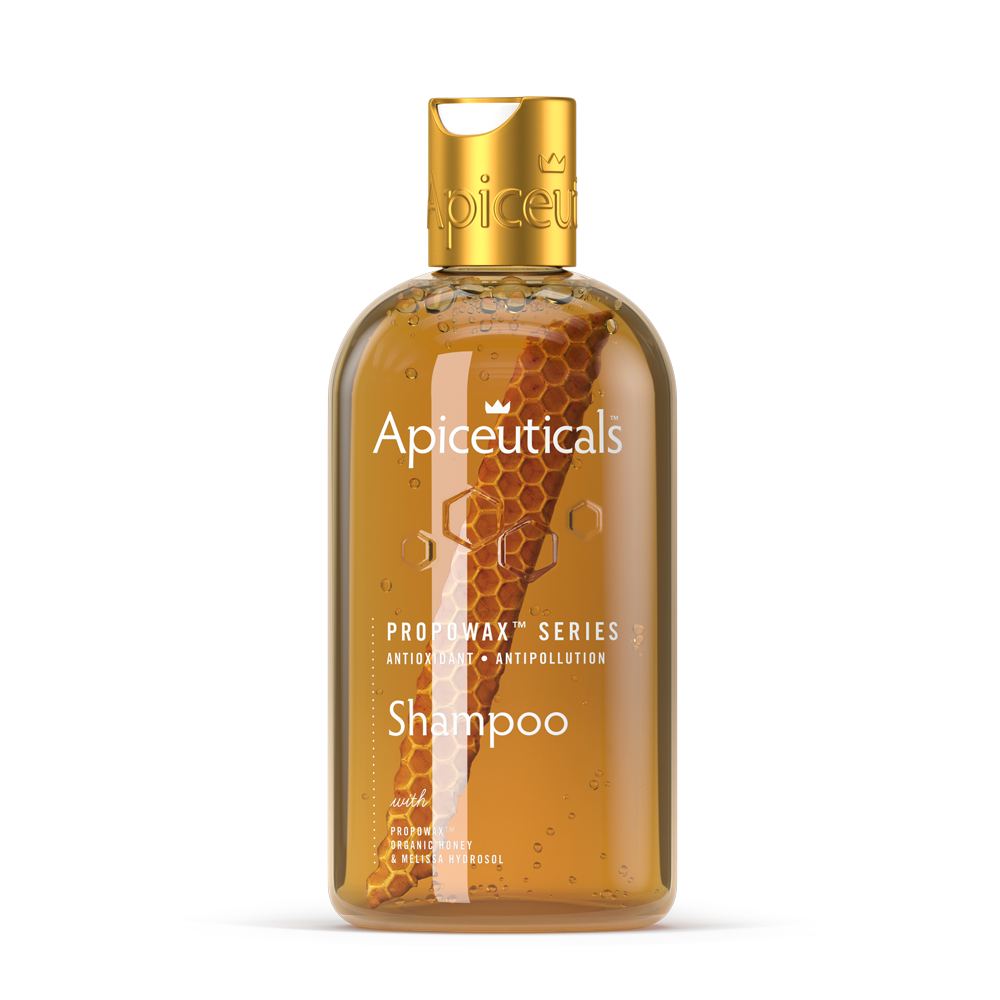
If you want a ready-made routine, the Antioxidant Hair Care Duo pairs the cleansing and conditioning steps around PROPOWAX™ Living Honeycomb. You can also choose individual products: the Propowax Antioxidant Shampoo for the wash and the Antioxidant Dry Oil as a light finishing layer. The full range is available in the PROPOWAX™ Series.

For anyone building a gift or a first routine, the Hair Care Premium Gift Set brings the products together.
FAQ
Can pollution really damage hair?
Yes, according to published research. Particulate matter deposits on the hair and is associated with loss of shine and structural change, and laboratory studies link it to oxidative stress and inflammatory signalling at the follicle. The studies are largely experimental, so they describe mechanisms rather than certain outcomes for each person.
Can air pollution cause hair loss?
Air pollutants have been linked to hair loss in the scientific literature, including associations with alopecia areata and early-onset androgenetic alopecia. If you notice sudden, patchy or persistent shedding, see a dermatologist, because many other causes need to be ruled out. Our note on hair loss and thinning covers the cosmetic side of scalp care.
How often should I wash hair to remove pollutants?
Reviews suggest frequent scalp washing with a mild shampoo. In a polluted city that can mean every one or two days, using lukewarm water and a sulphate-free formula so the scalp is cleansed without being stripped. Adjust to your scalp type and how much time you spend outdoors.
What is an antioxidant shampoo, and does it help?
An antioxidant shampoo combines cleansing with ingredients that neutralise free radicals on the scalp and hair. Reviews list special antioxidant shampoos among suggested protective measures, though they also note that further in vivo testing is needed. You can read the definition in our guide to what antioxidant shampoo means.
How can I protect my hair during wildfire smoke?
Follow the Civil Protection guidance first: keep windows closed, avoid activities that raise indoor particles, and wear an FFP3 mask outdoors. For hair, cover it when outside, wash it soon after exposure, and follow with an antioxidant conditioning step.
Sources
- The Effects of Environmental Pollutants and Exposures on Hair, PMC (2024)
- The Invisible Threat to Hair and Scalp from Air Pollution, Polish Journal of Environmental Studies (2025)
- Air Pollution and Skin Diseases, PMC (2025)
- Active ingredients and mechanisms of action, Brazilian Journal of Pharmaceutical Sciences (2018)
- Pollution Damage and Protection of Asian Hair, Cosmetics, MDPI (2018)
- Greece environmental health country profile, WHO (2023)
- Air quality legislation, Greek Ministry of Environment and Energy
- How to shield against forest fire and smoke impacts, General Secretariat for Civil Protection (2023)
Recommended


Related posts

How bees and biodiversity sustain each other, what the science says about Greece and the Aegean, and how antioxidant beauty can start from a hive...

How organic propolis extraction works, from hive to extract: collection, solvents, EU organic rules, Greek propolis phenolics and what it means for skincare.

Build an anti pollution skincare routine that fits Greek city life: what pollution does to skin, the morning and evening steps, and the antioxidants with...

Honey moisture content explained: the EU and Greek limits, how to take a refractometer reading, what excess water does to honey, and why it matters...

How antioxidant activity measurement works: DPPH, ABTS, FRAP and ORAC explained, why results differ, and what a lab number can and cannot say about skin...