No products in the cart.
Return To Shop
Propolis vs Vitamin C: When Patented Delivery Beats Raw Extracts
They aren’t rivals. Vitamin C and propolis solve different problems on skin, and in most routines they work best side by side rather than in competition. Vitamin C earns its place as a daytime antioxidant that brightens tone and supports collagen; propolis calms, soothes, and defends against microbial stress, particularly on compromised or reactive skin. The two can be combined, but the pairing depends on concentration, formulation, and a little patch-testing sense, all of which we unpack below.
TL;DR:
- Vitamin C is most effective for addressing pigmentation, dullness, and early photoaging when used in stable, formulated serums in the morning.
- Propolis better supports skin barrier repair and calms reactive, irritated, or acne-prone skin, especially after procedures or flare-ups.
- Combining vitamin C and propolis is safe if products are properly formulated, with layering starting with vitamin C first, followed by propolis after a few minutes.
- Raw propolis extracts can vary in antioxidant potency, so choosing products with validated delivery technology ensures consistent and effective results.
- Patch testing is essential for propolis due to allergy risks, and high-concentration vitamin C may cause irritation on sensitive skin.
Table of Contents
- Propolis vs Vitamin C: How Each One Actually Works on Skin
- Which One Fits Your Skin Concern Right Now
- Can You Use Propolis With Vitamin C? Layering Rules That Matter
- Safety First: Allergies, Irritation, and Drug Interactions
- Building a Routine: What to Look for on the Label
- Why Delivery Technology Solves Propolis’s Biggest Weakness
- When I Personally Recommend Vitamin C, Propolis, or Both
- A Discreet Option for Readers Who Want Validated Antioxidant Delivery
- Sources
- FAQ
Propolis vs Vitamin C: How Each One Actually Works on Skin
Vitamin C, particularly in its L-ascorbic acid form, drives collagen synthesis by acting as a cofactor for the enzymes that stabilize collagen fibers. It also inhibits tyrosinase, the enzyme responsible for melanin overproduction, which is why it shows up in nearly every serum marketed for uneven tone. The catch is stability: L-ascorbic acid oxidizes quickly when exposed to light and air, which is why derivatives like ascorbyl glucoside or sodium ascorbyl phosphate exist. They are gentler and more stable, though generally less potent at equal concentrations.
Propolis works through an entirely different mechanism. It is a resin bees collect from tree buds and mix with their own enzymes, and its chemistry reads more like a botanical cocktail than a single active. Depending on region and season, propolis is composed mostly of balsams and resins, a substantial proportion of waxes, and a small fraction of aromatic oils, with the remainder made up of hundreds of flavonoids and polyphenols. This is what gives propolis its anti-inflammatory, antimicrobial, and antioxidant activity, but it also explains why “propolis” from one hive can behave differently from propolis harvested a province away.
- Vitamin C: brightening, collagen support, daytime antioxidant shield.
- Propolis: calming, antimicrobial, barrier repair support.
- Vitamin C needs stability engineering; propolis needs compositional consistency.
The practical upshot: vitamin C is a brightening and prevention tool, while propolis behaves more like a repair and defense agent. Choosing between them often comes down to what your skin is asking for that week, not which one is “better.”
Which One Fits Your Skin Concern Right Now
Matching the ingredient to the concern matters more than chasing the trendier antioxidant. Vitamin C is the stronger choice for concerns tied to pigment and photoaging, while propolis tends to outperform it when the skin barrier itself is under stress.
Reach for vitamin C when you’re dealing with:
- Hyperpigmentation, sun spots, or post-inflammatory dark marks.
- General dullness or uneven tone.
- Early fine lines and the first signs of photoaging.
- A need for daytime antioxidant protection alongside sunscreen.
Reach for propolis when you’re dealing with:
- Sensitized, reactive, or recently irritated skin.
- Acne-prone or barrier-compromised skin that flares easily.
- Post-procedure redness after exfoliation, microneedling, or peels.
A common and sensible routine pairs a vitamin C serum in the morning, layered under sunscreen, with a propolis-based serum or balm at night when the skin is in repair mode rather than defense mode. That split respects what each ingredient actually does instead of forcing both into the same ten minutes of your routine.
Can You Use Propolis With Vitamin C? Layering Rules That Matter
Yes, propolis and vitamin C can be used together, and in some formulations they are combined intentionally. A randomized clinical trial testing a preparation of echinacea, propolis, and vitamin C found a 55 percent reduction in respiratory illness episodes in children over twelve weeks, which is a systemic result rather than a topical one, but it does confirm the two ingredients are not chemically incompatible when combined at the right ratios.
Topical layering is more about formulation logic than biochemistry:
- Apply vitamin C to clean, dry skin first. Most stabilized forms need a few minutes to absorb before anything else goes on top.
- Wait roughly five minutes, then follow with a propolis serum, balm, or moisturizer to lock in hydration and add its calming effect.
- If you’re using a low pH vitamin C product (below 3.5), consider keeping propolis to your PM routine instead, since very acidic vehicles can occasionally feel sharp on sensitized skin when doubled up with active-rich layers.
The concentration matters more than most people assume. In vitro fibroblast research combining vitamin C with propolis extract found the effect was concentration-dependent: at certain ratios, the combination was less cytotoxic to skin cells than propolis alone, while at higher concentrations, cytotoxicity increased. That is not a reason to avoid combining them; it is a reason to trust formulated products over improvised mixing of raw extracts.
Pro Tip: If you’re layering actives yourself, never mix a high-percentage vitamin C powder directly with a concentrated propolis tincture. Let each product do its job in its own step instead of combining raw ingredients in your palm.
For general layering logic beyond just these two actives, routine guidance on product order applies here too: work from thinnest, most active formulas to richer, more occlusive ones.
Safety First: Allergies, Irritation, and Drug Interactions
Propolis is a bee product, and bee products carry a real allergy risk, especially for anyone sensitive to bee stings, pollen, or other hive-derived ingredients. Watch for localized rash, swelling, or itching after first use, and always patch test on the inner forearm before applying anything propolis-based to the face.
Vitamin C is generally well tolerated, but L-ascorbic acid at high concentrations (15 percent and above) can sting or cause redness on sensitive skin. If that happens, a derivative form at a lower percentage is usually the fix rather than abandoning vitamin C altogether.
- Patch test any new propolis or vitamin C product for 48 hours before full application.
- Choose derivative forms of vitamin C if you have reactive or rosacea-prone skin.
- Discontinue use and consult a dermatologist if swelling or persistent redness develops.
Oral propolis supplements deserve a separate caution. Propolis extracts contain over 300 active phytochemicals capable of interacting with CYP450 liver enzymes, the same enzyme family responsible for metabolizing many prescription medications. Anyone on chronic medication should talk to a clinician before adding oral propolis, even though topical use carries far less systemic exposure.
Building a Routine: What to Look for on the Label
Choosing well-formulated products matters more than choosing the “stronger” ingredient. For vitamin C, check the form listed first on the ingredient panel, whether it’s stabilized in a serum, and whether it’s packaged in an opaque or airless container that blocks light and air. A vitamin C serum sold in a clear bottle has likely already started degrading before it reaches your bathroom shelf.
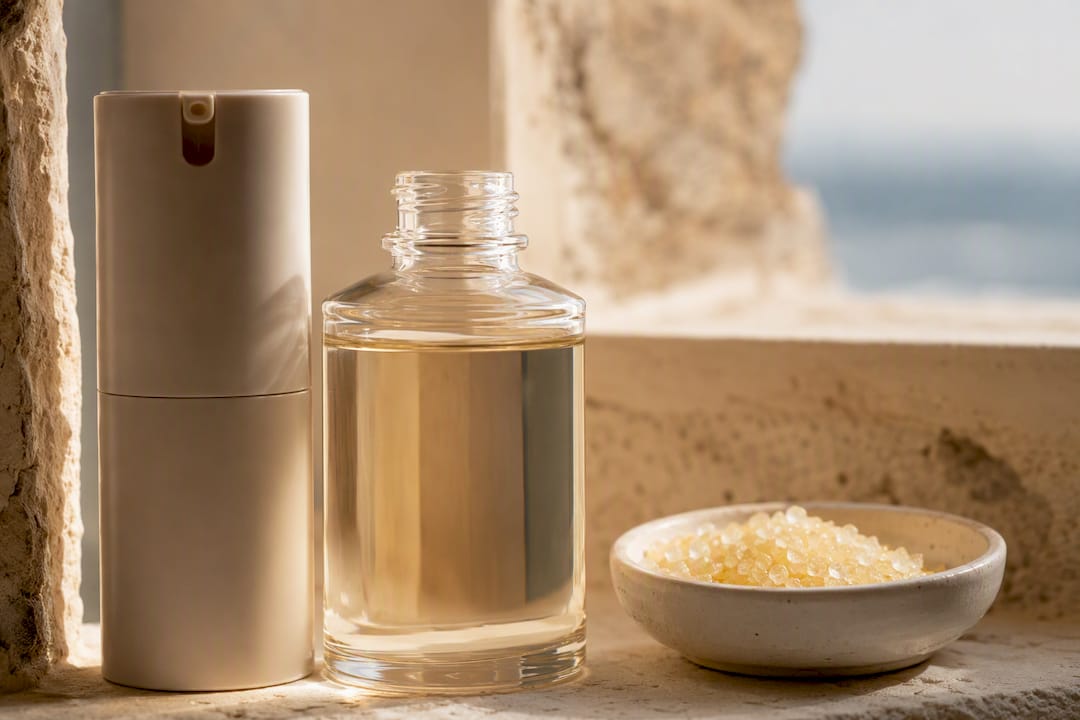
For propolis, look at the extract percentage and the solvent used to derive it, since alcohol-based extracts can feel drying on already sensitive skin compared to water- or oil-based versions. Supporting humectants like glycerin or panthenol are a good sign; heavy fragrance is not.
Starter routines by skin type:
- Sensitive skin: A low-percentage vitamin C derivative in the morning, propolis-based balm at night.
- Acne-prone skin: Spot-treat with a propolis serum, paired with a gentle vitamin C vehicle rather than a high-strength acid form.
- Mature or dull skin: Higher-percentage L-ascorbic acid in the AM, always under sunscreen.
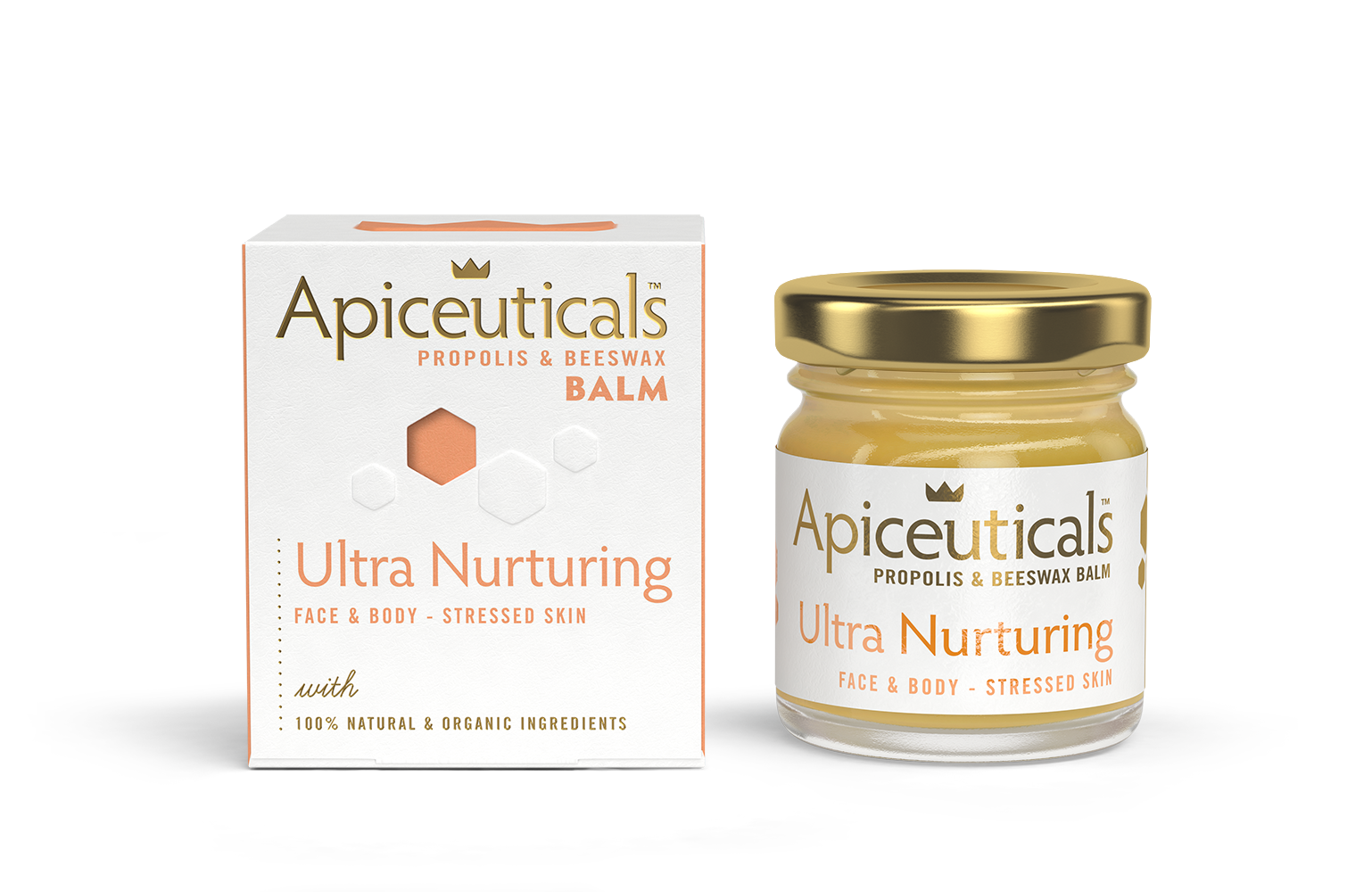
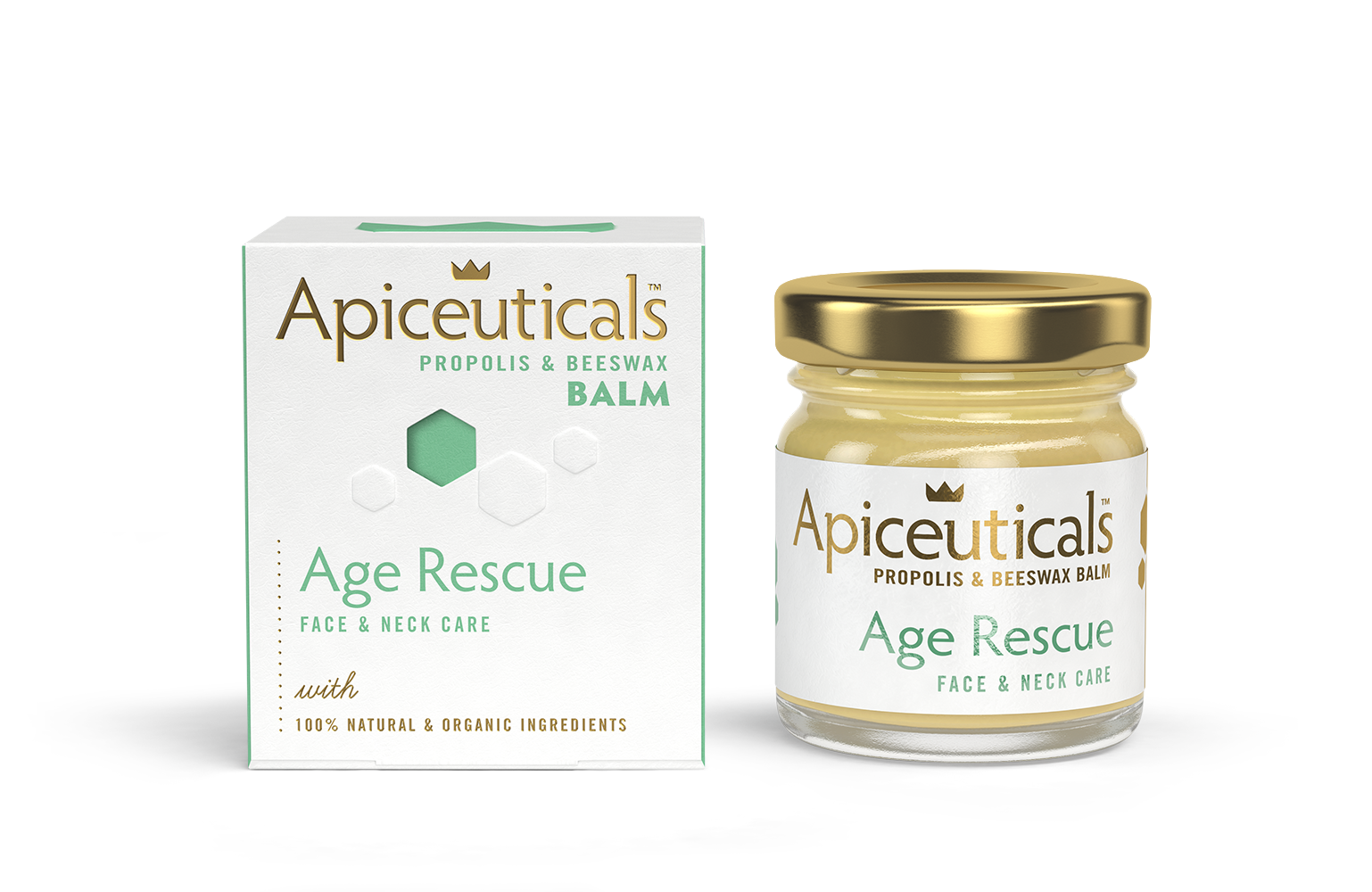
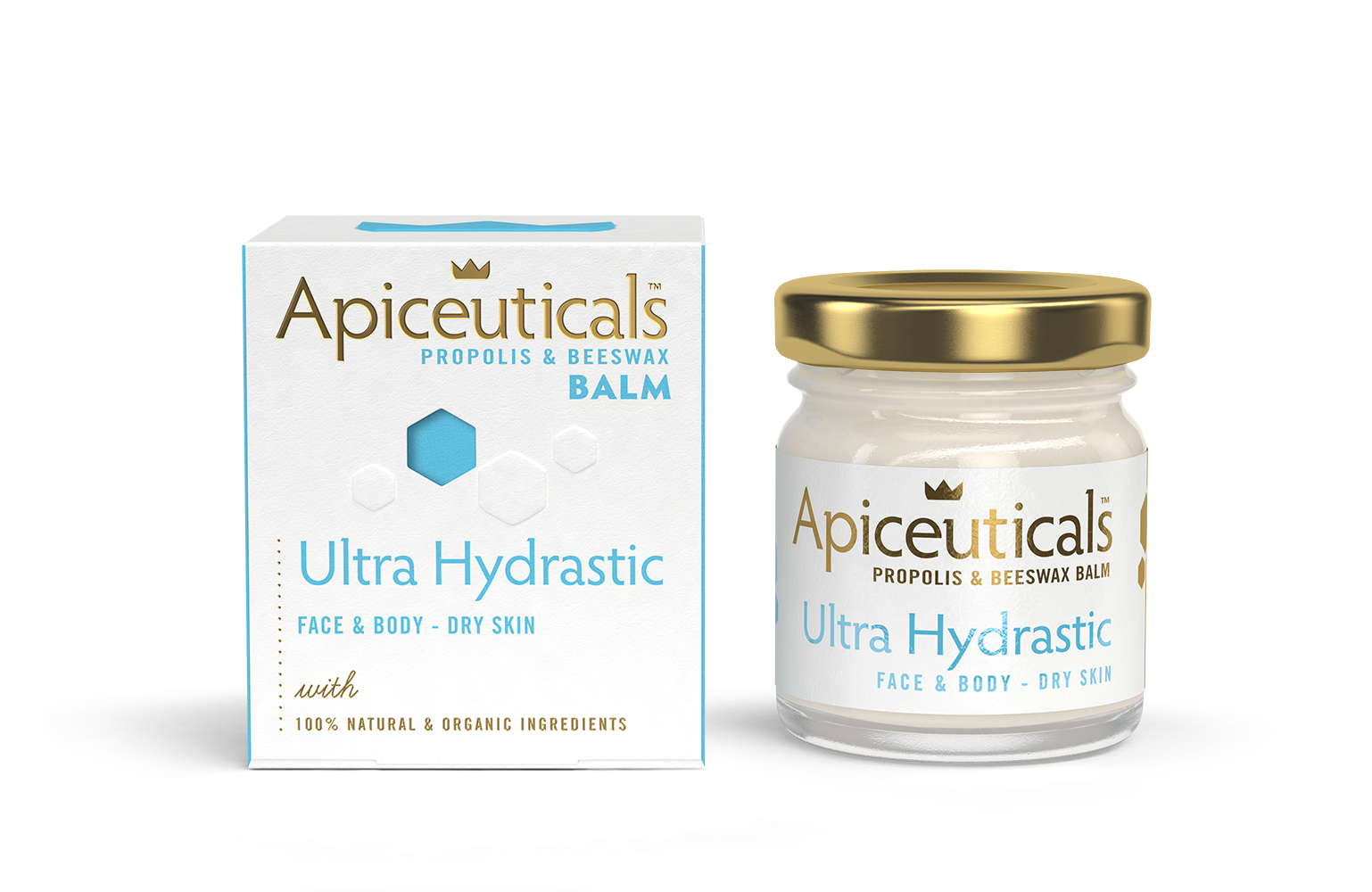
Before buying either, run through a short checklist: patch test first, look for dermatologist-tested claims, and favor brands that publish validated delivery data rather than vague antioxidant marketing. Apiceuticals’ propolis formulations are one place to see what that validation looks like in practice.
Why Delivery Technology Solves Propolis’s Biggest Weakness
Raw propolis is not a single ingredient so much as a regional signature. Because its composition shifts with local flora, season, and even hive health, propolis chemistry varies significantly between sources, which makes dosing antioxidant activity from an unstandardized extract genuinely difficult. Two jars labeled “propolis extract” can deliver meaningfully different antioxidant loads.
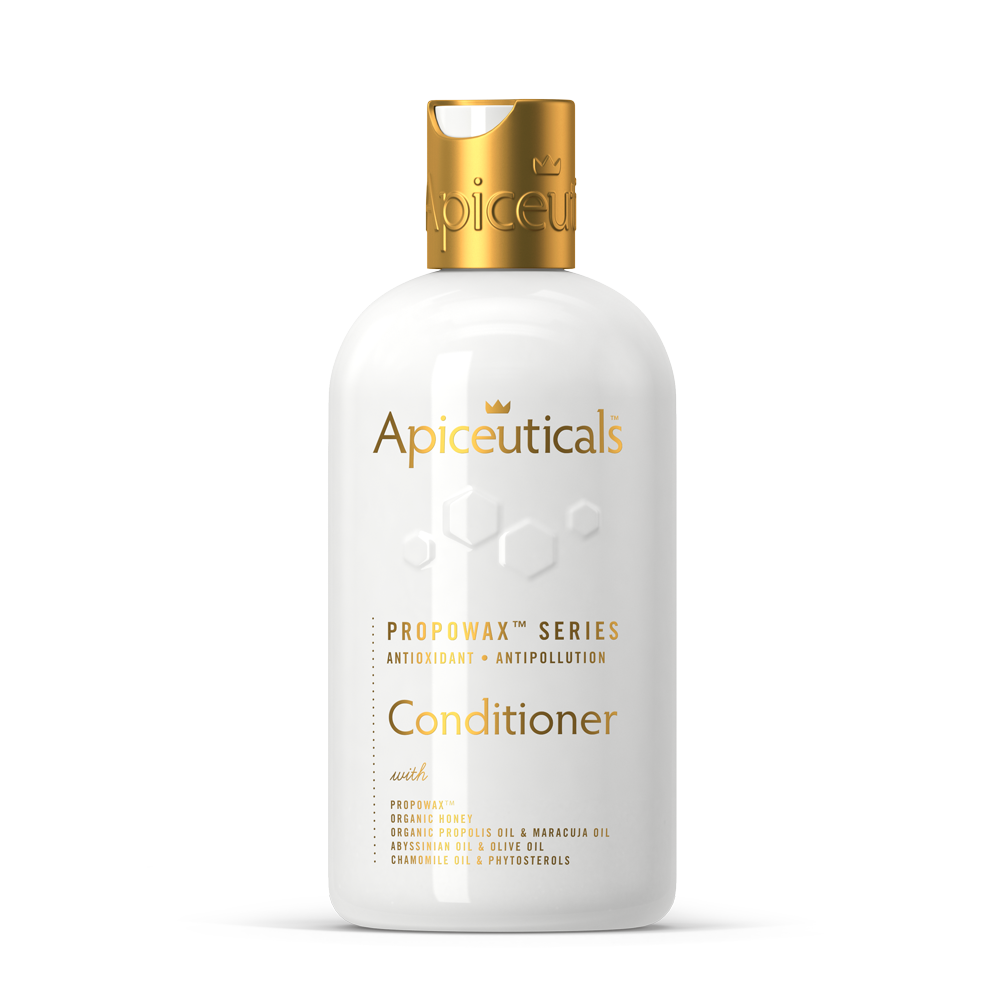
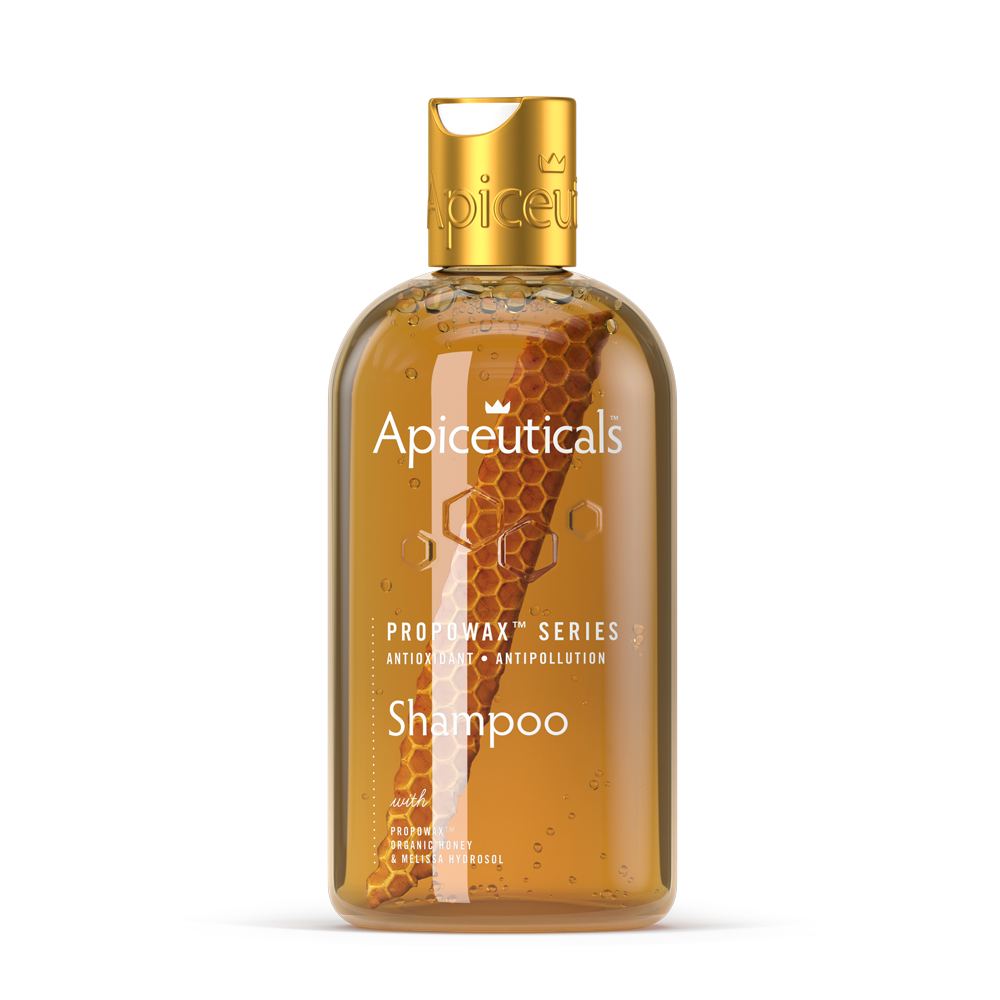
This is precisely the problem that PROPOWAX™ was engineered to solve. Apiceuticals’ patented Living Honeycomb technology continuously releases antioxidants onto skin, scalp, and hair rather than relying on a single unstandardized extract, and it holds a global patent for and the highest antioxidant activity recorded in cosmetics.
Independent testing by the Aristotle University of Thessaloniki validated PROPOWAX™’s antioxidant performance, giving the formulation a reproducibility standard that raw propolis extracts, by their botanical nature, cannot guarantee on their own.
When evaluating any advanced antioxidant formulation, look for the same three markers: published third-party validation, clinical or dermatological testing signals, and a delivery system engineered for consistency rather than a raw ingredient list alone. Read more on antioxidant activity and skin delivery for the science behind why this distinction matters.
When I Personally Recommend Vitamin C, Propolis, or Both
If your main concern is tone and prevention, start with vitamin C. If your skin feels reactive, over-exfoliated, or acne-prone, propolis comes first. When in doubt, patch test both, introduce one at a time, and talk to a clinician before combining either with chronic medication. If consistency matters to you, a validated formulation beats a raw extract every time.
— Apiceuticals
A Discreet Option for Readers Who Want Validated Antioxidant Delivery
If the variability of raw propolis extracts gives you pause, Apiceuticals built its entire antioxidant category around solving exactly that problem. Every PROPOWAX™ formulation delivers antioxidant activity that has been independently measured and patented, rather than left to the unpredictability of a single harvest.

For readers assembling a routine around vitamin C and propolis, Apiceuticals’ guide on preventing skin oxidation walks through how validated antioxidant delivery fits into daily skincare, and the PROPOWAX™ technology page details the science behind the patent. If you’re ready to see the formulation in action, browse the Apiceuticals shop to find the product that matches your skin’s current needs.
This article is general information, not a substitute for advice from a qualified doctor. Consult a qualified healthcare professional about your own circumstances before acting on anything here.
Sources
- Experimental Evidence for Therapeutic Potentials of Propolis – PMC
- Effectiveness of an herbal preparation containing echinacea, propolis, and vitamin C in preventing respiratory tract infections in children – randomized study
- Influence of vitamin C and ribwort plantain extract addition to propolis extract on fibroblast viability in cell culture in vitro – AMM (2025)
FAQ
What does propolis do to your face?
Propolis calms inflammation, fights surface bacteria, and supports barrier recovery, which makes it useful for acne-prone, reactive, or post-procedure skin.
Who should not take propolis?
Anyone allergic to bee stings, pollen, or honey should avoid propolis, and people on chronic medications should consult a clinician first since propolis can interact with CYP450 liver enzymes.
What vitamins does propolis have?
Propolis naturally contains small amounts of B vitamins and vitamin E alongside its dominant polyphenol and flavonoid content, though its antioxidant reputation comes primarily from those flavonoids rather than a notable vitamin profile.
Does propolis get rid of parasites?
Evidence for propolis against parasites is limited to lab and animal research, not confirmed human clinical use, so it should not be treated as a parasite treatment.
Should I take propolis or vitamin C for skincare?
Choose vitamin C for pigmentation and dullness, and propolis for sensitized or inflamed skin; most routines benefit from using both at different times of day rather than picking one exclusively.
Can you use propolis with vitamin C safely?
Yes, but formulation and concentration matter, since fibroblast studies show their combined effect shifts from protective to potentially irritating at higher concentrations, which is why finished, tested products are safer than mixing raw extracts yourself.
Recommended


Related posts

How bees and biodiversity sustain each other, what the science says about Greece and the Aegean, and how antioxidant beauty can start from a hive...

How organic propolis extraction works, from hive to extract: collection, solvents, EU organic rules, Greek propolis phenolics and what it means for skincare.

Build an anti pollution skincare routine that fits Greek city life: what pollution does to skin, the morning and evening steps, and the antioxidants with...

Honey moisture content explained: the EU and Greek limits, how to take a refractometer reading, what excess water does to honey, and why it matters...

How antioxidant activity measurement works: DPPH, ABTS, FRAP and ORAC explained, why results differ, and what a lab number can and cannot say about skin...