No products in the cart.
Return To Shop
Repair Your Scalp Barrier in 4–8 Weeks with Sustained Antioxidants
A damaged scalp barrier can be repaired, and the process starts with three specific moves: stop whatever is causing the irritation, switch to a pH-balanced gentle cleanser, and introduce a leave-on lipid and antioxidant serum. Most people feel real comfort within a few weeks. Deeper structural repair of the lipid matrix typically takes about one to two months of consistent care, not a single product change.
TL;DR:
- Repairing a damaged scalp barrier requires removing irritants, switching to a pH-balanced cleanser, and applying lipid and antioxidant serums consistently.
- Visible relief typically occurs within a few weeks, but rebuilding the lipid matrix can take four to eight weeks of regular care.
- Signs of barrier damage include persistent itching, flaking unresponsive to dandruff treatments, redness, and crusty scabs, especially if three or more symptoms appear.
- Common causes of damage involve harsh surfactants, heat styling, pollution, UV exposure, and mechanical trauma from aggressive handling or tight hairstyles.
- Incorporating antioxidants with sustained release technology supports the repair process by tackling oxidative stress that degrades the lipids essential for barrier integrity.
Table of Contents
- What Is the Scalp Barrier and Why Does Repair Take Time?
- What Are the Signs Your Scalp Barrier Is Damaged?
- What Causes the Scalp Barrier to Break Down?
- How Do You Repair a Damaged Scalp Barrier Step by Step?
- Which Ingredients Actually Help Scalp Barrier Repair?
- What Does the Science Say About Antioxidants and Barrier Repair?
- Why Most Scalp Advice Skips the Antioxidant Half of the Equation
- How Apiceuticals Supports a Lipid-First Scalp Routine
- Sources
- FAQ
What Is the Scalp Barrier and Why Does Repair Take Time?
The scalp barrier is the outermost layer of skin covering your head, and it works the same way skin does everywhere else on your body: through a structure scientists call the stratum corneum. Picture a brick wall. The corneocytes, flattened, dead skin cells packed with keratin, are the bricks. The mortar holding them together is a lipid matrix made of ceramides, cholesterol, and free fatty acids, arranged in tightly organized layers. When that mortar is intact, water stays in and irritants stay out. When it degrades, the wall crumbles, and both problems happen at once.
Two measurements matter here, and they explain almost everything about scalp barrier repair. The first is pH. A healthy scalp sits at a mildly acidic pH level, which keeps the lipid-producing enzymes working properly and discourages the overgrowth of organisms like Malassezia. The second is transepidermal water loss, or TEWL, the rate at which moisture escapes through the skin. Elevated TEWL is the clinical signature of a compromised barrier, and it’s what shows up as tightness, flaking, and that raw, exposed feeling after a hot shower.
This is why lipid replacement, not just moisture, is the foundation of any real repair strategy:
- Ceramides and cholesterol rebuild the mortar between corneocytes, directly lowering TEWL.
- A pH near 5 supports the scalp’s own lipid synthesis instead of fighting it.
- Antioxidants slow the oxidative degradation that breaks lipids down in the first place, addressed further below.
Clinical literature on lipid alteration in scalp disorders documents measurably lower ceramide levels in scalps affected by dandruff and flaking, alongside improved TEWL once those lipids are restored. That’s the mechanism behind every recommendation that follows.
What Are the Signs Your Scalp Barrier Is Damaged?
Not every itchy scalp signals barrier damage. Barrier breakdown has a specific, testable profile, and it usually shows up as several of the following happening together rather than one isolated symptom.
- Persistent itching, burning, or stinging when you apply products that never bothered you before, including your regular shampoo.
- Flaking that doesn’t respond to standard anti-dandruff formulas, sometimes alongside oily patches and dry patches on the same scalp.
- Visible redness in localized areas, particularly along the hairline, behind the ears, or at the crown.
- New sensitivity to previously tolerated products, a sunscreen, a styling spray, even your regular conditioner suddenly causing a reaction.
- Crusty scabs, weeping, or a feeling of raw heat on the scalp surface, which signal more advanced breakdown and deserve immediate attention.
If you’re checking off three or more of these, you’re likely dealing with genuine barrier dysfunction rather than a one-off bad wash day. The distinction matters because standard dandruff shampoos, often built around stripping surfactants, can make true barrier damage worse.
What Causes the Scalp Barrier to Break Down?
Barrier damage rarely comes from one dramatic event. It’s usually the accumulation of small, repeated insults, and identifying which ones apply to you is the first real step toward repair.
- Harsh surfactants, particularly SLS and SLES, strip essential lipids with every wash, and washing too frequently compounds the damage before the barrier can recover.
- Thermal styling and chemical services routinely exceed 60°C at the scalp, a threshold past which lipid structures start to degrade, according to heat damage research from Cocomera.
- Oxidative stress from pollution and UV exposure degrades lipids at a molecular level through a process called peroxidation.
- Malassezia overgrowth, a yeast naturally presents on the scalp, contributes to oxidative damage when the barrier’s defenses are already weakened.
- Mechanical trauma from aggressive scrubbing, hard-bristle brushes, or tight braids and buns adds friction injury on top of chemical stress.
Dermatology resources consistently flag sulfates and hot water together because both mechanisms drive the same outcome: elevated TEWL and depleted barrier lipids.
How Do You Repair a Damaged Scalp Barrier Step by Step?

Repair works in phases, not all at once. Trying to fix everything in week one, exfoliating, treating, and deep-conditioning simultaneously, is the most common reason people stall out or make things worse.
Phase A: Stabilize (Days 0 to 7)
- Remove every known irritant immediately: sulfate shampoos, high-alcohol tonics, fragranced sprays, and any recent chemical service ingredients still in rotation.
- Wash with lukewarm water only. Hot water accelerates lipid loss and inflames already-sensitized skin.
- Use a pH-balanced, sulfate-free cleanser and limit washing to what’s strictly necessary during this week, generally every other day at most.
- If there’s active heat or stinging, a brief cool rinse after washing helps calm surface inflammation before you apply anything else.
Phase B: Replenish Lipids (Weeks 1 to 4)
- Apply a lightweight pre-wash oil, such as squalane or jojoba, some minutes before shampooing. This creates a protective seal that reduces how much surfactant penetrates the scalp during cleansing, a technique supported by consumer dermatology guidance on pre-wash protection.
- Follow with a leave-on serum containing ceramides, niacinamide, and panthenol, applied directly to the scalp on clean, towel-dried skin using fingertip pressure, never nails.
- Massage in small, deliberate circles rather than dragging or scrubbing. Distribute product section by section across the scalp rather than pouring it in one spot.
Phase C: Hydrate and Protect (Weeks 2 to 8)
- Layer a humectant, glycerin or hyaluronic acid, onto damp scalp skin, then seal with a lightweight occlusive to lock that moisture in without clogging follicles.
- Reintroduce exfoliation cautiously, no more than once a week, and only once itching and flaking have meaningfully subsided.
- Adjust washing frequency as the barrier recovers; most people land somewhere between every other day and every third day.
Pro Tip: Apply serums to a slightly damp scalp rather than a bone-dry one. Damp skin absorbs water-compatible actives like niacinamide and panthenol more evenly, which means less product pooling in one spot and better coverage across the whole scalp.
Which Ingredients Actually Help Scalp Barrier Repair?
Ingredient selection determines whether a routine works or just feels pleasant. The goal is matching what you apply to what the barrier is actually missing.
- Barrier-identical lipids, ceramides, cholesterol, and fatty acids together, work best in a ratio that mimics the scalp’s own composition; ceramides alone without cholesterol and fatty acids underperform.
- Niacinamide and panthenol support barrier function and calm visible irritation without the greasy feel of heavier emollients.
- Glycerin, hyaluronic acid, and squalane handle hydration and light occlusion respectively, holding water in without suffocating follicles.
- Zinc pyrithione or ketoconazole belong in the routine only when Malassezia overgrowth is a confirmed factor, not as a default addition.
- Avoid sulfates, high-percentage alcohol tonics, heavy comedogenic oils like coconut oil in leave-on form, and strong fragrance, all of which undermine repair even while other ingredients try to support it.
Formulas built for facial skin often translate reasonably well to the scalp, provided the delivery vehicle stays lightweight enough to avoid follicle occlusion.
What Should You Expect During Recovery?
Visible comfort, including less itching and redness, tends to arrive within a few weeks into a consistent routine. Structural lipid recovery, the rebuilding of the intercellular matrix, generally takes several weeks to over a month.
Keep a simple log: note flaking severity, itch intensity, and any new product introduced, dated by day. A single bad day after weeks of improvement is a normal fluctuation, not a failure. Non-response looks different: no change at all after four full weeks of a correctly followed lipid-first routine. That pattern, not a single rough day, is what warrants stepping back and reassessing, or consulting a professional.
How Do You Maintain a Healthy Scalp Barrier Long Term?
Repair only holds if maintenance habits change with it. A few adjustments prevent the same breakdown from recurring.
- Personalize washing frequency to your scalp’s needs, generally every few days, rather than following a fixed schedule.
- Favor low-manipulation styling and avoid tight, high-tension styles that add mechanical stress on top of any chemical exposure.
- Protect the scalp from prolonged UV exposure and keep indoor humidity from swinging to extremes.
- Patch-test any new product on a small area before full application, especially anything marketed as “clarifying” or “detoxifying.”
- Support skin health from the inside with adequate sleep and stress management; both influence inflammatory response at a systemic level.
When Should You See a Dermatologist for Scalp Damage?
Spreading redness, warmth to the touch, pustules, or fever alongside scalp symptoms warrant urgent care, not a wait-and-see approach. Severe flaking or pain that persists past 4 to 6 weeks of correct home care, even without those acute signs, is worth a dermatology visit. Clinicians may use antifungal shampoos, short steroid courses, prescription-strength ceramide serums, or trichoscopy to diagnose what’s actually happening beneath the surface. Bring a symptom log, a list of recent products, and photos taken over time; that history speeds up an accurate diagnosis considerably.
What Does the Science Say About Antioxidants and Barrier Repair?
Oxidative stress isn’t a side issue in scalp barrier repair. It’s one of the mechanisms actively working against it. Reactive oxygen species trigger lipid peroxidation, a process that degrades the very ceramides and fatty acids the barrier depends on, and research on scalp condition and oxidative stress links this damage directly to impaired hair growth and barrier dysfunction. Antioxidants such as niacinamide and panthenol help by limiting that reactive oxygen activity, which supports the lipid replenishment already happening in Phase B and C of a repair routine.
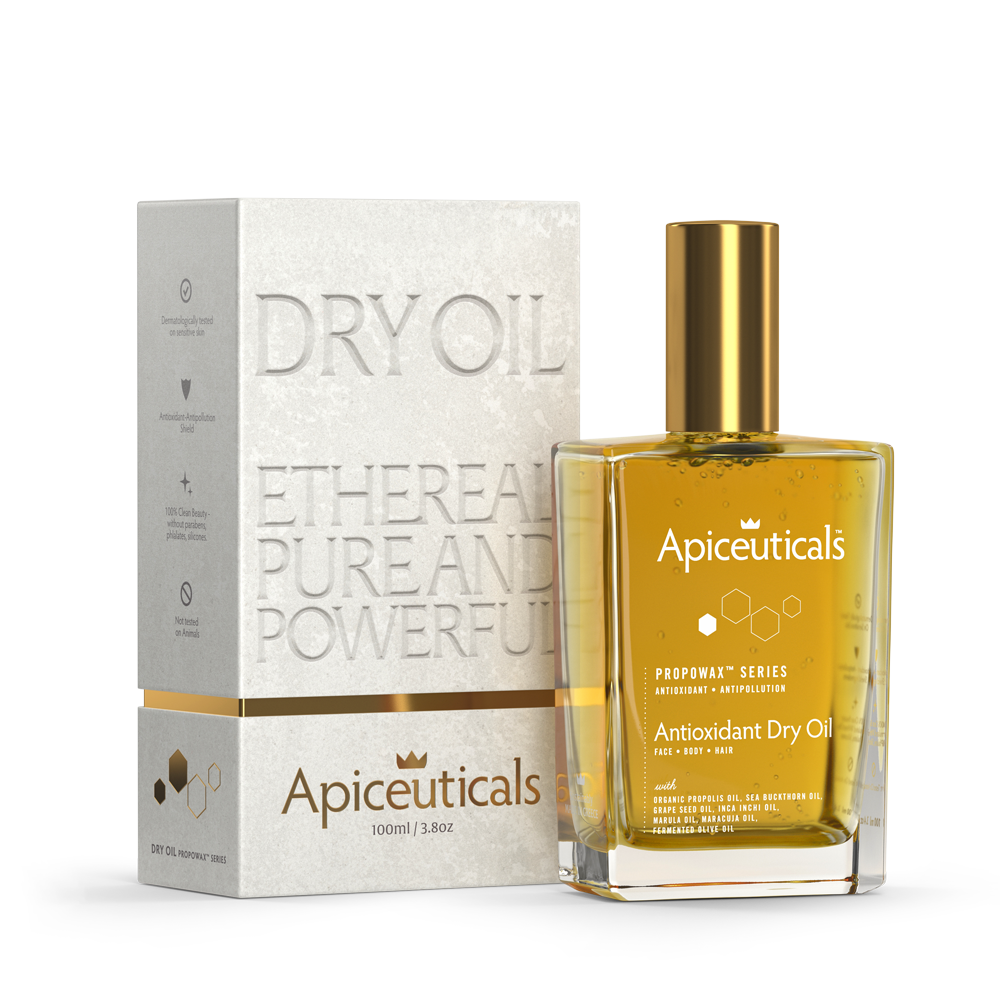
This is the scientific context behind PROPOWAX™ Technology, Apiceuticals’ patented Living Honeycomb delivery system, which holds a global patent for of the highest antioxidant activity in cosmetics, independently validated by the Aristotle University of Thessaloniki. The mechanism is sustained release rather than a single dose on contact.
A delivery system that releases antioxidants continuously, rather than all at once, addresses oxidative insults that recur between washes, supporting lipid-first scalp routines particularly during leave-on serum use and pre-wash oil protection.
Why Most Scalp Advice Skips the Antioxidant Half of the Equation
Most scalp care content treats lipid replacement and oxidative protection as separate categories, one for “dry, flaky scalp” and another for “anti-aging” or “environmental damage.” That split doesn’t hold up against the biology. Lipid peroxidation is actively breaking down the same ceramides and fatty acids a lipid-first routine is trying to restore, so skipping antioxidant support isn’t a minor omission. It’s leaving one half of the repair mechanism unaddressed.

The bigger failure in conventional advice is impatience. People abandon a correct routine at week two because visible comfort hasn’t fully arrived, not realizing that structural lipid recovery runs on a slower clock, typically 4 to 8 weeks, than symptom relief does. Consistency matters more than intensity here. A gentle, low-pH cleanser used every wash for six weeks outperforms an aggressive “reset” treatment used once.
If there’s one priority worth acting on first, it’s removing irritants completely before adding anything new. Layering serums onto a scalp still exposed to sulfates or excessive heat is building on a cracked foundation.
— Apiceuticals
How Apiceuticals Supports a Lipid-First Scalp Routine
Apiceuticals approaches scalp barrier repair the way it approaches every category it formulates for: through sustained antioxidant delivery rather than a single active ingredient chasing one symptom. The brand’s PROPOWAX™ Living Honeycomb technology continuously releases antioxidants onto the scalp, which maps directly onto the replenish and protect phases of the routine outlined above, where oxidative stress needs to be managed between washes, not just during them.

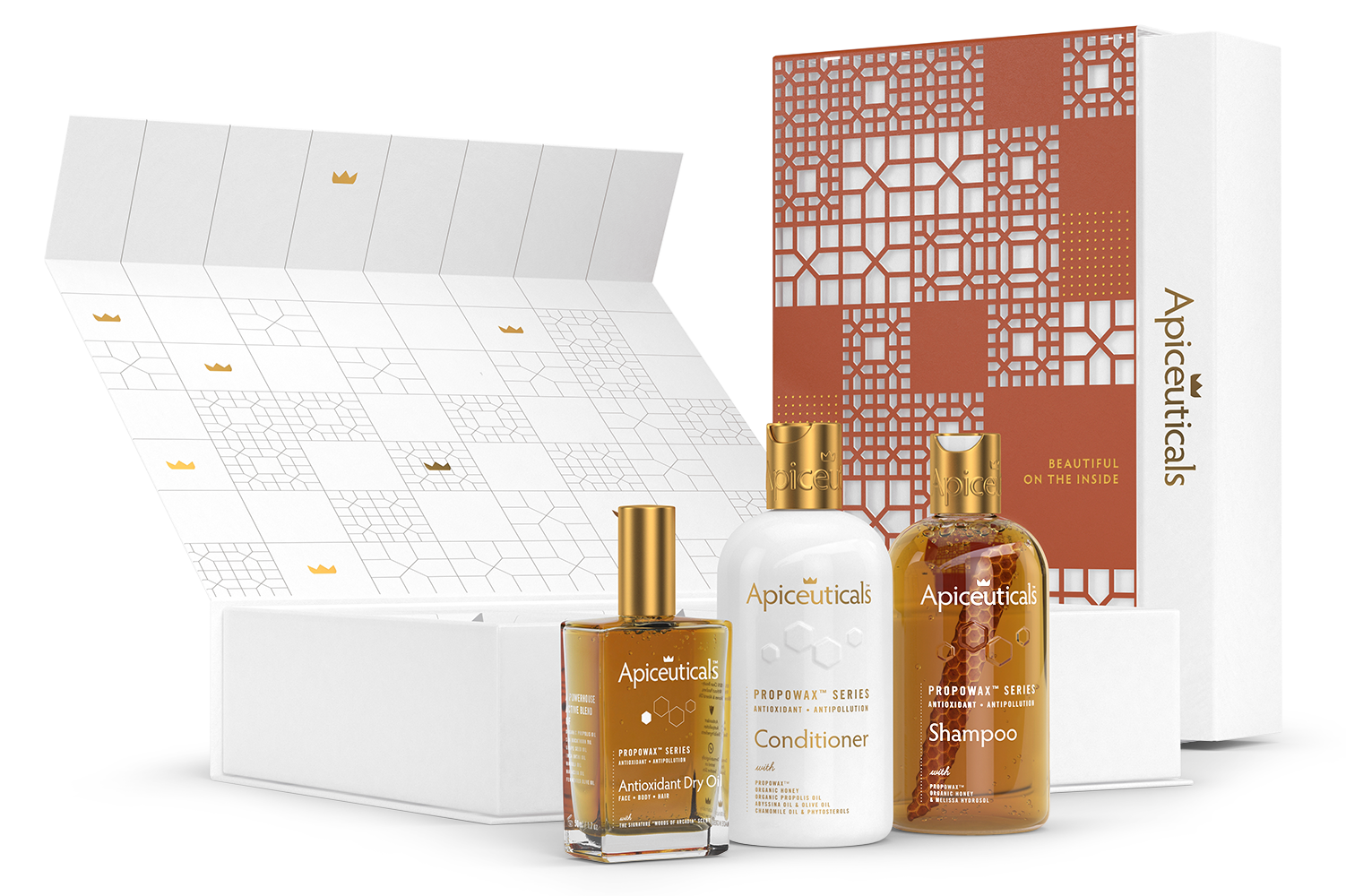
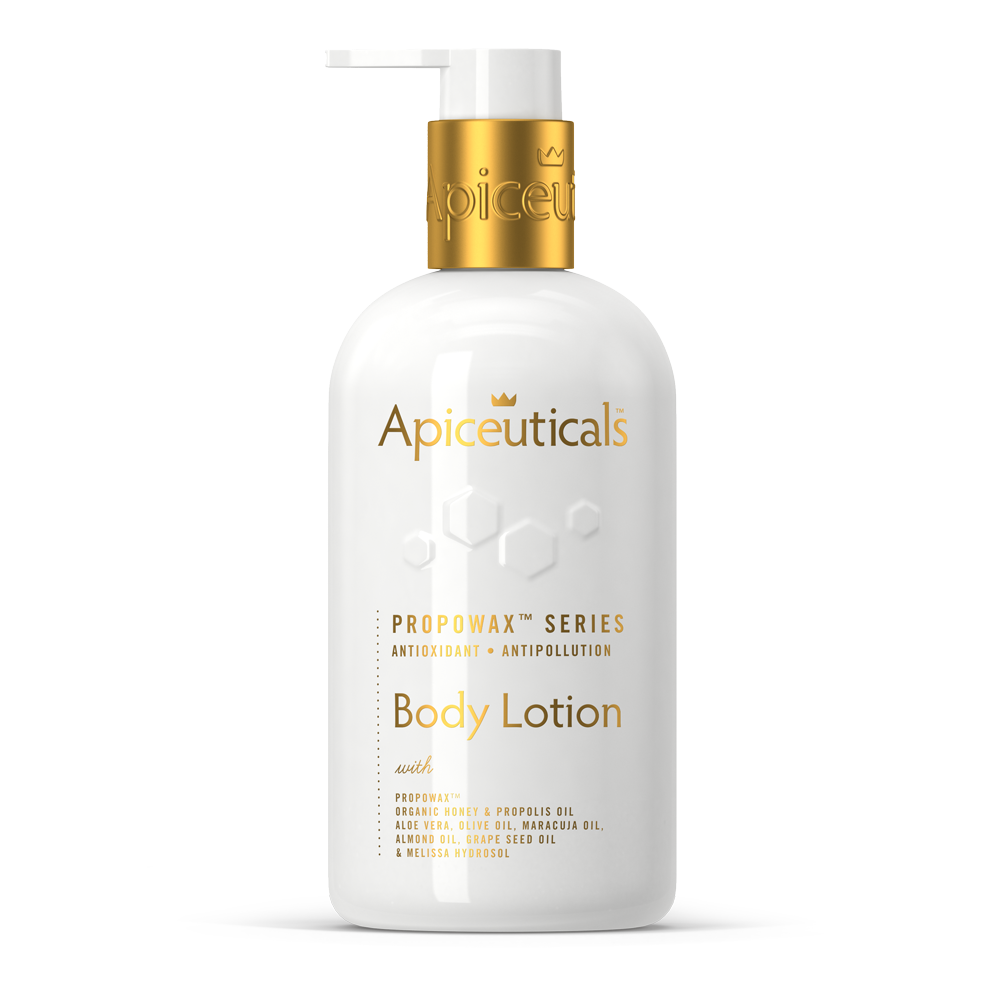
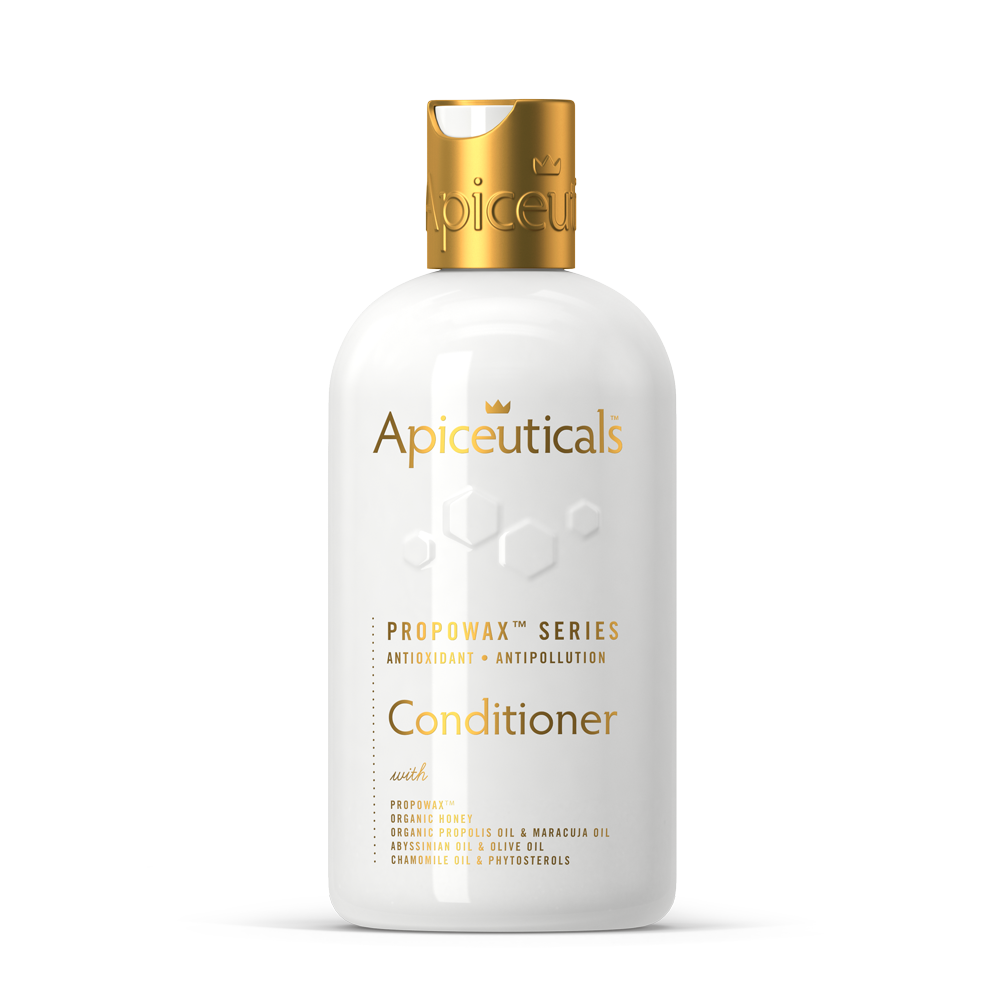
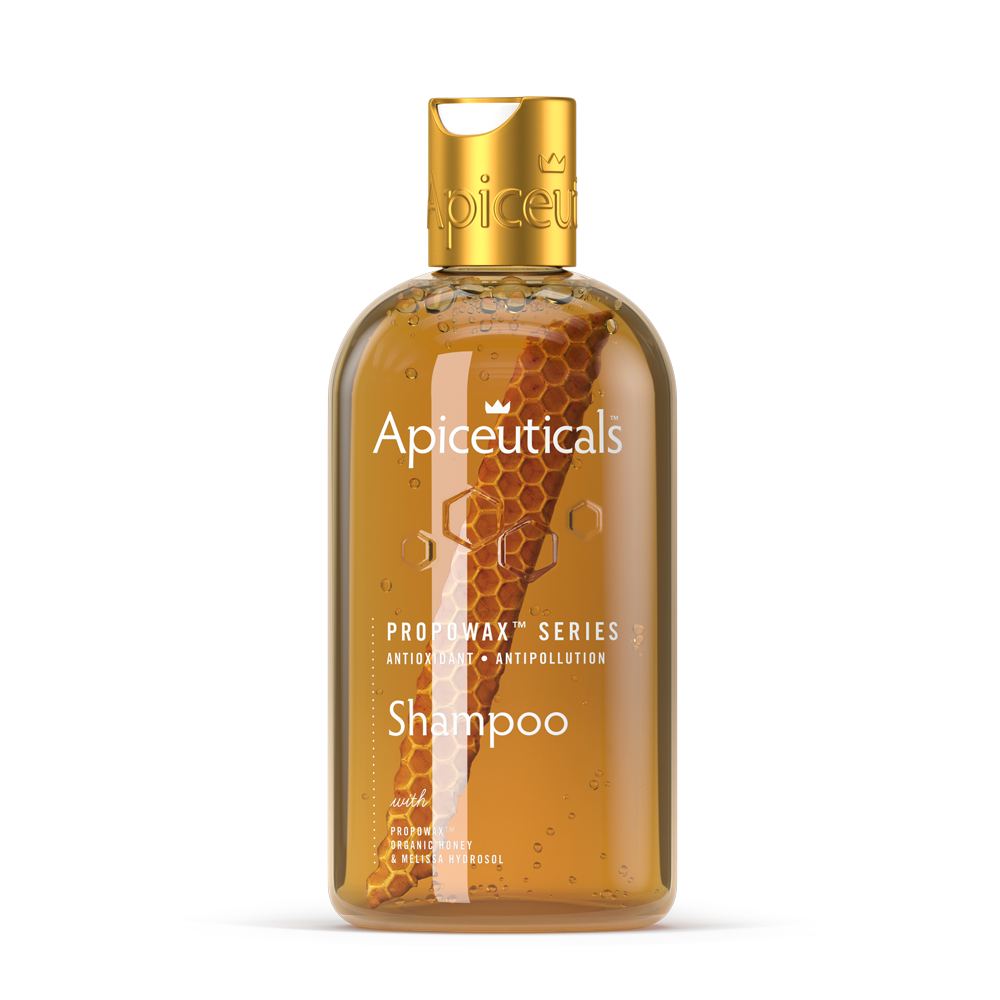
For readers ready to act on this, three steps make sense as immediate next moves. Start with the PROPOWAX™ Antioxidant Shampoo to replace a sulfate-based cleanser without sacrificing the low-pH formulation a compromised barrier needs. Pair it with the Antioxidant Conditioner to support the lipid replenishment phase. Both are available through the Apiceuticals shop, and for scalps showing signs of severe inflammation, crusting, or non-response after several weeks, a dermatologist consultation should run alongside any product routine, not instead of one.
Sources
For deeper clinical context, review the PMC study on scalp oxidative stress, the PMC review on scalp lipid alteration, and the American Academy of Dermatology’s scalp care guidance. Persistent or severe symptoms warrant a professional evaluation rather than continued self-treatment.
This article is general information, not a substitute for advice from a qualified doctor. Consult a qualified healthcare professional about your own circumstances before acting on anything here.
- Role of lipid alteration in scalp disorders — PMC
FAQ
How Do I Fix My Scalp Barrier?
Stop irritating products immediately, switch to a pH-balanced gentle cleanser, and introduce a lipid-replenishing leave-on serum with ceramides and antioxidants; most people notice comfort within 2 to 3 weeks.
What Vitamin Deficiency Causes an Itchy Scalp?
Itching has many possible causes, including barrier dysfunction, contact irritation, and Malassezia overgrowth; if a nutritional link is suspected, a clinician can test for it rather than guessing at supplementation.
How Can I Repair Scalp Damage at Home?
Follow a phased approach: stabilize by removing irritants and using lukewarm water for a week, replenish lipids with pre-wash oil and ceramide serums for several weeks, then hydrate and protect with humectants and light occlusives.
Why Do I Have Crusty Scabs on My Scalp?
Crusty scabs typically signal more advanced barrier breakdown, often combined with inflammation or a secondary irritation; this warrants a dermatologist visit rather than home treatment alone, especially if redness or warmth accompanies it.
How Long Does Scalp Barrier Repair Take?
Visible comfort generally arrives in 2 to 3 weeks, while structural lipid recovery takes about 4 to 8 weeks of consistent, gentle care.
Can Antioxidants Really Help Scalp Barrier Repair?
Yes. Antioxidants reduce the lipid peroxidation that degrades ceramides and fatty acids, which is why sustained-release antioxidant technology like PROPOWAX™ is formulated to work alongside, not instead of, lipid replacement.
Recommended


Related posts

Explore how a trial lasting 24 weeks and Malassezia research link scalp oxidative stress to shedding, and where PROPOWAX™ fits continuous antioxidant care.

See when silicones smooth hair or build up, and how PROPOWAX™ holds a global patent for highest antioxidant activity, validated by Aristotle University.

Explore mountain honey benefits for skin and body, from floral polyphenols and antioxidant activity to evidence on cough relief, wound care, and safe use.

Propolis delivers stronger antioxidant and antimicrobial action. Royal jelly boosts hydration and repair. Learn which suits your skin or scalp and why...

Pick sulfate-free or sulfate shampoo by your scalp, porosity, and color needs. Read evidence-backed guidance, antioxidant options, and a 4-step switch...