No products in the cart.
Return To Shop
Silicone Free Haircare Backed by Record Antioxidant Activity
Silicone-free haircare works well for most people, particularly those with fine or curl-prone hair, because it clears buildup and lets nourishing treatments reach the strand instead of sitting on top of it. Users transitioning off silicones commonly report a transition period where hair may feel drier or tangle more before it settles. A clarifying wash followed by antioxidant-based conditioning, the kind built on Apiceuticals’s PROPOWAX™ delivery system, tends to restore shine and manageability without the film silicones leave behind.
TL;DR:
- Fine and curl-prone hair benefit most from silicone-free products because they prevent buildup and improve moisture penetration.
- Water-resistant silicones like dimethicone can accumulate over weeks if not clarified, leading to dullness and heaviness.
- Transitioning off silicones involves a clarifying wash, immediate hydrating treatment, and reducing heat styling for about two weeks.
- Ingredient labels should be examined for water-soluble alternatives like botanical esters, rather than relying solely on “silicone-free” claims.
- Continuous antioxidant delivery systems, such as PROPOWAX™, protect the cuticle from oxidative damage, enhancing shine and manageability long-term.
Table of Contents
- What Are Silicones and How Do They Coat Hair?
- Silicones: What They Give You and What They Take Away
- Who Benefits Most From Going Silicone-Free?
- What Should You Look for on a Silicone-Free Label?
- Can Antioxidants Really Replace What Silicones Do?
- Building a Silicone-Free Routine That Actually Works
- Why Apiceuticals Prioritizes Antioxidants Over Silicones
- Where to Start With Antioxidant, Silicone-Free Haircare
- Sources
- FAQ
What Are Silicones and How Do They Coat Hair?
Silicones are synthetic polymers, and dimethicone is the most common one you will find on an ingredient label. They work by forming a thin film around each strand, filling in raised cuticle scales the way spackle fills cracks in plaster. That film is what makes silicone-treated hair feel instantly smoother and look glossier under light, since a flatter cuticle reflects light more evenly than a rough one, according to Medical News Today.
Not all silicones behave the same way once they land on hair. Some are water-soluble and rinse away easily with a normal wash; others are water-resistant and were engineered to survive rain, humidity, and repeated shampooing, which is exactly what makes them harder to remove, per Byrdie.
- Water-soluble silicones wash out with a standard cleanse, leaving little residue over time.
- Water-resistant silicones (like non-water-soluble dimethicone) accumulate with repeated use, especially without a clarifying step.
- Cuticle coating from either type temporarily increases shine and reduces friction between strands, which is why hair feels slippery right after application.
Silicones: What They Give You and What They Take Away
Silicones earn their popularity honestly. They deliver real, immediate benefits: smoother detangling, more visible shine, reduced frizz in humidity, and easier styling, since the coating cuts down on strand-to-strand friction. For a lot of people, that trade-off feels worth it.
The drawbacks show up more slowly. Water-resistant silicones build up layer by layer, and fine hair in particular starts to look flat and feel heavier within a few weeks. That coating can also block moisture and active ingredients from penetrating the cuticle, which matters if you are using a treatment meant to repair rather than just disguise damage.
- Pros: shine, slip for detangling, frizz control, easier blow-drying.
- Cons: buildup on fine or low-porosity hair, a weighed-down feel, reduced penetration of moisturizing or repair ingredients.
Silicones are not unsafe. Consumer reviewers on mindbodygreen have observed that hair can look shinier under silicones while still feeling under-conditioned underneath the film, an example of the cosmetic mismatch that pushes many people toward silicone-free styling products. The issue is cosmetic and cumulative, not toxicological.
Who Benefits Most From Going Silicone-Free?
Fine hair and many curl types are the clearest candidates for silicone-free haircare, since both are especially prone to visible buildup and both rely on effective moisture penetration to look and behave their best. If your hair feels increasingly dull, heavy, or resistant to styling changes despite trying new products, silicone residue is a common, overlooked cause. People with very dry, coarse, or chemically processed hair who value manageability above all else may prefer to keep a lightweight, water-soluble silicone in rotation rather than exclude silicones entirely.
The switch comes with a predictable adjustment window. As residue lifts, hair often feels drier and tangles more before your natural texture and any new conditioning ingredients take over, a pattern documented in transition accounts collected by SEPPIC. This is temporary, and it responds well to a specific sequence.
- Clarify once with a dedicated clarifying shampoo to strip existing residue completely.
- Hydrate immediately after with a rich mask, since clarifying strips both silicone and some natural oils.
- Reduce heat styling for one to two weeks while the cuticle recalibrates.
- Mask twice weekly for the first month, then taper to weekly maintenance.
Pro Tip: Do the clarifying wash the night before a low-maintenance day. Freshly clarified hair looks its roughest right before it looks its best.
What Should You Look for on a Silicone-Free Label?
Reading a label well matters more than trusting a “silicone-free” claim printed on the front of the bottle. Ingredient databases like EWG SkinDeep list dimethicone under several related names, and the same family shows up as cyclomethicone, dimethiconol, or anything ending in “cone” or “conol.” Scan the ingredient list itself, not just the marketing copy.
Beyond ruling out silicones, look for what actually replaces their function. Water-soluble conditioning agents, lightweight plant esters, and gentle surfactants (the kind you would also expect in a sulfate-free shampoo) do the detangling and cleansing work without leaving residue behind.
- Check for water-soluble conditioning agents rather than waxes or heavy oils as the primary smoothing ingredient.
- Favor lightweight esters (jojoba-derived, for example) over mineral oil or petrolatum for slip.
- Match the product to your goal: volumizing formulas for fine hair, richer smoothing formulas for coarse or curly textures.
- Editorial roundups, including one from The Guardian, consistently pair silicone-free claims with sulfate-free positioning, since the two often travel together in reformulated lines.
Can Antioxidants Really Replace What Silicones Do?
Shine without a silicone film is possible, but it comes from a different mechanism entirely. Instead of coating the strand, botanical lipids and lightweight esters fill in cuticle gaps at a molecular level, restoring a smoother surface that reflects light the way healthy, undamaged hair naturally does. Practitioners writing for mindbodygreen note this produces a reflective finish distinct from the flatter, more static gloss a silicone film creates.
Antioxidants add a second layer to this. Styling heat, UV exposure, and pollution generate oxidative stress on the hair shaft, similar to rust slowly corroding metal, and that stress roughens the cuticle over time. Reducing it protects the surface that gives hair its shine in the first place, and can also help topical treatments penetrate rather than deflect off a damaged cuticle.
Apiceuticals’s PROPOWAX™ technology approaches this directly. It is a patented Living Honeycomb structure, built into the product itself, that continuously releases antioxidants onto the scalp and hair surface rather than delivering a single dose that fades after rinsing. The approach holds the global patent for and the highest antioxidant activity recorded in cosmetics, independently validated by the Aristotle University of Thessaloniki.
Antioxidant delivery systems that continuously release actives to the hair surface can improve measurable shine and manageability over time by protecting the cuticle and reducing oxidative damage from styling, rather than masking it with a temporary coating.
- Botanical lipids like propolis rebuild surface smoothness gradually rather than instantly.
- Continuous-release antioxidants address oxidative roughening at the source instead of covering it.
- Lightweight oils, used sparingly, add slip without recreating the buildup silicones cause.
Building a Silicone-Free Routine That Actually Works
A workable silicone-free routine follows a rhythm, not a single swap. The sequence below assumes hair that has already gone through its initial clarifying transition.
- Clarify every two to four weeks, depending on product use and water hardness, to prevent any residue (including from oils) from re-accumulating.
- Cleanse with a gentle, sulfate-free shampoo between clarifying sessions to maintain scalp balance without stripping.
- Condition with a water-soluble formula, such as an antioxidant conditioner, focused on mid-lengths and ends.
- Apply a leave-in antioxidant treatment on damp hair before styling to support cuticle smoothness through the day.
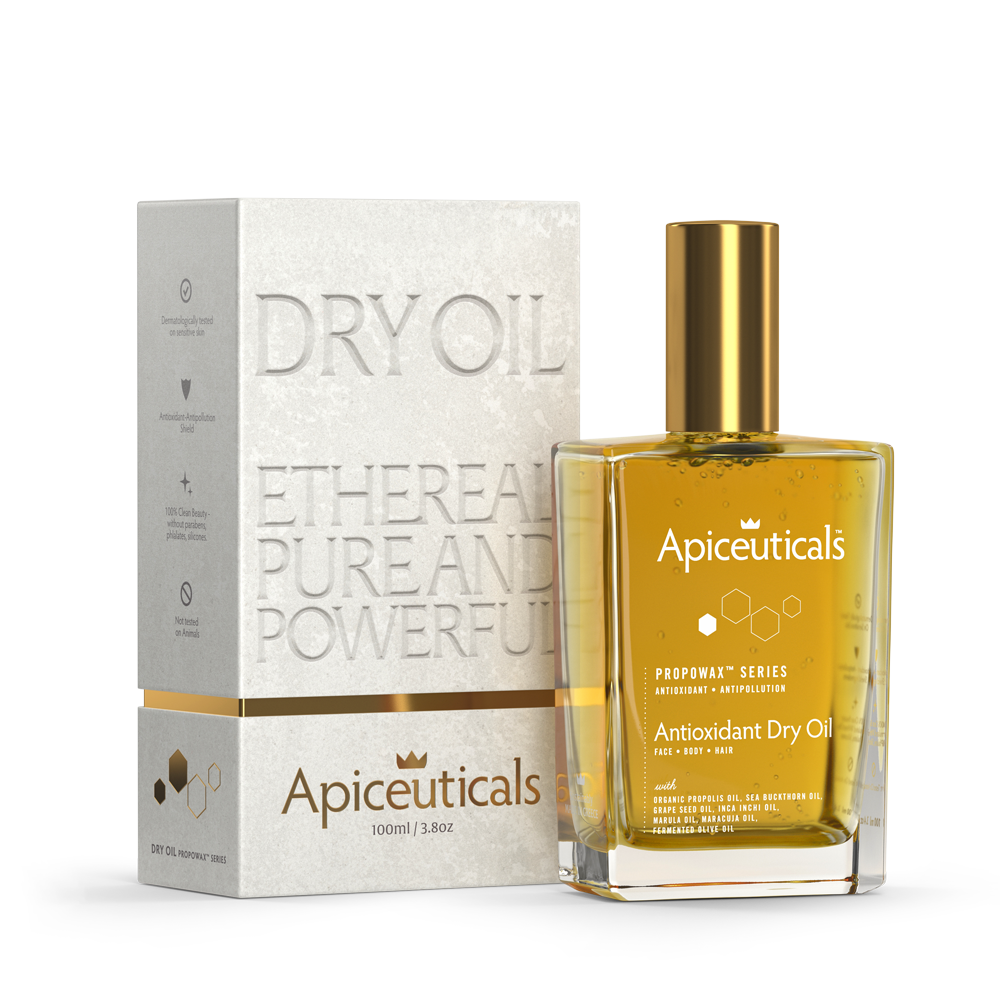
- Finish with a lightweight styling oil, like an antioxidant dry oil, applied sparingly to avoid weighing hair down.
Adjust frequency based on texture. Fine hair typically needs lighter, less frequent conditioning; coarse or curly hair usually needs richer masks weekly, alongside a lighter daily leave-in.
Why Apiceuticals Prioritizes Antioxidants Over Silicones
Apiceuticals was built on a different premise than most haircare brands: that hair surface quality is a biological question before it is a cosmetic one. That premise traces back to the Roumeliotis family’s beekeeping heritage in Arcadia since 1981, and it shaped a brand built around what bee-derived compounds can do for skin and hair rather than what a polymer film can temporarily disguise.
Silicones solve a surface problem with a surface solution. Antioxidants solve it closer to the source, by reducing the oxidative wear that roughens the cuticle in the first place. PROPOWAX™’s global patent for antioxidant activity, validated by researchers at the Aristotle University of Thessaloniki, exists because that continuous, low-dose antioxidant release measurably outperforms single-application approaches. That is a scientific claim, not a marketing one, and it is why Apiceuticals treats antioxidant strategy as the foundation of a silicone-free routine rather than an afterthought to it.
Readers curious about the mechanism behind this can explore how antioxidants support clean beauty formulation in more depth.
— Apiceuticals
Where to Start With Antioxidant, Silicone-Free Haircare
Apiceuticals formulates its haircare line entirely without silicones, sulfates, parabens, or mineral oils, built instead around the patented PROPOWAX™ Living Honeycomb, the antioxidant delivery system validated by the Aristotle University of Thessaloniki and the highest antioxidant activity recorded in cosmetics.

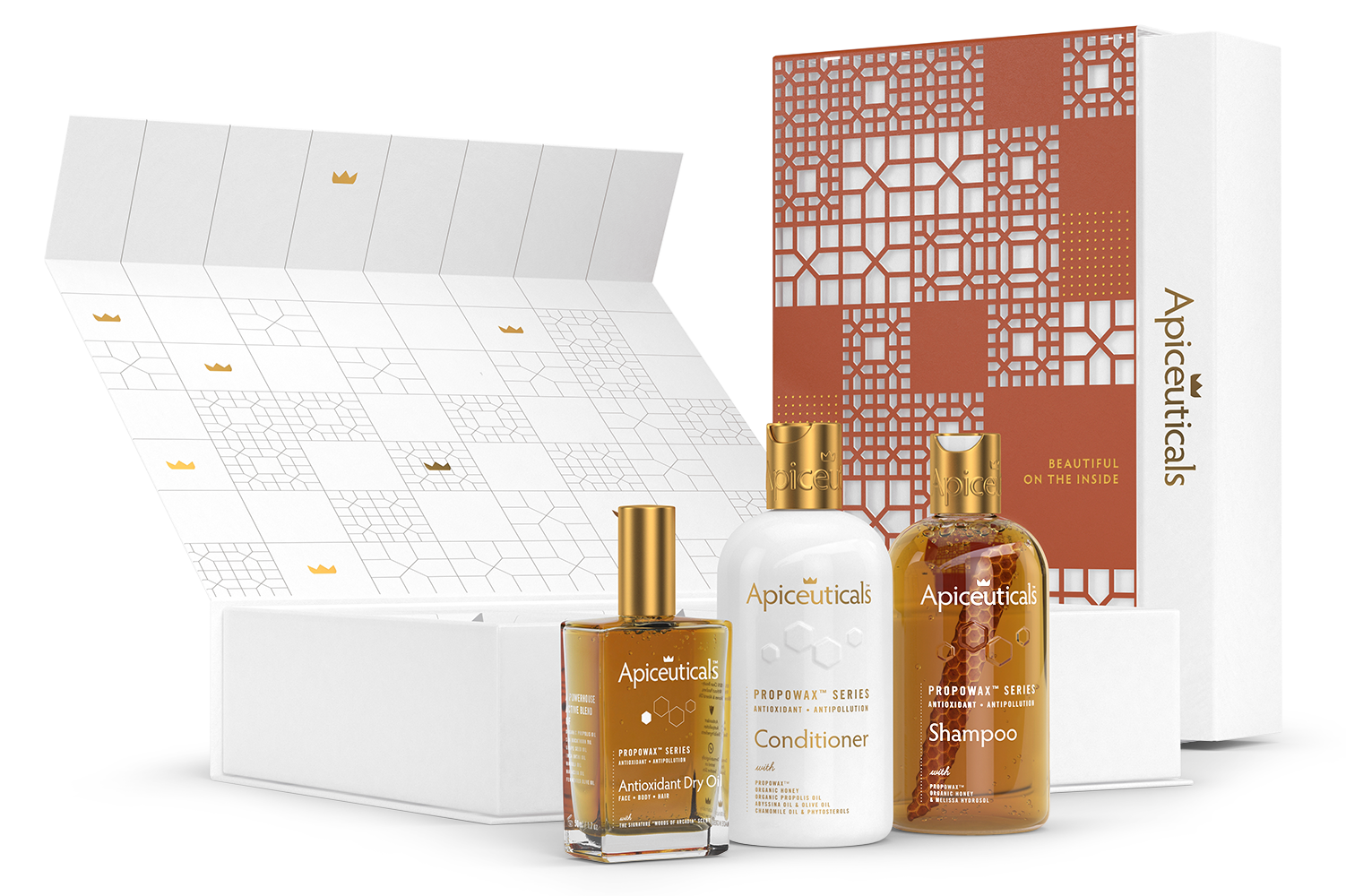
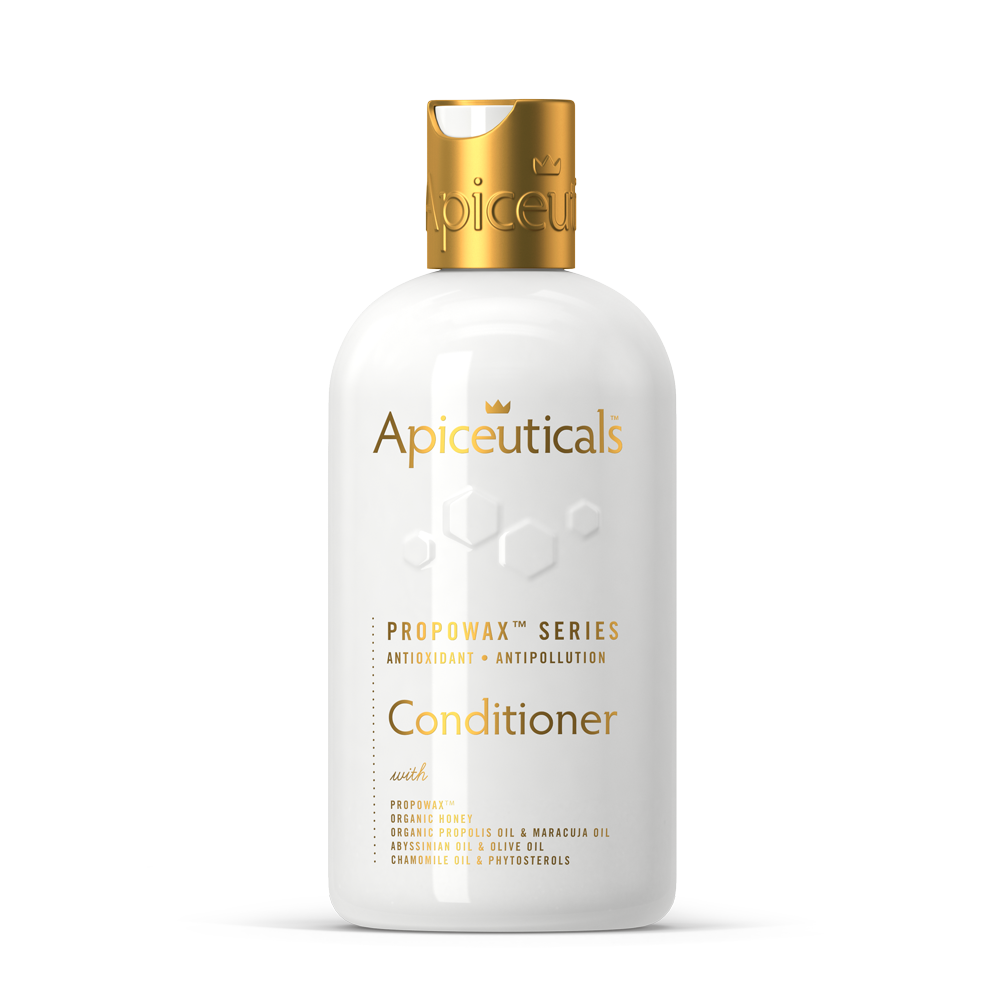
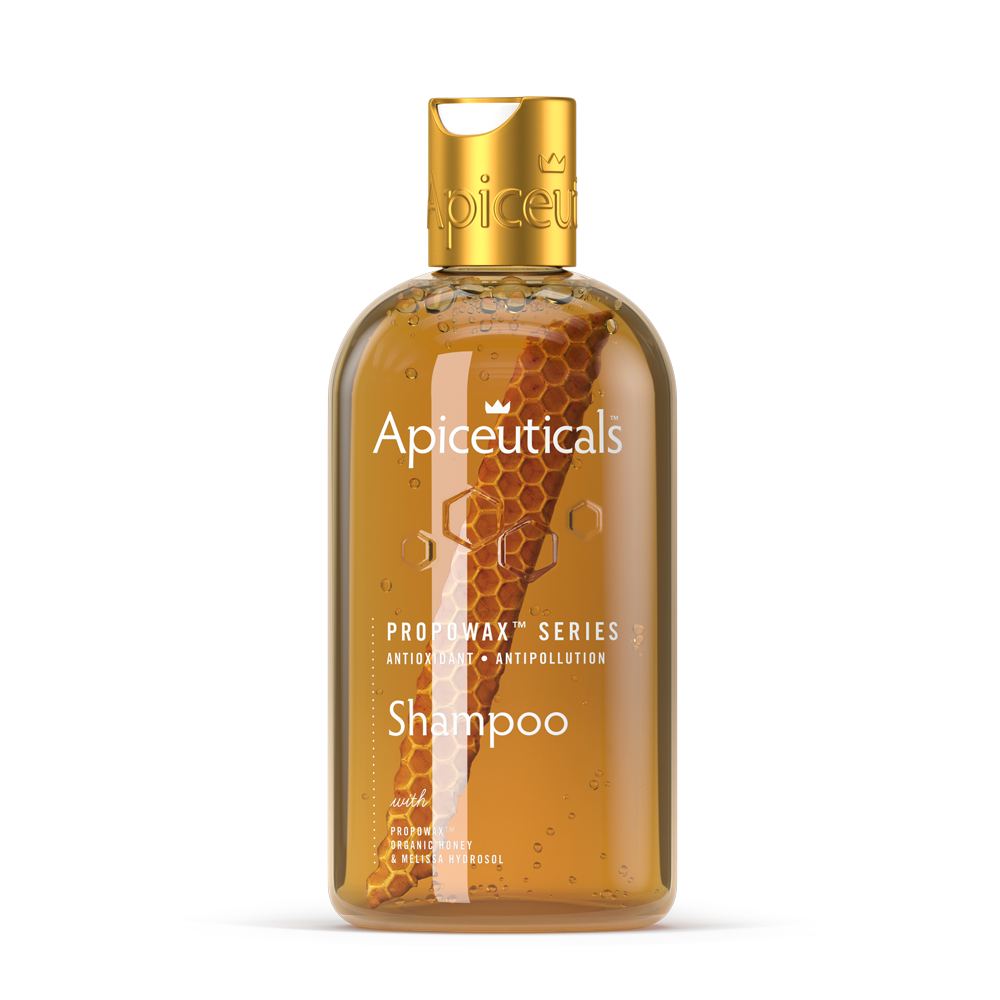
Three places to start: the Antioxidant Shampoo covers daily cleansing without residue buildup, the Antioxidant Conditioner handles water-soluble conditioning for mid-lengths and ends, and the Antioxidant Dry Oil finishes styling with shine that comes from cuticle repair rather than a film. For the science behind why continuous antioxidant release outperforms a single application, the antioxidants and clean beauty overview walks through the research in plain terms. Start with the shampoo and conditioner pair if you are mid-transition off silicones, and add the dry oil once your cuticle has settled.
Sources
- Dimethicone: What it is and how it affects hair — Medical News Today
- Natural silicone alternative and transition issues — SEPPIC
- Tried-and-tested: best silicone-free styling products — mindbodygreen
- Yes, Sulfate-Free Shampoos and Conditioners Are Worth the Switch — Allure
FAQ
Which hair products are silicone-free?
Products labeled without dimethicone, cyclomethicone, or dimethiconol on the ingredient list qualify, and lines built around water-soluble conditioners and antioxidant treatments, including Apiceuticals’s PROPOWAX™ haircare, are formulated this way from the start.
Is silicone-free good for your hair?
For fine hair and many curl types, yes, since it prevents buildup and lets moisture and active ingredients reach the cuticle rather than sitting on top of a polymer film.
What are the best hair products that don’t contain silicone?
The strongest options pair a water-soluble conditioning base with botanical lipids or antioxidant treatments, since these restore shine through cuticle repair instead of a temporary coating.
What is the best non-silicone shampoo?
Look for a sulfate-free, silicone-free formula built around gentle surfactants and antioxidant support, which cleanses without stripping natural oils or leaving residue behind.
Will my hair feel worse before it feels better after switching?
Yes, expect a short detox period of dryness or tangling as residue clears, typically resolved within one to two weeks with a clarifying wash followed by consistent hydrating care.
How often should I clarify in a silicone-free routine?
Every two to four weeks works for most routines, though this depends on water hardness and how much product, including oils, you use between washes.
Recommended


Related posts

Explore how a trial lasting 24 weeks and Malassezia research link scalp oxidative stress to shedding, and where PROPOWAX™ fits continuous antioxidant care.

See when silicones smooth hair or build up, and how PROPOWAX™ holds a global patent for highest antioxidant activity, validated by Aristotle University.

Explore mountain honey benefits for skin and body, from floral polyphenols and antioxidant activity to evidence on cough relief, wound care, and safe use.

Propolis delivers stronger antioxidant and antimicrobial action. Royal jelly boosts hydration and repair. Learn which suits your skin or scalp and why...

Pick sulfate-free or sulfate shampoo by your scalp, porosity, and color needs. Read evidence-backed guidance, antioxidant options, and a 4-step switch...