
No products in the cart.
Return To Shop
Step by Step Body Exfoliation for Smoother Skin
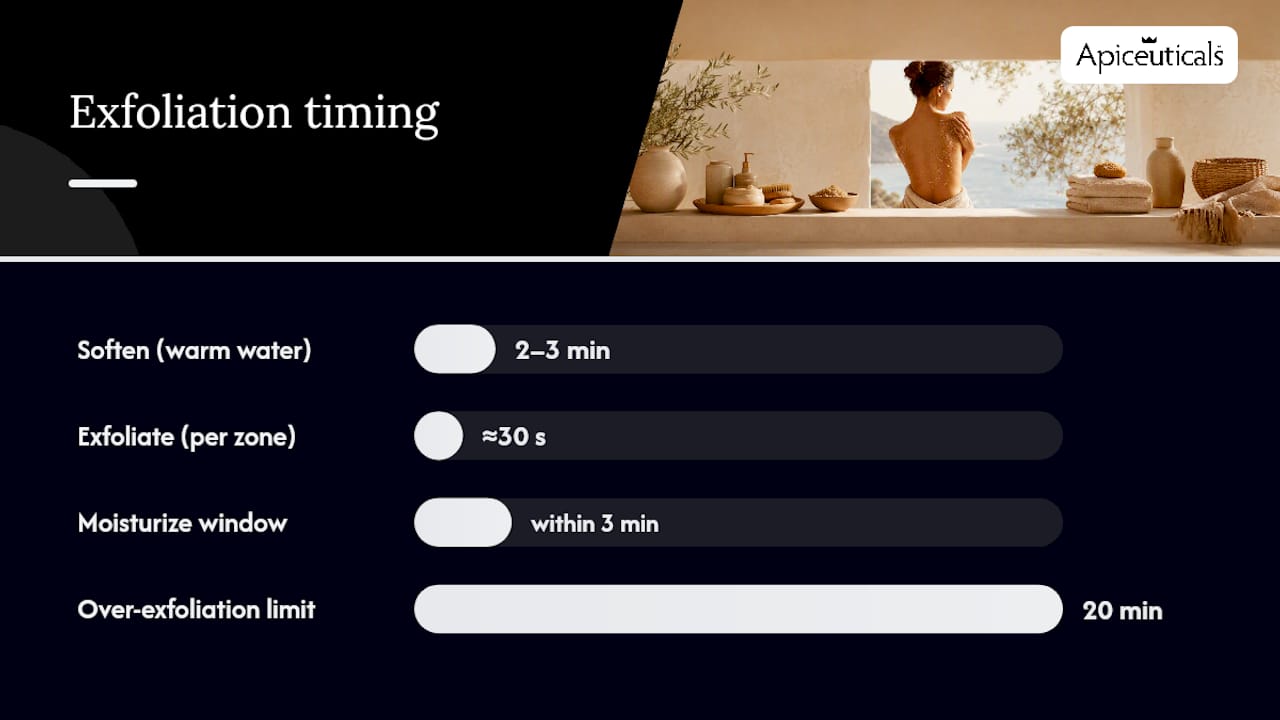
A complete step by step body exfoliation routine runs in this order: (1) dry-brush optionally on dry skin, (2) soften under warm water for 2–3 minutes, (3) cleanse with a gentle body wash, (4) apply your scrub or chemical exfoliant and work in small circular motions per zone, (5) rinse with lukewarm water followed by a brief 10-second cool rinse, (6) pat skin damp and moisturize within three minutes, and (7) apply sunscreen to any area that will be exposed to sun. Two safety rules apply before you begin: never exfoliate over sunburned skin or open wounds, and match your method to your skin type — sensitive or dry skin calls for gentler options than oily or thicker skin. The PROPOWAX™ Living Honeycomb aftercare science explained later in this article shows why that final moisturizing step is more than habit.
Table of Contents
- Step by Step Body Exfoliation: The Full At-Home Routine
- Mechanical vs. Chemical Exfoliation: Which Method Suits Your Skin?
- DIY Body Scrub Recipes and What to Avoid
- What Tools and Products Work Best at Home?
- How Often Should You Exfoliate, and When Should You Stop?
- Why Antioxidants Belong in Your Post-Exfoliation Routine
- Sources
- FAQ
Step by Step Body Exfoliation: The Full At-Home Routine
The sequence matters more than the product. Skin that has been softened by warm water accepts a scrub with far less friction than dry skin does, which is why the warm-soak step is non-negotiable rather than optional. Practical sequencing research confirms that two to three minutes under warm water before applying any scrub reduces irritation risk and produces perceptibly better texture results within a couple of sessions.
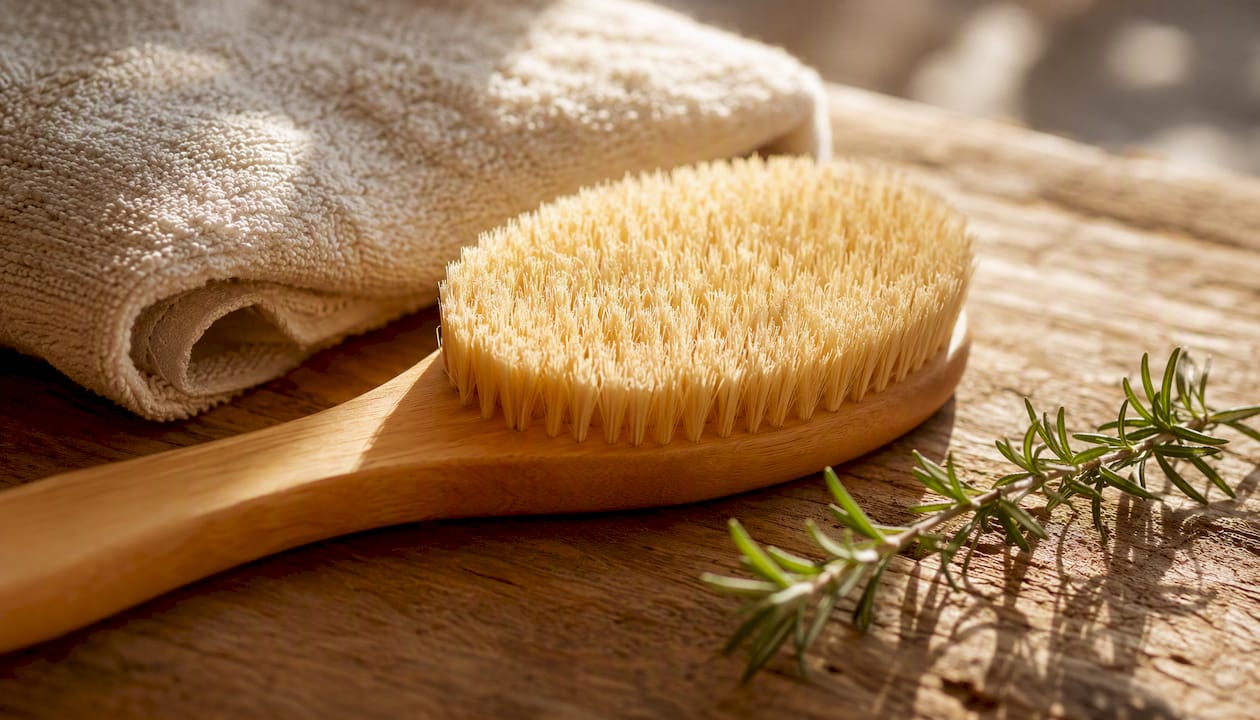
Step 1: Optional dry brushing (2 minutes on dry skin)
Use a soft-bristled dry brush on completely dry skin before you enter the shower. Work in long strokes toward the heart, starting at the feet. This step is optional but useful for rough zones like shins and upper arms. Skip it entirely if your skin is sensitive or reactive.
Step 2: Warm soak (2–3 minutes)
Step into a warm shower and let water run over your body for a full two to three minutes. The goal is to soften the outermost layer of dead cells so the exfoliant can do its work with minimal pressure. Hot water is counterproductive — it strips the skin barrier before you even begin.
Step 3: Cleanse first
Apply a gentle body wash and rinse before reaching for your scrub. Cleansing removes surface oils, sweat, and product residue that would otherwise dilute or contaminate the exfoliant. A clean surface lets the granules or acids contact skin directly.
Step 4: Apply the exfoliant, zone by zone
Step slightly aside from the running water so you are not rinsing the product off as you apply it. Use your hands rather than a loofah at this stage — hands give you better pressure control. The AAD recommends small circular motions for about 30 seconds per zone, with light, consistent pressure (avoid pressing hard). Let the grit or the acid do the work rather than pressing harder.
Zone-specific notes:
- Knees, elbows, and heels: Skin here is thicker but also prone to micro-tears from over-pressing. Use gentle, shorter passes — 20 to 30 seconds — and resist the temptation to scrub aggressively.
- Torso and back: Moderate circular motions, 30 seconds per area. A long-handled soft brush helps reach the center of the back.
- Underarms and groin: Very gentle or skip physical scrubs entirely here; the skin is thin and friction-sensitive. A mild chemical exfoliant (low-concentration lactic acid) is a better choice.
- Shaved skin: Wait at least 24 hours after shaving before exfoliating to avoid stinging and barrier disruption.
- Face: Excluded from body scrub application. The face warrants its own targeted exfoliation routine with gentler formulations.
Step 5: Rinse thoroughly (lukewarm, then brief cool)
Rinse with lukewarm water until no granules or product remain. Follow with roughly 10 seconds of cooler water — this helps close the pores and calm any surface reactivity from the exfoliant.
Step 6: Pat damp and moisturize within three minutes
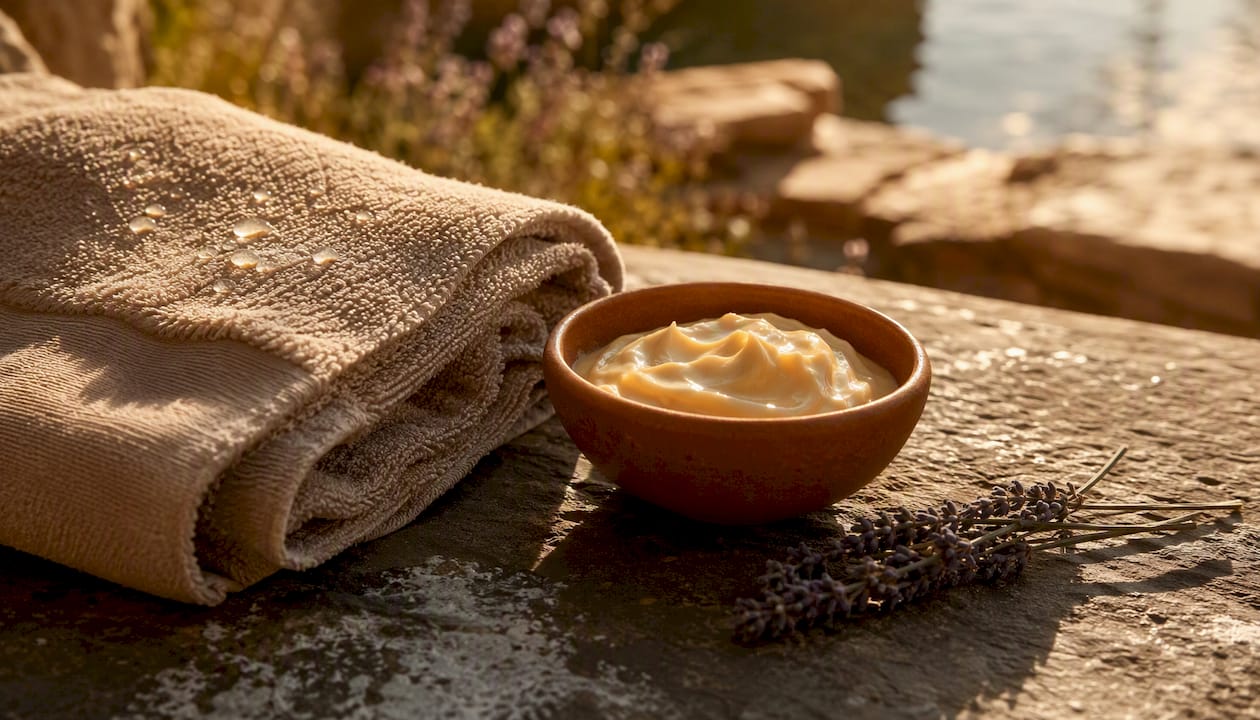
Do not rub dry. Pat skin with a clean towel until it is damp but not dripping, then apply your moisturizer or body oil immediately. The three-minute window is real: damp skin absorbs humectants and emollients far more efficiently than fully dry skin does. An antioxidant body lotion applied at this stage delivers measurably more active benefit than the same product applied ten minutes later.
Step 7: Sunscreen on exposed areas
Freshly exfoliated skin is more photosensitive. After body treatments and exfoliation, sunscreen is the essential final step, with mineral formulations particularly recommended for post-treatment skin. Apply SPF 30 or higher to any area that will see daylight.
Pro Tip: If your skin turns bright red during application — not the mild pink of increased circulation, but a vivid, uniform flush — stop immediately, rinse with cool water, and skip that zone for the session. Redness that persists beyond 20 minutes after rinsing is a signal to reduce frequency or switch to a gentler method.
Mechanical vs. Chemical Exfoliation: Which Method Suits Your Skin?
The choice between mechanical and chemical exfoliation is not a matter of preference alone — it is a clinical decision shaped by skin type, condition, and the body zone being treated.
Mechanical exfoliation uses physical abrasion: scrubs, brushes, washcloths, and mitts physically dislodge dead cells from the surface. The result is immediate smoothing and a visible improvement in skin luster. The trade-off, as Harvard Health notes, is that mechanical methods can aggravate inflammation, particularly for sensitive, dry, or darker skin tones where aggressive abrasion raises the risk of post-inflammatory hyperpigmentation.
Chemical exfoliation uses acids or enzymes — alpha-hydroxy acids (AHAs) such as glycolic and lactic acid, beta-hydroxy acids (BHAs) such as salicylic acid, and fruit-derived enzymes like papain. These work at a micro-level, dissolving the bonds between dead cells rather than scraping them off. For irritation-prone skin, clinicians often prefer this route precisely because it requires no friction. The AAD frames the choice around skin type: dry or sensitive skin may tolerate mechanical exfoliation poorly, while oilier or thicker skin can often handle stronger options.
Practical body-zone guide:
- Thighs, shins, upper arms: Generally tolerate gentle mechanical scrubs well.
- Heels and elbows: Benefit from mechanical exfoliation but require light pressure and short passes.
- Chest and décolletage: Skin here is thin and sun-exposed; low-concentration AHAs (lactic acid 5–10%) are preferable.
- Inner thighs and groin: Chemical or very mild mechanical only.
- Back: Moderate mechanical with a long-handled brush works for most skin types.
Patch-test protocol for chemical exfoliants: Apply a small amount to the inner forearm. Wait 24 hours. If no redness, stinging, or swelling appears, extend to 48 hours before full application. Discontinue if any reaction develops.
Dos and don’ts when combining methods with other actives:
- Do not use a physical scrub on the same day you apply a retinoid or high-concentration AHA.
- Do not layer a BHA chemical exfoliant directly over a freshly scrubbed area.
- Do allow 48 hours between aggressive chemical exfoliation and any mechanical method on the same zone.
- Do consult a dermatologist before exfoliating if you have eczema, psoriasis, or active skin infections — these conditions require professional guidance. Readers with sensitive or reactive skin will also find science-backed strategies for soothing sensitive skin useful before starting any new exfoliation protocol.
DIY Body Scrub Recipes and What to Avoid
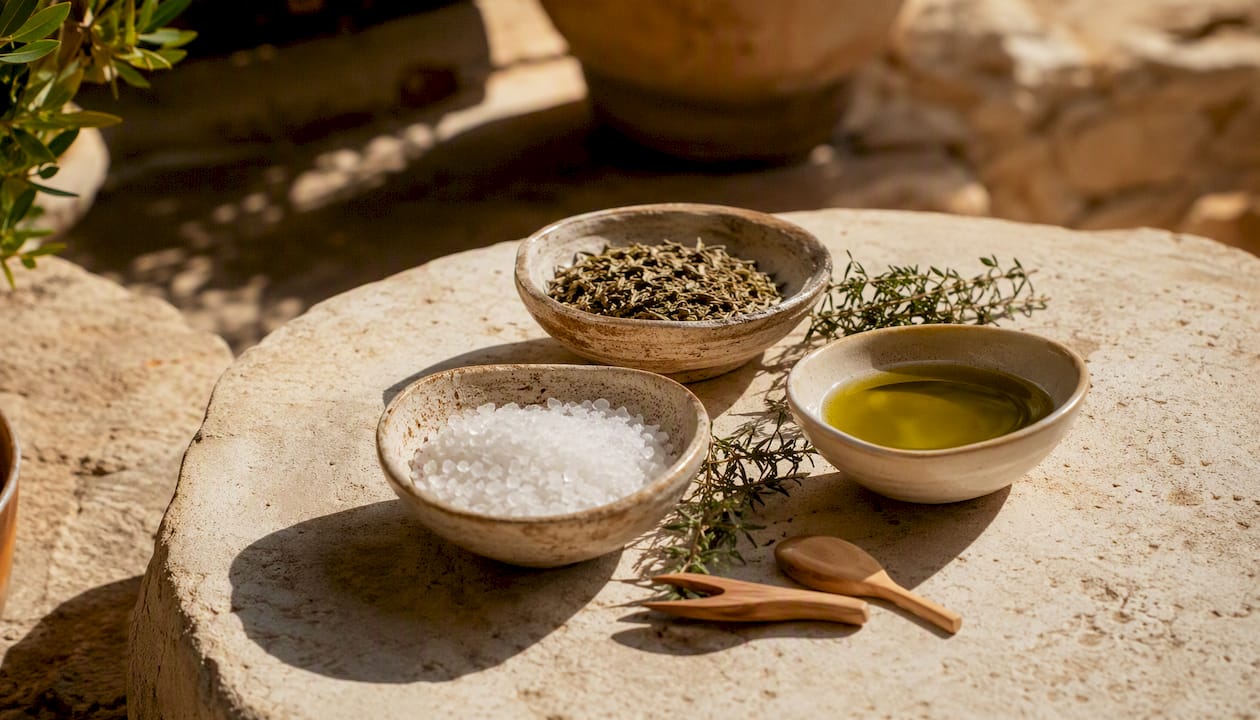
Pantry-based scrubs are a practical option for home exfoliation, and Greece’s kitchen staples — olive oil, sea salt, coffee, and raw sugar — map well onto the three main recipe categories. The key is ratio: too little oil and the granules abrade rather than glide; too much and the exfoliant effect is negligible.
Recipe 1: Brown sugar and olive oil (gentlest)
Combine two parts brown sugar with one part extra-virgin olive oil. Brown sugar dissolves as it contacts warm, wet skin, which naturally limits abrasion depth. This makes it the safest starting point for first-timers and anyone with mild sensitivity. Healthline confirms that brown sugar tends to be gentler than sea salt, making it the preferred granule for beginners.
Recipe 2: Coffee grounds and carrier oil (medium intensity)
Combine two parts used coffee grounds with one part oil (olive, almond, or jojoba). Coffee grounds are a commonly used gentle granule with a firm but rounded particle shape that exfoliates without sharp edges. The caffeine content may temporarily improve circulation in the skin surface. Use within 48 hours of brewing to avoid bacterial growth in the mixture.
Recipe 3: Fine sea salt and olive oil (use with caution)
Combine equal parts fine sea salt and olive oil. Salt crystals are harder and more angular than sugar or coffee, so this recipe suits thicker-skinned zones like heels only. Never use coarse rock salt or large crystal salt on the body — the particle size creates micro-lacerations rather than exfoliation.
Adjusting texture: More oil produces a gentler, more slip-heavy scrub; less oil increases abrasion. For dry skin, err toward a 1:1 oil-to-granule ratio. For normal to oily skin, a 1:2 ratio gives more active exfoliation.
What to avoid in DIY scrubs:
- Coarse rock salt or Himalayan large-crystal salt on body skin
- Walnut shell powder or apricot kernel particles — irregular, sharp edges cause micro-tears
- Abrasive household products (baking soda at high concentration, cleaning-grade powders)
- Applying any DIY body scrub to the face
- Using a scrub over sunburned skin, open wounds, or active breakouts
- Mixing a strong acid (apple cider vinegar, citrus juice) with an abrasive granule in the same application — the combined irritation potential is unpredictable
Patch test every new DIY recipe on the inner forearm before full-body use. For DIY scrubs, once or twice weekly is a reasonable starting frequency; reduce to once weekly if any redness or tightness persists between sessions.
What Tools and Products Work Best at Home?
The tool shapes the outcome as much as the product does. A soft-bristled dry brush used correctly on dry skin before showering is one of the most effective mechanical tools available — it stimulates surface circulation and loosens dead cells without requiring any product at all. Choose one with natural bristles rated soft to medium; stiff bristles are for floors, not skin.
Tool guide:
- Soft washcloth: The most accessible option. Effective for gentle daily or every-other-day exfoliation on normal skin. Replace weekly.
- Silicone body brush: Hygienic (does not harbor bacteria the way natural fibers do), gentle, and easy to clean. A good choice for sensitive skin.
- Loofah: Effective but requires strict hygiene — replace every three months and allow to dry completely between uses to prevent bacterial colonization.
- Body mitt (exfoliating glove): Gives good surface coverage and pressure control. Wash after every use; replace every three months.
- Long-handled brush: Practical for the back and posterior thighs. Choose soft to medium bristle density.
Product textures by skin type:
- Sugar scrubs: gentle, dissolve on contact, suit dry and sensitive skin.
- Salt scrubs: firmer, suit normal to oily skin and thick-skinned zones; avoid on thin or reactive areas.
- Cream scrubs: lowest abrasion, highest moisture delivery, ideal for very dry or mature skin.
- Enzymatic gels: no physical granules, suit sensitive skin and post-waxing or post-laser intervals.
Greek pharmacies and apothecaries stock a reliable range of body scrubs and exfoliating tools. For antioxidant-enriched aftercare, Apiceuticals PROPOWAX™ Bodycare is available directly through the brand’s online store. One purchase cue worth applying universally: look for a scrub that contains a visible carrier oil in the formulation, and pair it with an antioxidant-rich body lotion for the post-exfoliation window. The organic body care guide covers how to build that pairing into a coherent routine.
How Often Should You Exfoliate, and When Should You Stop?
The AAD’s position is clear: the more aggressive the exfoliation method, the less frequently it should be performed. There is no universal weekly number — frequency is a function of method intensity and individual skin tolerance.
| Method | Recommended Frequency | Notes |
|---|---|---|
| Gentle mechanical (soft cloth, sugar scrub) | 1–3 times weekly | Reduce if tightness or redness appears between sessions |
| Moderate mechanical (body brush, salt scrub) | 1–2 times weekly | Avoid on sensitive zones more than once weekly |
| High-intensity mechanical (stiff brush, coarse salt) | Every 2–4 weeks | Suitable for heels and elbows only; not for general body use |
| Low-concentration chemical (lactic acid 5–10%) | 2–3 times weekly | Patch test first; reduce if stinging persists |
| High-concentration chemical (glycolic acid) | Every 2–4 weeks or as directed | Dermatologist guidance recommended |
Special conditions:
- Keratosis pilaris: Gentle chemical exfoliation (lactic acid or urea-based) 2–3 times weekly tends to outperform mechanical scrubbing, which can worsen the follicular plugging.
- Very dry or dehydrated skin: Limit mechanical exfoliation to once weekly and prioritize intensive moisturizing in the days between sessions.
Red flags — stop and reassess:
- Persistent bright redness that does not fade within 20 minutes of rinsing
- Stinging or burning that continues after the product is removed
- Blistering or peeling beyond normal post-treatment flaking
- New or worsening hyperpigmentation in the treated area
- Open wounds or active skin infections in the zone
Contraindications requiring professional advice before exfoliating: active eczema, psoriasis, rosacea, recent laser treatment, recent waxing (wait at least 48 hours), and any active bacterial or fungal skin infection. If you are managing any of these conditions, consult a board-certified dermatologist in Greece before beginning or resuming an exfoliation routine.
Why Antioxidants Belong in Your Post-Exfoliation Routine
Exfoliation does not end when you rinse off the scrub. The process of removing the outermost layer of dead cells temporarily increases epidermal sensitivity and, with it, the skin’s exposure to oxidative stress — the cumulative cellular damage caused by free radicals from UV radiation, pollution, and environmental stressors. Freshly exfoliated skin is, by definition, newer skin: it has not yet built the same oxidative defenses as the layer it replaced. Applying an antioxidant-rich product in the immediate post-exfoliation window is therefore not a cosmetic flourish; it is a targeted response to a measurable biological state.
This is where the science behind PROPOWAX™ Living Honeycomb becomes relevant. Apiceuticals holds a global patent for the highest antioxidant activity in cosmetics through PROPOWAX™ technology, independently validated by the Aristotle University of Thessaloniki. The technology functions as a continuously releasing antioxidant delivery system, meaning the skin receives a sustained supply of antioxidants rather than a single-application dose that depletes within hours. Readers who want to understand the mechanism in detail can review the PROPOWAX™ technology page directly. The antioxidant protection strategies that underpin this approach are also relevant for anyone building a post-exfoliation protocol around oxidative defense.
Practical application: within three minutes of patting skin damp, apply an antioxidant-rich body lotion or oil. The damp-skin window is not arbitrary — it is the period during which the skin’s surface is most permeable to topical actives. Waiting until skin is fully dry reduces absorption efficiency.
On post-exfoliation sun protection: Dermatology guidance from the AAD and Every Body’s sunscreen research both treat sunscreen as part of the exfoliation protocol itself, not an optional afterthought. Exfoliated skin is more photosensitive, and unprotected UV exposure on a freshly treated surface accelerates the very oxidative damage that exfoliation is meant to address. Mineral sunscreens are specifically recommended for post-treatment skin. Your complete skin protection checklist covers SPF timing and reapplication in detail.
The routine most people get wrong
Most people treat exfoliation as the main event and moisturizing as an afterthought. The biology runs the other way. Exfoliation creates the condition; antioxidant aftercare and sun protection determine the outcome. A well-executed scrub followed by no moisturizer and no SPF leaves skin more vulnerable than it was before. The ritual is only complete when the final two steps are in place.
Apiceuticals PROPOWAX™ Bodycare: recommended aftercare for Greek readers
The single most important decision after exfoliation is what you apply to damp skin in those first three minutes. Apiceuticals PROPOWAX™ Bodycare delivers antioxidants through the patented Living Honeycomb system, validated by the Aristotle University of Thessaloniki for the highest antioxidant activity in cosmetics.

Greek readers can order directly through the Apiceuticals online store, with full product details and the antioxidant science available on the PROPOWAX™ technology page. For a broader understanding of how antioxidant bodycare fits into a complete skin protection strategy, the antioxidant skin science guide is the recommended starting point. Visit Apiceuticals to browse the full PROPOWAX™ Bodycare range and place an order.
Key Takeaways
A complete step by step body exfoliation routine requires warm-water preparation, gentle circular technique for roughly 30 seconds per zone, and antioxidant moisturizer applied to damp skin within three minutes, followed by sunscreen on any sun-exposed area.
| Point | Details |
|---|---|
| Sequence is non-negotiable | Soften 2–3 min, cleanse, exfoliate, rinse lukewarm then cool, moisturize within 3 min, apply SPF. |
| Match method to skin type | Sensitive or dry skin: gentle chemical or sugar scrubs. Oily or thicker skin: moderate mechanical options. |
| Frequency by intensity | Gentle methods: 1–3 times weekly. High-intensity or high-concentration chemical: every 2–4 weeks. |
| Red flag to watch | Bright redness or stinging that persists beyond 20 minutes after rinsing signals over-exfoliation. |
| Apiceuticals PROPOWAX™ Bodycare | Antioxidant aftercare validated by Aristotle University of Thessaloniki; apply to damp skin post-exfoliation. |
Sources
For readers who want to verify the clinical guidance in this article or go deeper on specific topics:
- How to safely exfoliate at home
- Have you exfoliated lately? – Harvard Health
- Sunscreen: Your Skin’s BFF – Every Body
- How to Use Body Scrub Correctly — 6 Steps for Silky Skin
- DIY body scrubs and recipes – Healthline
Readers managing eczema, psoriasis, keratosis pilaris, or any active skin condition should consult a board-certified dermatologist in Greece before beginning or modifying an exfoliation routine. This article provides general information and does not substitute for professional medical advice.
FAQ
What are the steps to exfoliate your body?
The core sequence is: soften skin under warm water for 2–3 minutes, cleanse, apply scrub in small circular motions for about 30 seconds per zone, rinse with lukewarm then briefly cool water, pat damp, and moisturize within three minutes. Apply sunscreen to any sun-exposed area as the final step.
Should you exfoliate before or after washing your body?
Cleanse first, then exfoliate. Washing removes surface oils and residue so the exfoliant contacts skin directly rather than working through a layer of product or sweat.
How do you exfoliate step by step for beginners?
Start with a gentle sugar-and-oil scrub on softened skin, use light circular motions for no more than 30 seconds per zone, rinse thoroughly, and follow immediately with a moisturizer on damp skin. Once weekly is a safe starting frequency; increase only if skin tolerates it without redness or tightness.
In what order should you use a body scrub?
Warm water first to soften skin, then cleanse, then apply the scrub off the direct stream of water using your hands for pressure control, then rinse, then moisturize. The AAD recommends this sequence to minimize irritation and maximize results.
How often should you exfoliate your body?
Frequency depends on method intensity. Gentle scrubs can be used 1–3 times weekly; high-intensity mechanical or high-concentration chemical exfoliants should be used every 2–4 weeks. The more aggressive the method, the less often it needs to be done, per AAD guidance.
Can Apiceuticals PROPOWAX™ Bodycare be used after exfoliation?
Yes.
Recommended


Related posts

How bees and biodiversity sustain each other, what the science says about Greece and the Aegean, and how antioxidant beauty can start from a hive...

How organic propolis extraction works, from hive to extract: collection, solvents, EU organic rules, Greek propolis phenolics and what it means for skincare.

Build an anti pollution skincare routine that fits Greek city life: what pollution does to skin, the morning and evening steps, and the antioxidants with...

Honey moisture content explained: the EU and Greek limits, how to take a refractometer reading, what excess water does to honey, and why it matters...

How antioxidant activity measurement works: DPPH, ABTS, FRAP and ORAC explained, why results differ, and what a lab number can and cannot say about skin...















