No products in the cart.
Return To Shop
Two-Week Sulfate-Free Shampoo Trial, Plus Why PROPOWAX™ Matters
Sulfate-free shampoo benefits most people through gentler cleansing that preserves scalp lipids, reduces irritation, and slows color fade on treated hair. The effect is real but not universal: very oily scalps and heavy product users sometimes need a stronger cleanse in rotation. Apiceuticals frames this as one layer of an antioxidant-haircare routine, where technologies like PROPOWAX™ address oxidative damage that cleansing alone cannot touch.
TL;DR:
- Sulfate-free shampoos are gentler on the scalp, helping retain moisture, reduce irritation, slow color fade, and control frizz, especially for color-treated or curly hair.
- They may leave buildup for heavy product users and often have a higher price point, requiring careful label reading and proper technique to avoid residue.
- Switching to sulfate-free shampoo involves double washing, using clarifying shampoos periodically, and adjusting product volume to prevent coating within the first weeks.
- Formulation, not just the sulfate-free claim, determines cleaning efficacy, with alternative surfactants like sodium lauroyl sarcosinate and decyl glucoside providing milder cleansing.
- Combining gentle cleansing with continuous antioxidant delivery, such as PROPOWAX™, offers enhanced protection against oxidative stress beyond just washing.
Table of Contents
- Why Sulfate Free Shampoo Benefits Show Up on Your Scalp First
- Who Benefits Most From Switching, and Who Might Not?
- What Are the Trade-Offs of Sulfate Free Shampoo?
- What Sulfate Alternatives Should You Look for on the Label?
- How Do You Switch to Sulfate Free Shampoo Without Buildup?
- How Does PROPOWAX™ Support a Sulfate-Free Routine?
- The Bottom Line on Switching
- Our Take: Gentler Cleansing Is a Starting Point, Not the Whole Story
- A Sulfate-Free Routine Built Around Continuous Antioxidant Delivery
- Sources
- FAQ
Why Sulfate Free Shampoo Benefits Show Up on Your Scalp First
Sodium lauryl sulfate and sodium laureth sulfate are anionic surfactants prized for lather and deep cleaning, but that same chemistry strips lipids the scalp needs and raises friction along the hair cuticle, according to Healthline’s breakdown of sulfate chemistry. Remove that aggressive surfactant, and the scalp barrier keeps more of its natural oil. Hair strands, in turn, hold moisture longer instead of drying out between washes.
The practical result touches four areas readers notice within a few washes.
- Moisture retention: less oil stripped means less rebound greasiness and dryness at the ends.
- Reduced irritation: sensitive or eczema-prone scalps tend to react less to milder surfactant blends.
- Color retention: color molecules sit in the cortex, and harsh detergents open the cuticle enough to let dye rinse out faster.
- Frizz control: a smoother, less-lifted cuticle reflects light more evenly and tangles less.
None of this is a fringe claim. A peer-reviewed review of surfactant chemistry confirms that formulation, not a single ingredient swap, ultimately determines how a shampoo treats hair and skin. Sulfates are effective cleansers; they are also demonstrably harsher than several alternatives, and that trade-off is where the sulfate-free case gets its strength.
This is also where antioxidant delivery earns a place in the conversation. A gentler cleanse protects what is already on the hair shaft, but it does nothing to neutralize oxidative stress from ultraviolet exposure, styling heat, or pollution. Apiceuticals built its antioxidant shampoo line around that gap, pairing a sulfate-free base with continuous antioxidant exposure rather than treating cleansing and protection as the same job.
Who Benefits Most From Switching, and Who Might Not?
Hair type and scalp condition decide how much difference a sulfate-free formula actually makes. The switch tends to matter most for these profiles:
- Color-treated hair. Slower cuticle lifting means fewer trips back to the salon for touch-ups.
- Dry, porous, or chemically processed hair. Lipids stay put instead of washing away with every shower.
- Curly and textured hair. Coily strands are already prone to dryness, so a milder surfactant supports definition and reduces frizz.
- Sensitive or reactive scalps. Conditions like mild dermatitis or general sensitivity often calm down once harsher detergents are gone.
Two groups should stay realistic about the trade-off. Very oily scalps and anyone using heavy daily styling products (thick creams, waxes, silicone serums) may find a sulfate-free formula leaves a filmy residue if used exclusively. Vogue’s reporting on sulfate-free formulas notes that hairstylists frame this as hair-type dependent rather than universally better, and often recommend rotating in a stronger cleanse periodically. The simplest way to test whether a switch is working: track scalp comfort, hair softness, and color vibrancy over two weeks, not how much foam builds up in the shower.
What Are the Trade-Offs of Sulfate Free Shampoo?
Gentler is not the same as flawless. Some sulfate-free surfactants clean less aggressively, which becomes a real problem for anyone layering on dry shampoo, heavy oils, or multiple styling products between washes. Women’s Health’s analysis of sulfate-free formulas points out that reduced cleaning efficacy and higher formula cost are the two most common complaints.
Formulation choices compound this. A sulfate-free shampoo loaded with non-water-soluble silicones or heavy conditioning agents can leave behind buildup that feels indistinguishable from dirty hair, even though the surfactant itself was mild. The cleanser is only half the formula.
- Sulfate-free options often carry a higher price point than mass-market sulfate shampoos.
- Availability can be narrower in drugstore aisles compared to premium or specialty retailers.
- Lather volume is not a reliable proxy for how clean hair actually gets, according to Cleveland Clinic’s guidance on shampoo and scalp health.
Peer-reviewed sources land on a nuanced conclusion: sulfates work, sulfate-free alternatives work differently, and the right choice depends on formulation balance rather than a blanket rule.
Pro Tip: Judge a wash by how your scalp feels the next morning, not by how much foam you saw in the shower. Low lather with a comfortable, non-tight scalp usually beats a big lather that leaves things dry by day two.
What Sulfate Alternatives Should You Look for on the Label?
Reading past the “sulfate-free” claim matters more than the claim itself. A handful of alternative surfactants show up repeatedly in well-formulated products, each with a distinct cleaning and conditioning profile according to Healthline’s ingredient guide.
- Sodium lauroyl sarcosinate: a mild cleanser derived from amino acids, gentle enough for frequent use.
- Cocamidopropyl betaine: a coconut-derived surfactant that adds mild foam and conditioning without much stripping.
- Decyl glucoside: a plant-based cleanser known for low irritation potential, often used in sensitive-scalp formulas.
Watch for warning signs elsewhere on the label. Vague phrases like “conditioning polymers” without naming the ingredient, or a heavy list of non-water-soluble silicones near the top, both suggest buildup risk regardless of the sulfate-free claim. For a full rundown of ingredients worth avoiding altogether, Apiceuticals maintains a guide to shampoo ingredients to avoid that pairs well with this label check. Claims worth trusting include “dermatologically tested” and “formulated without SLS/SLES,” since both point to a specific, verifiable formulation decision rather than marketing language.
How Do You Switch to Sulfate Free Shampoo Without Buildup?
Switching poorly is the main reason people abandon sulfate-free shampoo within a month. The fix is technique, not a different product.
- Double-wash on the first few uses. A quick first wash breaks down surface oil and old residue; a second, fuller wash actually cleanses the scalp. This avoids the common mistake of pouring on more product to compensate for less lather.
- Use a clarifying shampoo every two to six weeks. Frequency depends on how much styling product you use; heavy users lean toward the shorter end.
- Pair with a lightweight conditioner. Apply it mid-shaft to ends, not the roots, to prevent the scalp buildup that causes the “not clean” feeling.
- Give it two to six weeks before judging results. Track scalp comfort, color vibrancy, and softness rather than lather volume.
Pro Tip: If hair feels coated within a week of switching, the culprit is almost always technique, not the shampoo. Cut your product volume in half and add the second wash before assuming the formula failed. For a longer walkthrough of the transition, see Apiceuticals’ guide to switching to organic hair care.
How Does PROPOWAX™ Support a Sulfate-Free Routine?
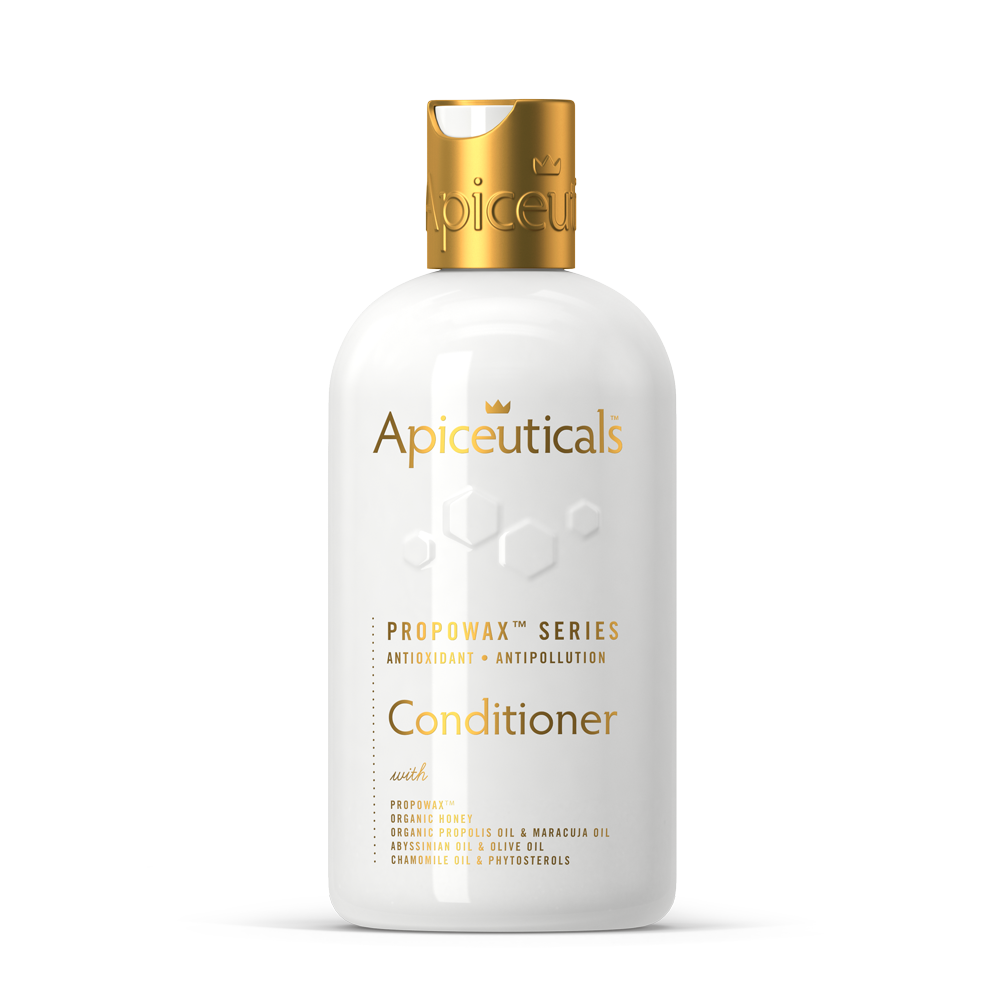
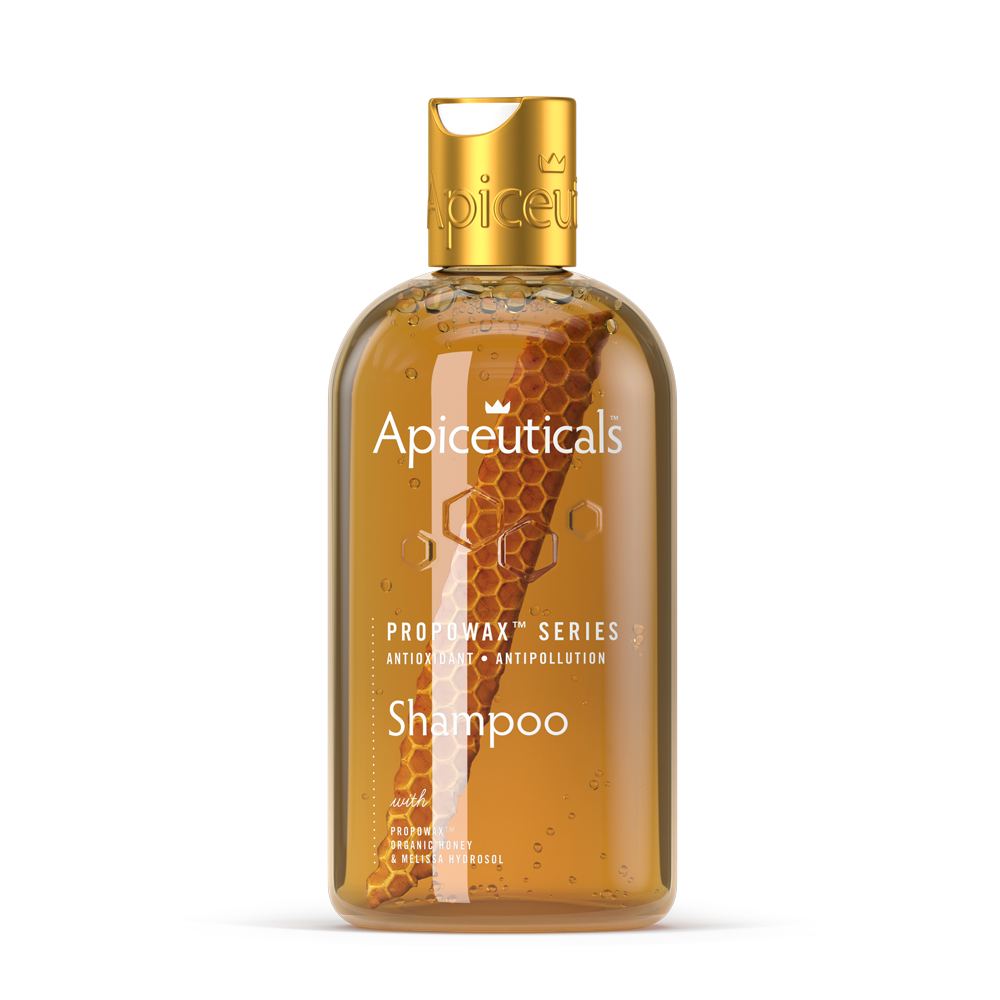
Cleansing gently protects what is already on the hair shaft. It does not address oxidative stress from sun exposure, heat tools, or pollution, which is a separate mechanism entirely. Apiceuticals developed PROPOWAX™, a patented Living Honeycomb structure embedded in its haircare formulas, to release antioxidants continuously onto the scalp and hair fiber rather than in a single rinse-off dose.
PROPOWAX™ holds a global patent for the highest antioxidant activity recorded in a cosmetic ingredient system, independently validated by the Aristotle University of Thessaloniki.
That validation matters because antioxidant claims in beauty are common and rarely tested independently. Pairing continuous antioxidant exposure with a sulfate-free base treats cleansing and protection as two distinct jobs, which is the more accurate way to think about hair health.
The Bottom Line on Switching
Sulfate-free shampoo benefits most hair types through gentler cleansing, but the payoff depends on technique and formulation. Read labels, run a two-week double-wash trial, and add a clarifying wash every few weeks if buildup appears.

Our Take: Gentler Cleansing Is a Starting Point, Not the Whole Story

The conventional advice on sulfate-free shampoo treats it like a single decision: swap the bottle, solve the problem. That framing undersells how much technique matters. A peer-reviewed review of surfactant chemistry makes clear that formulation balance, not the sulfate-free label alone, drives the outcome. Two shampoos can both be sulfate-free and behave completely differently on the same head of hair.
What gets overlooked more often is the ceiling on what gentler cleansing can achieve. It protects moisture already in the hair. It does not repair oxidative damage already done by sun, heat, or pollution, and no surfactant choice changes that. This is where an antioxidant-first view of haircare adds something the sulfate-free conversation usually misses: cleansing chemistry and antioxidant defense are separate problems requiring separate solutions, not one fix wearing two hats. Readers who prioritize the double-wash technique first, then layer in continuous antioxidant exposure, tend to see the clearest results.
— Apiceuticals
A Sulfate-Free Routine Built Around Continuous Antioxidant Delivery
Apiceuticals designs its haircare around a simple premise: gentle cleansing protects what you have, and PROPOWAX™ Living Honeycomb actively defends it against oxidative stress the rest of the day. Where a standard sulfate-free shampoo stops at “less harsh,” Apiceuticals adds a patented antioxidant delivery mechanism validated at Aristotle University of Thessaloniki, so the scalp and hair fiber keep receiving protection between washes, not just during them.

For readers who came here weighing sulfate-free options, that combination is the practical next step: a formula that cleanses without stripping and keeps working after the rinse. Explore the full antioxidant haircare range to find a formula matched to color-treated, curly, or sensitive-scalp needs, and read more on how antioxidant shampoo supports scalp integrity between washes before making the switch.
Sources
- Sulfate in Shampoo: What It Is, Fine Hair, Natural Hair, and More — Healthline
- Are sulfates bad for hair? — Women’s Health
- Are Sulfate-Free Shampoos Actually Better? — Vogue
- Peer-reviewed article relevant to surfactants and skin/hair effects — PMC
- Shampoo for hair loss — Cleveland Clinic
FAQ
Is Sulfate-Free Shampoo Good for Your Hair?
For most hair types, yes. It preserves scalp lipids and reduces cuticle friction, which shows up as better moisture retention and slower color fade, though very oily scalps may need an occasional stronger cleanse.
What Are the Disadvantages of Sulfate-Free Shampoo?
Some formulas clean less aggressively, which can leave product buildup for heavy stylers, and sulfate-free options often cost more than mass-market sulfate shampoos.
What Are the Benefits of Using Sulfate-Free Shampoo?
The main benefits are reduced scalp irritation, better moisture retention, slower color fade on treated hair, and less frizz from a smoother cuticle. Pairing that cleanse with continuous antioxidant exposure, as with Apiceuticals’ PROPOWAX™ formulas, adds a layer of protection cleansing alone cannot provide.
Is It Okay to Use Sulfate-Free Shampoo Every Day?
Yes, daily use is generally fine since the formula is milder on the scalp barrier, though anyone using heavy styling products should still rotate in a clarifying wash every two to six weeks.
Does Sulfate-Free Shampoo Actually Work?
It works differently rather than simply “better”: it cleanses less aggressively while protecting scalp lipids, so results depend on matching the formula and technique to your hair type.
What Ingredients Should I Look for Instead of Sulfates?
Look for sodium lauroyl sarcosinate, cocamidopropyl betaine, or decyl glucoside, and avoid vague terms like “conditioning polymers” that can signal buildup-prone silicones.
Recommended


Related posts

How bees and biodiversity sustain each other, what the science says about Greece and the Aegean, and how antioxidant beauty can start from a hive...

How organic propolis extraction works, from hive to extract: collection, solvents, EU organic rules, Greek propolis phenolics and what it means for skincare.

Build an anti pollution skincare routine that fits Greek city life: what pollution does to skin, the morning and evening steps, and the antioxidants with...

Honey moisture content explained: the EU and Greek limits, how to take a refractometer reading, what excess water does to honey, and why it matters...

How antioxidant activity measurement works: DPPH, ABTS, FRAP and ORAC explained, why results differ, and what a lab number can and cannot say about skin...