
No products in the cart.
Return To Shop
Superfoods and Skin Health: What the Science Says
TL;DR:
- Superfoods provide essential antioxidants, fatty acids, and micronutrients that support skin repair and barrier function. Consistent dietary changes over months, combined with topical antioxidants, improve skin structure and resilience from within and without. Gut health and balanced eating patterns amplify these benefits, preventing sugar-related collagen damage.
Superfoods are defined as nutrient-dense whole foods that deliver concentrated antioxidants, essential fatty acids, and micronutrients directly supporting skin structure, collagen production, and inflammation control. The role of superfoods in skin health is not cosmetic folklore. It is biochemistry. What you eat supplies the raw materials your skin uses to repair itself, maintain its moisture barrier, and resist oxidative damage. This article examines the specific mechanisms behind that process, drawing on clinical evidence and referencing Apiceuticals’ PROPOWAX™ Living Honeycomb, whose highest antioxidant activity globally was validated by the Aristotle University of Thessaloniki, as a scientific benchmark for antioxidant potency in both topical and dietary contexts.
How do superfoods shape skin health through antioxidants?
The role of superfoods in skin health begins at the cellular level, where oxidative stress is the primary accelerant of visible aging. Free radicals, generated by UV exposure, pollution, and metabolic processes, behave like rust corroding metal. They degrade collagen fibers, disrupt the skin’s lipid barrier, and trigger chronic low-grade inflammation that manifests as dullness, fine lines, and uneven tone.
Dietary antioxidants, specifically polyphenols and vitamins C and E, neutralize free radicals before they cause structural damage. Clinical studies confirm that antioxidant-rich dietary interventions produce a measurable mean difference of 2.12 in skin hydration scores and a reduction in transepidermal water loss (TEWL) of 0.68. That reduction in TEWL is significant because it reflects a stronger, more intact skin barrier, not just surface moisture.
A meta-analysis of dietary antioxidants also shows measurable reductions in wrinkle formation, dermatitis scores, and skin erythema. These are objective clinical markers, not subjective impressions. The implication is clear: consistent intake of antioxidant-rich superfoods produces structural improvements in skin that topical products alone cannot replicate.
The table below maps the primary antioxidant classes found in superfoods to their specific skin benefits.
| Antioxidant Type | Key Food Sources | Primary Skin Benefit |
|---|---|---|
| Vitamin C (ascorbic acid) | Kiwi, bell peppers, citrus | Collagen synthesis, brightening |
| Vitamin E (tocopherol) | Almonds, sunflower seeds, avocado | Membrane protection, TEWL reduction |
| Polyphenols (flavonoids) | Blueberries, green tea, dark chocolate | Anti-inflammatory, UV defense |
| Beta-carotene (provitamin A) | Sweet potatoes, carrots, spinach | Cell turnover, skin radiance |
| Selenium | Brazil nuts, eggs, sardines | Antioxidant enzyme activation |
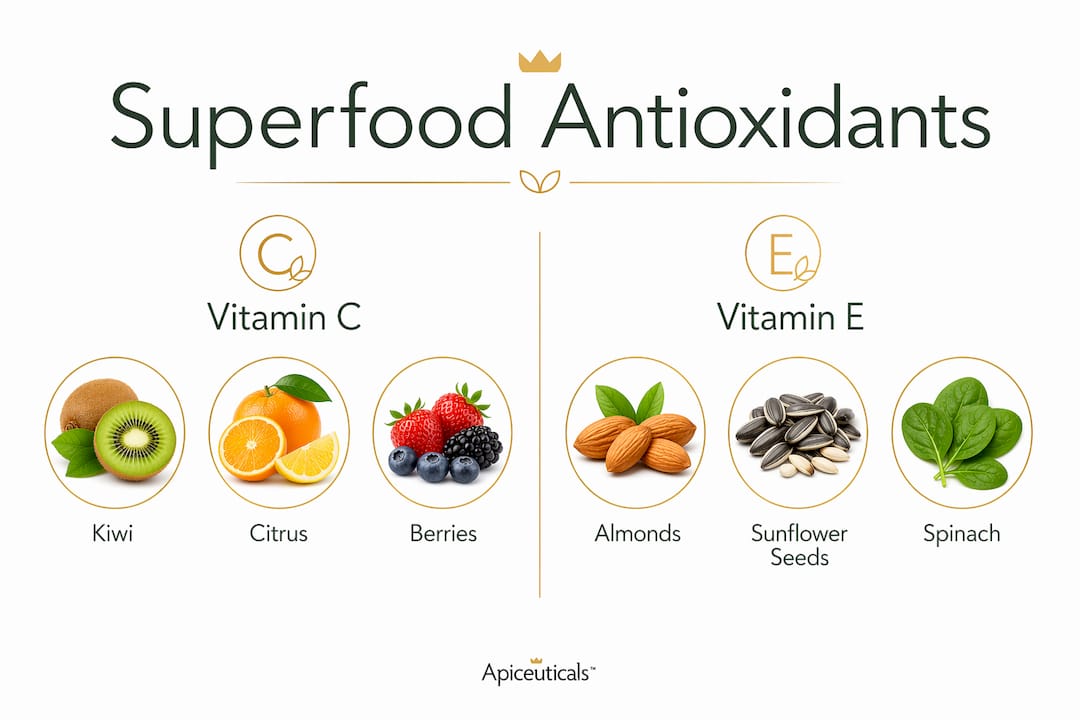
Pro Tip: Pair vitamin C-rich foods like kiwi with vitamin E sources like almonds in the same meal. These two antioxidants work synergistically, with vitamin E regenerating vitamin C after it neutralizes a free radical, effectively doubling the protective effect.
What essential fatty acids in superfoods do for skin elasticity
Dietary fats serve as internal moisturizers critical for skin suppleness, a role topical treatments cannot fully replace. This is one of the most underappreciated facts in skin nutrition. The lipids that form your skin’s barrier are built from the fats you eat. If those fats are insufficient or imbalanced, the barrier becomes permeable and moisture escapes.
Omega-3 fatty acids, specifically EPA (eicosapentaenoic acid) and DHA (docosahexaenoic acid), are the most clinically studied dietary fats for skin. Omega-3 supplementation reduces inflammatory skin conditions and measurably enhances skin suppleness by strengthening the lipid barrier and suppressing pro-inflammatory cytokines. The result is skin that holds moisture more effectively and responds less aggressively to environmental triggers.
The best superfoods for skin health in this category include:
- Fatty fish (salmon, mackerel, sardines): richest dietary sources of EPA and DHA, providing direct anti-inflammatory lipids
- Avocados: supply monounsaturated oleic acid alongside vitamin E, supporting both barrier integrity and membrane protection
- Walnuts: provide both omega-3 ALA and omega-6 linoleic acid, the precursor to ceramides that form the skin’s structural lipid matrix
- Chia seeds and flaxseeds: concentrated plant-based ALA sources, useful for those who do not consume fish
- Hemp seeds: deliver a favorable omega-6 to omega-3 ratio that supports skin barrier without promoting excess inflammation
The distinction between ALA from plant sources and EPA/DHA from marine sources matters. The body converts ALA to EPA and DHA at a low efficiency rate. For consistent skin improvement, marine sources or algae-based omega-3 supplements provide the most direct benefit.
Pro Tip: Aim for two servings of fatty fish per week as a baseline. If you follow a plant-based diet, algae-derived DHA supplements bypass the conversion inefficiency entirely and deliver the same anti-inflammatory benefit.
Which vitamins and minerals drive collagen synthesis and skin renewal?
Vitamins A, C, E, and zinc each play distinct but complementary roles in skin renewal, collagen synthesis, and antioxidant protection. Understanding how they interact helps you build a diet that addresses multiple skin functions simultaneously rather than optimizing for one nutrient in isolation.

Vitamin C is the most direct driver of collagen production. It is a required cofactor for the enzymes that stabilize the collagen triple helix. Without adequate vitamin C, newly synthesized collagen is structurally weak. Consuming 250 mg of vitamin C daily for 8 weeks increases skin thickness and accelerates epidermal cell regeneration. That dose is equivalent to two small kiwis per day, which makes it one of the most accessible dietary interventions in skin nutrition.
Vitamin A governs epithelial cell turnover. It regulates the rate at which old skin cells shed and new ones form, which directly affects skin texture, pore appearance, and the skin’s immune response to pathogens. Vitamin E protects cell membranes from lipid peroxidation, the process by which free radicals degrade the fatty acids within cell walls. Zinc contributes to wound healing and suppresses the matrix metalloproteinases that break down collagen during inflammation.
The table below compares these micronutrients by function and food source.
| Nutrient | Primary Skin Function | Top Superfood Sources |
|---|---|---|
| Vitamin C | Collagen synthesis, brightening | Kiwi, red bell pepper, strawberries |
| Vitamin A | Epithelial turnover, immune defense | Sweet potato, liver, spinach |
| Vitamin E | Membrane protection, antioxidant | Almonds, sunflower seeds, avocado |
| Zinc | Wound healing, anti-inflammatory | Pumpkin seeds, oysters, lentils |
| Selenium | Antioxidant enzyme support | Brazil nuts, tuna, eggs |
Berries deserve specific mention. Blueberries, raspberries, and blackberries deliver vitamin C alongside anthocyanins, a class of polyphenols that improve skin barrier function and reduce UV-induced oxidative damage. Leafy greens like spinach and kale provide vitamins A, C, and K together, making them among the most efficient single foods for skin micronutrient density.
How gut health and dietary patterns amplify superfood benefits for skin
The benefits of superfoods for skin do not operate in isolation. They depend heavily on the health of the gut that absorbs them and the broader dietary pattern surrounding them.
The gut-skin axis is the bidirectional communication pathway between the intestinal microbiome and the skin’s immune and inflammatory systems. Probiotic-rich foods like kimchi and sauerkraut modulate systemic immunity and reduce inflammatory skin conditions including acne, rosacea, and eczema. A diverse microbiome produces short-chain fatty acids that suppress systemic inflammation, which in turn reduces the inflammatory signals that degrade collagen and impair the skin barrier.
The practical implication is this: if your gut health is compromised, the antioxidants and vitamins in your superfoods may be poorly absorbed or their benefits undermined by systemic inflammation. Dietary adjustments alone may lack effect when gut health is the limiting factor. Addressing both simultaneously produces the most reliable outcomes.
The following steps outline a dietary framework that supports both gut health and skin function:
- Build around a Mediterranean-style pattern. No single superfood delivers reliable skin benefits in isolation. A Mediterranean-style diet rich in antioxidants, healthy fats, and fiber provides the most consistent evidence base for skin health improvement.
- Include fermented foods daily. Kimchi, kefir, yogurt, and sauerkraut introduce beneficial bacteria that strengthen the gut-skin axis and reduce inflammatory load.
- Prioritize fiber diversity. Prebiotic fibers from garlic, onions, leeks, and legumes feed the bacteria that produce anti-inflammatory short-chain fatty acids.
- Eliminate dietary stressors. Excess added sugar generates advanced glycation end-products (AGEs) that stiffen collagen and accelerate skin aging. High-glycemic and processed foods actively counteract the benefits of every superfood in your diet.
- Increase fruit and vegetable variety. Beta-carotene-rich foods like sweet potatoes produce measurable improvements in skin radiance within six weeks of consistent intake.
The timeline matters here. Sustained dietary changes over 8 weeks to several months are necessary before structural improvements in skin become visible. Skin cell turnover cycles take approximately 28 days. Collagen remodeling takes longer. Patience is not optional.
Key takeaways
The most effective approach to skin health through diet combines antioxidant-rich superfoods, essential fatty acids, and micronutrient diversity within a consistent dietary pattern that also supports gut health.
| Point | Details |
|---|---|
| Antioxidants reduce oxidative damage | Dietary polyphenols and vitamins C and E neutralize free radicals that degrade collagen and impair the skin barrier. |
| Omega-3 fats build the lipid barrier | EPA and DHA from fatty fish and algae strengthen skin’s moisture barrier in ways topical products cannot replicate. |
| Vitamin C drives collagen synthesis | 250 mg daily for 8 weeks measurably increases skin thickness and accelerates epidermal cell regeneration. |
| Gut health determines nutrient impact | A diverse microbiome amplifies superfood benefits; fermented foods and fiber are non-negotiable parts of a skin-focused diet. |
| Sugar actively undermines skin | Advanced glycation end-products from excess sugar stiffen collagen and cancel out the benefits of antioxidant-rich foods. |
What Apiceuticals has learned about superfoods and skin
The conversation around superfoods for glowing skin often collapses into a list of trendy ingredients. Açaí this week, sea buckthorn the next. That framing misses the point entirely.
What the evidence actually shows is that skin health is a systemic outcome. It reflects the cumulative effect of dietary patterns, gut integrity, and antioxidant availability over months, not the addition of a single ingredient. The most common mistake we observe is people adding a superfood to an otherwise poor diet and expecting visible results. The sugar and processed foods in that diet are generating AGEs faster than any berry can neutralize them.
The second misconception is that topical antioxidants and dietary antioxidants are interchangeable. They are not. They operate at different biological depths. Dietary antioxidants reach the dermis through circulation and support collagen synthesis from within. Topical antioxidants, including the PROPOWAX™ Living Honeycomb technology that holds a global patent for highest antioxidant activity, protect the epidermis from external oxidative assault. The two approaches address different layers of the same problem. Using both is not redundancy. It is precision.
The third point, and the one most articles avoid, is that skin nutrition fundamentally depends on diet more than topical care. Essential nutrients from food are irreplaceable for collagen synthesis and repair. No topical product synthesizes collagen from the outside. That process requires vitamin C, zinc, and amino acids delivered through circulation. Acknowledging that fact is not a limitation of skincare science. It is an honest account of how skin biology works.
— Apiceuticals
Strengthen your skin from every direction

Dietary antioxidants build skin resilience from within. Topical antioxidants protect it from without. Apiceuticals was built on the science of that second layer. The PROPOWAX™ Living Honeycomb technology, independently validated by the Aristotle University of Thessaloniki and recognized by British Vogue as “arguably the global leader in antioxidant activity,” continuously releases antioxidants onto skin throughout the day. Explore the full range of antioxidant skin formulations at Apiceuticals, or read the science behind bee-powered antioxidant beauty to understand how PROPOWAX™ Living Honeycomb works at the cellular level. Your diet does the internal work. Apiceuticals handles the external defense.
FAQ
What is the role of superfoods in skin health?
Superfoods supply the antioxidants, essential fatty acids, and micronutrients that skin requires for collagen synthesis, barrier integrity, and inflammation control. These nutrients reach the dermis through circulation and support structural skin functions that topical products cannot replicate.
How long does it take for superfoods to improve skin?
Measurable improvements in skin structure and appearance require sustained dietary changes over 8 weeks to several months. Skin cell turnover cycles take approximately 28 days, and collagen remodeling takes longer.
Which superfoods are best for skin hydration and barrier function?
Fatty fish, avocados, walnuts, and chia seeds provide omega-3 fatty acids that strengthen the skin’s lipid barrier and reduce transepidermal water loss. Antioxidant-rich foods like blueberries and bell peppers further support barrier integrity by reducing oxidative damage.
Can diet alone replace topical skincare for skin health?
Diet and topical skincare address different biological layers. Dietary nutrients support collagen synthesis and repair from within via circulation, while topical antioxidants protect the epidermis from external oxidative damage. Both are necessary for comprehensive skin protection.
Does sugar counteract the benefits of superfoods for skin?
Excess added sugar generates advanced glycation end-products that stiffen collagen and accelerate skin aging. High-glycemic and processed foods actively undermine the antioxidant and structural benefits delivered by superfoods in the same diet.
Recommended


Related posts

How bees and biodiversity sustain each other, what the science says about Greece and the Aegean, and how antioxidant beauty can start from a hive...

How organic propolis extraction works, from hive to extract: collection, solvents, EU organic rules, Greek propolis phenolics and what it means for skincare.

Build an anti pollution skincare routine that fits Greek city life: what pollution does to skin, the morning and evening steps, and the antioxidants with...

Honey moisture content explained: the EU and Greek limits, how to take a refractometer reading, what excess water does to honey, and why it matters...

How antioxidant activity measurement works: DPPH, ABTS, FRAP and ORAC explained, why results differ, and what a lab number can and cannot say about skin...















