No products in the cart.
Return To Shop
The Role of Antioxidants in Haircare: A Science Guide
TL;DR:
- Antioxidants in haircare neutralize free radicals that damage hair structure and scalp health. Their effectiveness depends on advanced delivery systems, like PROPOWAX™ Living Honeycomb, which ensure sustained antioxidant release deep into hair follicles. Proper formulation and application protect hair from oxidative stress and support regeneration.
Antioxidants in haircare are defined as compounds that neutralize reactive oxygen species (free radicals) before they degrade the structural proteins, pigment cells, and follicular stem cells that keep hair healthy. The role of antioxidants in haircare extends well beyond surface conditioning. These molecules defend the scalp’s living ecosystem against UV radiation, chemical processing, and environmental pollution. Apiceuticals’ PROPOWAX™ Living Honeycomb holds a global patent for the highest antioxidant activity in cosmetics, independently validated by the Aristotle University of Thessaloniki, making it the scientific benchmark against which antioxidant formulations are measured.
How does oxidative stress damage hair, and what do antioxidants do about it?
Oxidative stress is the primary driver of structural hair damage. Think of it like rust corroding metal: free radicals attack the proteins and lipids in hair fiber the same way oxygen degrades iron, steadily weakening what was once strong. The scalp, as a living ecosystem of follicles, sebaceous glands, and stem cells, is especially vulnerable because it is exposed to UV radiation daily and absorbs chemical agents during coloring and bleaching.
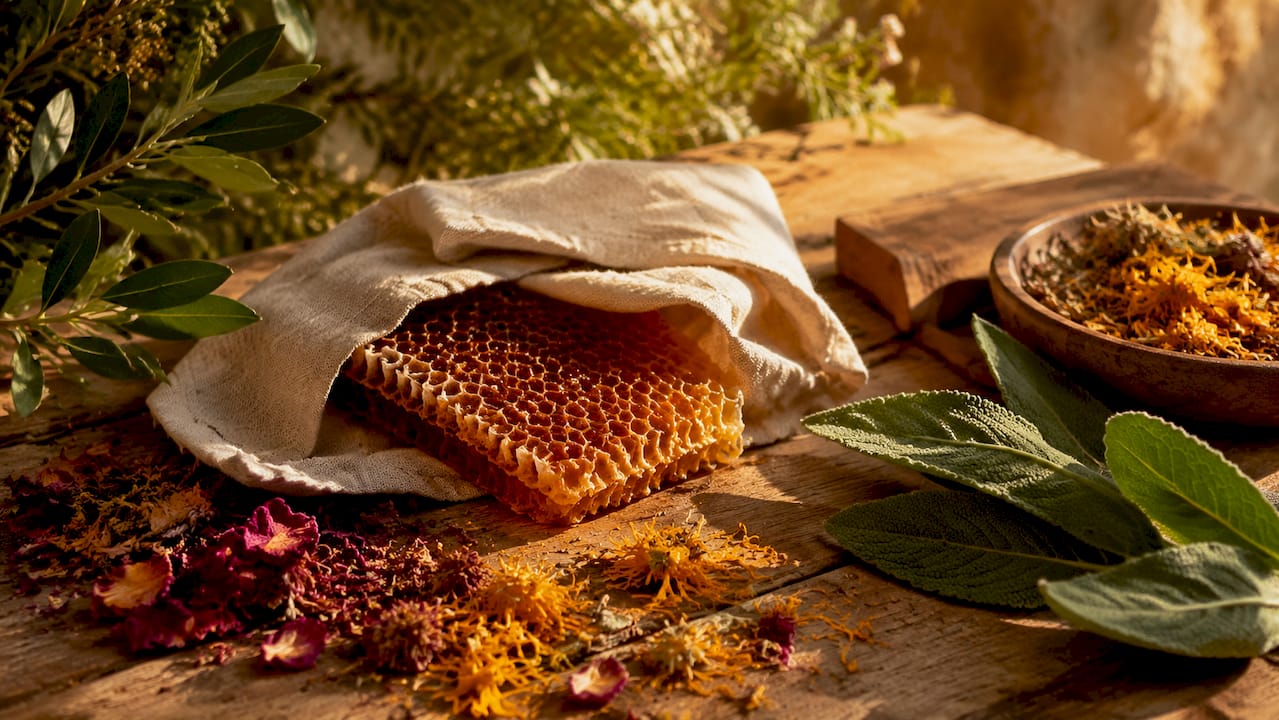
The biochemical damage follows two main pathways. Bleaching and UV exposure induce lipid peroxidation and protein carbonylation in hair, reducing tensile strength and accelerating mechanical degradation. These reactions are driven by hydroxyl radicals and singlet oxygen, which attack the keratin matrix and strip the cuticle of its protective lipid layer.
The follicle itself suffers separately. Oxidative stress contributes to follicle aging, premature greying, and androgenetic alopecia by damaging melanocytes and promoting follicle miniaturization. Antioxidants reduce this oxidative damage, though they do not directly block hormones like DHT. Their primary function is defensive: they extend the anagen (growth) phase by neutralizing the free radicals that accelerate follicle aging.
The key mechanisms antioxidants use to protect hair include:
- Reactive oxygen species (ROS) scavenging: Antioxidant molecules donate electrons to unstable free radicals, neutralizing them before they attack keratin or follicle DNA.
- Lipid peroxidation prevention: Antioxidants interrupt the chain reaction that degrades the hair fiber’s outer lipid layer, preserving shine and tensile strength.
- Follicular stem cell protection: Certain antioxidants shield hair follicle stem cells (HFSCs) from oxidative damage, preserving the cells responsible for new hair growth.
- Scalp homeostasis: Antioxidants maintain the biochemical balance of the scalp, preventing chronic low-grade inflammation that shortens hair cycles.
Which antioxidants are most effective for hair and scalp health?
Not all antioxidants perform equally in a haircare context. The most effective compounds combine free radical neutralization with direct signaling benefits inside the follicle.
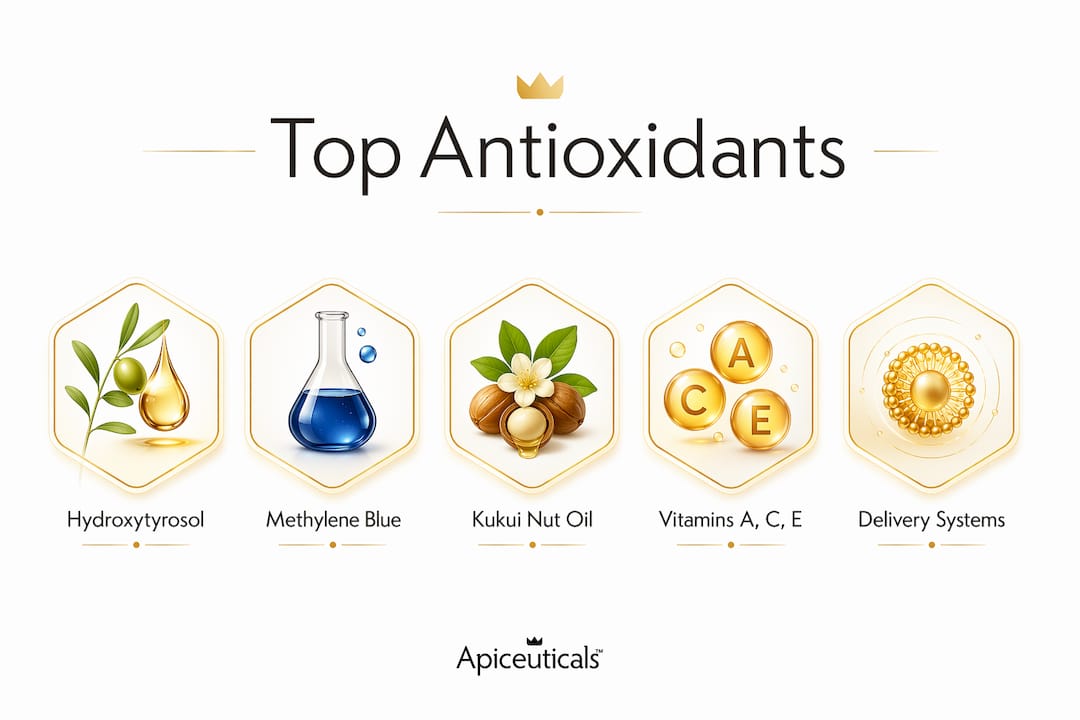
Hydroxytyrosol is one of the most studied antioxidants for topical application. Found in olive-derived compounds and concentrated in formulations like PROPOWAX™ Living Honeycomb, it scavenges ROS with exceptional efficiency. Its challenge has historically been delivery: as a hydrophilic molecule, it struggles to cross the skin’s lipid barrier without a carrier system.
Methylene blue represents a newer class of mitochondrial-targeted antioxidants. Research shows it protects hair follicle stem cells from oxidative and metabolic stress while simultaneously activating the Wnt/β-catenin signaling pathway to promote hair regeneration. This dual function, reducing ROS and stimulating stem cell proliferation, makes it one of the most promising antioxidant candidates in current haircare science.
Kukui nut oil works through a different mechanism. It promotes hair growth by activating the Nrf2/ARE-AKR1C family-PGF2α signaling axis, stimulating prostaglandin production and cell proliferation. This pathway links oxidative stress defense directly to active hair growth, not just damage prevention.
Vitamins A, C, and E are the most familiar antioxidants in consumer products. Vitamin E protects cell membranes from lipid peroxidation. Vitamin C regenerates oxidized Vitamin E and supports collagen synthesis in the scalp dermis. However, research reveals an important nuance: Vitamins A and C can suppress β-catenin pathway activation critical for hair follicle stem cell function, even while scavenging ROS. This means high-dose Vitamin A or C formulations may inadvertently reduce regenerative signaling despite their antioxidant activity.
| Antioxidant | Primary mechanism | Key benefit for hair |
|---|---|---|
| Hydroxytyrosol | ROS scavenging | Protects keratin and scalp lipids |
| Methylene blue | Mitochondrial protection + Wnt/β-catenin activation | Stem cell protection and regeneration |
| Kukui nut oil | Nrf2/ARE pathway activation | Stimulates prostaglandin-driven growth |
| Vitamin E | Lipid peroxidation inhibition | Preserves cuticle integrity |
| Vitamin C | Vitamin E regeneration, collagen support | Strengthens scalp dermis |
| PROPOWAX™ Living Honeycomb | Highest antioxidant activity (globally patented) | Continuous antioxidant release onto scalp and hair |
Pro Tip: When reading antioxidant ingredient labels, look for compounds that specify their signaling pathway activity, not just their ORAC (oxygen radical absorbance capacity) score. A high ORAC score does not guarantee follicle-level benefit.
Why does antioxidant delivery determine whether a product actually works?
The most potent antioxidant compound is useless if it cannot reach the follicle. This is the central challenge of antioxidant haircare formulation, and it is where most products fall short.
The scalp’s stratum corneum presents a formidable lipid barrier. Hydrophilic antioxidants like hydroxytyrosol dissolve readily in water but cannot cross this lipid-rich layer without a carrier. Standard aqueous shampoo or conditioner formulations deliver these molecules to the hair surface but rarely to the follicle itself.
Advanced delivery systems solve this problem. Deep eutectic solvents (DES) enable antioxidants like hydroxytyrosol to penetrate to a depth of at least 180 µm, achieving more than threefold greater permeation than aqueous solutions. That depth reaches the follicular bulge, where stem cells reside. Lipid encapsulation technologies work similarly, wrapping hydrophilic antioxidants in a lipid shell that merges with the skin’s barrier and releases the active compound inside.
| Delivery system | Penetration depth | Permeation vs. aqueous |
|---|---|---|
| Aqueous solution (standard) | Superficial (surface only) | Baseline |
| Deep eutectic solvent (DES) | At least 180 µm | More than 3x greater |
| Lipid encapsulation | Follicular level | Significantly improved |
| PROPOWAX™ Living Honeycomb | Continuous release onto scalp and hair | Sustained antioxidant activity |
PROPOWAX™ Living Honeycomb addresses the delivery problem through a different mechanism: a patented matrix that continuously releases antioxidants onto the scalp and hair over time, rather than delivering a single dose at wash-off. This sustained-release model maintains antioxidant protection between applications, which is the period when oxidative stress from UV and pollution accumulates most.
Pro Tip: Check whether a product’s antioxidant ingredients are listed in the top half of the INCI (International Nomenclature of Cosmetic Ingredients) list. Ingredients listed near the bottom are present in concentrations too low to achieve meaningful scalp penetration, regardless of the delivery system.
How to build an antioxidant haircare routine that actually protects hair
A well-structured antioxidant routine addresses hair at every stage: cleansing, conditioning, and targeted treatment.
Start with an antioxidant shampoo. The scalp accumulates oxidative byproducts from sebum oxidation, pollution, and UV exposure between washes. An antioxidant shampoo removes these byproducts while delivering protective compounds to the scalp surface. Look for formulations free from SLS and SLES, which strip the scalp’s natural lipid barrier and increase oxidative vulnerability.
Follow with an antioxidant conditioner. Conditioners have longer contact time with the hair fiber than shampoos, making them a more effective delivery vehicle for antioxidants targeting the cuticle and cortex. An antioxidant conditioner with Vitamin E or hydroxytyrosol restores lipid integrity to the cuticle and reduces mechanical damage during detangling.
Add a targeted antioxidant serum. Serums have the highest concentration of active ingredients and the longest leave-in contact time. They are the most effective format for delivering follicle-level antioxidants, particularly those requiring advanced delivery systems like DES or lipid encapsulation.
Support topical antioxidants with diet. Topical antioxidants protect the hair and scalp from the outside. Dietary antioxidants, particularly Vitamin C, Vitamin E, and polyphenols from berries and green tea, reduce systemic oxidative stress that reaches the follicle through the bloodstream. Both approaches are necessary for complete protection.
Avoid over-relying on high-dose Vitamin A or C topicals. Research shows these vitamins can suppress the β-catenin pathway critical for follicle stem cell regeneration. Balanced formulations that combine multiple antioxidant types deliver better outcomes than single-ingredient, high-dose products.
Key Takeaways
Antioxidants protect hair by neutralizing free radicals at the follicle level, but their efficacy depends entirely on the delivery system and the specific compounds used.
| Point | Details |
|---|---|
| Oxidative stress damages hair structurally | UV and bleaching cause lipid peroxidation and protein carbonylation, reducing tensile strength. |
| Delivery system determines efficacy | Deep eutectic solvents achieve more than 3x greater antioxidant penetration than standard aqueous formulas. |
| Not all antioxidants regenerate follicles | Vitamins A and C may suppress β-catenin signaling; methylene blue activates it while scavenging ROS. |
| PROPOWAX™ sets the benchmark | Apiceuticals’ patented technology holds the global record for highest antioxidant activity, validated by Aristotle University of Thessaloniki. |
| Routine structure matters | Shampoo, conditioner, and serum each serve a distinct antioxidant function and should be used together. |
Apiceuticals’ perspective on where antioxidant haircare science is heading
The conversation in antioxidant haircare is shifting from “how much” to “how precisely.” For years, the industry measured antioxidant products by ORAC scores and ingredient concentration. What the research now shows is that molecular pathway specificity matters more than raw antioxidant capacity.
Methylene blue is the clearest example of this shift. It does not simply scavenge free radicals. It targets mitochondria inside hair follicle stem cells, activates regenerative signaling, and has shown the ability to protect HFSCs against pharmaceutical-induced stress. That level of precision is what separates a functional antioxidant from a transformative one.
The Nrf2/ARE pathway, activated by compounds like kukui nut oil, points in the same direction. Antioxidants that engage cellular defense programs rather than simply neutralizing ROS in the extracellular space offer a fundamentally different category of protection. This is the science Apiceuticals has built toward since the beginning.
PROPOWAX™ Living Honeycomb was not designed to be the highest-antioxidant product in cosmetics by accident. The sustained-release model solves the delivery problem that makes most antioxidant haircare products ineffective between washes. The validation from the Aristotle University of Thessaloniki confirms what the formulation science already showed: continuous antioxidant release is the mechanism that matters. The next generation of haircare will be defined by products that understand this distinction and formulate accordingly.
— Apiceuticals
Apiceuticals’ antioxidant haircare, grounded in science
Apiceuticals was built on a single conviction: that antioxidant activity in haircare must be measurable, sustained, and scientifically validated. The PROPOWAX™ Series delivers on that standard through the patented Living Honeycomb matrix, which continuously releases antioxidants onto the scalp and hair rather than washing off with the product.

Every Apiceuticals formulation excludes over 2,000 potentially harmful ingredients, including SLS, SLES, parabens, silicones, and mineral oils. The result is a clean antioxidant haircare system that protects the scalp’s living ecosystem without compromising it. For those ready to move beyond surface-level conditioning, the full PROPOWAX™ range and the science behind it are available at Apiceuticals.
FAQ
What is the role of antioxidants in haircare?
Antioxidants neutralize free radicals that damage hair proteins, scalp lipids, and follicle stem cells. Their primary function is to prevent oxidative stress from shortening the hair growth cycle and degrading structural integrity.
How do antioxidants protect hair from UV and chemical damage?
UV radiation and bleaching generate hydroxyl radicals and singlet oxygen that cause lipid peroxidation and protein carbonylation in hair. Antioxidants interrupt these reactions before they reduce tensile strength and cause mechanical degradation.
Which antioxidant is best for hair follicle regeneration?
Methylene blue is currently the most studied antioxidant for follicle regeneration because it both reduces ROS and activates the Wnt/β-catenin signaling pathway, stimulating hair follicle stem cell proliferation rather than just protecting existing cells.
Do vitamins A and C help or hurt hair growth?
Vitamins A and C are effective ROS scavengers, but research shows they can suppress β-catenin pathway activation critical for follicle stem cell function. Balanced formulations that include multiple antioxidant types produce better outcomes than high-dose single-vitamin products.
Why does antioxidant delivery matter in haircare products?
Most antioxidants cannot cross the scalp’s lipid barrier without a carrier system. Advanced delivery technologies like deep eutectic solvents achieve penetration depths of at least 180 µm, more than three times deeper than standard aqueous formulas, reaching the follicular stem cells where protection is needed most.
Recommended


Related posts

How bees and biodiversity sustain each other, what the science says about Greece and the Aegean, and how antioxidant beauty can start from a hive...

How organic propolis extraction works, from hive to extract: collection, solvents, EU organic rules, Greek propolis phenolics and what it means for skincare.

Build an anti pollution skincare routine that fits Greek city life: what pollution does to skin, the morning and evening steps, and the antioxidants with...

Honey moisture content explained: the EU and Greek limits, how to take a refractometer reading, what excess water does to honey, and why it matters...

How antioxidant activity measurement works: DPPH, ABTS, FRAP and ORAC explained, why results differ, and what a lab number can and cannot say about skin...