
No products in the cart.
Return To Shop
The Role of Botanical Extracts in Beauty and Skin Science
TL;DR:
- Botanical extracts provide active, scientifically validated skin benefits through antioxidant, anti-inflammatory, and collagen-modulating mechanisms. Advanced delivery technologies like liposomes and nanoemulsions improve ingredient stability and skin penetration, enhancing efficacy. Rigorous clinical validation and standardized extracts are essential for safe, effective botanical skincare products.
Botanical extracts are defined as concentrated, bioactive compounds derived from plants, and their role in botanical extracts in beauty represents one of the most scientifically substantive developments in modern skincare. These phytochemicals, including flavonoids, polyphenols, terpenoids, and alkaloids, deliver antioxidant, anti-inflammatory, antimicrobial, and anti-aging effects by modulating molecular pathways deep within skin tissue. Ingredients like bakuchiol, green tea extract, and Centella asiatica have moved from ethnobotanical tradition into peer-reviewed clinical trials. Apiceuticals’ PROPOWAX™ Living Honeycomb, which holds a global patent for antioxidant activity validated by the Aristotle University of Thessaloniki, stands as a scientific benchmark for what plant-derived and bee-derived antioxidant technology can achieve in cosmetics.
What is the role of botanical extracts in beauty at a molecular level?
The role of botanicals in cosmetics begins at the cellular level, where plant-derived compounds interact with specific biological targets in skin tissue. Flavonoids modulate multiple skin pathways, including NF-κB suppression, which reduces inflammatory signaling, and collagen synthesis modulation, which supports structural integrity in aging skin. These are not passive moisturizing effects. They are active biochemical interventions.
The antioxidant mechanism is the most clinically documented. Free radicals generated by UV radiation, pollution, and metabolic stress oxidize lipids, proteins, and DNA in skin cells. Think of this process as rust forming on metal: slow, cumulative, and structurally damaging. Botanical antioxidants donate electrons to neutralize these radicals before they cause irreversible cellular damage.
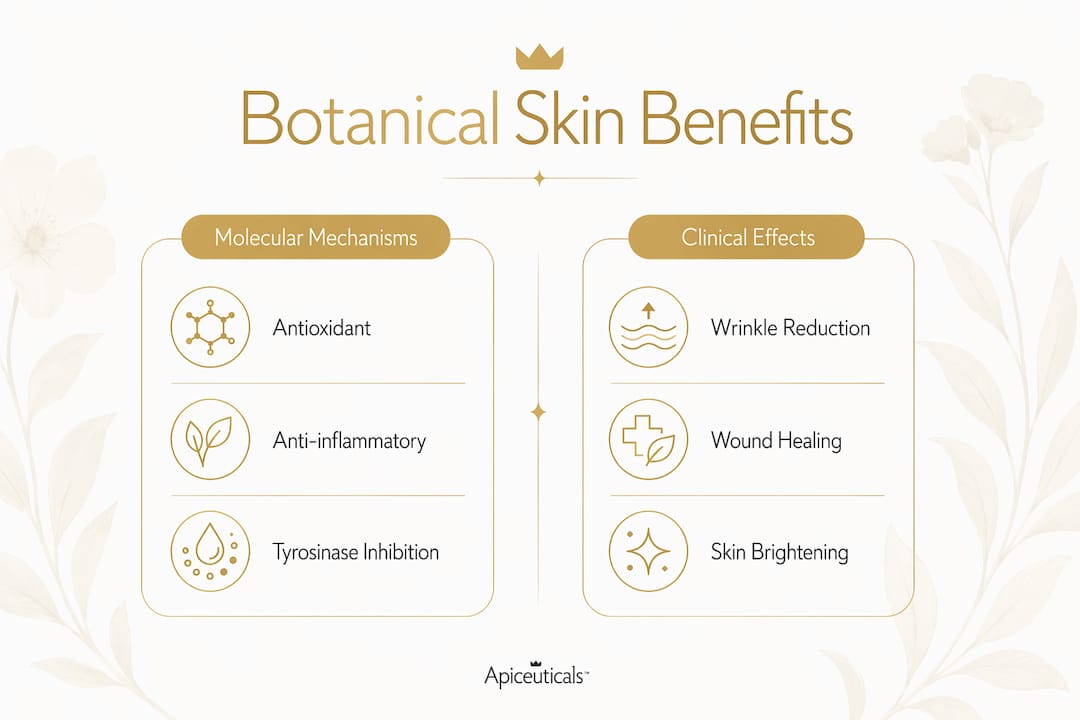
Anti-inflammatory activity follows a parallel pathway. Compounds like epigallocatechin gallate (EGCG) from green tea and asiaticoside from Centella asiatica suppress pro-inflammatory cytokines, reducing redness, swelling, and chronic low-grade inflammation that accelerates visible aging. Antimicrobial properties, particularly relevant in acne-prone skin, arise from disruption of bacterial cell membranes by terpenes and phenolic acids.
Tyrosinase inhibition is another mechanism worth understanding. Tyrosinase is the enzyme that catalyzes melanin production. Several botanical actives, including kojic acid derived from fungi and arbutin from bearberry, block this enzyme, reducing hyperpigmentation without the cytotoxicity associated with some synthetic depigmenting agents.
Pro Tip: When reading a product label, look for standardized botanical extracts with a declared percentage of active compound, such as “green tea extract standardized to 45% EGCG.” Unstandardized extracts may contain negligible active content.
Key mechanisms through which herbal ingredients in skincare act on the skin:
- Free radical scavenging: Flavonoids and polyphenols donate electrons to neutralize reactive oxygen species.
- NF-κB suppression: Reduces inflammatory gene expression, limiting redness and chronic skin damage.
- Collagen modulation: Certain terpenoids stimulate fibroblast activity, supporting dermal collagen networks.
- Tyrosinase inhibition: Botanical phenolics reduce melanin overproduction, addressing uneven skin tone.
- Antimicrobial disruption: Terpene-rich extracts compromise bacterial membrane integrity, relevant for acne management.
How do botanical actives compare with clinical skincare standards?
The most rigorous head-to-head comparison in botanical skincare research involves bakuchiol and retinol. Bakuchiol at 0.5% concentration performed equivalently to 0.5% retinol in reducing wrinkle surface area and hyperpigmentation over 12 weeks in a 44-participant study. This result is significant because it positions bakuchiol as a clinically validated alternative, not merely a marketing substitute.
The tolerability difference is equally important. Retinol users in the same study reported significantly more stinging and scaling. Bakuchiol users reported neither. For individuals with sensitive or reactive skin, this distinction determines whether an anti-aging regimen is sustainable long-term.
| Ingredient | Wrinkle reduction | Tolerability | Evidence level |
|---|---|---|---|
| Retinol (0.5%) | Clinically proven | Moderate irritation | Gold standard |
| Bakuchiol (0.5%) | Equivalent to retinol | High tolerability | 12-week RCT |
| Green tea EGCG | Strong in lab | Mixed in human trials | Mechanistic + limited RCT |
| Centella asiatica | Promising | Generally well tolerated | Requires more long-term RCTs |
Green tea polyphenols illustrate the gap between laboratory promise and clinical reality. EGCG demonstrates strong antioxidant and UV-protective properties in controlled lab settings. Yet one human trial found that two months of topical green tea extract application produced no visible skin changes. The reason is formulation failure: EGCG oxidizes rapidly in aqueous products, losing potency before it reaches the skin.
Centella asiatica presents a similar picture. The extract shows genuine wound-healing and anti-aging potential in mechanistic studies, but long-term randomized clinical trials confirming sustained benefits remain limited. The science is promising, not conclusive. Consumers who understand this distinction make better purchasing decisions.
The broader principle is clear. Clinical trial backing separates effective botanical actives from those with only mechanistic lab data. Lab results confirm a mechanism exists. Human trials confirm the mechanism survives formulation, application, and skin penetration in real conditions.
What technologies improve how botanical extracts work in products?
Bioavailability is the central challenge in botanical skincare formulation. A plant compound may be potent in isolation yet fail to penetrate the stratum corneum at therapeutic concentrations when delivered in a conventional cream or serum. The active compound concentration in a formula matters less than the delivery system effectiveness for achieving real skin penetration.
Nanocarrier technologies address this directly. Nanoemulsions and liposomes improve stability, skin penetration, and efficacy of botanical extracts over conventional formulations in the majority of documented cases. Liposomes encapsulate hydrophilic actives within phospholipid bilayers that fuse with skin cell membranes, delivering cargo intracellularly. Nanoemulsions reduce particle size to below 200 nanometers, increasing surface area and dermal absorption.
Nanosuspensions serve a different purpose: they stabilize poorly soluble botanical compounds, preventing crystallization and maintaining uniform dispersion throughout a product’s shelf life. This matters because many polyphenols, including resveratrol and curcumin, are notoriously unstable in standard formulations.
Encapsulation and biopolymer carriers also address lipid oxidation and ingredient degradation, extending functional shelf life while improving sensory texture. A product that feels lighter and absorbs faster is more likely to be used consistently, which directly affects real-world outcomes.
Pro Tip: When evaluating botanical skincare products, look for terms like “liposomal,” “nano-encapsulated,” or “phytosome” on the label. These signal that the brand has invested in delivery technology, not just ingredient sourcing.
The practical implication for consumers is straightforward. A product containing 2% bakuchiol in a liposomal carrier will outperform a product containing 5% bakuchiol in a basic emulsion. Delivery architecture determines efficacy, not ingredient percentage alone.
What safety considerations apply to botanical extracts in skincare?
The “natural” label does not confer automatic safety. This is the most important consumer misconception in the botanical skincare category. Essential oils like lavender, peppermint, and tea tree cause contact dermatitis and allergic reactions in a meaningful proportion of users, sometimes at rates that outweigh their active benefits. Fragrant botanical components are among the most common triggers of cosmetic-related skin irritation.
Chemical variability compounds the safety challenge. Botanical extract potency varies between plant batches due to genetic differences, cultivation environment, harvest timing, and extraction methods. A green tea extract from one supplier may contain three times the EGCG concentration of an extract from another, with no visible difference on the label. This variability delays standardization and complicates clinical validation across the industry.
Practical steps for selecting safer botanical skincare products:
- Prioritize standardized extracts. Look for declared active percentages on labels or in brand documentation.
- Check for patch test recommendations. Reputable brands with botanical formulations will advise patch testing, particularly for essential oil-containing products.
- Review the full ingredient list. Fragrance-free botanical products reduce allergen exposure significantly.
- Seek dermatological testing data. Products tested on sensitive skin with documented irritation rates provide objective safety evidence.
- Consult harmonized safety frameworks. Regulatory bodies in the EU and US are working toward standardized safety assessment for botanical cosmetics. Brands that reference these frameworks demonstrate regulatory awareness.
Apiceuticals addresses this directly: every product is dermatologically tested on sensitive skin with 0% irritation, and the formulations exclude over 2,000 potentially harmful ingredients. That is a measurable safety standard, not a marketing claim.
How can you choose and use botanical extracts effectively in your routine?
Effective use of plant-based ingredients in skincare begins with understanding which botanical actives have genuine clinical support. Bakuchiol, niacinamide (derived from niacin), and certain standardized Centella asiatica preparations have the strongest evidence bases. These are the ingredients worth prioritizing when building an anti-aging or antioxidant-focused routine.
Reading ingredient labels requires knowing where to look. Botanical extracts appear under their INCI (International Nomenclature of Cosmetic Ingredients) names, which are often Latin binomials. “Camellia sinensis leaf extract” is green tea. “Centella asiatica extract” is gotu kola. Recognizing these names helps you verify whether a product contains a meaningful botanical active or a trace amount added for marketing purposes.
The synergy between botanical antioxidants and advanced delivery systems produces the strongest outcomes. Apiceuticals’ PROPOWAX™ Living Honeycomb operates on this principle: a continuously releasing antioxidant system, validated for antioxidant potency by the Aristotle University of Thessaloniki, that delivers bee-derived and plant-derived bioactives to skin, scalp, and hair over time. This is the model that botanical skincare formulation is moving toward.
For daily routine integration, consider these application principles:
- Morning: Apply antioxidant-rich botanical serums before SPF. Antioxidants and UV filters work synergistically to reduce oxidative damage from sun exposure.
- Evening: Use retinol alternatives like bakuchiol at night when skin repair processes are most active.
- Consistency: Most botanical actives require 8–12 weeks of consistent use before visible results appear. Short trials produce misleading conclusions.
- Layering: Apply water-based botanical serums before oil-based products to maintain absorption order and prevent barrier disruption.
Understanding clean beauty ingredient standards helps you evaluate whether a brand’s botanical claims align with genuine formulation integrity. The integration of ethnobotanical tradition with modern biotechnology is what transforms traditional plant knowledge into safe, reproducible cosmetic ingredients with real clinical outcomes.
Key Takeaways
Botanical extracts deliver measurable skin benefits only when combined with rigorous clinical validation and advanced delivery technology, not ingredient sourcing alone.
| Point | Details |
|---|---|
| Mechanisms are specific | Botanical actives work via free radical scavenging, NF-κB suppression, tyrosinase inhibition, and collagen modulation. |
| Bakuchiol matches retinol | A 12-week clinical trial showed bakuchiol at 0.5% equals retinol in wrinkle and pigmentation reduction with fewer side effects. |
| Delivery systems determine efficacy | Liposomes and nanoemulsions outperform conventional formulations; active percentage alone does not predict results. |
| Natural does not mean safe | Lavender, peppermint, and tea tree oils are common contact allergens; standardized extracts and patch testing reduce risk. |
| Clinical validation is non-negotiable | Many botanicals show strong lab results but fail in human trials due to formulation instability and poor skin penetration. |
Why botanical science demands more than good intentions
From Apiceuticals’ perspective, the botanical beauty category sits at a crossroads. The science is genuinely exciting. The consumer demand is real. But the gap between ethnobotanical tradition and clinically validated formulation is wider than most brands acknowledge.
The misconception that “natural” automatically means effective and safe has done real damage to consumer trust. When a product containing unstabilized green tea extract fails to deliver visible results, the consumer blames the ingredient. The real failure is formulation science. This is why Apiceuticals built PROPOWAX™ Living Honeycomb around a continuous-release architecture validated by an independent university, not around ingredient lists designed to impress at first glance.
The future of botanical beauty belongs to brands that treat plant-derived compounds with the same rigor applied to synthetic actives: standardized extraction, delivery technology, and peer-reviewed clinical evidence. Tradition provides the starting point. Science determines what actually reaches your skin. The science behind beauty products is not a marketing layer. It is the difference between a product that works and one that simply sounds like it should.
— Apiceuticals
Discover Apiceuticals’ antioxidant beauty science
Apiceuticals combines the most rigorously validated botanical and bee-derived antioxidants available in cosmetics today. The PROPOWAX™ Living Honeycomb technology, patented globally and independently validated by the Aristotle University of Thessaloniki, continuously releases antioxidants onto skin, scalp, and hair. Every formulation excludes over 2,000 potentially harmful ingredients and is dermatologically tested on sensitive skin with 0% irritation.

If you want to understand what antioxidant skin science looks like when botanical tradition meets formulation rigor, Apiceuticals’ full range covers skin, hair, scalp, and body care. For those focused specifically on preventing oxidative damage, the guide on skin oxidation prevention provides a direct next step.
FAQ
What are botanical extracts in skincare?
Botanical extracts are concentrated bioactive compounds derived from plants, including flavonoids, polyphenols, and terpenoids, used in skincare for antioxidant, anti-inflammatory, and anti-aging effects. They are the active fraction of plant material, not the whole plant.
Is bakuchiol really as effective as retinol?
A 12-week randomized clinical trial of 44 participants found bakuchiol at 0.5% concentration equivalent to 0.5% retinol in reducing wrinkle surface area and hyperpigmentation, with significantly better tolerability and fewer side effects like stinging and scaling.
Why do some botanical skincare products not work?
Many botanical actives degrade rapidly in standard formulations or fail to penetrate the stratum corneum at therapeutic concentrations. Without nanocarrier or liposomal delivery systems, even high-quality botanical ingredients may produce no measurable skin benefit.
Are essential oils safe to use on skin?
Essential oils including lavender, peppermint, and tea tree are among the most common triggers of contact dermatitis in cosmetics. They can cause allergic reactions even in users with no prior sensitivity, making fragrance-free botanical formulations a safer default for daily use.
How do I know if a botanical skincare product is clinically validated?
Look for products that reference specific clinical trial data, declared active percentages in standardized extracts, and independent dermatological testing results. Brands that cite university validation or published peer-reviewed studies provide the most credible evidence of real-world efficacy.
Recommended


Related posts

How bees and biodiversity sustain each other, what the science says about Greece and the Aegean, and how antioxidant beauty can start from a hive...

How organic propolis extraction works, from hive to extract: collection, solvents, EU organic rules, Greek propolis phenolics and what it means for skincare.

Build an anti pollution skincare routine that fits Greek city life: what pollution does to skin, the morning and evening steps, and the antioxidants with...

Honey moisture content explained: the EU and Greek limits, how to take a refractometer reading, what excess water does to honey, and why it matters...

How antioxidant activity measurement works: DPPH, ABTS, FRAP and ORAC explained, why results differ, and what a lab number can and cannot say about skin...















