
No products in the cart.
Return To Shop
Types of Antioxidant Facial Treatments for Ageless Skin
TL;DR:
- Choosing the right antioxidant facial depends on skin type, concerns, and treatment technology, with stability and formulation quality being crucial. Professional options like HydraFacial, chemical peels, and medi-facials offer varying benefits, frequencies, and downtime, suitable for different skin conditions. Combining consistent in-clinic treatments with a daily antioxidant routine enhances skin health and longevity effectively.
Choosing between the many types of antioxidant facial treatments available today is genuinely complex, and the confusion is understandable. Free radicals generated by UV exposure, pollution, and metabolic stress act as electron donors that destabilize the skin’s redox balance, accelerating visible aging far faster than genetics alone. The professional treatment market has responded with a wide spectrum of antioxidant delivery methods, each targeting different skin concerns and depths of penetration. This article maps the full range of antioxidant skin therapy types currently used in dermatological and clinical settings, compares their mechanisms, and gives you the framework to select the right approach for your skin profile.
Table of Contents
- Key Takeaways
- 1. How to choose between types of antioxidant facial treatments
- 2. HydraFacial: multi-step antioxidant infusion
- 3. Chemical peel facials with antioxidant protocols
- 4. Oxygen facials: pressurized antioxidant delivery
- 5. Carbon laser facials: antioxidant skin therapy with laser precision
- 6. Medi-facials: physician-customized antioxidant protocols
- 7. Comparison of professional antioxidant facial treatments
- 8. Botanical and bee-derived antioxidant facial options
- My perspective on antioxidant facial selection
- Build your antioxidant skincare protocol with Apiceuticals
- FAQ
Key Takeaways
| Point | Details |
|---|---|
| Match antioxidant to skin type | Vitamin C and CoQ10 suit dry and mature skin; Niacinamide and green tea work better for oily or acne-prone skin. |
| Frequency determines results | Most professional antioxidant facials require sessions every 4 to 6 weeks to produce measurable, sustained skin improvement. |
| Stable formulas outperform complexity | A well-formulated Vitamin C serum delivers the majority of clinical antioxidant benefit; multi-ingredient blends rarely add proportional visible results. |
| Natural and bee-derived antioxidants are scientifically validated | PROPOWAX™ Living Honeycomb technology, validated by the Aristotle University of Thessaloniki, represents the highest patented antioxidant activity in cosmetics. |
| Combine topical and dietary antioxidants | Topical treatments preserve glutathione by preventing oxidative depletion, making dietary antioxidant intake a necessary complement. |
1. How to choose between types of antioxidant facial treatments
Not every antioxidant facial treatment belongs on every face. Skin type, lifestyle, and primary concerns all determine which treatment category will deliver a real return. Antioxidant selection by skin type follows a consistent clinical pattern: Vitamin C, Vitamin E, and CoQ10 perform best on dry and mature skin; Niacinamide and green tea extract suit oily and acne-prone skin; resveratrol and gentle botanical polyphenols are most appropriate for sensitive or reactive skin.
Beyond ingredient matching, the technology used to deliver antioxidants matters as much as the antioxidants themselves. Mechanical exfoliation, chemical exfoliation, laser energy, and oxygen infusion all affect how deeply antioxidants penetrate the stratum corneum and how much oxidative stress the treatment itself generates in the process.
Key selection criteria worth evaluating before booking a treatment:
- Skin condition: Active breakouts, rosacea, or post-procedure recovery each demand a different antioxidant protocol
- Treatment frequency: Most professional facials require sessions every 4 to 6 weeks for cumulative benefit; single sessions rarely produce lasting change
- Downtime tolerance: Laser-based and chemical peel options involve recovery periods that purely infusion-based treatments do not
- Antioxidant stability: Not all serum formulations maintain potency; pH, packaging, and oxidation protection all affect efficacy
Pro Tip: Ask your provider specifically which antioxidant compounds are infused during a facial and in what concentration. Marketing language like “antioxidant-rich” without a named ingredient or percentage tells you very little about actual treatment efficacy.
Understanding these factors makes the comparison between specific treatment types far more meaningful. The sections below move through each category with the specificity that decision genuinely requires.
2. HydraFacial: multi-step antioxidant infusion
HydraFacial is one of the most recognized professional antioxidant facial treatments globally, and its popularity reflects a clinical logic that holds up to scrutiny. The treatment runs through three distinct phases: deep cleansing and exfoliation, painless extraction using vortex suction, and a final infusion of hydrating serums that typically include Vitamin C, peptides, and hyaluronic acid.
Sessions run 30 to 60 minutes with no downtime, which makes it one of the most accessible options for regular maintenance. The multi-step architecture matters because exfoliation first removes the physical barrier of dead keratinocytes, meaningfully improving antioxidant absorption during the infusion stage. For mature or dehydrated skin in particular, the combination of mechanical resurfacing and antioxidant delivery produces results that neither step achieves alone. It is appropriate for most skin types, including sensitive, which gives it a strong clinical utility profile.
3. Chemical peel facials with antioxidant protocols
Chemical peels accelerate cellular turnover through controlled acid exfoliation, and when paired with an antioxidant serum application in the post-peel phase, they represent one of the more effective anti-aging antioxidant facial approaches available. The logic is straightforward: freshly exfoliated skin is temporarily more permeable, creating a window in which antioxidants penetrate more effectively than they would on intact, cornified skin.
Post-procedure antioxidant application is not an afterthought in this context. It actively mitigates the inflammation that aggressive exfoliation triggers, reducing the risk of post-inflammatory hyperpigmentation, particularly in darker Fitzpatrick skin tones. Superficial peels using glycolic or lactic acid are compatible with antioxidant infusion almost immediately. Medium-depth peels using trichloroacetic acid require a short recovery window before antioxidant application begins. Deep phenol peels are high-intervention procedures handled exclusively in medical settings.
The strength of a chemical peel facial lies precisely in its ability to amplify what comes after it. Antioxidant serums applied to a freshly exfoliated surface are doing measurably more work than serums applied to unexfoliated skin.
4. Oxygen facials: pressurized antioxidant delivery
Oxygen facials use pressurized streams of hyperbaric oxygen to push serum molecules through the upper skin layers. The oxygen itself promotes microcirculation and creates a temporary vasodilatory effect, which providers often describe as a “glow response.” The serums delivered through this method typically carry Vitamin C, hyaluronic acid, and botanical antioxidant concentrates.
The benefit of antioxidant facials using oxygen infusion is the absence of any thermal or mechanical trauma. There is no redness, no peeling, and no sensitization period. For pre-event skin preparation or for clients with reactive skin who cannot tolerate exfoliation-based treatments, the oxygen facial occupies a specific and useful clinical niche. The limitation is that the delivery depth is relatively shallow compared to peel-enhanced absorption, which makes it better suited for surface hydration and brightening than for structural anti-aging work.
5. Carbon laser facials: antioxidant skin therapy with laser precision
The carbon laser facial works through a two-stage mechanism. A carbon solution is applied to the face, penetrating pores and adhering to sebum and debris. A Q-switched Nd:YAG laser then passes over the skin, targeting the carbon particles. The resulting controlled photothermal destruction reduces oiliness, minimizes pores, and improves overall skin texture.
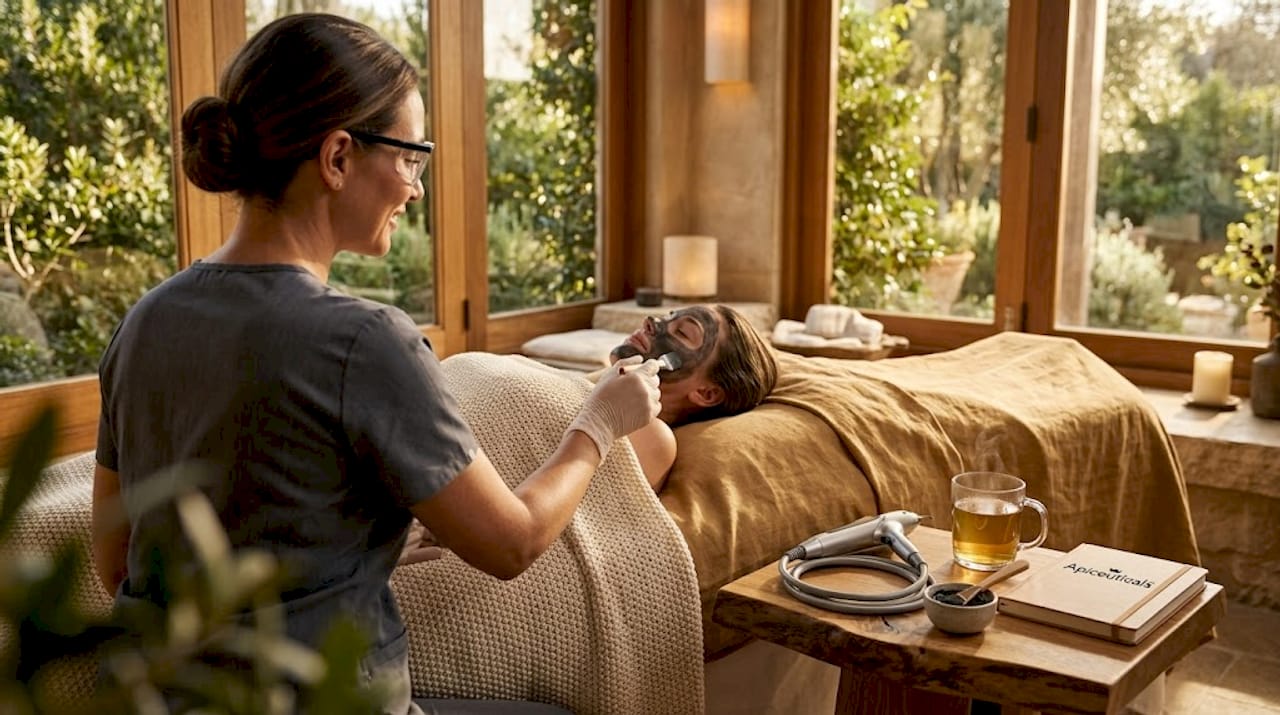
Antioxidant application in this protocol occurs both before treatment, to protect surrounding tissue from oxidative stress generated by laser energy, and after, to accelerate recovery. The laser component makes this one of the more technically intensive antioxidant skin therapy types, and it requires a qualified provider operating calibrated equipment. Results are particularly strong for oily, acne-prone, or textured skin. It is not recommended for active inflammatory acne, very dark skin tones without protocol adjustment, or clients on photosensitizing medications.
6. Medi-facials: physician-customized antioxidant protocols
Medi-facials sit at the intersection of cosmetic dermatology and aesthetic medicine. Unlike standardized spa treatments, these protocols are designed by dermatologists or medical aestheticians to address specific skin pathologies. An anti-aging antioxidant facial developed in this context might combine LED light therapy, microcurrent stimulation, and a physician-grade antioxidant serum infusion in a single session tailored to the individual’s skin mapping.
The defining feature of medi-facials is clinical personalization. Providers such as aesthetic medicine clinics that operate under medical supervision can prescribe higher-concentration antioxidant formulations than those available in spa settings, including pharmaceutical-grade Vitamin C, retinaldehyde, and alpha-lipoic acid. Long-term antioxidant intervention in a medically supervised format produces the most consistent improvements in barrier function and inflammatory skin conditions. This is the most expensive category of treatment, but for clients with chronic skin concerns or significant photoaging, the clinical ROI tends to justify the investment.
7. Comparison of professional antioxidant facial treatments
Selecting between treatments requires a structured look at how they differ across the dimensions that actually matter for your skin goals.
| Treatment | Session length | Frequency | Primary antioxidants | Best for | Downtime |
|---|---|---|---|---|---|
| HydraFacial | 30 to 60 min | Every 4 to 6 weeks | Vitamin C, peptides, hyaluronic acid | All skin types, hydration, aging | None |
| Chemical peel + antioxidant | 30 to 45 min | Every 4 to 8 weeks | Vitamin C, niacinamide, kojic acid | Pigmentation, aging, texture | 3 to 7 days |
| Oxygen facial | 30 to 45 min | Every 2 to 4 weeks | Vitamin C, botanical extracts | Sensitive skin, pre-event prep | None |
| Carbon laser facial | 30 to 60 min | Every 4 to 6 weeks | Post-treatment antioxidant serum | Oily, acne-prone, textured skin | Minimal |
| Medi-facial | 45 to 90 min | Every 4 to 6 weeks | Pharmaceutical-grade Vitamin C, retinoids | Chronic skin concerns, photoaging | Varies |
Pro Tip: If you are managing both active pigmentation and early structural aging, a chemical peel with a stabilized Vitamin C serum applied immediately after is one of the most cost-effective combinations available. The peel creates the absorption window; the antioxidant does the corrective work.
One variable this table cannot capture is product quality. Two treatments labeled identically can produce vastly different results depending on the stability and concentration of the antioxidant serums used. Most clinical benefit comes from a stable, well-formulated Vitamin C serum. Complex multi-ingredient blends often deliver far less visible improvement than their formulation complexity suggests.
8. Botanical and bee-derived antioxidant facial options
The category of natural antioxidant facial options has expanded significantly as botanical polyphenols and fatty acids have accumulated a credible evidence base for reducing oxidative stress biomarkers and improving barrier function. Resveratrol, green tea catechins, quercetin, and ferulic acid all operate as free-radical scavengers, each with a distinct redox mechanism that makes them valuable in combination or alone.
Honey-derived antioxidants occupy a particularly well-validated position in this space. Propolis, beeswax, and raw honey concentrates carry measurable ORAC values and documented anti-inflammatory properties. Apiceuticals’ PROPOWAX™ Living Honeycomb technology, which holds a global patent for the highest antioxidant activity in cosmetics independently validated by the Aristotle University of Thessaloniki, is a reference-grade example of what bee-science formulation can achieve at a clinical standard. The PROPOWAX™ system continuously releases antioxidants rather than delivering a single-dose application, which more closely mirrors the sustained antioxidant exposure that skin needs to maintain redox stability over time.
A few principles worth understanding when evaluating natural antioxidant facial options:
- Synergistic combinations work better than isolated compounds: Vitamin C and Vitamin E together provide greater photoprotective effect than either alone, because Vitamin E regenerates oxidized Vitamin C
- Source purity matters: Botanical extracts standardized to polyphenol content deliver measurably more consistent results than generic herbal infusions
- Bioavailability is not guaranteed by natural origin: Resveratrol, for example, has poor skin penetration without a delivery-enhancing carrier system
The science behind antioxidant serums explains these mechanisms in greater depth for readers who want to evaluate ingredient labels more critically.
“Antioxidants are not purely cosmetic interventions. They are biochemical stabilizers that preserve the skin’s intrinsic redox environment, which is constantly challenged by UV radiation, pollution, and metabolic byproducts. The most effective antioxidant facial treatments are those that work with that biology rather than simply sitting on top of it.”
Incorporating systemic antioxidant support through diet or supplementation compounds the benefit of any topical protocol. Topical antioxidants preserve glutathione rather than generating it, which means that dietary sources of glutathione precursors, such as sulfur-rich vegetables and whey protein, directly support the skin’s intrinsic antioxidant capacity alongside any professional treatment.
My perspective on antioxidant facial selection
I’ve spent considerable time studying how antioxidant science translates into real skin outcomes, and the honest observation I keep returning to is this: most people over-invest in treatment variety and under-invest in treatment consistency. Rotating between five different antioxidant facial treatment types every few months does less for skin than committing to one well-matched protocol and maintaining it at the recommended frequency.
What I’ve also found is that the antioxidant type selection conversation is often more important than the treatment delivery method. A precisely matched, stable Vitamin C serum infused during a HydraFacial will outperform a more elaborate treatment using unstable or poorly matched compounds. The science on this is consistent: 80% of clinical benefit is achieved by a stabilized Vitamin C formula. Complexity beyond that rarely translates proportionally to the skin.
What genuinely changes outcomes is treating antioxidant facials as part of a larger skin health architecture, not as isolated appointments. The most effective protocols I’ve observed combine professional treatments with a daily topical antioxidant routine, adequate dietary antioxidant intake, and meaningful UV protection. PROPOWAX™ Living Honeycomb, with its sustained-release mechanism and validated redox activity, represents the kind of daily antioxidant support that makes professional treatments work harder between sessions. The two categories of care are not alternatives to each other. They are complementary biological interventions operating on the same underlying chemistry.
— Apiceuticals
Build your antioxidant skincare protocol with Apiceuticals
If this overview of professional antioxidant facial treatments has clarified your options, the next logical step is building the daily routine that supports and extends those results. Apiceuticals’ formulations are grounded in the same antioxidant science covered throughout this article, with the PROPOWAX™ Living Honeycomb technology delivering patented, sustained-release antioxidant activity validated at the Aristotle University of Thessaloniki. Explore the antioxidant skincare science behind the brand’s approach, or start with the antioxidant-rich routine guide to understand how daily and professional antioxidant care work together for measurable, lasting skin health.
FAQ
What are antioxidant facial treatments?
Antioxidant facial treatments are professional or topical skin care protocols that deliver antioxidant compounds to the skin to neutralize free radicals, reduce oxidative stress, and support barrier repair. They range from infusion-based facials like HydraFacial to chemically exfoliating peels followed by antioxidant serums.
Which types of antioxidant facial treatments work best for aging skin?
Medi-facials with pharmaceutical-grade Vitamin C and chemical peel facials with post-peel antioxidant infusion are among the most effective for structural anti-aging concerns. Consistency over time matters more than treatment intensity for sustained results.
How often should you get an antioxidant facial?
Most professional antioxidant facials are recommended every 4 to 6 weeks. This frequency allows the skin to complete a turnover cycle and benefit from cumulative antioxidant exposure without overstimulation.
Can you combine professional facials with at-home antioxidant products?
Yes, and the combination produces meaningfully better outcomes. Topical antioxidants preserve glutathione between professional sessions, maintaining the skin’s redox stability rather than relying solely on periodic in-clinic treatment.
Are natural antioxidant facial options as effective as clinical treatments?
Well-formulated natural antioxidant facials using clinically validated compounds, such as resveratrol, green tea, or honey-derived propolis, can produce significant results, particularly when delivered through a technology like PROPOWAX™ Living Honeycomb that sustains antioxidant release over time rather than delivering a single application dose.
Recommended


Related posts

How bees and biodiversity sustain each other, what the science says about Greece and the Aegean, and how antioxidant beauty can start from a hive...

How organic propolis extraction works, from hive to extract: collection, solvents, EU organic rules, Greek propolis phenolics and what it means for skincare.

Build an anti pollution skincare routine that fits Greek city life: what pollution does to skin, the morning and evening steps, and the antioxidants with...

Honey moisture content explained: the EU and Greek limits, how to take a refractometer reading, what excess water does to honey, and why it matters...

How antioxidant activity measurement works: DPPH, ABTS, FRAP and ORAC explained, why results differ, and what a lab number can and cannot say about skin...















