No products in the cart.
Return To Shop
Antioxidant First UV Protection for Hair That Stops Color Fade
The most reliable UV protection for hair combines three elements working together: a physical barrier like a wide brim hat, a lightweight leave-in product with UV filters on strands and scalp, and an antioxidant step layered into daily care. Skip the barrier and you’re relying on a spray alone. Skip the antioxidants and you’re only blocking incoming light, not the oxidative cascade it triggers once it lands. PROPOWAX™ belongs in that third category, as a patented antioxidant delivery technology built for exactly this kind of cumulative, everyday defense.
TL;DR:
- UV protection for hair is most effective when combining physical barriers, topical UV filters, and antioxidants like PROPOWAX™ for cumulative defense.
- Powder formulations are best for oily or fine hair, while leave-in treatments suit dry or coarse hair, with frequent reapplication critical for processed or color-treated strands.
- Scalp coverage cannot be overlooked, as it is vulnerable to sunburn and long-term damage, especially along part lines and in high-altitude or reflective environments.
- Reapply UV products every two hours during peak sun or after water exposure, starting before sun exposure begins, to ensure continuous protection.
- Antioxidants neutralize free radicals after UV exposure but do not replace UV filters, making combined use essential for comprehensive hair and scalp safeguarding.
Table of Contents
- Quick Protection Checklist: Which Product Format Fits Which Scenario
- How Sun and UV Damage Hair and Scalp
- How to Choose the Right UV Hair Protectant for Your Hair Type
- When and How to Apply: Timing and Reapplication Rules
- Ingredients and Technologies That Actually Help
- Physical Protection and After-Sun Habits That Preserve Results
- What Happens With Cumulative, Long-Term UV Exposure
- Signs of UV Hair Damage to Watch For
- Preventive Habits Beyond Direct Sun Exposure
- Do UV Needs Change by Location and Season?
- Why Apiceuticals Treats Antioxidants as Essential, Not Optional
- Where PROPOWAX™ Fits Into Your Sun-Protection Routine
- Sources
- FAQ
Quick Protection Checklist: Which Product Format Fits Which Scenario
Not every UV hair protector suits every head of hair, and matching format to hair type is where most people get it wrong. A film former that works beautifully on coarse, dry strands will leave fine hair looking flat and oily by noon.
Here’s how to sort the options by scenario:
- Powder SPF — Best for oily or fine scalps that need a quick touch-up. Powders absorb excess oil while adding a light film-forming layer, so they double as a midday refresh without weighing hair down. Dermatologists note that powders add scalp coverage without the greasy finish creams and lotions tend to leave behind.
- Bi-phase or light mist sprays — Ideal for daily refresh and color protection between washes. These distribute evenly and won’t disturb styling, making them the easiest habit to actually stick to.
- Leave-in conditioners or light oils — Suited to dry or coarse hair, especially on beach days when hair faces hours of continuous exposure plus salt or chlorine.
- UV-protective shampoos and conditioners — Function as the preventive baseline, building a low-grade defense into every wash rather than something you remember only on vacation.
- Hats and UPF fabric — Provide the broadest, most dependable coverage, particularly for the scalp, which dermatologists flag as an easy site to overlook and one where physical barriers outperform topical sprays.
Retail and clinical guidance both converge on the same taxonomy of formats and situational use, which is a useful signal that this isn’t a marketing invention. Consumer product breakdowns confirm the same format categories apply whether you’re shopping in a pharmacy or a specialty haircare counter.
How Sun and UV Damage Hair and Scalp
Hair has no living cells to repair itself once damaged, unlike skin. Every strand you see is dead keratin, so UV exposure doesn’t heal between beach days. It accumulates.
UVB rays act on the cuticle, the hair’s outer shingle-like layer, breaking down the protein bonds that keep it smooth and reflective. UVA penetrates deeper into the cortex, where it oxidizes melanin and triggers the same kind of pigment breakdown that fades a color-treated dye job or dulls natural tone. Peer-reviewed research on hair photodamage documents this dual mechanism directly: UV radiation drives measurable protein degradation in the hair shaft alongside pigment oxidation, which is why sun-damaged hair often looks simultaneously drier and duller, not just one or the other.
Think of it as rust forming on two different metals at once. The cuticle erosion is mechanical, like sandpaper wearing down a surface. The pigment oxidation is chemical, closer to how a cut apple browns in open air. Both processes are driven by free radicals, unstable molecules generated when UV photons strike hair proteins and disrupt their structure.
The scalp deserves the same attention as any other sun-exposed patch of skin, and it rarely gets it. Most people apply sunscreen to their face and shoulders and never think about the strip of scalp visible along a part line. Dermatologists are direct about this gap: the scalp is genuinely vulnerable to sunburn and skin cancer, and a wide-brim hat remains more reliable protection than a spray applied alone. Treating the scalp as an extension of facial skin, rather than as hair-covered and therefore exempt, changes how seriously most people take this.
How to Choose the Right UV Hair Protectant for Your Hair Type
Hair type and color status should drive product selection more than brand loyalty or habit. Getting the format wrong doesn’t just waste a product, it can actively work against your hair’s texture.
Fine or oily hair responds best to powders and light mist sprays. These formats add scalp coverage and a thin protective film without adding the weight that thicker leave-ins or oils bring, which is what causes fine hair to look limp and greasy by afternoon.
Dry or coarse hair benefits from leave-in treatments and light oils that serve double duty: they act as both a moisture barrier and a film former, coating the cuticle to reduce the moisture loss that UV exposure accelerates.
Color-treated or bleached hair needs the most deliberate strategy of the three:
- Prioritize antioxidants alongside UV filters, since bleached and lightened hair has already lost some of its natural photoprotective melanin.
- Reapply more frequently than you would on virgin hair. Processed cuticles are rougher and more porous, so protective films wear off faster.
- Favor film-forming leave-ins over pure oils, which can sit on already-porous strands without adding meaningful UV defense.
Extensions require a lighter touch with oil-based products near the bonds or tape, where buildup can loosen adhesive over a season of sun exposure. A mist-based UV product applied only mid-shaft to ends tends to work better than a full leave-in treatment.
When and How to Apply: Timing and Reapplication Rules
The single biggest mistake in UV hair protection isn’t choosing the wrong product. It’s applying it once and assuming that’s enough for the day.
- Apply before sun exposure, not after you’ve already been outside for an hour. UV filters and film formers need a few minutes to settle on the hair shaft before they’re doing meaningful work.
- Reapply every two hours during peak sun, and immediately after swimming or heavy sweating. This isn’t a suggestion pulled from skincare habits transplanted onto hair. Effective hair sun protection specifically requires reapplication on that same two-hour cycle, or right after water or sweat exposure washes the product away.
- Target the parting and crown first. These are the highest-exposure zones and the ones people forget, since you can’t see your own part line without a mirror.
- Layer in the right order: leave-in treatment first, styling products second, finishing UV mist last. Applying a mist before styling product traps it under a layer that blocks reapplication later in the day.
- Towel-dry gently after swimming, then reapply rather than assuming a morning application survived an hour in a pool.
Even coverage matters more than quantity. Guides on hair sun care consistently point out that missing the part line or applying product unevenly leaves patchy protection, which is often why some sections of hair look more sun-damaged than others by the end of summer. For fine hair, use light passes rather than saturating one section, since overloading fine strands with product accelerates the greasy look you’re trying to avoid. Professional stylists who work with UV-protective styling products, including resources from Hairbond, generally recommend building protection into the same layering sequence you already use for heat styling, so it becomes a habit rather than an extra step.
Ingredients and Technologies That Actually Help
Three distinct ingredient classes do different jobs, and confusing them is common. UV filters absorb or reflect incoming radiation before it reaches the hair shaft, acting as the first line of defense. Film formers, often silicones or polymers, coat the strand and reduce the moisture loss that follows UV exposure, addressing the drying side effect rather than the radiation itself. Conditioning agents smooth the cuticle mechanically, improving how light reflects off hair and making damage less visually obvious even when it’s still occurring underneath.

Antioxidants work on a different front entirely; they neutralize the free radicals generated after UV photons have already struck hair proteins. This is the step most conventional UV sprays skip. Vitamin E, ferulic acid, and various botanical antioxidants interrupt the oxidative cascade that continues degrading keratin and pigment even minutes after direct sun exposure ends. Pairing UV filters and film formers with antioxidants addresses both the initial photon damage and the oxidative aftermath, which is a more complete strategy than filtering light alone.
PROPOWAX™ Living Honeycomb is Apiceuticals’s contribution to that antioxidant category. It holds a global patent for the highest antioxidant activity in cosmetics, a claim independently validated by the Aristotle University of Thessaloniki. The technology functions as a continuous-release system embedded in the product itself, delivering antioxidant compounds to scalp and strand rather than depositing everything in a single application.
When scanning a label, look for stabilized UV filters, a named film-forming agent, and at least one antioxidant compound listed by name rather than buried in a generic “botanical extract” blend. If you have a sensitive scalp, be cautious of heavy fragrance loads and high-alcohol spray bases, which can dry out already sun-exposed skin further.
Physical Protection and After-Sun Habits That Preserve Results
A hat does work a spray cannot. Wide-brim styles in tightly woven or UPF-rated fabric block a larger surface area than any topical product, and they require zero reapplication throughout the day. Choose a brim of at least three inches for meaningful scalp and hairline coverage.

After-sun care determines whether the day’s damage compounds or gets addressed. Start with gentle cleansing to remove salt, chlorine, or sunscreen residue without stripping hair further. Follow with an antioxidant shampoo and conditioner system, then a hydrating mask once or twice a week during peak sun months to counter the moisture loss UV exposure accelerates. Detangle only with a product that adds slip, since sun-dried hair is more prone to breakage under friction from a brush or comb. That same friction principle applies to hats and towels: rough terry cloth and tightly woven hatbands can mechanically stress already UV-stressed cuticles, so a microfiber towel and a looser-weave hat interior are worth the small upgrade.
What Happens With Cumulative, Long-Term UV Exposure
A single sunny afternoon rarely causes visible damage on its own. The real toll builds across a season, or across years of summers without a consistent routine.
Cuticle erosion is progressive. Each exposure lifts the outer scale layer slightly further, and once enough of that layer is compromised, hair loses its ability to reflect light evenly, which is the biological reason chronically sun-exposed hair looks dull rather than glossy regardless of how much conditioner is applied. Color fade follows the same cumulative logic. Pigment oxidized in June doesn’t reset in July; it stacks, which is why colorists often see clients whose summer color has shifted noticeably by Labor Day even though no single day felt like “the damage.”
The scalp carries its own long-term stakes. Years of unprotected exposure along a habitual part line contribute to the kind of chronic sun damage dermatologists associate with skin aging and, more seriously, skin cancer risk on scalp skin. Because hair often hides this exposure from casual observation, scalp sun damage tends to go unnoticed longer than damage to visibly exposed skin elsewhere.
Signs of UV Hair Damage to Watch For
Some signs of UV hair damage are obvious and some are easy to miss until they’ve progressed.
Watch for a rough, straw-like texture that wasn’t there before summer began, dullness that doesn’t respond to conditioner the way it used to, and split ends that seem to appear faster than your usual trim schedule. Color-treated hair will show brassiness or an unintended warm shift, since UV oxidation tends to strip cooler tones first. Increased tangling and a “cottony” feel at the ends, rather than the smoother feel of mid-shaft hair, often signals cuticle breakdown concentrated where sun exposure is heaviest. On the scalp, redness, tightness, or peeling along the part line are signs that skin, not just hair, has taken direct UV exposure and needs the same aftercare a sunburned shoulder would get.

Preventive Habits Beyond Direct Sun Exposure
UV exposure isn’t limited to obvious sun; it happens through office windows, in cars, and off reflective surfaces like water, sand, snow, and concrete, all of which bounce additional UV back onto hair and scalp that already faced direct exposure. A driver’s part line, for instance, often shows more cumulative sun damage than the rest of the scalp simply from years of window-side UV.
Building UV-protective steps into a daily routine, rather than reserving them for beach trips, closes this gap. A leave-in with UV filters applied most mornings, regardless of whether the day includes deliberate sun exposure, addresses the incidental dose that accumulates from commuting, errands, and time near windows. Pairing that habit with an antioxidant-forward shampoo and conditioner system gives ongoing, low-effort coverage against the oxidative load that builds even on days that don’t feel sunny.
Do UV Needs Change by Location and Season?
UV intensity varies significantly by latitude, altitude, and season, and a routine calibrated for one climate can under-protect in another. Higher altitudes see stronger UV exposure because there’s less atmosphere to filter radiation, which is why hair damage at ski resorts and mountain destinations often surprises people who associate sun damage only with beaches. Tropical and equatorial locations carry consistently high UV year-round, while temperate regions see sharp seasonal swings, meaning a spring-weight routine is often insufficient by midsummer.
Reflective surfaces compound the seasonal picture. Snow reflects a large share of UV back upward, so winter sun exposure at altitude can rival summer beach exposure, an detail skiers and snowboarders frequently overlook. The practical takeaway is to treat UV protection as climate-responsive rather than fixed: increase reapplication frequency and lean more heavily on physical barriers during high-altitude, tropical, or snow-reflective conditions, and maintain the daily antioxidant baseline year-round regardless of season.
Why Apiceuticals Treats Antioxidants as Essential, Not Optional
Blocking UV rays addresses only half the problem. The oxidative cascade that follows exposure continues degrading keratin and pigment long after hair leaves direct sunlight, which is why filters alone leave a gap that antioxidants are built to close. PROPOWAX™ Living Honeycomb, validated by the Aristotle University of Thessaloniki for the highest antioxidant activity recorded in cosmetics, reflects a beekeeping heritage the Roumeliotis family has practiced in Arcadia since 1981. Consistency matters more than intensity here. A single application won’t undo a season of sun; a routine will.
— Apiceuticals
Where PROPOWAX™ Fits Into Your Sun-Protection Routine
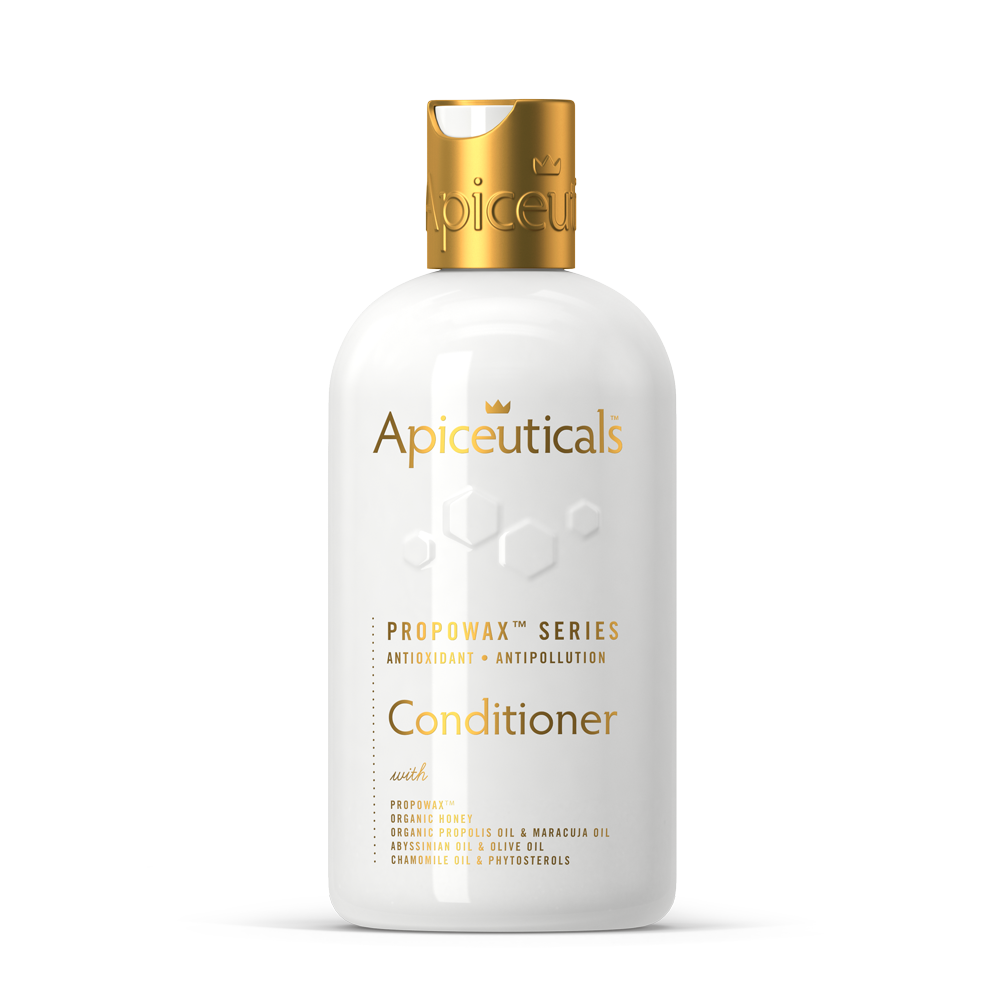
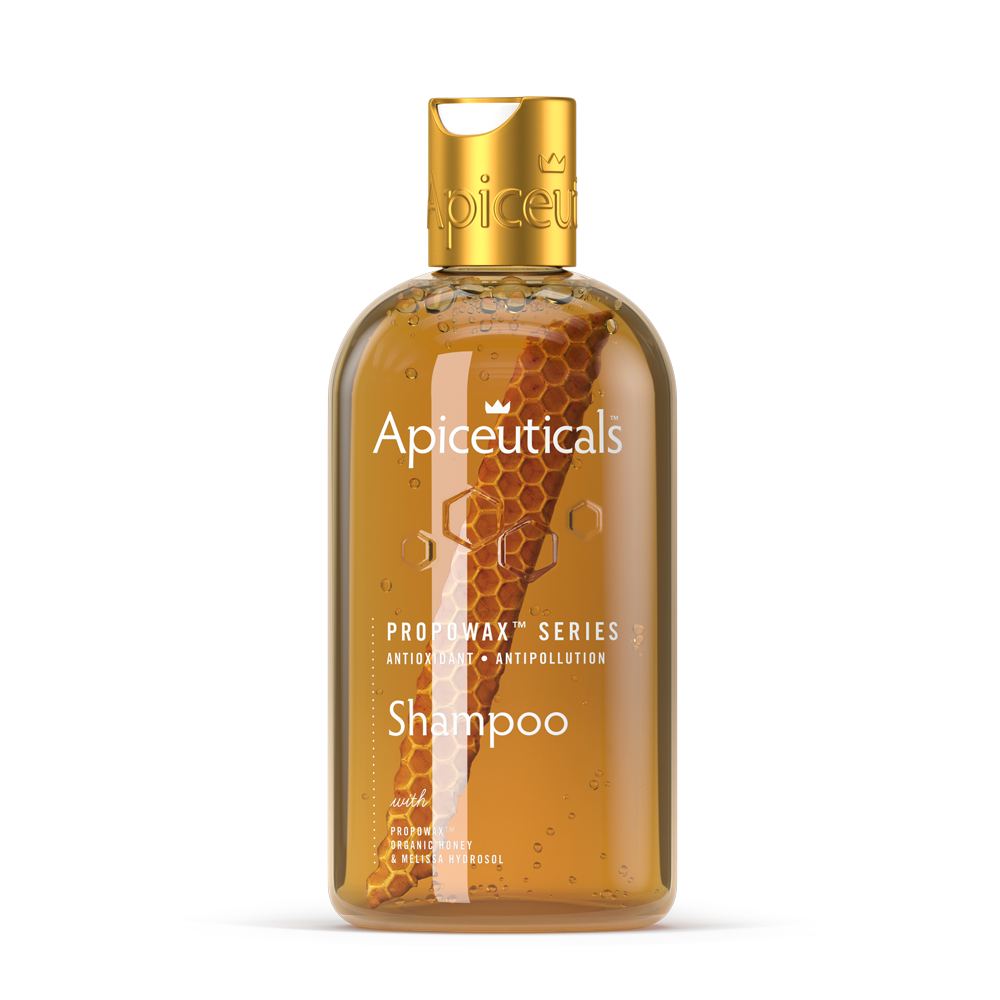
Once you know the routine, the next question is which products cover which role. An antioxidant shampoo and conditioner system builds the preventive baseline described earlier, working into every wash rather than sitting on top of hair as an afterthought. A leave-in serum picks up the daily film-forming and antioxidant layer that fits under styling products and before any UV mist. And an antioxidant treatment step, used weekly, addresses the cumulative oxidative load that builds across a season of exposure, whether that exposure came from the beach or a window seat on a commute.

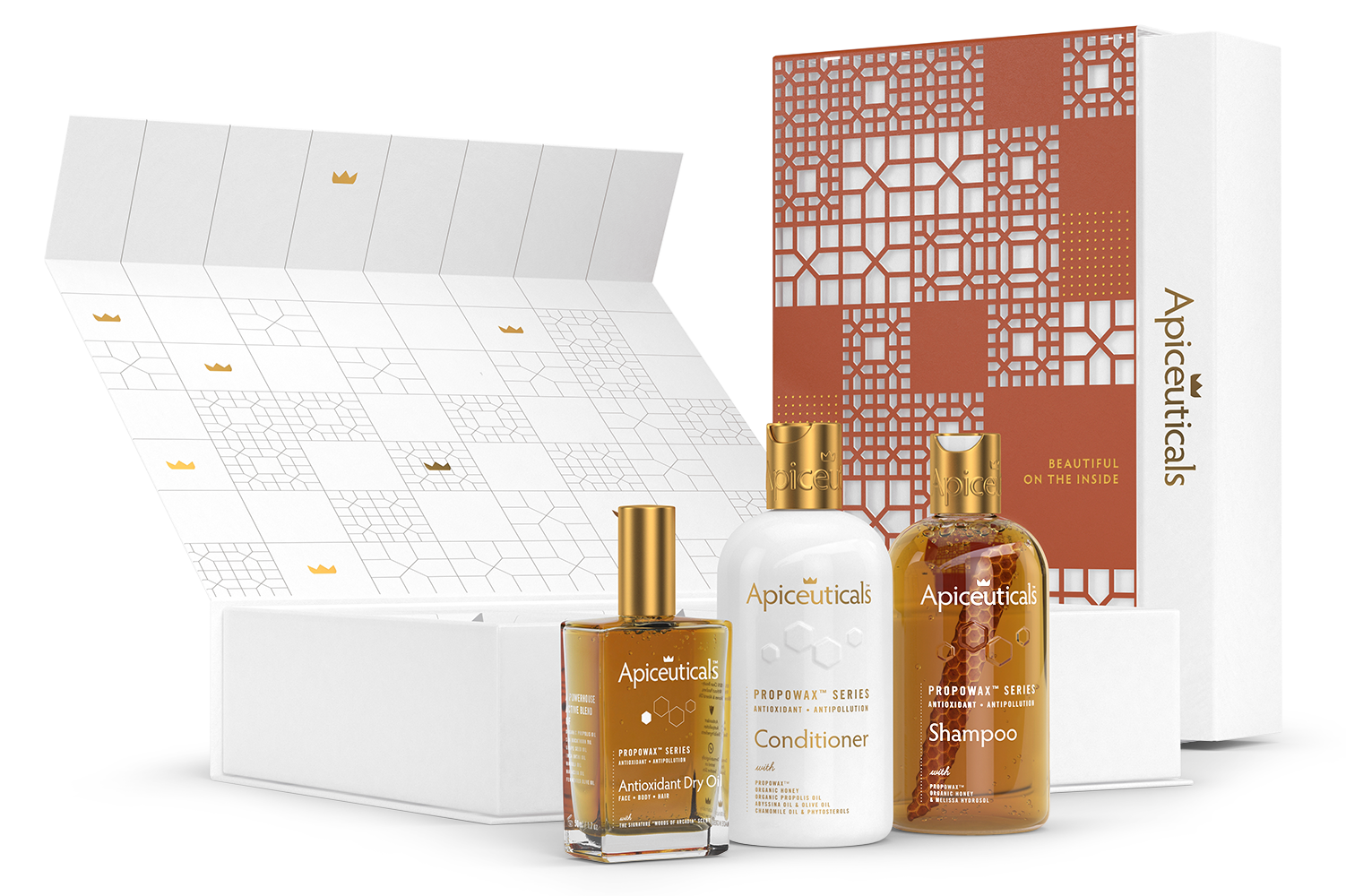
Apiceuticals built its PROPOWAX™ technology page as the place to understand exactly how the Living Honeycomb delivery system works, patent and university validation included, before deciding what belongs in a personal routine. For a broader look at how antioxidants slot into scalp and hair care specifically, the antioxidant haircare guide walks through seven practical moves that pair naturally with the checklist above. If sun protection is part of a wider skin routine, the shop is where the antioxidant shampoo, leave-in, and treatment formats described here are available to browse directly.
Sources
- How to protect your hair against sun damage | Everyday Health
- Hair sunscreen: What the experts say | Healthline
- Photodamage to hair: mechanisms and mitigation (PMC article)
FAQ
Does UV protection for hair actually work?
Yes. UV filters and film formers measurably reduce the cuticle erosion and pigment oxidation that peer-reviewed research links to sun exposure, though they work best combined with a physical barrier and antioxidant care rather than used alone.
What is the best UV protection for hair?
The most effective approach combines a wide-brim hat or UPF fabric for scalp coverage, a lightweight UV-filtering mist or powder for strands, and an antioxidant step like PROPOWAX™ to address the oxidative damage that filters alone don’t stop.
How can I protect my hair from UV rays?
Apply a UV-protective product before sun exposure, reapply every two hours during peak sun or immediately after swimming, and prioritize the scalp and part line, which dermatologists consistently flag as the most overlooked exposure site.
What is the best sun protection for hair?
There’s no single best format; powders suit fine or oily hair, leave-ins and light oils suit dry or coarse hair, and color-treated hair benefits most from antioxidant-forward formulas paired with more frequent reapplication.
Do I need different UV hair protection in winter versus summer?
Yes. High-altitude and snow-reflective conditions can deliver UV exposure comparable to summer beach days, so reapplication frequency and physical barriers should scale with the actual UV intensity of your location and season, not the calendar alone.
Can antioxidants alone replace UV filters in a hair care routine?
No. Antioxidants neutralize free radicals generated after UV exposure, but they don’t block incoming radiation the way UV filters do, so the two work best as complementary steps rather than substitutes for each other.
Recommended


Related posts

Explore how a trial lasting 24 weeks and Malassezia research link scalp oxidative stress to shedding, and where PROPOWAX™ fits continuous antioxidant care.

See when silicones smooth hair or build up, and how PROPOWAX™ holds a global patent for highest antioxidant activity, validated by Aristotle University.

Explore mountain honey benefits for skin and body, from floral polyphenols and antioxidant activity to evidence on cough relief, wound care, and safe use.

Propolis delivers stronger antioxidant and antimicrobial action. Royal jelly boosts hydration and repair. Learn which suits your skin or scalp and why...

Pick sulfate-free or sulfate shampoo by your scalp, porosity, and color needs. Read evidence-backed guidance, antioxidant options, and a 4-step switch...