
No products in the cart.
Return To Shop
Ways to Maximize Skincare Absorption: Science-Backed Steps
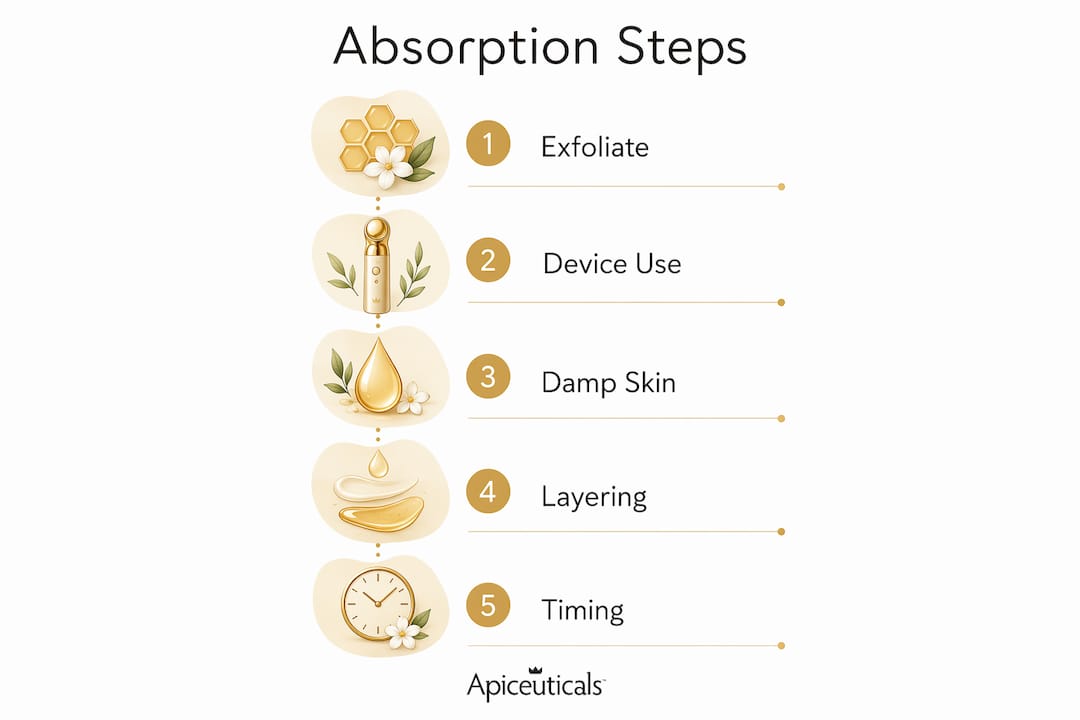
To maximize skincare absorption, the highest-impact steps are clean skin, gentle scheduled exfoliation, application to slightly damp skin, and strict light-to-heavy layering. Research shows that optimal layering order can significantly increase serum absorption compared to applying a serum after an oil. These ways to maximize skincare absorption are safe for most skin types when introduced gradually, and they cost nothing beyond your existing routine.
Start here today:
- Cleanse thoroughly before applying any active or serum.
- Apply serums to skin that is still slightly damp from toner or mist.
- Layer products from thinnest to thickest consistency.
Safety note: Never combine strong actives (retinoids, AHAs, and vitamin C) in the same application without a titration schedule. When your skin stings, flakes persistently, or feels raw, stop all actives and patch-test before reintroducing.
Pro Tip: Before changing your full routine, test any new method on a small area for 48 hours. Barrier damage from over-optimization is harder to repair than a slow routine.
Table of Contents
- 1. Exfoliation reduces surface buildup and opens the path for actives
- 2. Professional and advanced device options go beyond what at-home products can do
- 3. Damp skin, steam, and occlusion each change how much product your skin retains
- 4. Layering order and application technique are among the most effective ways to maximize skincare absorption
- 5. Actives, timing, and safe combinations require a sequenced approach
- 6. Facial tools and massage techniques distribute product but have real limits
- 7. Signs of barrier damage tell you when to stop, not push further
- 8. Realistic timelines and cost ranges help you choose the right path
- 9. Formulation science and antioxidant delivery determine what actually reaches your skin
- Key Takeaways
- Why absorption strategy is really a formulation question
- Apiceuticals and antioxidant-forward formulation
- FAQ
1. Exfoliation reduces surface buildup and opens the path for actives
The stratum corneum accumulates dead corneocytes that physically increase the diffusion distance between a product and viable skin cells. Removing that buildup shortens the path actives must travel. Chemical exfoliants such as AHAs (glycolic, lactic acid), BHAs (salicylic acid), and enzymes dissolve intercellular bonds without the micro-tears that aggressive physical scrubs can cause.
Frequency matters as much as method. For many skin types, regular chemical exfoliation is effective without compromising the barrier. Sensitive or reactive skin should start less frequently. Physical microdermabrasion is a clinic-grade option for more significant surface renewal, appropriate when at-home acids are insufficient.
- AHAs: best for dry, sun-damaged, or uneven-texture skin.
- BHAs: preferred for oily or acne-prone skin; oil-soluble, so they penetrate follicles.
- Enzyme exfoliants (papain, bromelain): gentler option for sensitive skin.
Pro Tip: Apply a humectant like hyaluronic acid immediately after exfoliating. It draws moisture into the freshly cleared surface and limits transepidermal water loss (TEWL) during the recovery window.
2. Professional and advanced device options go beyond what at-home products can do
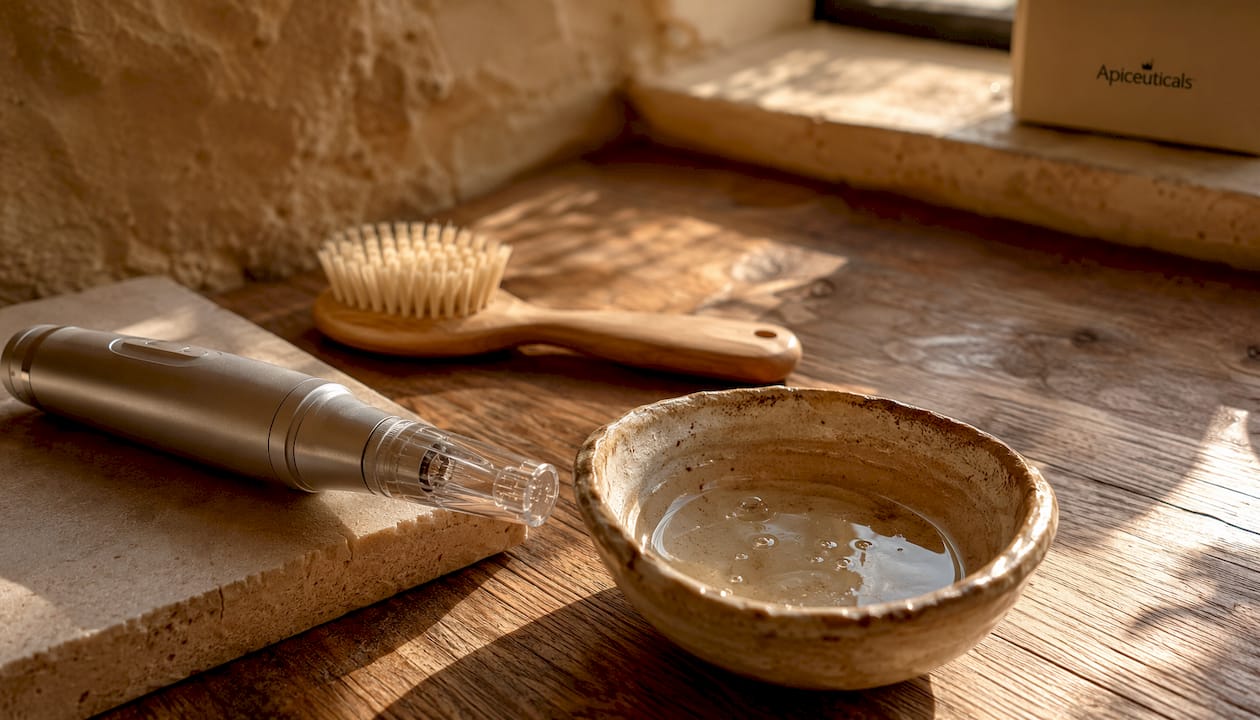
Clinic-grade procedures increase skin permeability through controlled barrier disruption, creating temporary channels that allow actives to reach deeper layers.
| Procedure | Typical cost range | Sessions needed | Downtime |
|---|---|---|---|
| Chemical peel (superficial) | — | 3–6 | 2–5 days |
| Microdermabrasion | — | 4–6 | Minimal |
| Microneedling | — | 3–6 | 2–4 days |
| Electroporation (device) | — | Ongoing | None |
Microneedling creates micro-channels through the epidermis, temporarily increasing transdermal delivery of applied serums. Electroporation uses brief electrical pulses to transiently alter lipid packing in the stratum corneum, allowing larger or hydrophilic molecules to pass that would otherwise be blocked. Chemical peels remove surface layers chemically, improving contact for subsequent topicals.
Professional devices produce clinical gains, but they also raise the risk of post-procedural TEWL and require careful aftercare to protect the compromised barrier. Always consult a licensed clinician before scheduling microneedling or medium-depth peels, particularly if you use retinoids or are pregnant; for pregnancy-safe skincare guidance, see this natural pregnancy skincare routine. Costs above reflect general U.S. market ranges and vary by provider and region.
3. Damp skin, steam, and occlusion each change how much product your skin retains
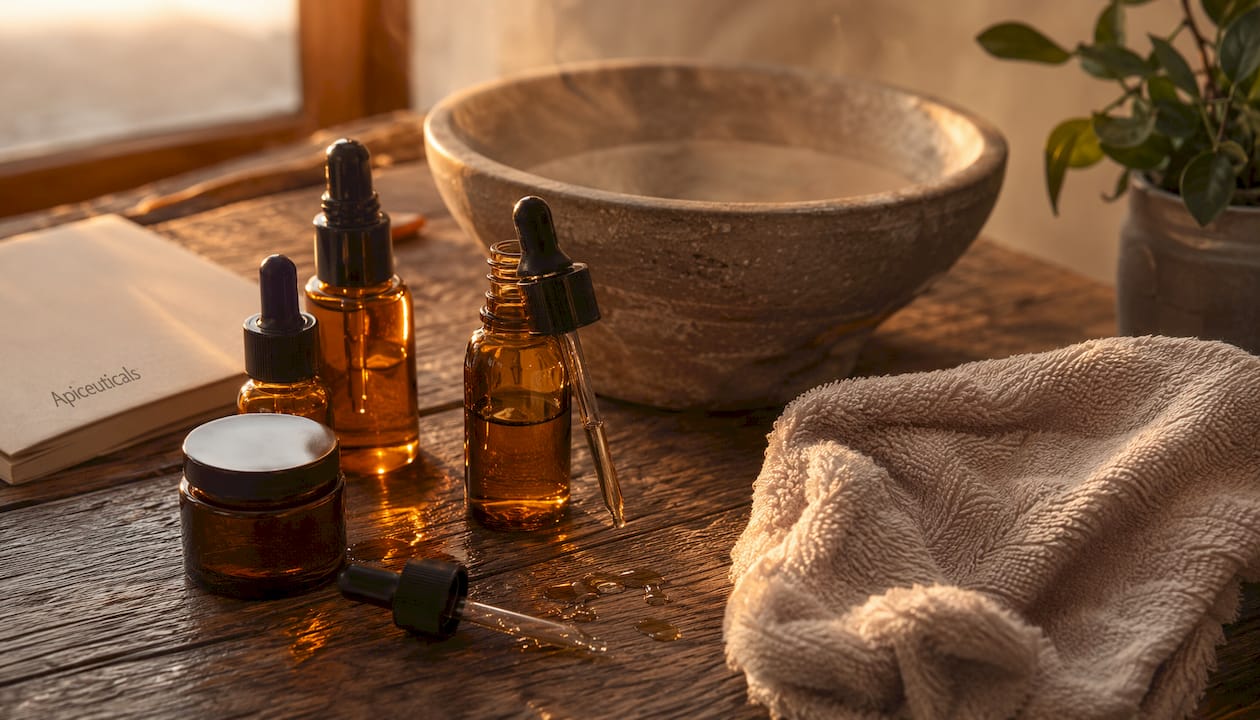
Hydration loosens the intercellular lipids of the stratum corneum, warmth increases molecular diffusion rates, and an occlusive layer raises both hydration and the residence time of actives on the skin surface. These three mechanisms work together, and skin hydration and warmth are among the most accessible ways to increase permeability without any additional product.
A practical steam-and-damp routine:
- Cleanse with lukewarm water (not hot, which strips lipids).
- Optional: hold your face 10–12 inches above a bowl of steaming water for 60–90 seconds.
- Pat skin to damp, not dry.
- Apply your first serum or essence immediately while skin is still hydrated.
- Wait 1–2 minutes between layers.
- Seal with a moisturizer or, when appropriate, a light occlusive.
Pro Tip: Use occlusion selectively. Unsaturated fatty acids in some facial oils can increase penetration but may also worsen TEWL if the barrier is already compromised. Reserve heavy occlusives for a healthy, intact barrier.
4. Layering order and application technique are among the most effective ways to maximize skincare absorption
The thin-to-thick principle is grounded in physicochemistry. Small, hydrophilic molecules (toners, essences, vitamin C serums) need direct contact with the skin surface to partition into the aqueous environment of the stratum corneum. Applying a heavier, lipid-rich product first creates a film that physically blocks that contact.
A practical AM sequence:
- Cleanser
- Toner or essence (apply to damp skin; press gently, do not rub)
- Small-molecule serums (vitamin C, niacinamide, peptides)
- Thicker serums or treatments
- Moisturizer
- Sunscreen (always last in AM; sunscreen applied last maintains full UV protection)
Pressing and patting rather than rubbing increases contact time and reduces mechanical disruption of the film. For the Korean 7-skin method, a thin toner or essence is pressed into skin in five to seven successive layers before any serum. This builds hydration incrementally and is particularly effective for dry or dehydrated skin types that need a saturated surface before actives.
Wait times between layers matter. Short intervals between layers improve cumulative absorption: absorption improves from about 35% with no wait to around 62% with a one-minute pause, rising further with longer waits, but one to two minutes between steps is the practical sweet spot for most routines. For detailed guidance on product layering order, Apiceuticals provides a step-by-step reference.
5. Actives, timing, and safe combinations require a sequenced approach
Retinoids, AHAs/BHAs, and vitamin C are among the most evidence-supported actives in topical skincare, but their efficacy depends on pH, timing, and what they are paired with. Vitamin C (L-ascorbic acid) is most stable and effective at pH 2.5–3.5, which conflicts with the higher pH of most AHAs. Applying both in the same session can reduce the efficacy of both and increase irritation.
A safe scheduling framework:
- AM: Vitamin C serum (after cleansing, before moisturizer and sunscreen).
- PM: Retinoid or AHA/BHA exfoliant (not both on the same night).
- Alternating nights: Retinoid nights and acid nights, never combined.
The “1% rule” is a practical titration principle: when introducing a new active, start at the lowest available concentration and increase only after your skin has tolerated the current level for two to four weeks. This minimizes cumulative irritation from stacking multiple actives simultaneously.
Patch-test steps for any new active:
- Apply a small amount to the inner forearm or behind the ear.
- Wait 48 hours.
- If no redness, stinging, or swelling appears, introduce it into your routine at the lowest frequency (once or twice weekly).
- Increase frequency only after two weeks of tolerance.
6. Facial tools and massage techniques distribute product but have real limits
Facial massage, gua sha, and jade or quartz rollers increase transient blood flow and support lymphatic drainage. They improve product distribution across the skin surface, which is genuinely useful, but they do not drive actives into deeper dermal layers. Think of them as tools for contact optimization, not deep delivery.
At-home dermarollers (typically 0.2–0.5 mm needle depth) differ meaningfully from clinical microneedling (0.5–2.5 mm). At-home devices at low depths can mildly increase surface permeability when used correctly, but the infection risk from improper sterilization is real.
- Cleanse the tool with 70% isopropyl alcohol before and after each use.
- Apply serum before rolling, not after, to avoid pushing surface bacteria into micro-channels.
- Use light pressure; the roller should glide, not drag.
- Replace needle cartridges every 8–12 uses.
Pro Tip: Gua sha and rollers are most effective when used after your serum has been pressed in. They extend contact time and support drainage rather than replacing the absorption step itself.
7. Signs of barrier damage tell you when to stop, not push further
Increased absorption is only beneficial when the barrier is intact. Pushing absorption strategies on a compromised barrier drives irritants and allergens deeper, not just actives.
Clinical signs of barrier damage to watch for:
- Persistent redness or flushing that does not resolve within an hour of application.
- Stinging or burning from products that previously caused no reaction.
- Chronic tightness, flaking, or a feeling of rawness.
- Increased sensitivity to water temperature or wind.
A short repair protocol: gentle cleanse, ceramide-rich moisturizer twice daily, no actives, no fragrance, no physical exfoliation. For broader skin protection techniques, Apiceuticals covers barrier-repair strategies in detail.
8. Realistic timelines and cost ranges help you choose the right path
At-home tactics produce noticeable changes in skin texture and hydration within days to weeks. Structural changes from actives like retinoids or vitamin C typically require eight to twelve weeks of consistent use. Professional procedures accelerate outcomes but require recovery time and recurring investment.
| Approach | Typical timeframe for visible results | Maintenance frequency |
|---|---|---|
| Correct layering order | Days (texture/hydration) | Daily |
| Chemical exfoliation | 2–4 weeks | 2–3× weekly |
| Professional chemical peel | 1–3 weeks post-procedure | Every 4–6 weeks |
| Microneedling series | 4–8 weeks post-series | Every 3–6 months |
- Daily: Cleanse, layer correctly, apply sunscreen.
- Weekly: Exfoliate one to three times depending on skin type.
- Quarterly: Consider a professional procedure if at-home results plateau.
9. Formulation science and antioxidant delivery determine what actually reaches your skin
The vehicle a formula uses, whether water-based, oil-based, or a hybrid emulsion, determines how an active partitions into the stratum corneum. Molecules under approximately 500 Daltons penetrate transcellularly with relative ease; larger molecules rely on follicular routes, which represent a smaller fraction of total skin surface area. Humectants like hyaluronic acid increase surface hydration and residence time, which raises uptake for many actives without driving them into the dermis.
Antioxidant delivery presents a specific formulation challenge: antioxidants are inherently reactive and can degrade before reaching the skin surface. Stability in the vehicle and controlled release are what separate a well-formulated antioxidant product from one that oxidizes in the bottle.
“Arguably the global leader in antioxidant activity” is how British Vogue described Apiceuticals’ PROPOWAX™ technology. The PROPOWAX™ Living Honeycomb is a patented delivery system that continuously releases antioxidants onto the skin surface, validated independently by the Aristotle University of Thessaloniki and protected by a global patent for highest antioxidant activity in cosmetics. For the technical detail on how this delivery mechanism works, the PROPOWAX™ technology page provides the full scientific framework. Apiceuticals’ research on antioxidant types and formulation is also a useful reference for understanding vehicle choices and stability considerations.
Key Takeaways
Consistent, correctly sequenced application of well-formulated products is the single most effective and safest approach to improving topical absorption.
| Point | Details |
|---|---|
| Layer thin to thick | Optimal layering order can raise serum absorption to 89% vs 42% when reversed. |
| Wait between layers | A one-to-two minute pause between steps raises cumulative absorption materially. |
| Exfoliate on schedule | Chemical exfoliants two to three times weekly clear surface buildup without barrier damage. |
| Recognize barrier damage | Persistent stinging, redness, or rawness means stop actives and repair before continuing. |
| Apiceuticals PROPOWAX™ | The patented Living Honeycomb delivers antioxidants continuously, validated by the Aristotle University of Thessaloniki. |
Why absorption strategy is really a formulation question
The conversation about skincare absorption tends to focus on technique, and technique does matter. But the more you study the evidence, the clearer it becomes that the formulation itself is doing most of the work. A perfectly layered routine built on an unstable vitamin C serum that has already oxidized in the bottle delivers very little, regardless of how carefully you press it in. This is why antioxidant stability and controlled release are not secondary concerns. They are the foundation. The practical steps in this article, from exfoliation schedules to wait times, create the optimal conditions for a formula to perform. Whether that formula actually delivers is a separate, upstream question worth asking before you buy.
Apiceuticals and antioxidant-forward formulation
For readers who want to take the formulation question seriously, Apiceuticals offers a science-grounded starting point. The brand’s PROPOWAX™ Living Honeycomb technology holds a global patent for the highest antioxidant activity in cosmetics, independently validated by the Aristotle University of Thessaloniki. Every product in the PROPOWAX™ Series and the HONEY BALM™ Series is dermatologically tested on sensitive skin with 0% irritation and excludes over 2,000 potentially harmful ingredients. The HONEY BALM™ Series has demonstrated clinically observed wrinkle reduction. To understand how antioxidant delivery works at the formulation level, the PROPOWAX™ technology page is the most detailed public resource Apiceuticals provides. For a broader view of antioxidant skincare science, that resource connects formulation choices directly to skin outcomes.
Note: Advanced procedures such as microneedling, chemical peels, and electroporation require a licensed clinician and are entirely separate from topical product choices.
FAQ
Why won’t my skin absorb skincare products?
The most common reasons are excess surface buildup (dead corneocytes), applying products in the wrong order, or using products on completely dry skin. Gentle exfoliation and applying to slightly damp skin address both issues.
What is the correct layering order for maximum absorption?
Apply products from thinnest to thickest: cleanser, toner or essence, small-molecule serums, thicker treatments, moisturizer, and sunscreen last in the morning. Dermatologists recommend this sequence to preserve each product’s efficacy.
What is the Korean 7-skin method?
It involves pressing a lightweight toner or essence into skin in five to seven successive layers before applying serums. The method builds surface hydration incrementally and works best for dry or dehydrated skin types.
What is the 1% rule in skincare?
It is a titration principle: introduce new actives at the lowest available concentration and increase only after two to four weeks of tolerance, minimizing cumulative irritation from stacking multiple actives.
What is the 4-2-4 rule in skincare?
The 4-2-4 cleansing method involves massaging an oil cleanser for four minutes, emulsifying with water for two minutes, then rinsing with a water-based cleanser for four minutes. The extended contact time is intended to improve makeup and sebum removal before applying actives.
How long does it take to see results from improved absorption strategies?
Hydration and texture improvements from correct layering and exfoliation can appear within days to weeks. Structural changes from actives like retinoids typically require eight to twelve weeks of consistent use.
Recommended


Related posts

How bees and biodiversity sustain each other, what the science says about Greece and the Aegean, and how antioxidant beauty can start from a hive...

How organic propolis extraction works, from hive to extract: collection, solvents, EU organic rules, Greek propolis phenolics and what it means for skincare.

Build an anti pollution skincare routine that fits Greek city life: what pollution does to skin, the morning and evening steps, and the antioxidants with...

Honey moisture content explained: the EU and Greek limits, how to take a refractometer reading, what excess water does to honey, and why it matters...

How antioxidant activity measurement works: DPPH, ABTS, FRAP and ORAC explained, why results differ, and what a lab number can and cannot say about skin...















