
No products in the cart.
Return To Shop
What Is Botanical Skincare? Science, Benefits, and Ingredients
TL;DR:
- Botanical skincare uses standardized plant bioactives to reduce oxidative stress and inflammation. Recent research confirms these phytochemicals support skin repair with proven antioxidant and anti-inflammatory mechanisms. The most effective products combine scientific extraction, validation, and advanced formulation technology for real skin benefits.
Botanical skincare is defined as skin care formulated primarily with plant-derived ingredients containing bioactive compounds that act on skin physiology through measurable biochemical pathways. This category is distinct from generic natural skincare products because it relies on specific phytochemicals, including polyphenols, flavonoids, and carotenoids, that reduce oxidative stress, modulate inflammation, and support skin repair. Recent 2025–2026 clinical research confirms these mechanisms at the molecular level, identifying reductions in inflammatory markers such as IL-6 and IL-8 as direct outcomes of phytochemical activity. The science behind plant-based skincare has advanced significantly, with formulation technologies now enabling stable, bioavailable delivery of botanical actives. Apiceuticals’ PROPOWAX™ Living Honeycomb, which holds a global patent for the highest antioxidant activity in cosmetics validated by the Aristotle University of Thessaloniki, represents a benchmark in what rigorous botanical formulation can achieve.
What is botanical skincare made of, and how do botanical ingredients work?
Botanical ingredients are plant-derived substances that carry biologically active molecules capable of interacting with skin cells. They fall into three broad classes: standardized extracts (concentrated fractions of plant material), fixed and essential oils (lipid-rich carriers with their own bioactivity), and isolated phytochemicals (purified compounds such as resveratrol, quercetin, or beta-carotene). Each class contributes differently to a formula’s overall effect on the skin.
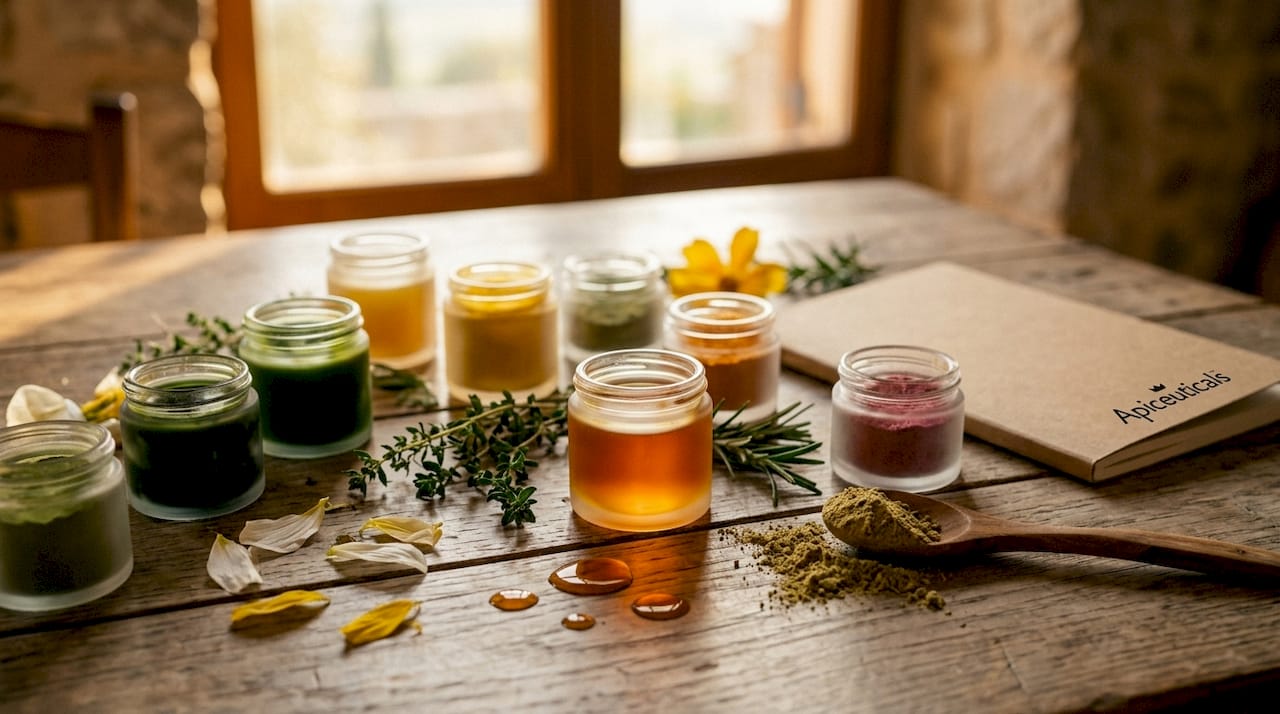
The primary action mechanism is antioxidant activity. Phytochemicals neutralize reactive oxygen species and inhibit enzymes, including matrix metalloproteinases, that degrade collagen and elastin. Think of free radicals as rust corroding a metal surface. Polyphenols and carotenoids act as a protective coating, slowing that structural breakdown before it becomes visible on the skin. A secondary mechanism is inflammation modulation: flavonoids and phenolic acids suppress pro-inflammatory cytokine pathways, reducing the chronic low-grade inflammation that accelerates skin aging.
Standardization is the factor that separates functional botanical skincare from decorative plant-infused products. Rigorous quality control determines the actual concentration of bioactive compounds in a finished formula, regardless of what the label says. A product listing “rose hip oil” may contain trace amounts of the active carotenoids or a therapeutically relevant concentration. Only standardized extraction and verified bioactive levels confirm the difference. Industry professionals recognize CO2 extraction and standardized whole-plant materials as hallmarks of authentic botanical formulations, precisely because these methods preserve and quantify the active fraction.
The role of botanical extracts in skin science extends to the scalp and hair as well, where the same antioxidant and anti-inflammatory mechanisms protect follicle health and reduce oxidative damage to the hair fiber. Apiceuticals’ PROPOWAX™ Living Honeycomb applies this principle through a patented delivery system that continuously releases antioxidants from a living honeycomb matrix embedded in every product.
Pro Tip: When evaluating a botanical product, look for the extraction method and standardized percentage of the key active on the label or product page. If neither is listed, the plant ingredient is likely serving as a carrier rather than a functional active.
What are the proven benefits of botanical skincare for different skin types?
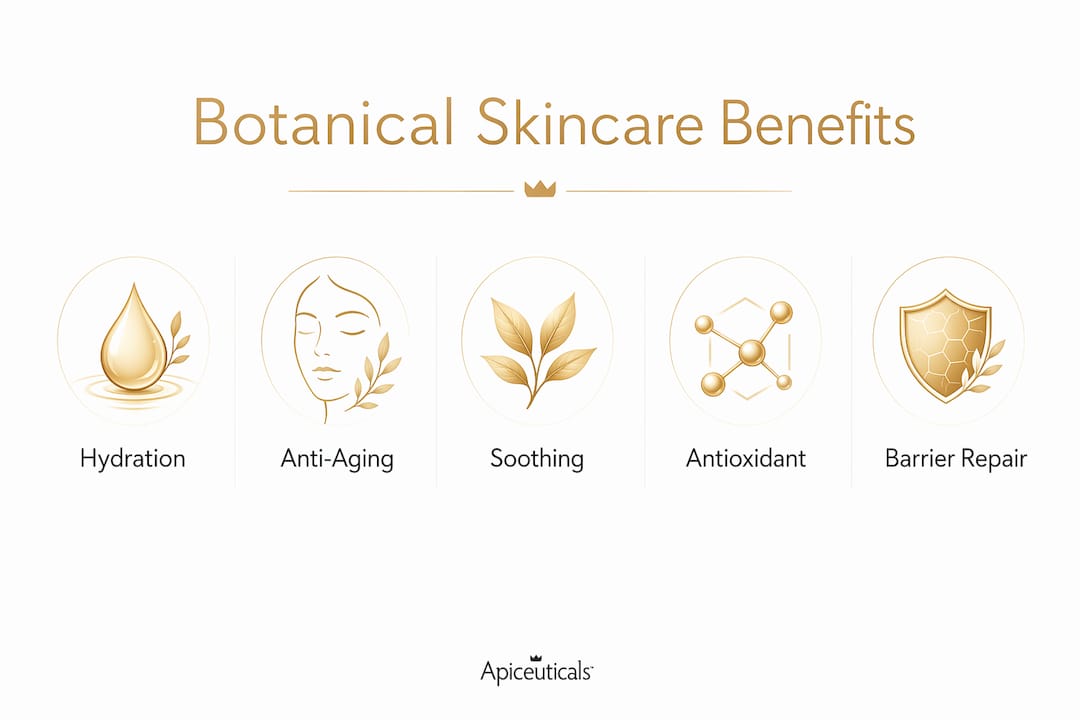
Clinical evidence now supports botanical skincare benefits across multiple skin concerns, with the strongest data in hydration, elasticity, and inflammatory skin conditions. Traditional medicinal plants improve skin hydration, elasticity, and brightness, with Mediterranean dermatological practice offering particularly well-documented examples of botanical ingredients used as both preventive and therapeutic agents.
For sensitive or reactive skin, plant-based skincare holds a structural advantage over many synthetic alternatives. Botanical actives typically work through multiple, overlapping pathways rather than a single aggressive mechanism. This means the skin barrier is less likely to experience the irritation associated with high-concentration synthetic actives such as retinoids or alpha-hydroxy acids at clinical doses. Dermatological testing of formulations like Apiceuticals’ HONEY BALM™ Series, which is waterless and clinically proven to deliver 26% wrinkle reduction, confirms 0% irritation on sensitive skin, reflecting what well-formulated botanical skincare can achieve.
For aging skin, the antioxidant benefit is the most scientifically substantiated. Polyphenols and carotenoids reduce IL-6 and IL-8, two inflammatory markers directly linked to collagen degradation and accelerated skin aging. Reducing these markers does not just slow visible aging. It supports the skin’s own repair mechanisms, which depend on a low-inflammation environment to function correctly.
| Skin concern | Relevant botanical mechanism | Key phytochemical class |
|---|---|---|
| Dehydration and barrier damage | Lipid replenishment, ceramide-like activity | Fatty acid-rich plant oils |
| Premature aging and oxidative damage | Free radical neutralization, enzyme inhibition | Polyphenols, carotenoids |
| Sensitive or reactive skin | Cytokine suppression, anti-inflammatory signaling | Flavonoids, phenolic acids |
| Hyperpigmentation | Tyrosinase inhibition | Hydroxycinnamic acids, kojic acid precursors |
Pro Tip: If you have reactive skin, prioritize botanical formulas that list their clinical testing results explicitly. Dermatological testing on sensitive skin with documented irritation rates is the most reliable indicator of real-world tolerability.
How does botanical skincare compare to traditional synthetic skincare?
The comparison between botanical and synthetic skincare is not a binary choice between nature and science. It is a question of formulation philosophy and quality control. Synthetic actives such as niacinamide, retinol, and peptides offer precise, single-target activity at known concentrations. Botanical actives offer multifunctional bioactivity, often acting on several pathways simultaneously, but they require more sophisticated formulation to deliver consistent results.
Modern botanical skincare uses “green science” to combine the biological complexity of plant actives with the precision of pharmaceutical-grade formulation. This means botanical products are no longer simply raw plant materials in a cream base. They are scientifically optimized systems where extraction method, standardization, and delivery technology determine whether the active reaches the target tissue at an effective concentration.
A common consumer misconception is that “natural” automatically means safe and effective. Neither claim is inherently true. Poison ivy is natural. Synthetic hyaluronic acid is safe and clinically effective. The decisive variable is not origin but standardization and quality control. A botanical formula with verified bioactive levels and a validated delivery system outperforms an unstandardized plant extract every time.
| Criterion | Standardized botanical formulation | Conventional synthetic formulation |
|---|---|---|
| Mechanism of action | Multifunctional, multi-pathway | Single-target, high precision |
| Formulation complexity | High (stability, bioavailability challenges) | Moderate (well-characterized actives) |
| Skin tolerance profile | Generally favorable for sensitive skin | Variable, depends on active and concentration |
| Quality control requirement | Critical (standardized extraction essential) | High (concentration and purity verified) |
| Antioxidant activity | Broad-spectrum via phytochemical diversity | Narrow-spectrum, ingredient-specific |
The science behind beauty products confirms that the most effective modern formulations integrate both approaches. Apiceuticals’ PROPOWAX™ Living Honeycomb exemplifies this integration: a botanical-origin antioxidant system, propolis-derived and bee-science-validated, formulated with patented technology to deliver measurable, sustained antioxidant activity.
What advances in formulation technology enhance botanical skincare effectiveness?
The central challenge in botanical skincare has always been delivery. Many phytochemicals are unstable in water-based formulas, degrade on exposure to light or oxygen, and absorb poorly through the skin’s lipid barrier. Formulation technology now addresses each of these limitations directly.
Nanotechnology delivery systems, including nanoemulsions and nanogels, protect botanical actives from degradation, increase skin penetration, and allow controlled release over time. A nanoemulsion reduces droplet size to the nanometer scale, which dramatically increases the surface area available for skin absorption. A nanogel creates a semi-solid matrix that releases the active gradually, extending its residence time in the epidermis.
Key formulation advances that define effective botanical skincare today include:
- Nanoencapsulation: Encases fragile phytochemicals in lipid or polymer shells, protecting them from oxidation and improving transdermal delivery.
- CO2 supercritical extraction: Preserves the full bioactive profile of plant material without heat degradation or solvent residue, producing the most concentrated and clean botanical extracts available.
- Waterless formulation: Eliminates water as a solvent, which reduces microbial risk, increases active concentration per gram, and improves stability of water-sensitive botanicals.
- Standardized whole-plant matrices: Ensures every batch contains a verified concentration of the target bioactive, removing the variability inherent in raw plant materials.
Apiceuticals’ PROPOWAX™ Living Honeycomb represents a distinct category within these advances. Rather than encapsulating a single extracted phytochemical, the PROPOWAX™ technology embeds a living honeycomb structure directly into the formula. This structure continuously releases antioxidants onto skin, scalp, and hair over time, functioning as a sustained-release botanical antioxidant system. The Aristotle University of Thessaloniki independently validated this technology for the highest antioxidant activity in cosmetics, and British Vogue recognized it as “arguably the global leader in antioxidant activity.” That level of independent validation is rare in the botanical skincare category.
The role of innovation in skincare continues to accelerate, with 2025–2026 research pointing toward upcycled botanical bioactives, fermentation-derived phytochemicals, and AI-assisted formulation as the next frontier. The direction is consistent: botanical skincare is becoming more precise, more stable, and more clinically verifiable, not less scientific.
Key Takeaways
Botanical skincare is most effective when plant-derived bioactives are standardized, scientifically extracted, and delivered through formulation technology that ensures stability and skin absorption.
| Point | Details |
|---|---|
| Definition and mechanism | Botanical skincare uses plant bioactives like polyphenols and carotenoids to reduce oxidative stress and inflammation in skin. |
| Standardization is decisive | Verified bioactive concentration, not the “natural” label, determines whether a botanical product actually works. |
| Benefits across skin types | Clinical evidence supports improvements in hydration, elasticity, and inflammatory skin conditions, with strong tolerability for sensitive skin. |
| Botanical vs. synthetic | Standardized botanical formulas offer multifunctional, multi-pathway activity; the best modern products integrate both approaches. |
| PROPOWAX™ as a benchmark | Apiceuticals’ PROPOWAX™ Living Honeycomb holds a global patent for highest antioxidant activity, validated by the Aristotle University of Thessaloniki. |
Why botanical skincare’s future depends on science, not just plants
The most important shift Apiceuticals has observed in the botanical skincare category is the collapse of the false divide between “natural” and “scientific.” For years, botanical products were marketed on the basis of ingredient origin rather than clinical evidence. That era is ending. The 2025–2026 research cycle has produced some of the most rigorous clinical data the category has ever seen, and it consistently rewards formulations that combine botanical complexity with pharmaceutical-grade quality control.
What this means in practice is that the “natural” label is becoming less useful as a consumer signal. The questions that matter are: What is the extraction method? What is the standardized bioactive level? Has the formula been tested clinically? These are the same questions applied to any serious skincare ingredient, botanical or synthetic.
Apiceuticals’ position on this is direct. PROPOWAX™ Living Honeycomb was not developed to be a “natural” product in the marketing sense. It was developed to achieve the highest measurable antioxidant activity in cosmetics, using bee-science and patented formulation technology. The botanical origin of propolis is relevant because it provides a uniquely complex phytochemical profile that no single synthetic antioxidant can replicate. But the patent, the university validation, and the clinical testing are what make it credible.
The future of botanical skincare belongs to formulations that are transparent about their science. Consumers who understand what they are looking for, standardized actives, validated delivery, and clinical evidence, will make better choices. And the category will be stronger for it.
— Apiceuticals
Apiceuticals and the science of antioxidant botanical skincare
Apiceuticals was built on the premise that botanical skincare must be scientifically verifiable to be genuinely effective. Every product in the antioxidant skincare range is formulated around PROPOWAX™ Living Honeycomb, the globally patented antioxidant delivery system validated by the Aristotle University of Thessaloniki for the highest antioxidant activity in cosmetics.
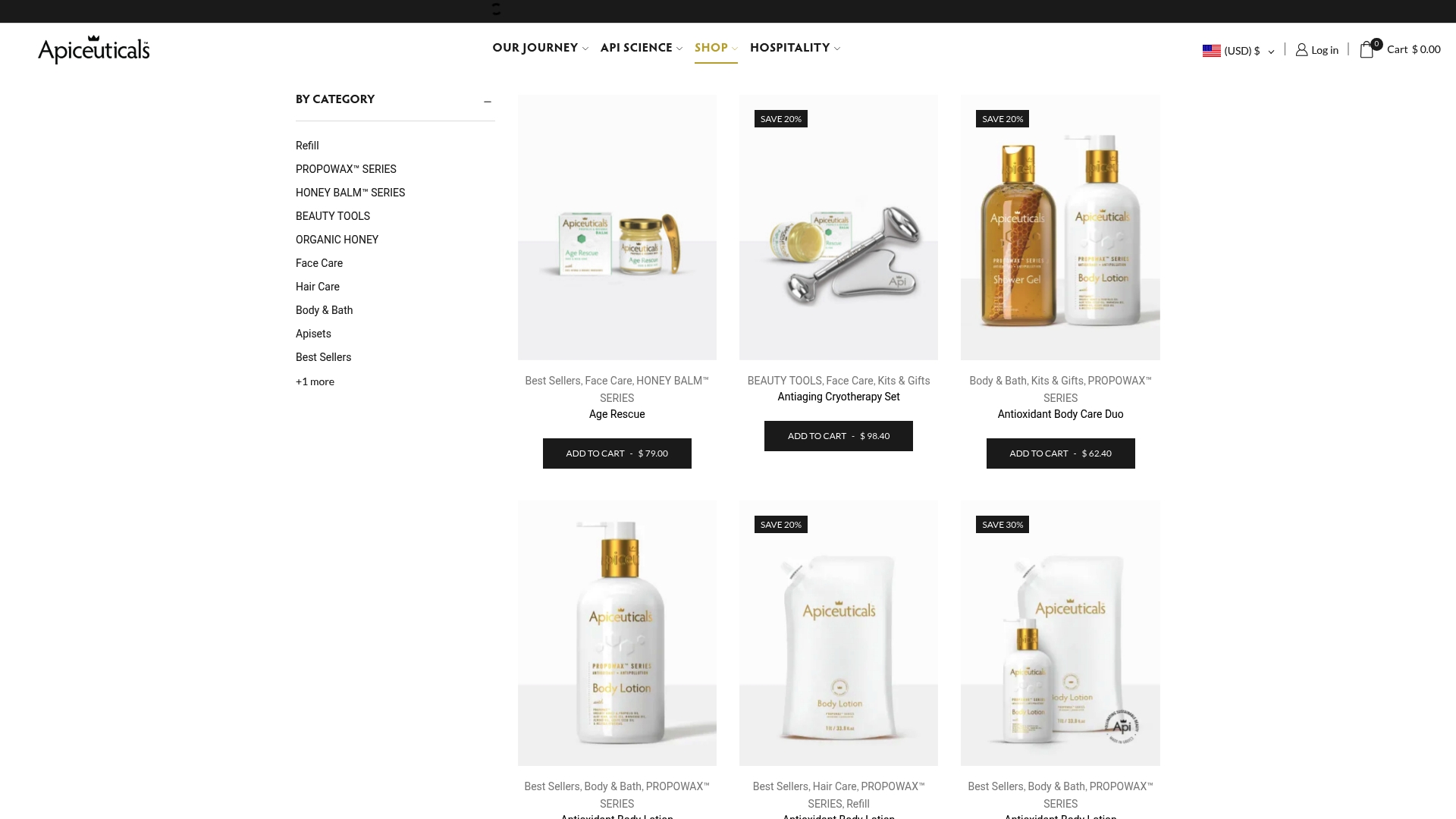
The PROPOWAX™ Series covers antioxidant haircare and bodycare. The HONEY BALM™ Series addresses facial care with clinically proven 26% wrinkle reduction. All formulas are free from SLS, SLES, parabens, silicones, and mineral oils, and are dermatologically tested on sensitive skin with 0% irritation. If you want to understand what bee-powered antioxidant science looks like in a finished product, Apiceuticals’ full range is the clearest available example.
FAQ
What is botanical skincare, exactly?
Botanical skincare refers to formulations built around plant-derived bioactive compounds, such as polyphenols, flavonoids, and carotenoids, that act on skin physiology through antioxidant, anti-inflammatory, and regenerative mechanisms. It is distinct from generic natural skincare products because it requires standardized, clinically verified ingredients rather than simply plant-origin materials.
What are the main botanical skincare benefits?
The strongest clinical evidence supports improvements in skin hydration, elasticity, and reduction of inflammatory markers linked to aging. Plant-based phytochemicals also protect collagen and elastin by inhibiting the enzymes that break them down.
Is botanical skincare suitable for sensitive skin?
Yes. Botanical actives generally work through multiple, overlapping pathways rather than a single aggressive mechanism, which reduces the irritation risk associated with high-dose synthetic actives. Formulas clinically tested on sensitive skin with documented 0% irritation rates offer the most reliable evidence of tolerability.
How do I choose botanical skincare that actually works?
Look for products that disclose their extraction method, standardized bioactive percentage, and clinical testing results. CO2 extraction and standardized extracts are the clearest markers of a formula built for efficacy rather than marketing appeal.
What makes PROPOWAX™ Living Honeycomb different from other botanical actives?
PROPOWAX™ Living Honeycomb is a patented sustained-release antioxidant system derived from propolis, embedded as a living matrix in every Apiceuticals formula. Unlike a single extracted phytochemical, it delivers a complex, continuously active antioxidant profile validated for the highest antioxidant activity in cosmetics by the Aristotle University of Thessaloniki.
Recommended


Related posts

How bees and biodiversity sustain each other, what the science says about Greece and the Aegean, and how antioxidant beauty can start from a hive...

How organic propolis extraction works, from hive to extract: collection, solvents, EU organic rules, Greek propolis phenolics and what it means for skincare.

Build an anti pollution skincare routine that fits Greek city life: what pollution does to skin, the morning and evening steps, and the antioxidants with...

Honey moisture content explained: the EU and Greek limits, how to take a refractometer reading, what excess water does to honey, and why it matters...

How antioxidant activity measurement works: DPPH, ABTS, FRAP and ORAC explained, why results differ, and what a lab number can and cannot say about skin...















