
No products in the cart.
Return To Shop
What Is Dermatological Testing for Sensitive Skin?
Dermatological testing is a controlled evaluation of a finished skincare formula on human volunteers to measure how skin tolerates it, using protocols such as the Repeated Open Application Test (ROAT), standard patch testing, and clinical use trials overseen by dermatologists. In the United States, cosmetic safety substantiation falls under FDA guidance, while in the European Union it sits within the EU Cosmetics Regulation. Neither body certifies a single “dermatologically tested” seal. The claim simply means someone ran a safety study.
Independent laboratories or dermatologists typically conduct these evaluations, usually tracking irritation and sensitization on skin over a defined period. For the consumer, the takeaway is straightforward: passing a dermatological test reduces the likelihood of a reaction. It does not eliminate that possibility for every individual, and it says nothing about long-term efficacy. Apiceuticals builds this understanding into how it discusses its own PROPOWAX™ Living Honeycomb technology, framing test data as evidence of tolerance, not a guarantee.
What the label reasonably tells you:
- The formula was applied to real skin under observation, not just assessed on paper.
- Irritation and sensitization were monitored using a named or describable protocol.
- Individual reactions can still occur, particularly with allergens specific to your skin.
Pro Tip: Before trusting any new product on your face, apply a small amount to the inner forearm or elbow crease twice daily for seven to ten days. If redness, itching, or swelling shows up, stop immediately. This mirrors the same logic behind clinical ROAT protocols, just scaled down for one person.
Key Takeaways
Dermatological testing measures how a finished formula performs on a defined panel under a named protocol, and the strength of that evidence depends entirely on sample size, panel makeup, and transparency.
| Point | Details |
|---|---|
| Know the protocol name | Look for ROAT, RIPT, or patch test rather than trusting “dermatologically tested” alone. |
| Check panel details | Sample size and inclusion of sensitive-skin volunteers determine how much the claim applies to you. |
| Separate tested from recommended | Tested means a safety study ran; recommended means a professional endorsed it for a specific use. |
| Know when to see a dermatologist | Persistent rash, spreading redness, or systemic symptoms call for diagnostic testing, not a product swap. |
| Apiceuticals discloses its method | HONEY BALM™ Series testing includes sensitive-skin panels and reports no irritation alongside PROPOWAX™’s patented antioxidant validation. |
This article is general information, not a substitute for advice from a qualified doctor. Consult a qualified healthcare professional about your own circumstances before acting on anything here.
Table of Contents
- How Does Dermatological Testing Work?
- What Does the Claim Actually Prove?
- When Do You Need a Diagnostic Test Instead of a Product Test?
- How Do You Evaluate a Dermatological Testing Claim?
- How Apiceuticals Applies Testing to Antioxidant Formulas
- Sources
- FAQ
How Does Dermatological Testing Work?
Manufacturers rely on a handful of standardized methods, each measuring something slightly different. Understanding what a given test actually checks is the difference between reading a label meaningfully and taking it on faith.
The Repeated Open Application Test applies a product once daily, uncovered, to the same patch of skin, typically for five consecutive days on a panel that can be as small as ten adults, with a dermatologist recording redness, itching, and inflammation as the protocol used in supplier testing shows. It measures cumulative irritation under conditions that resemble ordinary use.
Patch testing, by contrast, is the diagnostic standard for allergic contact dermatitis. A panel of allergens, sometimes thirty, sometimes over a hundred, is applied under occlusion for 48 hours and read again at 96 hours, because delayed hypersensitivity reactions need that window to surface, according to DermNet’s clinical guidance. The Repeat Insult Patch Test, a larger-sample variant, extends this over several weeks to catch slower-developing sensitization.
Controlled clinical use trials sit above both. These enroll larger cohorts, sometimes blinded, and track endpoints like percent irritation, erythema grading, and participant-reported itching or edema through structured questionnaires.
| Test | Typical duration | Typical sample size | Primary endpoint |
|---|---|---|---|
| ROAT | once daily | a small adult panel | Cumulative irritation, tolerance |
| Patch test | 48 hours applied, read at 96 hours | 30–100+ allergens per panel | Delayed hypersensitivity (Type IV) |
| RIPT | Several weeks | Larger cohort | Sensitization potential |
| Clinical use trial | Weeks, varies | Study-specific | Redness, itching, edema, self-report |
A protocol claiming zero irritation on a panel of ten sensitive-skin volunteers over five days is a real result, but it describes that panel, not a universal guarantee.
Pro Tip: Look past the phrase “dermatologically tested” and search for the method name, ROAT, RIPT, or patch test, along with sample size. Brands confident in their data usually publish it.
What Does the Claim Actually Prove?
“Dermatologically tested” means a safety evaluation happened. It does not mean a dermatologist endorsed the product for your specific skin concern, and it is not interchangeable with “hypoallergenic” or “clinically tested,” which imply different or broader evidence. There is no single global regulatory definition standardizing what counts, so protocols vary meaningfully between manufacturers.
Reasonable inferences you can draw:
- A defined test was run on the finished formula, not just individual ingredients.
- Someone with dermatological expertise likely reviewed the results.
- The panel size and duration, if disclosed, tell you how much confidence the data actually supports.
Claims that deserve skepticism: “dermatologist tested” with no method named, no disclosed sample size, or marketing copy that substitutes “hypoallergenic” as if it were a synonym for “safety-tested.” Dermatologists distinguish “tested” from “recommended,” where the former documents a completed safety protocol and the latter reflects professional endorsement for a specific clinical need, a distinction the Merck Manual draws clearly. You can read more about what this label really means for your skin before assuming it applies to your exact case.
When Do You Need a Diagnostic Test Instead of a Product Test?
Product testing and medical diagnostic testing solve different problems. One asks whether a formula tends to irritate skin in a study population; the other asks why your skin is currently reacting.

Diagnostic tools include skin biopsy, KOH microscopy for fungal infection, bacterial or fungal cultures, dermoscopy, and diagnostic patch testing using standardized allergen series read at 48 and 96 hours, the same timing window used in cosmetic patch studies but applied to find a specific cause rather than certify a product. Office techniques like diascopy and Tzanck smears remain staples of clinical evaluation when a visual exam alone is inconclusive.
See a dermatologist if you notice any of the following:
- A rash that persists more than a few days after stopping the product.
- Spreading redness, swelling, or signs of infection.
- Systemic symptoms like fever or widespread hives.
- A reaction that doesn’t fit the timeline of anything you’ve applied recently.
Bring the ingredient list, a timeline of when symptoms started, and any at-home patch test results. That single sheet of information often shortens the diagnostic path considerably. For guidance on managing reactive skin day to day, this breakdown of sensitive-skin strategies covers practical steps beyond the testing question.
How Do You Evaluate a Dermatological Testing Claim?
Treat the label as a starting question, not a final answer. Ask who ran the study: an independent lab, an academic partner, or only the brand’s own team with no outside oversight. Ask how many participants took part and whether the panel specifically included sensitive-skin volunteers, since testing the finished formula on a representative panel matters more than testing raw ingredients in isolation.
Red flags worth taking seriously:
- Vague phrasing with no named protocol, no ROAT, no RIPT, no patch test.
- No published sample size or methodology anywhere in accessible brand materials.
- A panel too small or too narrow to represent different skin types.
- Reliance entirely on internal testing with zero third-party or academic oversight.
Questions worth putting directly to a brand: Who conducted the test? How many participants, and what skin types were represented? What protocol was used, and were full results reported rather than summarized selectively? Third-party or academic validation carries more weight than in-house claims precisely because it removes the incentive to round favorable numbers up. This guide to choosing safer skincare walks through the same evaluation logic in more depth, and a third-party explainer on skin’s response to new products offers a useful outside perspective on reading early reaction signs correctly.
How Apiceuticals Applies Testing to Antioxidant Formulas
Apiceuticals evaluates finished formulas with sensitive-skin volunteers under dermatologist oversight, reporting irritation endpoints rather than leaving the claim to marketing language alone. That discipline extends to how the brand talks about PROPOWAX™ Living Honeycomb, a patented antioxidant delivery system holding a global patent for the highest antioxidant activity recorded in cosmetics, independently validated by the Aristotle University of Thessaloniki.
The HONEY BALM™ Series illustrates the approach: sensitive-skin panels reported no irritation, and the line’s clinically tested wrinkle-reduction outcome shows a meaningful improvement, both figures specific to Apiceuticals’ own testing and disclosed as brand-reported results rather than universal claims. You can review the full clinical testing methodology and browse the HONEY BALM™ Series directly.
- Sensitive-skin inclusion is standard in the testing panel, not an afterthought.
- Endpoints are irritation and tolerance, tracked and reported rather than assumed.
- PROPOWAX™ evidence sits alongside, not in place of, finished-formula safety testing.
A senior editor’s take on what testing actually buys you
Working through the antioxidant beauty category, the pattern that stands out is how often “tested” gets treated as a synonym for “safe for everyone,” when it really documents one study on one panel. That distinction matters most for sensitive skin, where the gap between average tolerance and your tolerance is widest. Apiceuticals’ commitment to disclosed, dermatologist-overseen panels, including its work validating PROPOWAX™ Living Honeycomb’s antioxidant activity through the Aristotle University of Thessaloniki, reflects a beekeeping heritage that treats transparency as part of the product, not an add-on to the marketing.
See the testing and technology behind Apiceuticals formulas
Reading protocol names and sample sizes only gets you so far without seeing how a brand applies that discipline to its own shelf. Apiceuticals runs dermatological testing on finished formulas with sensitive-skin volunteers and reports the underlying antioxidant science behind every product line, rather than resting on the phrase “dermatologically tested” alone.
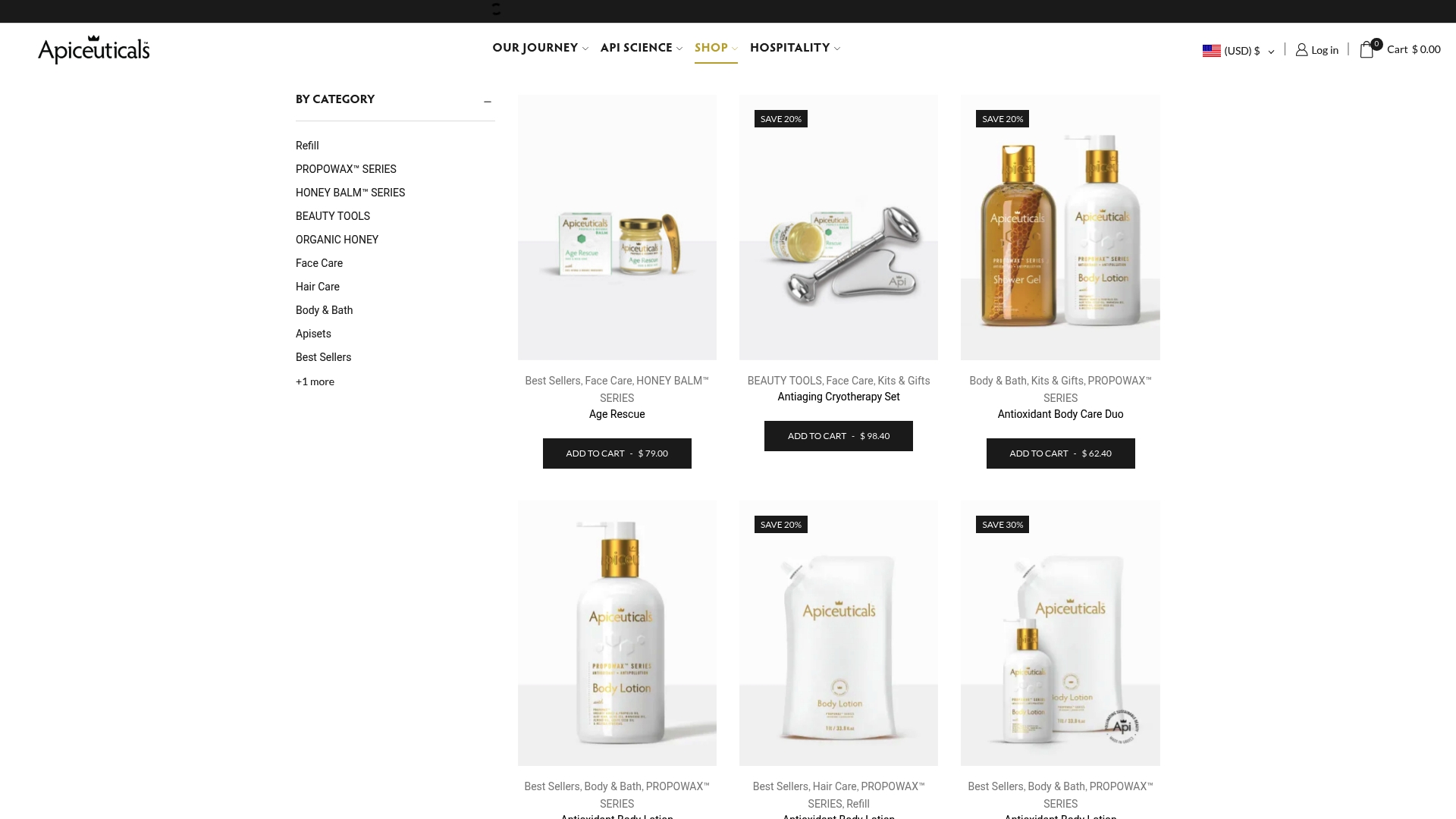
The PROPOWAX™ Living Honeycomb inside each formula continuously releases antioxidants onto skin, scalp, and hair, a mechanism documented on the PROPOWAX™ technology page alongside its global patent status. If you’re evaluating whether an antioxidant product is right for reactive skin, start by browsing the full Apiceuticals collection to see disclosed testing details on each product page before adding anything new to your routine.
Sources
- Diagnosis of Skin Disorders – Merck Manual Consumer Version
- Patch tests: Skin Contact Allergy Tests Explained – DermNet
- Dermatological Testing for Cosmetics – Certified Cosmetics
- Approach to the dermatologic patient – NCBI Bookshelf
FAQ
What does it mean if something is dermatologist tested?
It means a study evaluated the finished product on human volunteers under a dermatologist’s oversight, usually tracking irritation or sensitization. It does not mean the product suits every skin type or that a dermatologist personally endorses it.
What is a red flag in dermatology testing claims?
Vague language with no named protocol, no disclosed sample size, and reliance on in-house testing with zero independent oversight are the clearest warning signs. A brand confident in its data typically publishes the method.
What’s the difference between a patch test and a ROAT?
A patch test applies allergens under occlusion for 48 hours, read at 96 hours, to diagnose delayed allergic reactions. A ROAT applies a full product openly, once daily for about five days, to check cumulative irritation under near-normal use.
Does passing dermatological testing guarantee no reaction?
No. It shows the product performed within acceptable limits on a specific panel, but individual sensitivities, especially to particular ingredients, can still cause a reaction in someone outside that panel.
When should I see a dermatologist instead of just stopping a product?
See a dermatologist if a reaction persists after you stop using the product, spreads, shows signs of infection, or comes with systemic symptoms like fever. Bring the ingredient list and a timeline of when symptoms started.
How does Apiceuticals test its antioxidant products?
Apiceuticals evaluates finished formulas on sensitive-skin panels under dermatologist oversight and reports irritation outcomes directly, pairing that with independently validated PROPOWAX™ antioxidant data from the Aristotle University of Thessaloniki.
Recommended


Related posts

How bees and biodiversity sustain each other, what the science says about Greece and the Aegean, and how antioxidant beauty can start from a hive...

How organic propolis extraction works, from hive to extract: collection, solvents, EU organic rules, Greek propolis phenolics and what it means for skincare.

Build an anti pollution skincare routine that fits Greek city life: what pollution does to skin, the morning and evening steps, and the antioxidants with...

Honey moisture content explained: the EU and Greek limits, how to take a refractometer reading, what excess water does to honey, and why it matters...

How antioxidant activity measurement works: DPPH, ABTS, FRAP and ORAC explained, why results differ, and what a lab number can and cannot say about skin...















