
No products in the cart.
Return To Shop
What Is Ethical Sourcing in Cosmetics? A Clear Guide
TL;DR:
- Ethical sourcing in cosmetics involves fair labor, environmental protection, and community benefit verified by standards like SA8000 and RSPO. Companies must implement ongoing due diligence, transparent supply chain mapping, and responsible procurement practices. Consumers can identify credible brands through independent certifications, supplier transparency, and verified ingredient origins.
Ethical sourcing in cosmetics is defined as the practice of procuring ingredients and materials through processes that guarantee fair labor, protect the environment, and generate measurable benefit for the communities involved. Understanding what is ethical sourcing in cosmetics means looking beyond ingredient origin to examine how workers are treated, how ecosystems are managed, and whether local communities share in the value created. Standards like SA8000, RSPO certification, and COSMOS organic verification provide the frameworks that separate verified claims from marketing language. Apiceuticals’ PROPOWAX™ Living Honeycomb, validated by the Aristotle University of Thessaloniki, demonstrates how science-backed ethical sourcing can be embedded directly into a product’s formulation.
What are the key principles guiding ethical sourcing in cosmetics?
Ethical sourcing in cosmetics rests on three pillars: social accountability, environmental protection, and supply chain transparency. Each pillar requires specific standards and verification mechanisms to function. Without all three, a brand’s sourcing claim is incomplete.

Social accountability is the most measurable pillar. The SA8000 standard secures fair wages, safe working conditions, and prohibits child and forced labor for over 2.8 million workers globally as of early 2026. That figure represents real people whose livelihoods depend on brands choosing certified suppliers over cheaper, unverified alternatives.
Environmental protection in sourcing relies heavily on certification schemes. RSPO (Roundtable on Sustainable Palm Oil) governs one of the most widely used cosmetic ingredients. COSMOS certification verifies organic and natural formulations against strict agricultural and processing standards. Both schemes require third-party audits, which means a brand cannot self-certify its way to compliance.
Traceability is the mechanism that holds the other two pillars together. Mass Balance certification allows certified and uncertified volumes to be mixed in a supply chain while still incentivizing sustainable production at scale. Physical traceability of every molecule is technically impossible for most agricultural ingredients. Mass Balance manages this reality by auditing volumes and verified claims rather than tracking individual batches, which drives continuous improvement across entire supply chains.
- SA8000: Protects worker rights across global supply chains, covering wages, safety, and freedom of association.
- RSPO: Sets the standard for sustainable palm oil, one of the most common cosmetic raw materials.
- COSMOS: Certifies organic and natural cosmetic ingredients against rigorous agricultural and processing criteria.
- Mass Balance: A pragmatic traceability approach that verifies sustainable volumes without requiring molecule-level tracking.
- Fair Trade: Ensures producers in developing countries receive fair prices and community investment funds.
Pro Tip: When evaluating a brand’s sourcing claims, look for the specific certification body named on the label, not just the word “sustainable.” RSPO, COSMOS, and SA8000 each have public registries where you can verify a brand’s status.
How do cosmetic companies implement responsible sourcing practices?
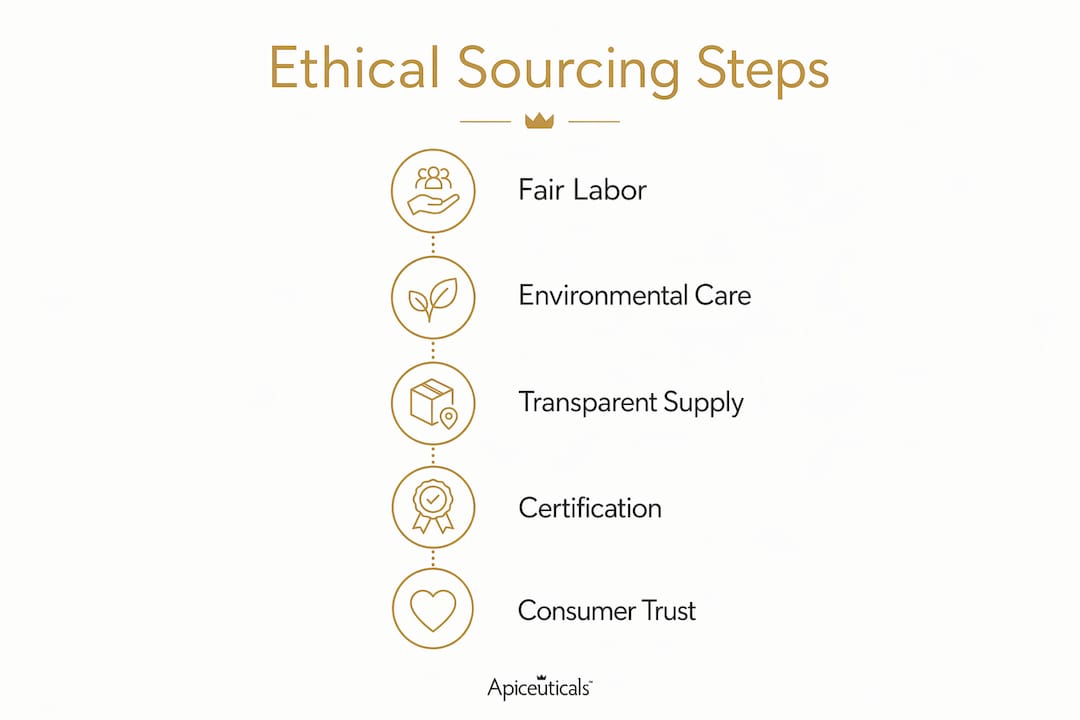
Implementation is where most brands struggle. Ethical sourcing requires ongoing human rights due diligence integrated into procurement decisions rather than one-time audits. A single factory inspection every two years does not constitute a due diligence program. It constitutes a snapshot.
The most effective implementation follows a structured sequence:
- Map the supply chain footprint. Identify every tier of supplier, from finished product manufacturers down to raw material farmers. Mapping 54 key plant species across 18 countries, for example, allows brands to target vulnerable regions and direct investment where it creates the most impact, including support for smallholder farmers and biodiversity protection on thousands of hectares.
- Embed due diligence into procurement contracts. Supplier onboarding, performance reviews, and contract terms must all include human rights and environmental criteria. Sustainability cannot live in a separate compliance department while procurement operates on cost alone.
- Align commercial purchasing behavior with sourcing goals. Last-minute order changes and aggressive cost reduction conflict directly with labor standards. When a buyer demands a 20% price cut with two weeks’ notice, the supplier absorbs that pressure through worker wages or safety shortcuts.
- Invest in community co-development. The most durable sourcing programs go beyond compliance. They fund farmer training, provide access to credit, and build local infrastructure. This creates supplier loyalty and supply chain resilience simultaneously.
Ethical sourcing must become part of core procurement decisions to be effective. Siloed compliance approaches often fail to address the root causes of exploitation because they treat sourcing ethics as a reporting exercise rather than a purchasing discipline.
The commercial pressure problem is real and underreported. Brands that publicly commit to ethical sourcing while internally rewarding buyers for cost savings create a structural contradiction. Resolving it requires tying procurement performance metrics to supplier welfare outcomes, not just price and delivery.
What is the difference between ethical, sustainable, and cruelty-free sourcing?
These three terms overlap but are not interchangeable. Treating them as synonyms leads to incomplete purchasing decisions and allows brands to use one credential to imply the others.
| Concept | Primary focus | Key verification |
|---|---|---|
| Ethical sourcing | Fair labor, human rights, community welfare | SA8000, Fair Trade certification |
| Sustainable sourcing | Environmental regeneration, lifecycle impact | RSPO, COSMOS, lifecycle assessments |
| Cruelty-free sourcing | Animal welfare, elimination of animal testing | Leaping Bunny, PETA certification |
Sustainable sourcing means harvesting resources at regenerative rates, protecting people and the environment, and ensuring long-term accountability beyond just ingredient origin. A sustainably sourced ingredient can still come from a supply chain where workers are underpaid, which is why ethical sourcing adds the social justice dimension that sustainability alone does not guarantee.
Cruelty-free sourcing involves assessing suppliers for ethical animal treatment and eliminating animal testing to reduce environmental footprint and strengthen brand credibility. A product can be cruelty-free but sourced from a region with documented labor violations. The three concepts reinforce each other but require separate verification.
The most common consumer misconception is that “natural” implies all three. Natural ingredients can be harvested destructively, processed by underpaid workers, and tested on animals at the raw material stage. The label “natural” carries no regulatory requirement for ethical, sustainable, or cruelty-free practices.
Pro Tip: A product that holds COSMOS certification, SA8000-verified suppliers, and Leaping Bunny approval covers all three dimensions. Requiring all three from a single brand is a high bar. It is also the clearest signal that sourcing ethics are embedded in operations rather than bolted on for marketing.
How can consumers identify products made with ethically sourced ingredients?
Consumers seek transparency showing ingredient origins, harvesting methods, and community benefits to trust ethical sourcing claims. Proof matters more than promises. The gap between a brand’s sourcing narrative and its verified supply chain practices is where greenwashing lives.
The most reliable signals of credible responsible sourcing in beauty are:
- Third-party certifications: RSPO, Fair Trade, COSMOS, and SA8000 each require independent audits. A brand that holds multiple certifications across its supply chain has accepted external accountability.
- Named supplier relationships: Brands that publish the names and locations of their key ingredient suppliers demonstrate a level of transparency that generic “sustainably sourced” claims cannot match.
- Ingredient-level traceability: Look for brands that specify not just what an ingredient is, but where it was grown, how it was harvested, and who harvested it.
- Community benefit programs: Credible ethical beauty brands document the social investments they make in sourcing communities, from farmer training to healthcare access.
- Clean formulation standards: Brands that exclude harmful ingredients demonstrate that ethical thinking extends from the supply chain into the formulation itself.
Apiceuticals provides a concrete example of how ethical sourcing practices translate into a finished product. All bee ingredients are organic and ethically harvested from over 1,000 beehives in Arcadia, Greece. Only 60% of production is collected, leaving 40% for the bees. That single practice reflects a sourcing philosophy where the health of the source ecosystem takes precedence over maximum yield. The PROPOWAX™ Living Honeycomb technology, which holds a global patent for the highest antioxidant activity in cosmetics, was built on this foundation. The Aristotle University of Thessaloniki independently validated its antioxidant performance, which means the science behind the product is as verifiable as the sourcing behind the ingredients. Consumers who want to understand how to source cosmetics ethically through their purchasing choices can use the ethical beauty product guide to evaluate brands against these criteria.
Major industry players have set public targets that signal where the sector is heading. Companies have committed to sourcing 100% of agricultural raw materials sustainably by 2025 and reducing emissions per finished product by 25% by 2030. Those targets create industry pressure that benefits all consumers, because they push suppliers to meet higher standards across their entire customer base.
Key Takeaways
Ethical sourcing in cosmetics requires verified social accountability, environmental protection, and supply chain transparency working together. No single certification covers all three dimensions.
| Point | Details |
|---|---|
| Definition is specific | Ethical sourcing covers fair labor, environmental stewardship, and community welfare. “Natural” implies none of these. |
| Certifications are verifiable | SA8000, RSPO, COSMOS, and Fair Trade each have public registries. Check them before trusting a label. |
| Due diligence is continuous | One-time audits do not constitute an ethical sourcing program. Ongoing supplier monitoring is the standard. |
| Three concepts differ | Ethical, sustainable, and cruelty-free sourcing overlap but require separate verification. Treat them as distinct. |
| Purchasing behavior matters | Consumers who choose certified brands create market demand that raises standards across entire supply chains. |
Why ethical sourcing is harder than it looks
The beauty industry has a transparency problem that certifications alone cannot solve. At Apiceuticals, the decision to harvest only 60% of bee production was not made because it was the easiest or most profitable choice. It was made because the long-term health of the hive is the foundation of every product. That logic, applied consistently, is what separates genuine ethical sourcing from compliance theater.
The brands that struggle most are those that treat sourcing ethics as a communications exercise. They publish sustainability reports without changing procurement incentives. They earn one certification and imply it covers their entire supply chain. The uncomfortable truth is that responsible sourcing in beauty requires structural changes to how buyers are evaluated, how contracts are written, and how supplier relationships are managed over years, not quarters.
PROPOWAX™ Living Honeycomb, with its global patent for highest antioxidant activity validated by the Aristotle University of Thessaloniki, exists because Apiceuticals built its sourcing model around the integrity of the ingredient first. The science follows from the sourcing. That sequence is the right one, and it is the sequence that conscious consumers should demand from every brand they choose.
— Apiceuticals
Apiceuticals and the science of ethically sourced antioxidant beauty
Apiceuticals was founded on a sourcing model that predates the industry’s current sustainability conversation. The Roumeliotis family introduced organic and sustainable beekeeping to Greece in 1981. Every product in the Apiceuticals range carries that heritage forward through PROPOWAX™ Living Honeycomb, a patented system that continuously releases antioxidants onto skin, scalp, and hair.
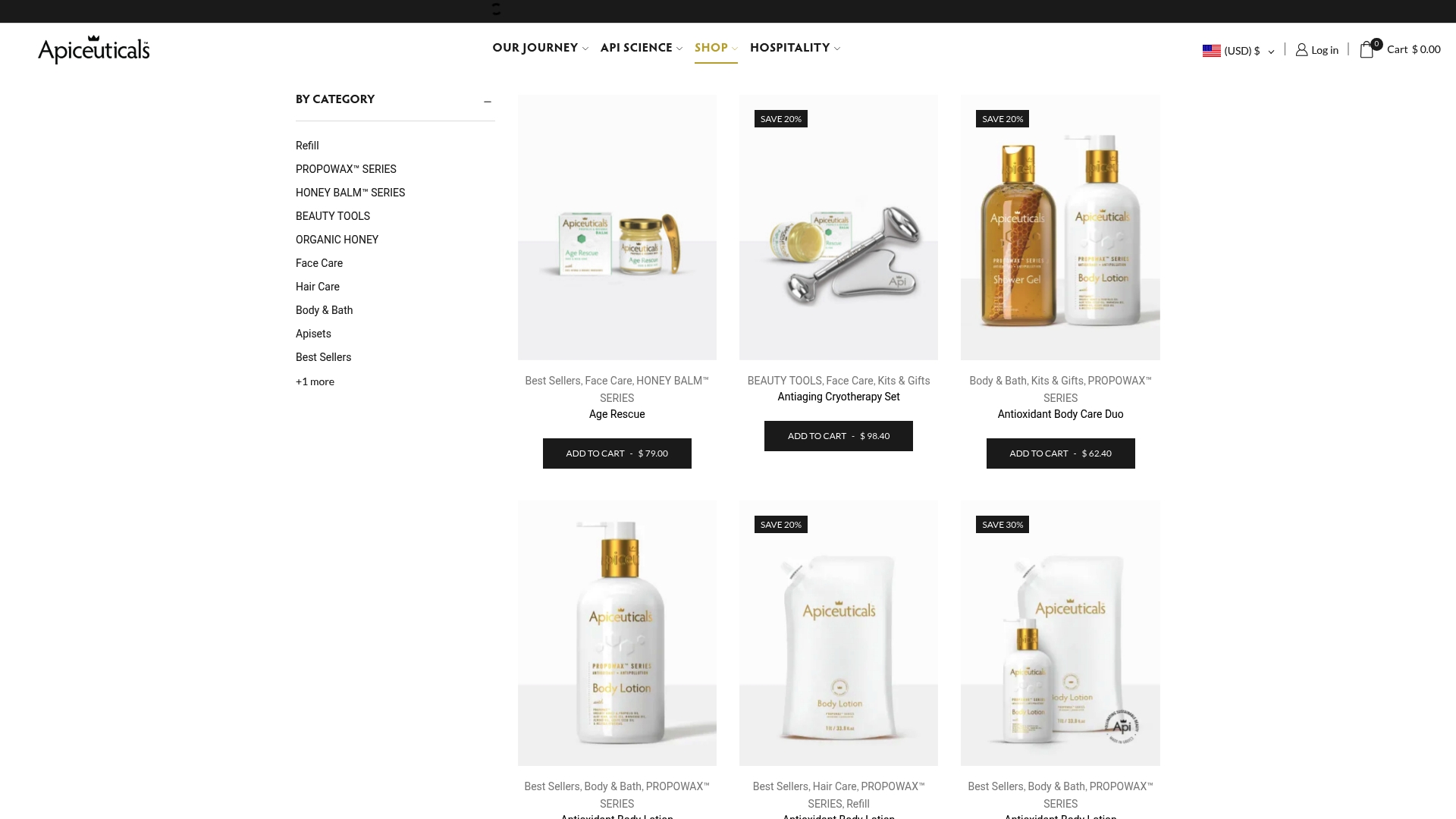
The Aristotle University of Thessaloniki independently validated PROPOWAX™ for the highest antioxidant activity in cosmetics, a claim supported by a global patent. British Vogue recognized it as “arguably the global leader in antioxidant activity.” Apiceuticals excludes over 2,000 potentially harmful ingredients and is dermatologically tested on sensitive skin with 0% irritation. Consumers who want to experience antioxidant skin care built on verified ethical sourcing can explore the full Apiceuticals range, where every formulation traces directly back to Arcadia’s organic beekeeping heritage.
FAQ
What does ethical sourcing mean in cosmetics?
Ethical sourcing in cosmetics means procuring ingredients through processes that guarantee fair labor, protect ecosystems, and benefit local communities. It requires verified standards like SA8000 and RSPO, not just brand claims.
What certifications prove ethical sourcing in beauty products?
SA8000 verifies worker rights, RSPO certifies sustainable palm oil, COSMOS confirms organic standards, and Fair Trade ensures equitable producer payments. Each requires independent third-party audits.
Is ethical sourcing the same as sustainable sourcing?
No. Sustainable sourcing focuses on environmental regeneration and lifecycle impact. Ethical sourcing adds social justice and labor rights. A product can be sustainably sourced but still come from a supply chain with labor violations.
What is Mass Balance certification in cosmetics?
Mass Balance certification verifies that a brand sources a certified volume of a sustainable ingredient without requiring molecule-level traceability. It is a practical standard used when full physical traceability is technically impossible.
How can I tell if a beauty brand practices ethical sourcing?
Look for named third-party certifications, published supplier information, ingredient-level traceability, and documented community investment programs. Generic “sustainably sourced” language without certification details is insufficient evidence.
How does Apiceuticals practice ethical sourcing?
Apiceuticals harvests only 60% of bee production from over 1,000 organic beehives in Arcadia, Greece, leaving 40% for the bees. All ingredients are organically certified, and the PROPOWAX™ Living Honeycomb technology is independently validated by the Aristotle University of Thessaloniki.
Recommended


Related posts

How bees and biodiversity sustain each other, what the science says about Greece and the Aegean, and how antioxidant beauty can start from a hive...

How organic propolis extraction works, from hive to extract: collection, solvents, EU organic rules, Greek propolis phenolics and what it means for skincare.

Build an anti pollution skincare routine that fits Greek city life: what pollution does to skin, the morning and evening steps, and the antioxidants with...

Honey moisture content explained: the EU and Greek limits, how to take a refractometer reading, what excess water does to honey, and why it matters...

How antioxidant activity measurement works: DPPH, ABTS, FRAP and ORAC explained, why results differ, and what a lab number can and cannot say about skin...















