No products in the cart.
Return To Shop
What Is a Nature-Positive Beauty Brand?
TL;DR:
- A nature-positive beauty brand actively restores ecosystems and improves biodiversity at ingredient origins. It uses scientifically validated, bee-sourced antioxidants like PROPOWAX™, which holds a global patent for highest antioxidant activity. Such brands demonstrate transparency, circular practices, and measurable environmental impacts grounded in independent verification.
What is a nature-positive beauty brand, and why does it matter?
A nature-positive beauty brand does more than avoid harm. It actively restores the ecosystems it depends on, measures that restoration, and builds it into every layer of the supply chain. The World Economic Forum’s nature-positive guidance, channeled through the Union for Ethical BioTrade, frames this as a shift from “do no harm” to net positive biodiversity outcomes. For the beauty industry, that means sourcing ingredients in ways that leave habitats measurably better than they were found.
Scientifically validated antioxidant ingredients sit at the center of this model. Bee-sourced compounds, in particular, carry some of the highest documented antioxidant activity of any cosmetic raw material. Apiceuticals, a Greek bee-science brand rooted in Arcadia, has built its entire formulation philosophy around this principle, anchoring it in a patented delivery system called PROPOWAX™ technology that continuously releases antioxidants onto skin, scalp, and hair.
A nature-positive beauty brand typically demonstrates all of the following:
- Active ecosystem restoration at the origin of its raw materials, not carbon offsets as a substitute
- Full supply chain traceability with measurable biodiversity outcomes
- Scientifically validated ingredients with independent third-party confirmation
- Clean formulation standards that exclude ecotoxic substances
- Circular practices such as refillable packaging and waste-minimized manufacturing
Table of Contents
- Why antioxidants and bee-sourced ingredients define this category
- How Apiceuticals demonstrates what a nature-positive brand looks like in practice
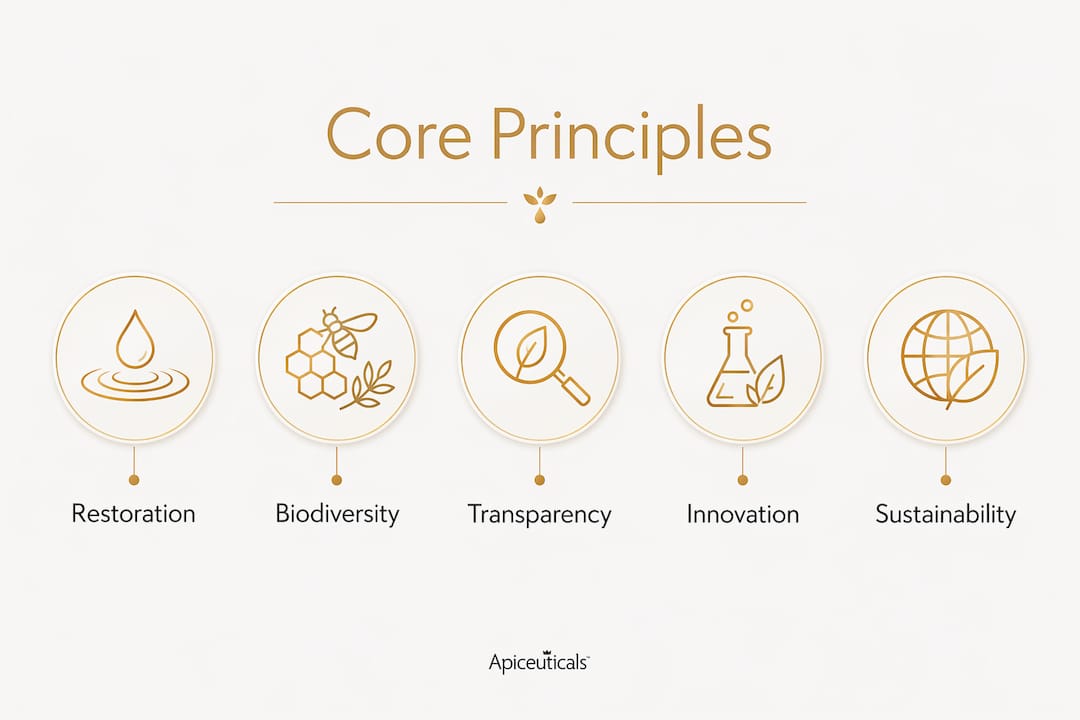
- What core principles actually define a nature-positive beauty brand
- Apiceuticals: antioxidant bee-science beauty, built on nature-positive principles
- Key Takeaways
- FAQ
Why antioxidants and bee-sourced ingredients define this category
Oxidative stress is the primary driver of visible skin aging. Free radicals, generated by UV exposure, pollution, and metabolic processes, attack cellular membranes and collagen fibers in a process that resembles rust forming on metal. Independent research confirms that topically applied antioxidants interrupt this cascade, preventing wrinkle formation and preserving skin vitality.
Bee-derived ingredients occupy a distinct position in this science. Propolis, beeswax, and raw honey contain polyphenols, flavonoids, and enzymes that neutralize free radicals with a breadth and potency that most plant extracts cannot match individually. The table below places this in context.
| Ingredient | Primary Antioxidant Compounds | Validated Antioxidant Activity |
|---|---|---|
| Green tea extract | EGCG, catechins | High |
| Vitamin C (ascorbic acid) | Ascorbate | High, but unstable |
| Rosehip oil | Beta-carotene, tocopherols | Moderate |
| Resveratrol | Stilbenoids | High, low bioavailability |
| PROPOWAX™ Living Honeycomb | Propolis polyphenols, beeswax matrix | Highest measured in cosmetics (globally patented) |
The PROPOWAX™ Living Honeycomb’s position in that table is not a marketing claim. It reflects independent validation by the Aristotle University of Thessaloniki, which confirmed the technology holds the highest measured antioxidant activity in cosmetics. The delivery mechanism matters as much as the compound itself: the honeycomb matrix releases antioxidants continuously rather than in a single application burst, sustaining protection across the skin’s oxidative cycle.
Understanding antioxidants in natural skincare at this level of specificity is what separates a genuinely eco-conscious beauty product from one that simply uses “natural” as a label.
How Apiceuticals demonstrates what a nature-positive brand looks like in practice
The Roumeliotis family began beekeeping in Arcadia, Greece, in 1981, becoming the first family in Greece to practice organic and sustainable beekeeping. That heritage is not incidental to the brand’s science. Over 1,000 beehives pollinate 4 billion flowers daily across Arcadian forests and mountains, and only 60% of production is collected, leaving 40% for the bees. This is regenerative beekeeping in the truest operational sense: the ecosystem is not depleted to supply the product line.
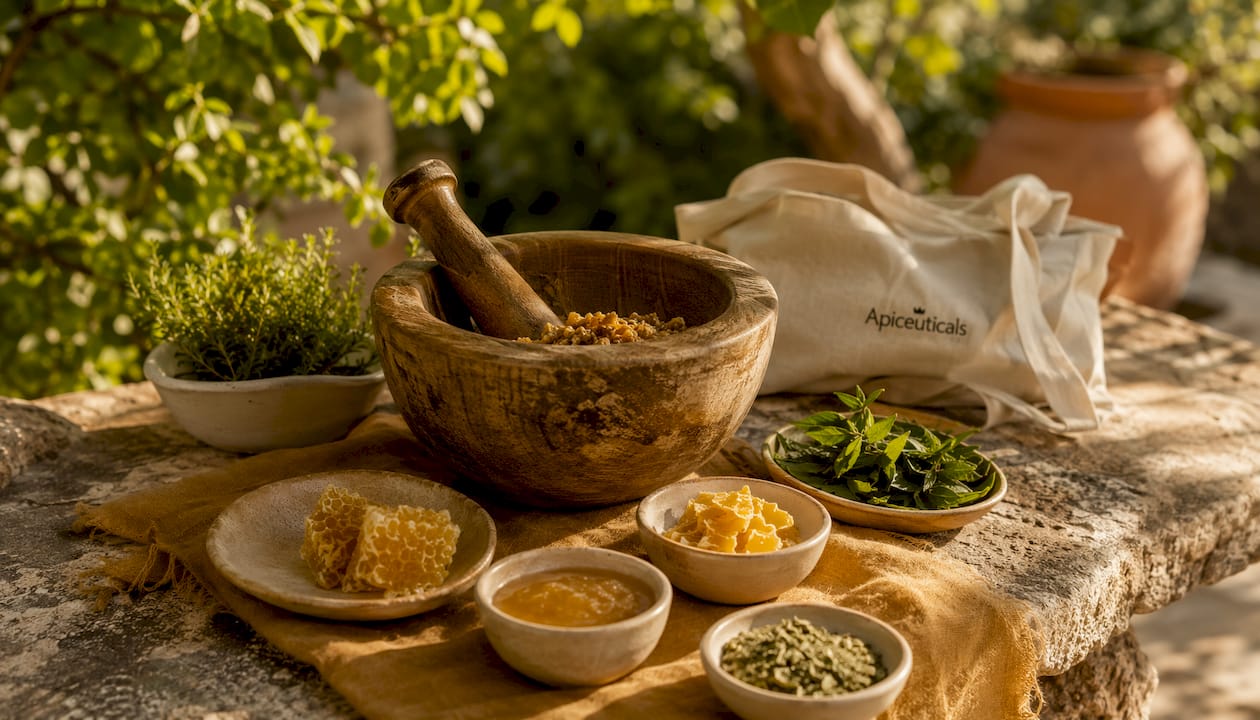
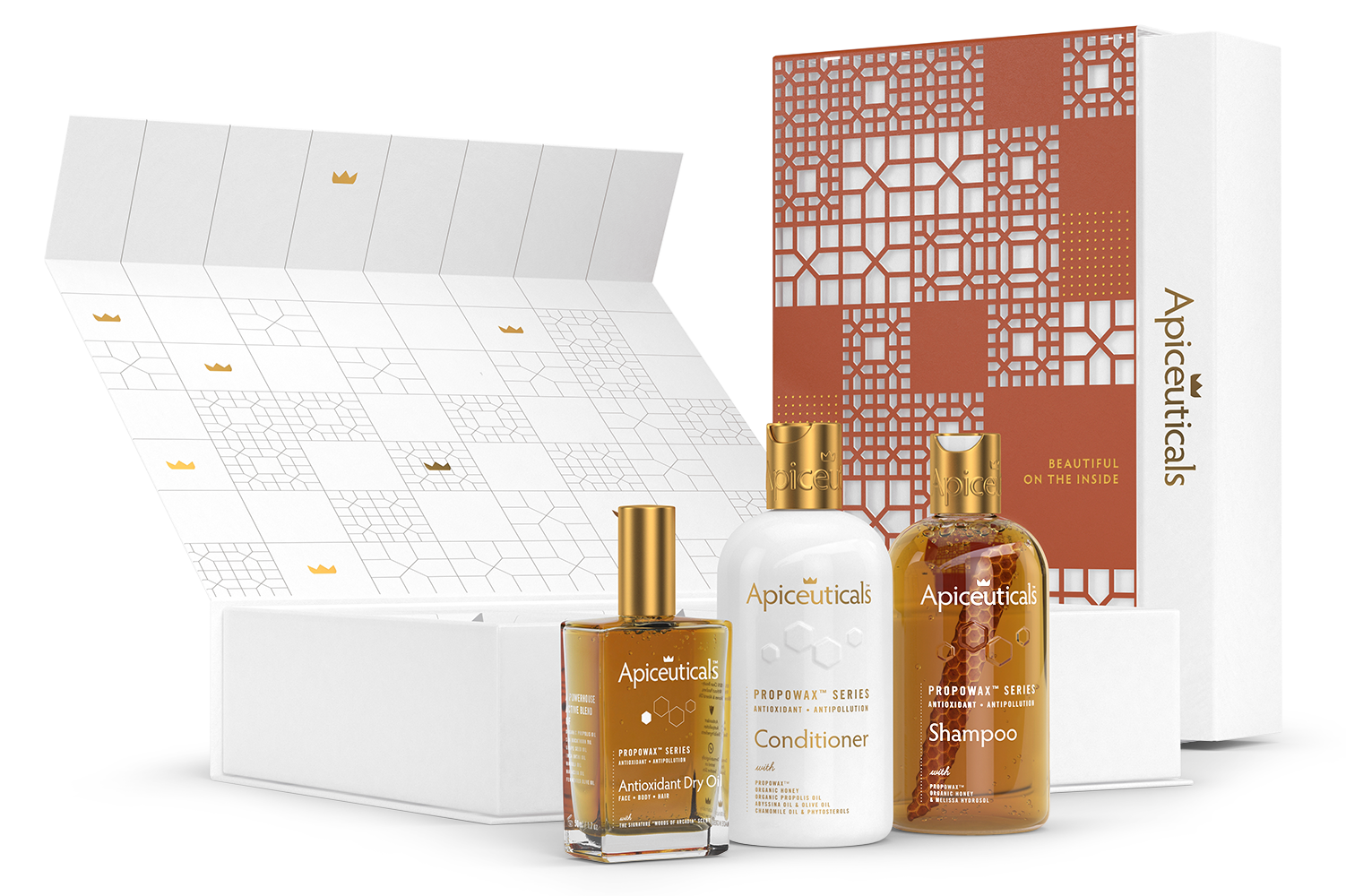
The PROPOWAX™ Living Honeycomb is the scientific expression of that sourcing philosophy. It holds a global patent for the highest antioxidant activity in cosmetics, a distinction that required both the innovation itself and independent university-level verification to secure. Apiceuticals’ full product range, including the PROPOWAX™ Series for haircare and bodycare and the HONEY BALM™ Series for facial care, is dermatologically tested on sensitive skin with 0% irritation, and formulated without SLS, SLES, parabens, silicones, or mineral oils. The brand excludes over 2,000 potentially harmful ingredients.
Awards reinforce the scientific credibility: Top 3 Startups in Greece (2019), Most Sustainable Startup at the Venture Impact Awards (2020–2021), multiple Great Taste Awards, and Best Luxury Honey in Greece at the Luxury Lifestyle Awards (2020). The HONEY BALM™ Series has demonstrated a clinically proven reduction in wrinkles. These are not aesthetic distinctions; they are measurable outcomes that align precisely with what nature-positive standards demand.
What core principles actually define a nature-positive beauty brand
The Union for Ethical BioTrade sets a clear standard: brands must provide full supply chain traceability and demonstrate net positive biodiversity outcomes, not simply claim them. This is analogous to the rigor applied in regenerative agriculture, where soil health metrics, not intentions, determine compliance.
Several operational principles follow from that standard:
- Biodiversity investment at source. True nature-positive transformation, as the UEBT frames it, means investing in restoration projects at raw material origins. Regenerative beekeeping, like Apiceuticals practices in Arcadia, is a concrete example of this principle applied at scale.
- Renewable and responsibly sourced ingredients. NATRUE certification requires 100% naturally derived, renewable raw materials and active biodiversity protection measures. Nature-positive brands meet or exceed this bar.
- Circular economy practices. Leading brands are transitioning supply chains from linear take-make-waste models to bio-based, refillable, and ecotoxicity-minimized systems. Apiceuticals’ refillable hotel amenity systems for 4- and 5-star properties are a working example of this at the commercial level.
- Transparent impact measurement. Claiming sustainability without quantified biodiversity data is greenwashing. Nature-positive brands publish measurable outcomes.
- Consumer education as part of the model. Brands that engage consumers on responsible product use reduce downstream environmental impact, extending the nature-positive effect beyond the factory gate.
Adopting these values is also a strategic business necessity, not philanthropy. Consumer demand for ethical beauty brand practices has shifted from niche preference to mainstream expectation, and brands that can demonstrate measurable impact build loyalty that price-driven competitors cannot replicate.
If you want to evaluate a brand’s sourcing claims before purchasing, the ethically sourced beauty checklist offers a practical framework for assessing supply chain transparency.
Apiceuticals: antioxidant bee-science beauty, built on nature-positive principles

Apiceuticals is the clearest working example of what a nature-positive beauty brand looks like when science, ethics, and sourcing are genuinely integrated rather than marketed separately. The brand’s PROPOWAX™ Living Honeycomb, validated by the Aristotle University of Thessaloniki and recognized by British Vogue, delivers the highest measured antioxidant activity in cosmetics through a globally patented mechanism. Its formulations exclude over 2,000 potentially harmful ingredients, carry 0% irritation in dermatological testing, and are produced through organic, ethically managed beekeeping that actively restores the Arcadian ecosystem.
For consumers who want to understand how antioxidants protect skin at a cellular level, the guide on preventing skin oxidation explains the science behind the PROPOWAX™ approach. Those ready to build a full antioxidant-rich routine can explore the natural skincare guide for a structured starting point.
Key Takeaways
A nature-positive beauty brand is defined by active ecosystem restoration, measurable biodiversity outcomes, and scientifically validated antioxidant formulations, not by ingredient labels alone.
| Point | Details |
|---|---|
| Nature-positive means active restoration | Brands must go beyond harm reduction to measurably improve biodiversity at ingredient origins. |
| Antioxidants are the scientific core | Bee-sourced polyphenols and flavonoids deliver the broadest, most potent antioxidant protection in cosmetics. |
| Independent validation matters | Third-party confirmation, such as Aristotle University of Thessaloniki’s work, distinguishes genuine claims from marketing. |
| Circularity is non-optional | Refillable systems, renewable feedstocks, and ecotoxicity-free formulas define operational nature-positivity. |
| Apiceuticals as a benchmark | PROPOWAX™ holds a global patent for the highest antioxidant activity in cosmetics, with 0% irritation in dermatological testing and regenerative beekeeping at source. |
FAQ
What is a nature-positive beauty brand?
A nature-positive beauty brand actively restores ecosystems and biodiversity at its ingredient sources, rather than simply minimizing harm. It combines measurable environmental impact with scientifically validated, responsibly sourced formulations.
How do antioxidants connect to nature-positive beauty?
Antioxidants combat oxidative stress, the primary driver of skin aging, and bee-sourced antioxidant compounds rank among the most potent available. Nature-positive brands use these ingredients in ways that are both clinically effective and ecologically regenerative.
What makes PROPOWAX™ different from other antioxidant ingredients?
PROPOWAX™ Living Honeycomb holds a global patent for the highest measured antioxidant activity in cosmetics, independently validated by the Aristotle University of Thessaloniki. Its honeycomb matrix releases antioxidants continuously, sustaining protection rather than delivering a single-dose effect.
What certifications should you look for in eco-conscious beauty products?
NATRUE certification requires 100% naturally derived, renewable raw materials and active biodiversity protection measures, making it one of the most rigorous standards for environmentally friendly cosmetics. Supply chain traceability verified by bodies like the Union for Ethical BioTrade adds another layer of accountability.
How does Apiceuticals qualify as a nature-positive brand?
Apiceuticals practices regenerative beekeeping across 1,000-plus beehives in Arcadia, collects only 60% of production to preserve colony health, excludes over 2,000 potentially harmful ingredients, and holds a global patent for antioxidant activity. Its ethics and sustainability practices are independently verified and publicly documented.
Recommended


Related posts

How bees and biodiversity sustain each other, what the science says about Greece and the Aegean, and how antioxidant beauty can start from a hive...

How organic propolis extraction works, from hive to extract: collection, solvents, EU organic rules, Greek propolis phenolics and what it means for skincare.

Build an anti pollution skincare routine that fits Greek city life: what pollution does to skin, the morning and evening steps, and the antioxidants with...

Honey moisture content explained: the EU and Greek limits, how to take a refractometer reading, what excess water does to honey, and why it matters...

How antioxidant activity measurement works: DPPH, ABTS, FRAP and ORAC explained, why results differ, and what a lab number can and cannot say about skin...