
No products in the cart.
Return To Shop
Skin Microbiome: What It Is and How It Protects You
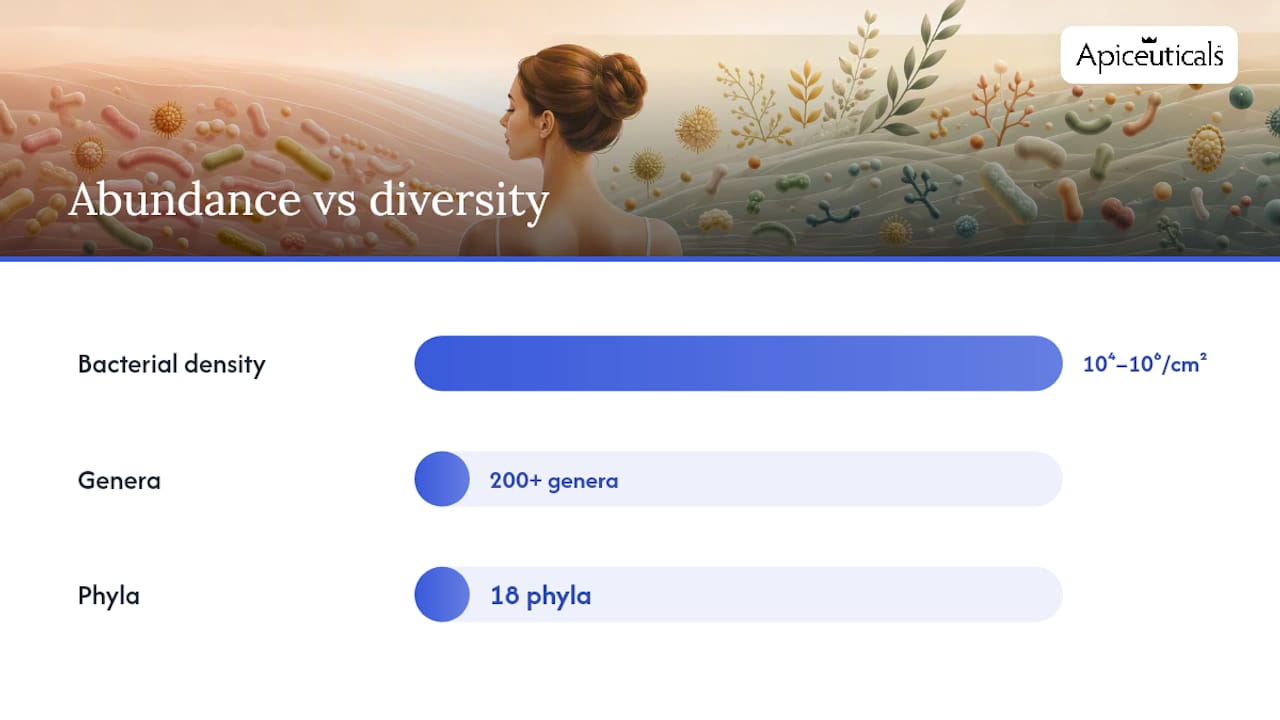
The skin microbiome is the community of bacteria, fungi, viruses, and mites that live on and within the skin’s surface, collectively performing functions that no skincare product can fully replicate. According to a clinical review in the Journal of Clinical Investigation, this microbial community tunes local immunity, provides colonization resistance against pathogens, and actively promotes barrier integrity and wound repair. Research published in MDPI estimates bacterial density at 10⁴–10⁶ bacteria per cm², making the skin the body’s second most densely colonized organ after the gut. Understanding the skin microbiome is not an academic exercise. It is the foundation for every meaningful decision you make about cleansing, moisturizing, and antioxidant care, including science-backed systems like PROPOWAX™ Living Honeycomb.
Table of Contents
- What Does the Skin Microbiome Do for Your Health?
- How the Microbiome Varies by Skin Site and Life Stage
- Practical Ways to Support a Healthy Skin Microbiome
- Recent Research and the Antioxidant Connection to Microbiome-Friendly Care
- Key Takeaways
- The Gap Between Microbiome Science and What Your Shelf Actually Needs
- Antioxidant Skincare That Works With Your Skin’s Biology
- Sources and Further Reading
- FAQ
What Does the Skin Microbiome Do for Your Health?
The skin microbiome performs several distinct, well-documented functions that go far beyond passive coexistence with the host.
- Metabolic contributions: Microbes break down sebum lipids and contribute to the production of natural moisturizing factors (NMFs), compounds that keep the stratum corneum hydrated and supple. The NIH Genome glossary describes these organisms as biochemical workers whose metabolic output is integral to skin chemistry.
The JCI review frames these roles as homeostatic, meaning the microbiome is not simply present but actively maintaining equilibrium. Disrupting that equilibrium, even briefly, can shift the skin toward a state that favors pathogen overgrowth or chronic inflammation.
Pro Tip: Avoid antibacterial hand soaps for routine face cleansing. They are formulated to reduce total bacterial load, which can undermine the colonization resistance your resident commensals provide.
How the Microbiome Varies by Skin Site and Life Stage
Topographic variation is one of the most striking features of the skin microbiome. The face and upper back, rich in sebaceous glands, are dominated by lipophilic Cutibacterium and Malassezia. Moist sites such as the axillae and groin favor Corynebacterium and Staphylococcus. Dry sites like the forearm and lower leg host the most diverse communities, with lower overall bacterial density.

Life stage shapes the microbiome just as powerfully as body site. Neonatal skin is colonized within hours of birth, influenced by delivery mode and early environment. By approximately age three, a relatively stable core microbiota is established, according to WebMD’s clinical explainer. Puberty drives a sebum surge that shifts the face and scalp toward Cutibacterium dominance. Aging brings reduced sebum production, thinning of the stratum corneum, and a gradual decline in microbial diversity.
Several behavioral and environmental factors modulate the microbiome throughout life:
- Skincare product ingredients: Preservatives, high-alcohol formulations, and certain surfactants can shift pH and selectively suppress commensals. Seasonal changes also matter; a seasonal skincare checklist can help you adapt your routine as temperature and humidity fluctuate.
“The skin microbiome is dynamic and highly responsive to pH, surfactants, UV, climate, and topical antioxidants. The apparent stability we observe is an average over time rather than a static state.” — MDPI, Current Landscape and Future Opportunities
Practical Ways to Support a Healthy Skin Microbiome
Evidence-based microbiome care is less about adding products and more about removing the ones that cause harm.
- Cleanse gently. Choose pH-balanced cleansers (ideally pH 4.5–5.5) with mild surfactants. Harsh sodium lauryl sulfate formulations strip the acid mantle and reduce commensal diversity. The Personal Care Council’s industry guidance specifically flags surfactant type and concentration as key variables in microbiome impact.
When evaluating product ingredients, watch for:
A microbiome-friendly AM/PM routine might look like: gentle low-surfactant cleanser, antioxidant serum or balm, barrier moisturizer, and SPF in the morning; gentle cleanse and a richer antioxidant-forward balm at night. For deeper guidance on microbiome-friendly skincare principles, the formulation rationale matters as much as the ingredient list.
Pro Tip: Apply antioxidant formulations before your moisturizer, not after. Antioxidants work at the level of the stratum corneum and the follicular opening, where oxidative stress is highest and where most resident microbes live.
Recent Research and the Antioxidant Connection to Microbiome-Friendly Care
Three findings from recent peer-reviewed literature are particularly relevant for anyone thinking about the skin microbiome and skincare.
- The JCI 2025 clinical review established that the skin microbiome performs homeostatic immune tuning and barrier repair functions, and that disrupting these functions correlates with a range of dermatologic disorders.
- The MDPI review quantified bacterial density at 10⁴–10⁶ per cm² and characterized over 200 genera across 18 phyla, providing the most detailed compositional map of the healthy skin microbiome to date.
- The Science review on barrier–microbiota interactions identified oxidative stress as one of the mechanisms through which environmental insults disrupt both the physical barrier and the microbial community simultaneously.
That last point opens a scientifically grounded connection between antioxidant care and microbiome health. Oxidative stress, generated by UV, pollution, and metabolic activity, damages lipids in the stratum corneum and alters the chemical environment that resident microbes depend on. Reducing that oxidative load through topical antioxidants may help preserve the conditions commensals need to function. This is an area of active investigation, not settled clinical fact, but the mechanistic logic is coherent and supported by the barrier–microbiota literature.
| Approach | Mechanism | Evidence Level |
|---|---|---|
| Antioxidant topicals | Reduce oxidative damage to stratum corneum and follicular environment | Preliminary, mechanistically supported |
| Gentle cleansers (pH 4.5–5.5) | Preserve acid mantle and commensal habitat | Established (formulation science) |
| Topical probiotics | Introduce or reinforce commensal strains | Early clinical (small trials) |
| Prebiotic substrates | Feed resident commensals selectively | Emerging |
| Barrier moisturizers | Maintain hydration gradient for microbial stability | Established (clinical dermatology) |
Apiceuticals’ PROPOWAX™ technology is a patented Living Honeycomb antioxidant delivery system that continuously releases antioxidants onto the skin. The global patent for highest antioxidant activity in cosmetics was independently validated by the Aristotle University of Thessaloniki. While PROPOWAX™ is not a probiotic or a microbiome therapeutic, its antioxidant delivery mechanism addresses the oxidative stress pathway that the Science review identifies as a disruptor of both barrier function and microbial balance. For a deeper look at antioxidant types and their skin actions, the science of delivery matters as much as the antioxidant molecule itself.
Pro Tip: When evaluating an antioxidant product for microbiome-friendly care, check that it is free from high-concentration alcohols and synthetic preservatives known to suppress commensals. Efficacy and microbial compatibility are not mutually exclusive, but they require deliberate formulation.
Key Takeaways
The skin microbiome is the body’s second most densely colonized surface, and its microbial residents actively maintain the barrier, tune immunity, and resist pathogens, making it central to skin health at every life stage.
| Point | Details |
|---|---|
| Bacterial density | Skin hosts 10⁴–10⁶ bacteria per cm² across more than 200 genera and 18 phyla, concentrated in hair follicles and sebaceous glands. |
| Core functions | The microbiome provides colonization resistance, immune modulation, barrier repair, and metabolic contributions to skin hydration. |
| Dysbiosis and disease | S. aureus expansion in eczema is the strongest causal link; psoriasis and rosacea associations are real but largely associative. |
| Evidence-based care | Gentle pH-balanced cleansing, barrier moisturization, and cautious antibiotic use are the most evidence-supported microbiome care steps. |
| Apiceuticals PROPOWAX™ | The patented Living Honeycomb antioxidant delivery system targets oxidative stress, a documented disruptor of both barrier function and microbial balance. |
The Gap Between Microbiome Science and What Your Shelf Actually Needs
The microbiome conversation in skincare has, in many ways, outpaced the science. Products labeled “microbiome-friendly” or “probiotic” are proliferating faster than the clinical evidence that would justify those claims. That does not mean the underlying biology is wrong. It means the translation from bench to bottle is still incomplete, and consumers deserve to know the difference.
What the evidence does clearly support is this: the conditions you create on your skin’s surface determine which microbes thrive. pH, hydration, oxidative load, and surfactant exposure are the variables you can actually control with a daily routine. Antioxidant-rich formulations that reduce oxidative stress without disrupting the acid mantle or introducing harsh preservatives are, by that logic, genuinely compatible with microbial health, even if “microbiome-supporting” is not yet a claim the clinical literature fully endorses for any specific product.
Apiceuticals’ focus on antioxidant delivery through the PROPOWAX™ Living Honeycomb reflects this evidence-first stance. The goal is not to add microbes or claim microbiome modulation. It is to reduce the oxidative damage that destabilizes the barrier and the microbial community that depends on it. That is a narrower claim, but it is one the science can actually support.
Antioxidant Skincare That Works With Your Skin’s Biology
The most defensible step you can take for your skin microbiome today is not buying a probiotic serum. It is choosing formulations that do not actively harm the microbial environment your skin has spent years building.

Apiceuticals builds every product around that principle. The PROPOWAX™ Living Honeycomb, validated by the Aristotle University of Thessaloniki for the highest antioxidant activity in cosmetics, delivers continuous antioxidant protection without SLS, SLES, parabens, silicones, or the synthetic preservatives that suppress commensal bacteria. Dermatologically tested on sensitive skin with 0% irritation, the formulations are designed to work with the skin’s biology, not against it.
If you want a routine that addresses oxidative stress while keeping your microbial environment intact, start with Apiceuticals’ guide to preventing skin oxidation and explore the science behind PROPOWAX™ technology. The clinical skincare team at evoyouthful offers a physician-curated perspective on antioxidant approaches that complements this science-first framework.
Sources and Further Reading
The following peer-reviewed and authoritative sources informed this article. Each contributes a distinct layer of evidence.
| Source | What It Contributes |
|---|---|
| MDPI — The Skin Microbiome: Current Landscape and Future Opportunities | Quantifies bacterial density (10⁴–10⁶/cm²), dominant phyla, and over 200 genera; frames dysbiosis and therapeutic opportunities. |
| JCI — Skin Microbiome and Dermatologic Disorders | Clinical review of homeostatic functions, immune tuning, barrier repair, and links to dermatologic conditions. |
| WebMD — What Is the Skin Microbiome? | Accessible explainer on core microbiota stability in early childhood and modifiable environmental factors. |
| Genome.gov — Microbiome | Authoritative NIH definition and functional framing of microbes as biochemical workers producing NMFs and colonization resistance. |
| Science — Human Skin Microbiota and Barrier Function | High-level review connecting microbiota to barrier function, immune training, and translational research needs. |
| ScienceDirect — Current Perspectives on the Human Skin Microbiome | Consolidates therapeutic modulation strategies (probiotics, phages, metabolites) and regulatory/evidence challenges. |
| Personal Care Council — Skin Microbiome Guidance (IFSCC PDF) | Industry formulation guidance on surfactants, preservatives, and pH as variables affecting microbiome balance. |
FAQ
What is the skin microbiome, exactly?
The skin microbiome is the collective community of bacteria, fungi, viruses, and mites that live on and within the skin. These microbes actively maintain barrier function, tune immunity, and resist pathogens rather than simply residing passively on the surface.
How does the skin microbiome affect health beyond the skin?
The skin microbiome communicates with systemic immunity through cytokine signaling and antigen presentation. Dysbiosis can influence inflammatory responses that extend beyond local skin effects, though the full scope of these systemic interactions is still being characterized.
What disrupts skin microbiome balance most commonly?
Harsh surfactants, high-alcohol formulations, broad-spectrum antibiotics, chronic UV exposure, and synthetic preservatives in leave-on products are the most documented disruptors of skin microbiome balance, according to industry formulation guidance.
Is the evidence for probiotic skincare products strong?
Early clinical trials show promise, particularly for eczema-prone skin, but most evidence remains preliminary. Mechanistic rationale is sound; large, strain-resolved randomized controlled trials are still needed before broad clinical recommendations are appropriate.
How does PROPOWAX™ relate to skin microbiome care?
PROPOWAX™ Living Honeycomb is an antioxidant delivery system, not a probiotic. Its relevance to microbiome care lies in reducing oxidative stress, a documented disruptor of both the stratum corneum barrier and the microbial environment that depends on it. The global patent was validated by the Aristotle University of Thessaloniki.
Can diet and stress really change your skin microbiome?
Yes. High-glycemic diets alter sebum composition in ways that favor Cutibacterium overgrowth, and elevated cortisol from chronic stress shifts the skin’s chemical environment. Both are modifiable factors that influence microbial community composition over time.
Recommended


Related posts

How bees and biodiversity sustain each other, what the science says about Greece and the Aegean, and how antioxidant beauty can start from a hive...

How organic propolis extraction works, from hive to extract: collection, solvents, EU organic rules, Greek propolis phenolics and what it means for skincare.

Build an anti pollution skincare routine that fits Greek city life: what pollution does to skin, the morning and evening steps, and the antioxidants with...

Honey moisture content explained: the EU and Greek limits, how to take a refractometer reading, what excess water does to honey, and why it matters...

How antioxidant activity measurement works: DPPH, ABTS, FRAP and ORAC explained, why results differ, and what a lab number can and cannot say about skin...















