
No products in the cart.
Return To Shop
Why Natural Beauty Matters for Skin and Self-Esteem
TL;DR:
- Natural beauty enhances psychological well-being through self-compassion and perceived restoration, while delivering measurable skin benefits via clinical validation of ingredients. Regulatory standards apply equally to natural and synthetic products, making safety dependent on formulation rather than labels. Authentic digital representation and scientifically supported skincare practices promote self-acceptance and effective skincare routines grounded in evidence.
Natural beauty matters because it operates on two distinct and measurable levels: the psychological restoration that nature exposure provides and the biological efficacy of nature-derived ingredients on skin health. These are not interchangeable ideas. One reshapes how you relate to your body; the other repairs the skin barrier, reduces oxidative stress, and measurably improves dermis density. Understanding both dimensions is the foundation of any serious conversation about the importance of natural beauty in 2026. Apiceuticals’ PROPOWAX™ Living Honeycomb technology, which holds a global patent for the highest antioxidant activity in cosmetics validated by the Aristotle University of Thessaloniki, represents the clearest example of where nature-derived science and clinical evidence converge. This article examines the psychology, the biology, the regulatory realities, and the social forces that together explain why natural beauty deserves more than a marketing label.
Why natural beauty matters: nature, self-esteem, and the body
The relationship between nature contact and body appreciation is not intuitive, but it is well-documented. The 2026 Body Image in Nature Survey (BINS), conducted with over 50,000 participants across 58 countries, found that spending time in natural environments enhances body appreciation indirectly, with the effect flowing through two psychological mechanisms: self-compassion and perceived restoration. This means nature does not simply improve your mood. It changes the cognitive lens through which you evaluate your own body.

Self-compassion is the strongest pathway linking nature contact to greater body appreciation and life satisfaction. Natural environments promote a kind of cognitive quiet that reduces self-critical rumination, the internal monologue that compares, judges, and finds the body lacking. When that noise diminishes, the body is perceived more functionally and less as an aesthetic object to be corrected.
Perceived restoration matters equally. Feeling mentally restored during a nature visit mediates the positive effect on body image more powerfully than the exposure itself. A walk through a forest or time near water that genuinely allows the mind to decompress produces measurable shifts in self-perception. A distracted scroll through a phone in a park does not. The quality of the nature experience, not just its presence, determines the psychological outcome.
Practical implications from the BINS data suggest several approaches worth considering:
- Prioritize immersive, screen-free time in natural settings, even for 20 to 30 minutes.
- Combine physical movement with nature exposure, since both independently support self-compassion.
- Treat restorative nature time as a component of a beauty and wellness routine, not a separate activity.
- Pair outdoor time with mindful beauty practices to reinforce the connection between self-care and self-acceptance.
“Nature influences how one relates to their body via psychological restoration and self-compassion. These are the key mechanisms behind natural beauty’s significance for well-being.” — mindbodygreen, 2026
What clinical evidence says about natural skincare ingredients
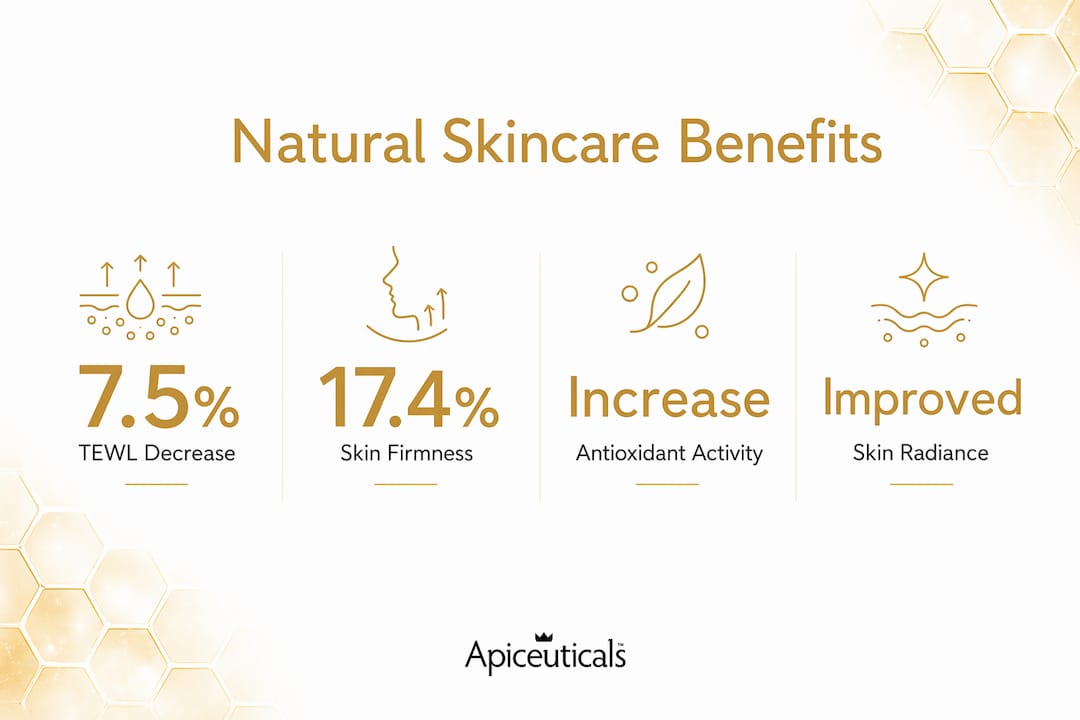
The benefits of embracing natural beauty in skincare are not self-evident from ingredient labels. They require clinical validation with defined endpoints and measurable durations. Purebkale™, a dry aqueous extract of Brassica oleracea, provides one of the more rigorous recent examples. In a controlled study over 56 days, oral supplementation produced the following instrumental measurements:
| Skin Parameter | Change After 56 Days |
|---|---|
| Transepidermal water loss (TEWL) | Decreased by 7.5% |
| Dermis density | Increased by 12.8% |
| Wrinkle depth | Decreased by 15.1% |
| Skin firmness | Increased by 17.4% |
| Skin elasticity | Increased by 9.7% |
These clinical improvements in skin parameters were measured instrumentally, not through subjective perception, which is a critical distinction. Dermis density and TEWL are objective endpoints that reflect genuine structural changes in the skin. A 15.1% reduction in wrinkle depth over 56 days is a result that most synthetic actives would be satisfied to claim.
The biological mechanism behind these outcomes involves NRF2 pathway activation. NRF2 is a transcription factor that regulates the body’s antioxidant response, upregulating protective enzymes that neutralize free radicals before they degrade collagen and elastin. Think of free radicals as the rust corroding a metal structure from within. NRF2 activation is the protective coating applied before the rust takes hold. Natural polyphenols and glucosinolates found in brassica extracts are among the most studied NRF2 activators in dermatological research.
PROPOWAX™ Living Honeycomb operates through a comparable antioxidant mechanism. Its global patent for antioxidant activity, independently validated by the Aristotle University of Thessaloniki, reflects a continuous-release model in which antioxidants are delivered to the skin surface over time rather than in a single application burst. This sustained delivery is what distinguishes it from conventional antioxidant formulations, which typically degrade rapidly on contact with air and light.
Pro Tip: When evaluating any natural skincare ingredient, look for studies that specify both the duration of use and the measurement method. Subjective self-assessment is not a clinical endpoint. Instrumental data from corneometers, cutometers, and optical profilometry are the standards that matter.
Are natural beauty products actually safe?
The regulatory reality of natural cosmetics is one of the most misunderstood areas in the beauty industry. Under the Modernization of Cosmetics Regulation Act (MoCRA), natural cosmetics must comply with all standard FDA requirements, including facility registration, adverse event reporting, and safety substantiation. The word “natural” on a label carries no formal FDA definition and confers no regulatory exemption. A product labeled natural is held to exactly the same safety standards as any other cosmetic.
This matters because the marketing language around natural beauty frequently implies a safety advantage that the regulatory framework does not support. A synthetic fragrance and a natural essential oil are both subject to the same labeling and safety requirements. Neither is automatically safer than the other. The distinction lies in the specific formulation, the concentration of active compounds, and the individual’s skin tolerance.
Fragrance allergens represent the clearest illustration of this point. Linalool and limonene, both naturally derived fragrance compounds found in lavender and citrus respectively, are among the most frequent causes of allergic contact dermatitis in cosmetic users. They appear in products marketed as natural at rates comparable to synthetic fragrance components. The natural origin of a sensitizing compound does not reduce its allergenic potential.
For anyone with sensitive skin, the practical guidance is straightforward:
- Patch test every new product regardless of its natural or clean beauty positioning.
- Read ingredient lists for linalool, limonene, geraniol, citronellol, and eugenol, all common natural fragrance allergens.
- Prioritize products with dermatological testing on sensitive skin and documented irritation rates.
- Consult resources on clean beauty safety standards to understand what exclusion lists actually mean in formulation terms.
Apiceuticals excludes over 2,000 potentially harmful ingredients and has completed dermatological testing on sensitive skin with a documented 0% irritation rate. That outcome is a function of formulation discipline, not simply the natural origin of the ingredients.
How natural beauty influences self-acceptance in the digital age
Authentic representation of natural beauty in digital media produces measurable psychological benefits. Research published in 2026 shows that viewing unfiltered beauty content on platforms like Instagram increases body appreciation and reduces body dissatisfaction. The mechanism is a shift in comparison target. When the reference point moves from idealized, edited images to realistic, unaltered bodies, the gap between self-perception and ideal narrows. This is how natural beauty and self-acceptance become structurally linked through media consumption.
The practical implications for cultivating a healthier relationship with your body through social media are specific:
- Audit your feed deliberately. Accounts that consistently present edited or filtered images activate upward social comparison, which research consistently links to lower body satisfaction.
- Follow accounts that show skin texture, variation in body shape, and unretouched photography. The psychological benefit comes from normalizing realistic appearance, not from passive exposure to any content.
- Limit passive scrolling. Active, intentional engagement with content you have selected produces different psychological outcomes than algorithmic delivery of appearance-focused material.
- Recognize that social media algorithms are optimized for engagement, not for your body image. High-engagement beauty content tends toward the aspirational and edited. Conscious curation is a form of self-care.
The science of mindful beauty routines supports this approach. When beauty practice is grounded in self-acceptance rather than correction, the psychological relationship with appearance shifts from deficit-based to maintenance-based. That shift has measurable effects on self-esteem and long-term adherence to skincare routines.
Key takeaways
Natural beauty matters because it addresses both the psychological relationship with the body and the biological health of the skin through evidence-based mechanisms, not marketing claims.
| Point | Details |
|---|---|
| Nature restores body appreciation | Self-compassion and perceived restoration mediate the link between nature contact and positive body image. |
| Clinical data defines ingredient efficacy | Natural actives like Purebkale™ show measurable skin improvements only when studied with defined durations and instrumental endpoints. |
| “Natural” is a marketing term, not a safety standard | FDA MoCRA applies equally to natural and conventional cosmetics; patch testing remains essential regardless of label claims. |
| Authentic media content supports self-acceptance | Unfiltered beauty posts reduce body dissatisfaction by shifting comparison targets toward realistic appearance. |
| Antioxidant delivery determines skincare performance | Continuous-release antioxidant systems like PROPOWAX™ Living Honeycomb outperform single-application formulations in sustained skin protection. |
Apiceuticals’ perspective on natural beauty and antioxidant science
The most persistent misconception we encounter is that natural beauty is primarily an aesthetic or philosophical position. It is not. The evidence from the 2026 BINS study, from clinical trials on brassica-derived actives, and from regulatory analysis of MoCRA all point to the same conclusion: natural beauty matters precisely because it can be measured, validated, and applied with scientific rigor.
What we have observed in formulating with PROPOWAX™ Living Honeycomb is that the distinction between natural and synthetic is far less meaningful than the distinction between substantiated and unsubstantiated. A natural ingredient without clinical evidence is not inherently safer or more effective than a synthetic one with a robust safety profile. The question is always: what does the data show, over what duration, and measured by what method?
The integration of psychological restoration through nature exposure with clinically supported antioxidant skincare ingredients represents the most coherent framework for natural beauty in 2026. One addresses how you feel about your body. The other addresses what your skin can demonstrably achieve. Neither is sufficient alone. Together, they form the basis of a beauty practice that is both scientifically defensible and genuinely restorative. That is why we should appreciate natural beauty not as a trend, but as a discipline.
— Apiceuticals
Discover antioxidant beauty grounded in bee science
Apiceuticals was built on the premise that the most effective skincare is the kind that can be independently verified. PROPOWAX™ Living Honeycomb holds a global patent for antioxidant activity, validated by the Aristotle University of Thessaloniki, and recognized by British Vogue as “arguably the global leader in antioxidant activity.” Every formulation excludes over 2,000 potentially harmful ingredients and has been dermatologically tested on sensitive skin with 0% irritation.

For those who want to understand what antioxidant beauty actually delivers at the cellular level, Apiceuticals’ product lines offer a starting point grounded in science rather than suggestion. The HONEY BALM™ Series delivers clinically proven 26% wrinkle reduction. The PROPOWAX™ Series provides continuous antioxidant release for skin, scalp, and hair. Explore the full range and the science behind it at Apiceuticals.
FAQ
Why does natural beauty matter for self-esteem?
Natural beauty matters for self-esteem because nature contact increases self-compassion and perceived restoration, both of which are documented mediators of body appreciation. The 2026 BINS study across 58 countries confirmed this pathway with over 50,000 participants.
Are natural skincare ingredients clinically proven to work?
Some are, when studied with defined durations and instrumental measurement. Purebkale™, for example, produced a 17.4% increase in skin firmness and a 15.1% reduction in wrinkle depth over 56 days in a controlled study.
Is natural beauty skincare safer than conventional skincare?
Not automatically. The FDA applies the same safety requirements to natural cosmetics under MoCRA as to conventional products. Natural fragrance compounds like linalool and limonene are among the most common causes of allergic contact dermatitis, so patch testing remains necessary.
How does authentic beauty content online affect body image?
Viewing unfiltered, realistic beauty content on platforms like Instagram increases body appreciation and reduces dissatisfaction by shifting social comparison toward attainable reference points rather than idealized, edited images.
What makes PROPOWAX™ Living Honeycomb different from other natural antioxidants?
PROPOWAX™ Living Honeycomb uses a patented continuous-release mechanism that delivers antioxidants to skin, scalp, and hair over time. This sustained delivery, validated by the Aristotle University of Thessaloniki, distinguishes it from conventional antioxidant formulations that degrade rapidly after application.
Recommended


Related posts

How bees and biodiversity sustain each other, what the science says about Greece and the Aegean, and how antioxidant beauty can start from a hive...

How organic propolis extraction works, from hive to extract: collection, solvents, EU organic rules, Greek propolis phenolics and what it means for skincare.

Build an anti pollution skincare routine that fits Greek city life: what pollution does to skin, the morning and evening steps, and the antioxidants with...

Honey moisture content explained: the EU and Greek limits, how to take a refractometer reading, what excess water does to honey, and why it matters...

How antioxidant activity measurement works: DPPH, ABTS, FRAP and ORAC explained, why results differ, and what a lab number can and cannot say about skin...















