
No products in the cart.
Return To Shop
Why Organic Ingredients Matter for Skin and Beauty
TL;DR:
- Organic ingredients in beauty products are sourced without synthetic pesticides, GMOs, antibiotics, or harmful fertilizers. They offer benefits like reducing chemical exposure, supporting the skin microbiome, and promoting environmental sustainability. Apiceuticals exemplifies science-backed organic skincare through its patented antioxidant honeycomb technology derived from certified organic beehives.
Organic ingredients in beauty products are defined by the absence of synthetic pesticides, GMOs, antibiotics, and harmful fertilizers — and their presence signals a measurable reduction in chemical load on the skin. Understanding why organic ingredients matter requires looking beyond marketing labels and into the science of skin permeability, antioxidant activity, and environmental responsibility. Apiceuticals, founded in Arcadia, Greece, with beekeeping heritage since 1981, built its entire formulation philosophy on this principle. Its PROPOWAX™ Living Honeycomb technology, globally patented for highest antioxidant activity and validated by the Aristotle University of Thessaloniki, demonstrates what happens when organic bee ingredients meet rigorous science. The result is not just cleaner beauty. It is more effective beauty.
Why organic ingredients matter: definitions and certification standards
Organic ingredients in cosmetics are those sourced from plants, animals, or minerals cultivated without synthetic pesticides, artificial fertilizers, genetically modified organisms, or growth-stimulating antibiotics. The term “organic” in beauty is not interchangeable with “natural.” A natural ingredient may still be processed with solvents or grown with pesticide exposure. Organic certification, by contrast, imposes verifiable production standards at every stage from soil to formulation.
The USDA National Organic Program sets the most widely recognized criteria. Products labeled “100% organic” contain only certified organic ingredients. Those labeled “organic” must contain at least 95% certified organic content. Products with “made with organic ingredients” contain a minimum of 70% organic content. This labeling hierarchy matters because it directly determines how much synthetic chemical residue a consumer may be absorbing through their skin.
| Label | Organic content | Synthetic ingredients allowed |
|---|---|---|
| 100% Organic | 100% | None |
| Organic | 95% minimum | Up to 5% approved non-organic |
| Made with organic ingredients | 70% minimum | Up to 30% non-organic |
| No organic claim | Below 70% | Unrestricted |
Organic certification criteria exclude synthetic pesticides, antibiotics, and harmful fertilizers. This means the choice is as much about avoiding harmful substances as it is about any nutritional or botanical superiority. For beauty consumers, this distinction is critical. The skin does not digest and filter ingredients the way the gut does. What lands on the skin surface has a direct pathway inward.
How do organic ingredients benefit skin health?
Skin is a permeable organ, not a sealed barrier. Skin permeability increases significantly during hormonal changes, stress, and in sensitive populations, meaning synthetic chemicals in conventional products are not simply sitting on the surface. They are being absorbed. This is the foundational argument for organic skincare, and it is grounded in physiology rather than preference.
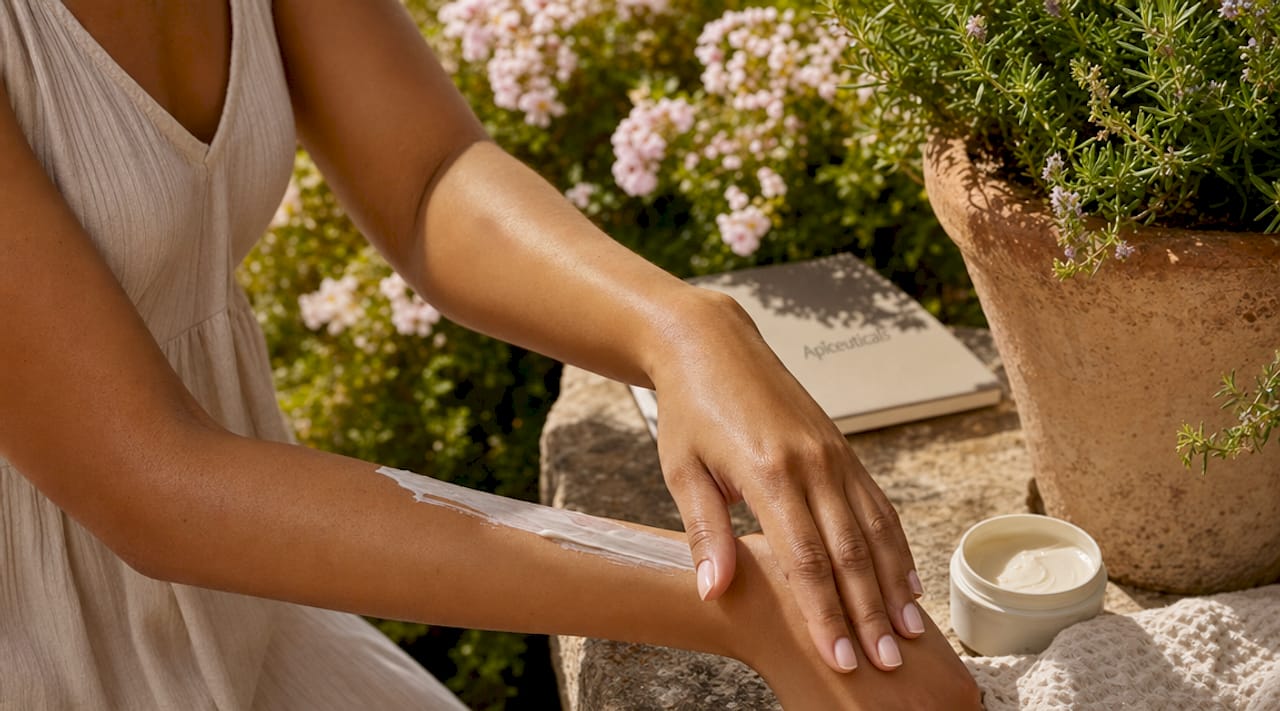
Conventional beauty formulations frequently contain endocrine-disrupting compounds, synthetic fragrances, and preservative systems that can compromise the skin’s microbiome. The skin microbiome is a living ecosystem of bacteria, fungi, and other microorganisms that regulate inflammation, barrier function, and immune response. Disrupting it with harsh synthetic detergents or artificial preservatives creates a cascade of sensitivity, redness, and accelerated aging. Skin barrier integrity is directly supported by avoiding these compounds, which organic formulations systematically exclude.
Organic skincare is rich in vitamins, antioxidants, and essential fatty acids that nourish and support the skin’s natural repair mechanisms. Antioxidants are particularly relevant here. Free radicals generated by UV exposure, pollution, and metabolic stress degrade collagen, disrupt melanin production, and accelerate cellular aging. Think of free radical damage to skin cells as rust forming on metal: slow, cumulative, and structural. Organic antioxidant ingredients interrupt that process at the molecular level. PROPOWAX™ Living Honeycomb, derived from Arcadian propolis and beeswax, continuously releases antioxidants onto the skin surface, providing a sustained protective response rather than a single-dose application.
A review of hundreds of comparative studies found that organic products contain slightly higher levels of certain vitamins, minerals, and phytonutrients, though the evidence on nutritional density differences remains mixed. What is consistent across the research is that organic ingredients carry fewer pesticide residues. For topical application, where the skin absorbs rather than metabolizes what it encounters, that reduction in residue load is clinically meaningful.
- Organic formulations exclude SLS, SLES, parabens, silicones, and mineral oils, all of which can disrupt the skin barrier over time.
- Phytonutrients found in organically grown botanicals support collagen synthesis and cellular repair.
- Reduced pesticide residue in organic ingredients lowers the risk of contact dermatitis and sensitization reactions.
- Organic bee-derived ingredients such as propolis and beeswax provide antimicrobial and antioxidant activity without synthetic additives.
Pro Tip: When selecting organic skincare for sensitive or reactive skin, look for products that are dermatologically tested specifically on sensitive skin with documented irritation rates. Apiceuticals’ formulations carry a 0% irritation result across dermatological testing.
What environmental impact does choosing organic ingredients have?
The environmental case for organic ingredients is as well-documented as the skin health case. Organic farming improves soil health, biodiversity, and water quality while reducing pollution compared to conventional agriculture. This is not a marginal difference. Conventional farming relies on synthetic nitrogen fertilizers and broad-spectrum pesticides that leach into waterways, degrade topsoil microbiology, and reduce the diversity of plant and insect species in surrounding ecosystems.
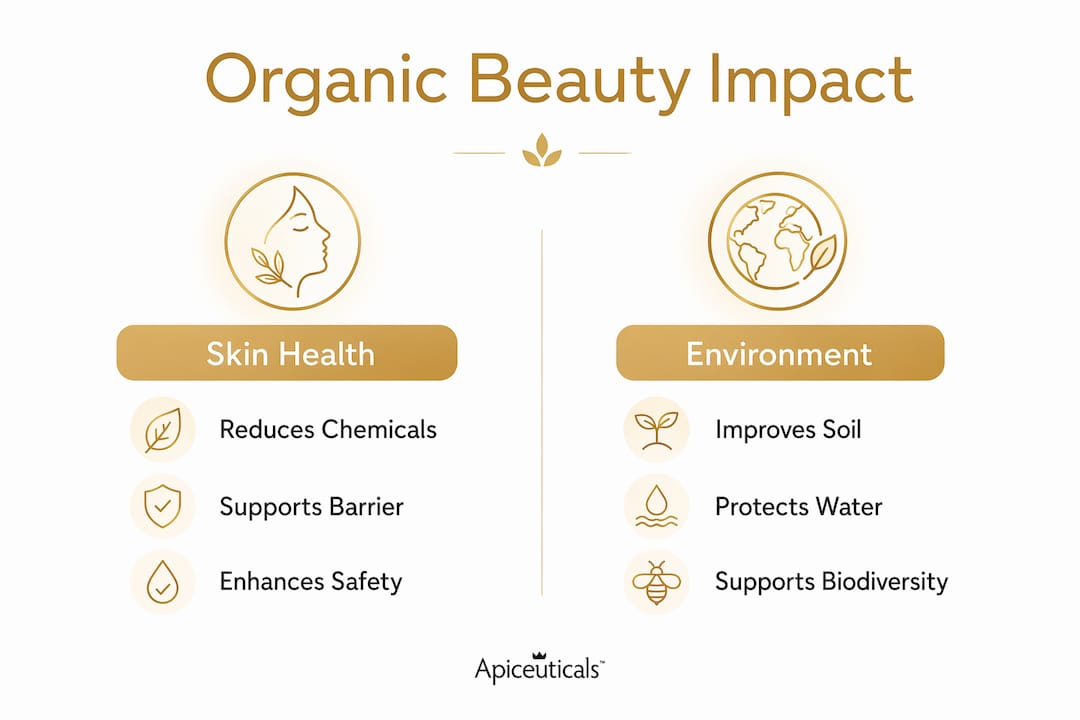
For beauty brands sourcing botanical ingredients at scale, the environmental footprint of their supply chain is a direct extension of their product’s impact. Choosing organic-certified ingredient suppliers means supporting farming systems that build rather than deplete the land. Apiceuticals’ 1,000-plus beehives in Arcadia pollinate 4 billion flowers daily, actively contributing to the biodiversity of the Peloponnese rather than extracting from it. That is a measurable ecological contribution embedded in the product’s origin.
The four primary environmental benefits of organic ingredient sourcing are:
- Reduced pesticide runoff. Organic farming eliminates synthetic pesticide application, preventing chemical contamination of rivers, groundwater, and adjacent soil ecosystems.
- Improved soil biology. Organic practices build microbial diversity in soil, increasing carbon sequestration and long-term agricultural productivity.
- Biodiversity support. The absence of broad-spectrum pesticides allows pollinator populations, including bees, to thrive. This is directly relevant to bee-derived beauty ingredients.
- Lower synthetic chemical pollution. Organic processing standards restrict the use of petrochemical solvents and synthetic preservatives, reducing industrial chemical discharge.
Consumers who choose organic products are exercising a precautionary principle: reducing exposure to synthetic pesticides, growth stimulants, and GMOs in the absence of complete certainty about long-term effects. That precaution extends beyond personal health to planetary health. Every purchase of a certified organic beauty product is a vote for the farming system that produced its ingredients.
How to integrate organic ingredients into your beauty routine
Integrating organic ingredients into a beauty routine does not require replacing every product at once. Strategic selection involves prioritizing high-impact products first, specifically those that remain on the skin for extended periods, such as moisturizers, serums, and body oils, rather than rinse-off products where contact time is brief.
Reading ingredient lists is the most reliable tool available. Ingredients are listed in descending order of concentration. If the first five ingredients are organic-certified, the product delivers meaningful organic content regardless of what appears further down the list. Certification marks from USDA Organic, COSMOS Organic, or ECOCERT provide independent verification that the organic claims have been audited.
- Prioritize leave-on products: moisturizers, facial oils, body lotions, and hair treatments have the highest skin contact time and therefore the greatest absorption potential.
- Check for certification marks rather than relying on “natural” or “botanical” claims, which carry no regulatory standard.
- Understand that “fragrance-free” and “organic” are separate claims. A product can be organic and still contain synthetic fragrance unless the formulation explicitly excludes it.
- Look for brands that publish their full ingredient exclusion lists. Apiceuticals excludes over 2,000 potentially harmful ingredients, a standard that goes well beyond basic organic certification.
Pro Tip: If budget is a constraint, apply the same logic used for food purchasing: prioritize organic for products that cover the largest skin surface area or are used most frequently. A daily body lotion applied head to toe warrants more scrutiny than an occasional exfoliant.
PROPOWAX™ Living Honeycomb offers a useful reference point for what science-backed organic ingredient selection looks like in practice. The technology uses propolis and beeswax sourced from Arcadia’s certified organic beehives, processed to preserve their full antioxidant profile, and formulated into a patented delivery system that releases antioxidants continuously rather than in a single application burst. It is the difference between a static ingredient and an active one.
How does organic beauty connect to clean beauty and antioxidant skincare?
Clean beauty is defined by the systematic exclusion of ingredients with known or suspected harm profiles, and organic sourcing is one of its foundational pillars. The two movements share a common logic: reduce the chemical burden on the skin and replace it with ingredients that support rather than disrupt biological function. Antioxidant skincare adds a third dimension, targeting the oxidative stress that drives premature aging at the cellular level.
The synergy between organic, antioxidant-rich, and clean formulations is not coincidental. Organic ingredients tend to retain higher concentrations of naturally occurring antioxidants, including polyphenols, flavonoids, and tocopherols, because they are not exposed to the oxidative stress of synthetic pesticide application during growth. PROPOWAX™ Living Honeycomb exemplifies this synergy. Its antioxidant efficacy was independently validated by the Aristotle University of Thessaloniki, and British Vogue recognized it as “arguably the global leader in antioxidant activity.” That recognition is grounded in measurable biochemistry, not marketing.
| Approach | Core principle | Key benefit |
|---|---|---|
| Organic beauty | Certified ingredient sourcing | Reduced synthetic chemical exposure |
| Clean beauty | Ingredient exclusion standards | Safer formulations for sensitive skin |
| Antioxidant skincare | Free radical neutralization | Protection against oxidative aging |
| Apiceuticals PROPOWAX™ | Patented continuous antioxidant release | Sustained skin protection, validated by science |
Consumer demand for transparency, traceability, and ingredient safety is reshaping the beauty industry. Brands that can demonstrate the origin of their ingredients, the certification standards applied, and the scientific validation behind their efficacy claims are earning a level of trust that conventional beauty marketing cannot replicate. The science-backed benefits of organic skincare are becoming the baseline expectation, not a premium differentiator.
Key takeaways
Organic ingredients matter in beauty because they reduce synthetic chemical absorption through the skin, support the skin’s microbiome and barrier function, and connect individual purchasing decisions to broader environmental outcomes.
| Point | Details |
|---|---|
| Skin absorbs what it touches | Organic ingredients reduce pesticide and synthetic chemical absorption through the skin’s permeable surface. |
| Certification defines the claim | USDA and COSMOS Organic labels verify ingredient standards; “natural” carries no equivalent regulatory weight. |
| Antioxidants amplify organic benefits | Organically grown botanicals retain higher antioxidant concentrations, supporting cellular defense against oxidative aging. |
| Environmental impact is measurable | Organic farming improves soil health, biodiversity, and water quality compared to conventional ingredient sourcing. |
| Strategic selection maximizes value | Prioritizing leave-on, high-contact-time products for organic formulations delivers the greatest skin health return. |
Apiceuticals’ perspective on organic ingredients and antioxidant beauty
The conversation around organic beauty has matured considerably. What began as a consumer reaction against synthetic chemicals has evolved into a more nuanced discipline, one that demands both certification rigor and scientific validation. At Apiceuticals, the view is that these two requirements are inseparable. Organic sourcing without scientific evidence of efficacy is incomplete. Scientific efficacy built on conventionally farmed, pesticide-exposed ingredients undermines the very biology it claims to support.
The precautionary principle is not anti-science. It is the application of scientific humility: acknowledging that the long-term dermal effects of cumulative synthetic chemical exposure are not fully characterized, and choosing to reduce that exposure while the evidence continues to develop. This is the reasoning behind Apiceuticals’ decision to source all bee ingredients from certified organic beehives in Arcadia, where the Roumeliotis family introduced organic beekeeping to Greece in 1981.
What PROPOWAX™ Living Honeycomb demonstrates is that organic origin and patent-backed performance are not in tension. The propolis and beeswax at its core are certified organic. The antioxidant activity they deliver is the highest validated in cosmetics. The lesson for consumers is to look for both: the certification that confirms what is absent, and the science that confirms what is present. That combination is where organic beauty becomes genuinely transformative rather than merely reassuring.
— Apiceuticals
Discover Apiceuticals’ organic antioxidant skincare
Apiceuticals was built on a single conviction: that the most effective skincare begins with the purest ingredients, validated by rigorous science. Every formulation in the PROPOWAX™ Series and HONEY BALM™ Series is free from SLS, SLES, parabens, silicones, and mineral oils, and excludes over 2,000 potentially harmful compounds.
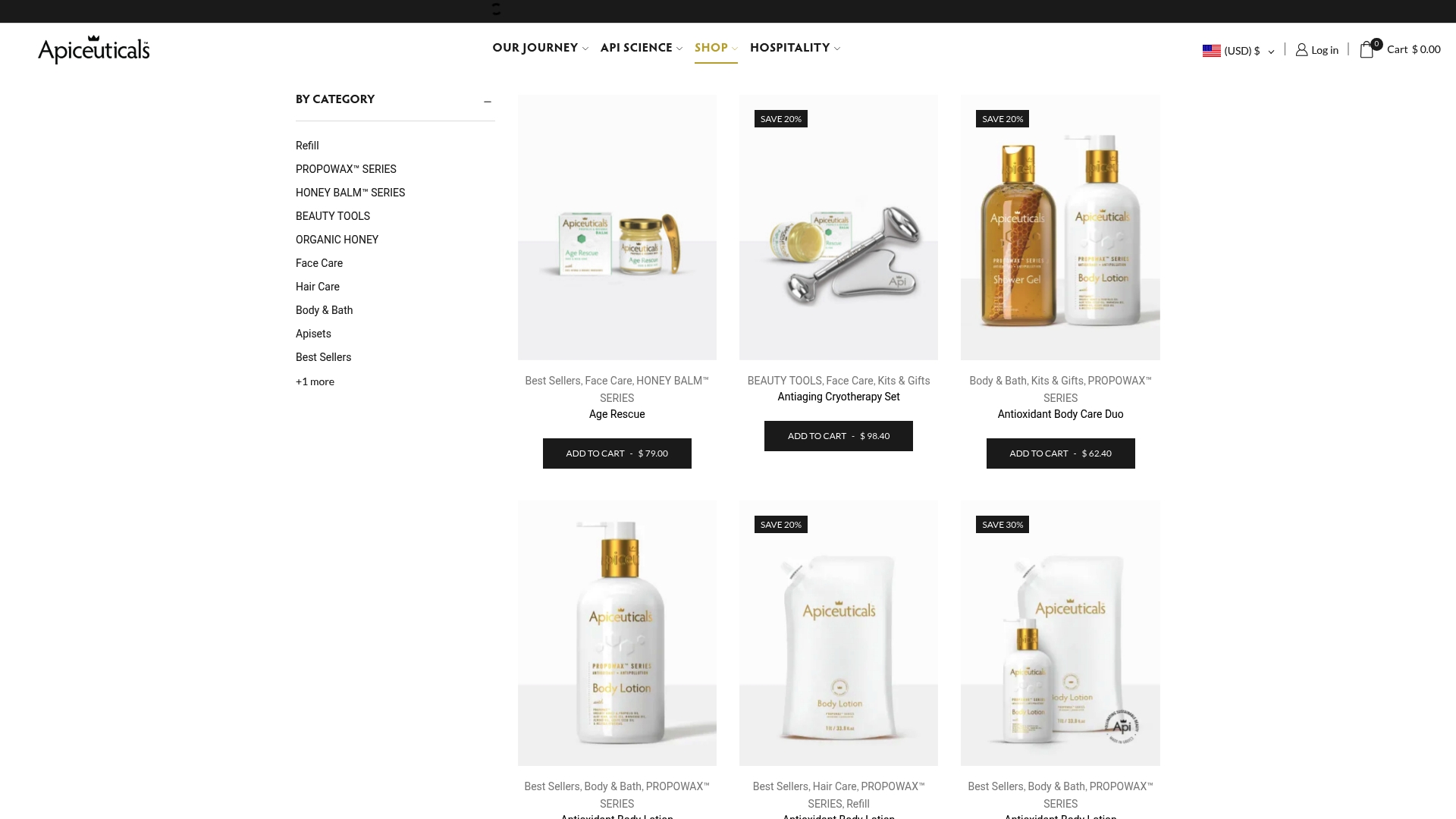
At the center of every product is PROPOWAX™ Living Honeycomb, the globally patented antioxidant technology validated by the Aristotle University of Thessaloniki. Sourced from certified organic beehives in Arcadia, Greece, it delivers continuous antioxidant protection to skin, scalp, and hair. Explore the full range of antioxidant skin care and discover what science-backed organic beauty looks like in practice.
FAQ
What makes an ingredient officially organic in beauty products?
An ingredient is certified organic when it is grown and processed without synthetic pesticides, GMOs, antibiotics, or artificial fertilizers, verified by a recognized body such as USDA Organic or COSMOS Organic. The certification applies to the ingredient’s full production chain, from soil to extraction.
Is “natural” the same as “organic” in skincare?
Natural and organic are not equivalent terms. “Natural” has no regulated definition in cosmetics and can be applied to any ingredient derived from a plant or mineral source, regardless of how it was grown or processed. “Organic” requires third-party certification against defined production standards.
Why do organic ingredients matter specifically for sensitive skin?
Sensitive skin has a compromised barrier function, making it more permeable to synthetic chemicals, fragrances, and preservatives commonly found in conventional formulations. Organic ingredients reduce exposure to these potential irritants, supporting the skin microbiome and barrier repair without adding synthetic chemical load.
How does PROPOWAX™ Living Honeycomb relate to organic ingredients?
PROPOWAX™ Living Honeycomb is derived from propolis and beeswax sourced from Apiceuticals’ certified organic beehives in Arcadia, Greece. Its antioxidant activity is the highest validated in cosmetics, confirmed by the Aristotle University of Thessaloniki, making it a direct example of organic origin combined with measurable scientific efficacy.
Do organic beauty products cost more, and is the investment justified?
Organic beauty products often carry a higher price point due to certification costs and more complex sourcing. The investment is most justified for leave-on products with high skin contact time, such as moisturizers, body oils, and serums, where the reduction in synthetic chemical absorption is greatest and the benefits of organic ingredients are most clinically relevant.
Recommended


Related posts

How bees and biodiversity sustain each other, what the science says about Greece and the Aegean, and how antioxidant beauty can start from a hive...

How organic propolis extraction works, from hive to extract: collection, solvents, EU organic rules, Greek propolis phenolics and what it means for skincare.

Build an anti pollution skincare routine that fits Greek city life: what pollution does to skin, the morning and evening steps, and the antioxidants with...

Honey moisture content explained: the EU and Greek limits, how to take a refractometer reading, what excess water does to honey, and why it matters...

How antioxidant activity measurement works: DPPH, ABTS, FRAP and ORAC explained, why results differ, and what a lab number can and cannot say about skin...















